
A comprehensive metallurgical, thermal, and structural framework for procurement directors, structural engineers, and facility planners deploying insulated aluminum panel systems.
Industrial infrastructure and cold-chain logistics across the Russian Federation operate under some of the most unforgiving environmental conditions in the modern built world. Spanning permafrost foundations in Western Siberia to high-humidity marine corridors in the Baltic and Pacific regions, building envelopes must maintain airtight integrity against temperature fluctuations from −55°C in mid-winter to +40°C during peak summer months. In this rigorous context, standard galvanized steel cladding increasingly yields to Custom OEM Aluminum Sandwich Panels. Fabricated using high-strength aluminum-manganese (Al-Mn 3003) or aluminum-magnesium (Al-Mg 5005) structural facings, these advanced composite panels combine innate atmospheric corrosion immunity with superior strength-to-weight ratios and cryogenic ductility.
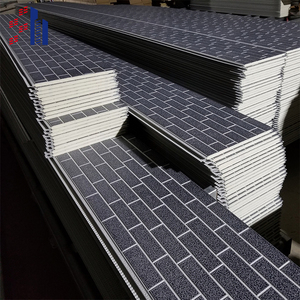
Modern Russian construction standards—governed by SP 50.13330.2012 (Thermal Performance of Buildings), GOST 32603-2012, and strict fire safety directives under Federal Law No. 123-FZ—demand zero compromise regarding thermal bridging, condensation mitigation, and reaction-to-fire performance. As a preeminent design, fabrication, and structural engineering collective established in 2010, our manufacturing operations fulfill precise OEM configurations. We laminate Polyisocyanurate (PIR), Polyurethane (PUR), and non-combustible structural Basalt Rock Wool cores directly between architectural-grade aluminum facers with continuous polyurethane-reactive (PUR-hot-melt) structural bonding adhesives.
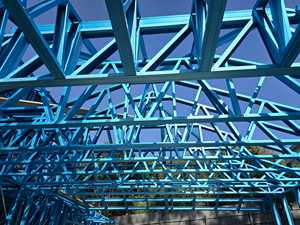
Aluminum skins eliminate zinc micro-fracturing at sub-zero temperatures, weigh approximately 60% less than equivalent 0.7mm steel facings, and impose dramatically reduced dead loads on structural steel portal frames. This weight reduction directly translates to a 12% to 18% steel tonnage savings on primary structural columns and roof trusses, while yielding an atmospheric maintenance-free service lifespan surpassing 40 years without chalking, blistering, or galvanic degradation.
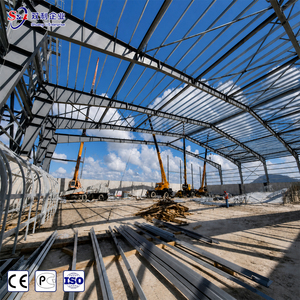
Factory-fabricated pre-engineered systems engineered to ISO 9001:2015 quality standards for rapid site installation, airtight cold storage, and heavy-duty industrial framing.
Precise thermodynamic and mechanical property calibration for continuous lamination panel production.
The engineering validation of custom OEM aluminum sandwich panels relies upon continuous composite adhesion. Under intense sub-zero conditions, differing coefficients of linear thermal expansion ($\alpha$) between metal facings and insulation cores induce severe interfacial shear stress. Aluminum exhibits a thermal expansion coefficient of approximately $23 \times 10^{-6}/\text{K}$, compared to $12 \times 10^{-6}/\text{K}$ for structural carbon steel. Left uncompensated in production, this differential causes exterior face pillowing, skin buckling, or core delamination.
Our OEM manufacturing protocols overcome these thermodynamic stresses through high-elasticity, two-component polyurethane cross-linking bonding adhesives coupled with micro-ribbed aluminum surface profiling. Facings are pre-treated with chromate-free conversion coatings followed by multi-layer fluorocarbon (PVDF / FEVE) or high-durability polyamide-modified polyurethane (Pural) paint systems. This surface finish withstands high ultraviolet exposure across open Russian plains while resisting aggressive chemicals, industrial sulfur dioxides, and saltwater sea mists along commercial maritime hubs.
| Insulation Core Type | Density Range (kg/m³) | Thermal Conductivity (λ, W/m·K) | GOST 30247 Fire Rating | Tensile Bond Strength (MPa) | Optimal Deployment Arena |
|---|---|---|---|---|---|
| PIR (Polyisocyanurate Foam) | 40 – 45 kg/m³ | 0.019 – 0.022 W/m·K | G1 (Low Combustibility) | > 0.12 MPa | Cold logistics, high-bay freezers, pharmaceuticals |
| High-Density Basalt Rock Wool | 100 – 140 kg/m³ | 0.038 – 0.042 W/m·K | NG (Non-Combustible) | > 0.08 MPa | Fire-barrier walls, refineries, power plants |
| Rigid PUR (Polyurethane Foam) | 38 – 42 kg/m³ | 0.021 – 0.024 W/m·K | G2 – G3 Flammability | > 0.14 MPa | Agro-processing, dry storage warehouses |
| Self-Extinguishing EPS Core | 16 – 24 kg/m³ | 0.035 – 0.039 W/m·K | G3 Fire Retardant | > 0.10 MPa | Temporary field housing, worker accommodations |
Every batch of OEM aluminum composite panels produced features our proprietary labyrinthine Z-lock / tongue-and-groove joint geometry. This joint design integrates continuous factory-injected butyl elastomeric sealant grooves and EPDM thermal breaks. This engineering eliminates continuous metal-to-metal contact between internal and external building surfaces, guaranteeing an absolute barrier against condensation formation at dew point under $-45^\circ\text{C}$ exterior ambient conditions.
High-reliability building solutions engineered around distinct Russian geological, logistical, and environmental realities.
Class-A distribution parks along the Central Federal District and Baltic corridors demand massive multi-temperature cold storage facilities. Using 150mm–200mm PIR aluminum sandwich panels with micro-ribbed profiles provides continuous thermal insulation values of $U \le 0.11\,\text{W}/(\text{m}^2\cdot\text{K})$, minimizing compressor power draw in high-throughput food terminals.
Extreme sub-arctic conditions in resource extraction territories cause standard galvanized steels to suffer cold-shortness and stress corrosion cracking. Alloy 5005 aluminum facing panels remain ductile down to $-65^\circ\text{C}$. Laminated with non-combustible basalt cores, they withstand heavy snow loads, Arctic gales, and high sulfur concentrations around refining units.
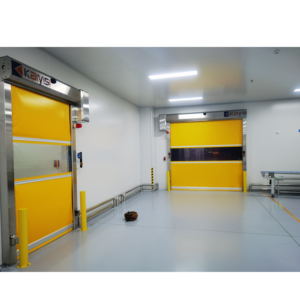
Specialized manufacturing hubs across Tatarstan and the Kaluga pharmaceutical cluster require wall cladding capable of withstanding daily high-pressure chemical sterilization. Factory-anodized or PVDF-coated flush aluminum panels prevent microbial entrapment, eliminate oxidation, and satisfy GOST R ISO 14644-1 cleanroom environmental protocols.
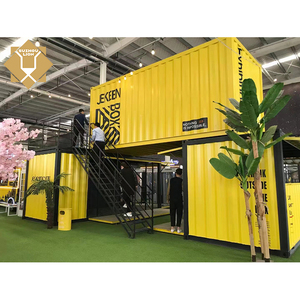
Upgrades across the Trans-Siberian and Baikal-Amur Mainline railway hubs require fast-deployment modular offices, equipment shelter buildings, and emergency substations. Flat-pack modular container units fabricated with lightweight aluminum sandwich panels permit rapid craning, transport over permafrost roads, and instant on-site assembly.
Shifts in technical standards, sovereign supply lines, and building performance metrics reshaping commercial procurement.
Amendments to national energy conservation decrees demand lower envelope heat transfer coefficients. Developers can no longer deploy outdated 50mm–80mm foam panels in central industrial belts. The industry is rapidly adopting 120mm–160mm PIR and high-density mineral wool panels with thermal transmittance ratings under $0.16\,\text{W}/(\text{m}^2\cdot\text{K})$ to slash building operating overhead.
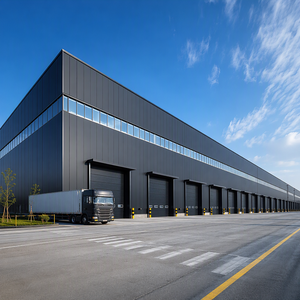
Shorter construction seasons across northern territories have turned traditional brick-and-mortar or site-cast concrete builds into economic liabilities. Turnkey integrated packages—pairing pre-engineered steel frames with pre-cut, pre-drilled aluminum sandwich panels—shorten commissioning timelines by over 60%, delivering quick handovers for logistics operators.
Volatile pricing in galvanized coil imports and domestic zinc smelter shifts have made premium aluminum alloy coil an increasingly cost-competitive alternative. Factoring in zero maintenance, non-existent recoating cycles, and higher residual scrap value after a 30-year lifecycle, aluminum panels offer clear total-cost-of-ownership benefits.
Industrial fire safety enforcement has intensified nationwide. Flammable core installations in commercial, warehousing, or manufacturing facilities face immediate regulatory shutdown. The market has shifted toward continuous-line PIR formulations meeting G1 combustibility and certified non-combustible (NG) basalt core configurations tested to GOST 30247.0-94 standards.
Clear, technically rigorous answers addressing certification, shipping logistics, material science, and on-site assembly.
A battle-tested industrial group delivering single-source accountability from structural CAD/CAM calculations to final delivery.
Our in-house design institute uses advanced finite-element structural modeling to calculate wind, seismic, and snow loads under regional building codes (SP 20.13330), minimizing steel consumption while guaranteeing safety.
Continuous double-belt laminating equipment ensures uniform polyurethane high-pressure injection, continuous core feeding, and high compressive bonding strength, eliminating human error inherent to discontinuous batch presses.
Each production run undergoes peel-strength tension testing, shear modulus verification, thermal conductivity calibration, and dimensional tolerance checks in accordance with ISO 9001 and GOST requirements.
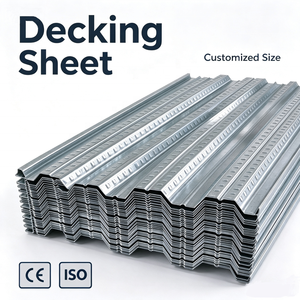
We supply the entire envelope assembly: primary steel, secondary purlins, composite floor decks, sandwich panels, flashing trims, self-drilling fasteners, and sealant tapes under one unified, accountable contract.
Our scaled manufacturing base and deep inventory of certified aluminum coils and raw chemical systems support rapid production turnarounds, ensuring your project schedule stays on track ahead of harsh seasonal deadlines.