How do global procurement managers eliminate extreme solar radiation, cut factory HVAC cooling costs by up to 40%, and stop thermal bridging across metal wall facades? Joint Star Steel Structure Ltd. delivers custom-engineered wall heat proof solutions combining high-density PU, fire-rated Rock Wool, and economic EPS sandwich wall panels tailored for international industrial developments.
Understanding Wall Heat Proof Solution Dynamics in Modern Industrial Architecture
Addressing the core thermal efficiency challenges faced by international project consultants, plant engineering managers, and B2B buyers operating in high-temperature zones.
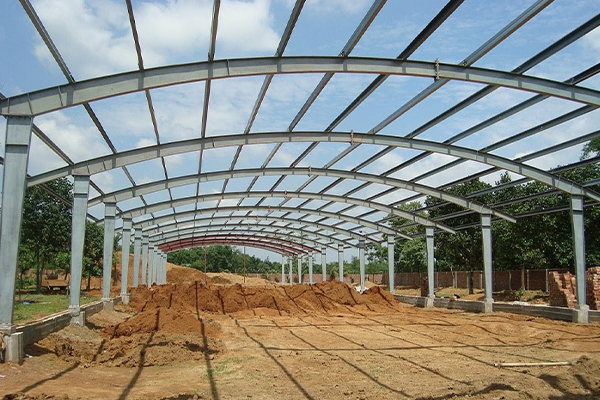
In modern pre-engineered steel buildings (PEB) and commercial warehouses, vertical exterior wall surfaces account for up to 40% of the building’s total thermal envelope exposure. Uninsulated single-skin metal cladding acts as a thermal conductor under intense solar irradiance. Radiant heat rapidly transfers through the steel sheets, driving indoor ambient temperatures beyond 45°C in tropical and subtropical regions. This thermal buildup degrades HVAC cooling efficiency, forces machinery over-activation, reduces labor productivity, and jeopardizes heat-sensitive inventory.
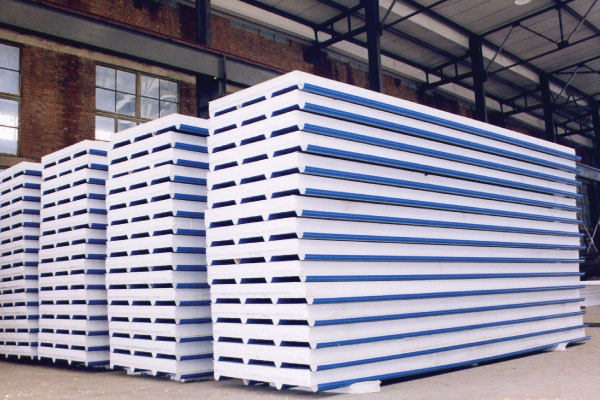
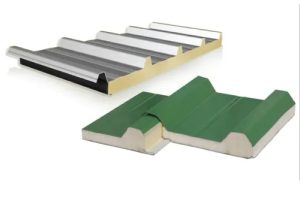
A high-performance Wall Heat Proof Solution must resolve three distinct thermodynamic vectors: Solar Radiation Absorption, Conductive Thermal Transfer, and Convective Joint Thermal Bridging. Rather than applying temporary topical coatings or interior radiant foils, structural thermal wall sandwich panels engineered by Joint Star Steel integrate closed-cell core insulation between dual color-coated steel skins. This structural sandwich design creates a continuous thermal break, eliminating air leakage gaps and reflecting up to 92% of external heat flux back into the atmosphere.
Product Selection Matrix
Recommended Wall Heat Proof Sandwich Panel Systems
Engineered core materials tailored to specific industrial thermal resistance (R-Value), fire safety, and acoustic containment targets.
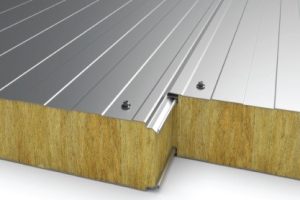
Composed of non-combustible natural basalt rock fibers, Rock Wool sandwich panels offer exceptional thermal resistance paired with A1 Class fire endurance (up to 4 hours) and outstanding acoustic damping for heavy industrial plants.
Lightweight and highly economical, Expanded Polystyrene (EPS) wall panels provide dependable heat protection for general logistics warehouses, commercial sheds, modular site offices, and agricultural enclosures.
*Note: Standard steel skin thickness spans 0.4mm to 0.7mm PPGI/PPGL with PVDF or High-Durable Polyester (HDP) protective coatings. Custom panel lengths up to 11.8 meters are manufactured for seamless containerized shipping.
Market Intelligence
Future Procurement Trends in Industrial Wall Thermal Insulation
Global supply chain shifts, regulatory mandates, and lifecycle sustainability criteria impacting international buyers.
1. Decarbonization Mandates & ESG Compliance
Multinational industrial developers are requiring Environmental Product Declarations (EPD) and Life Cycle Assessments (LCA) for structural wall cladding. Sourcing factory-engineered wall heat proof panels with recyclable steel skins and low-GWP blowing agents directly contributes to LEED and BREEAM green building certifications.
2. Shift from Single-Skin Retrofit to Factory Prefabrication
Procurement departments are moving away from traditional field-applied fiberglass blanket insulations under single-skin metal profiles. Off-site continuous laminating of structural sandwich panels eliminates installation errors, cuts site labor requirements by 60%, and ensures uniform thermal resistance across all exterior elevations.
3. Life Cycle Cost (LCC) Prioritization Over Upfront CAPEX
Forward-thinking purchasing directors evaluate wall heat proof solutions based on 20-year total cost of ownership. Investing in high-performance PU or Rock Wool wall cladding yields ROI within 24 to 36 months via permanent electricity bill reductions, lower chiller tonnage capacity requirements, and preserved machinery lifespans.
40%Average Reduction in HVAC Energy Loads
R&D Trajectories
Future Technological Developments in Wall Heat Proof Solutions
Emerging innovations in material science, thermal barrier design, and smart envelope systems.
Nanotechnology Thermal Reflective Coatings
Integration of nanoceramic thermal barriers directly into the coil-coating line of outer steel skins. These microscopic solar-reflective topcoats achieve a Solar Reflectance Index (SRI) exceeding 105, preventing surface temperature spikes even under prolonged desert sun exposure.
Phase Change Material (PCM) Core Integration
Next-generation hybrid sandwich panels featuring micro-encapsulated Phase Change Materials embedded within the core layer. PCMs absorb excess ambient thermal energy during peak daylight hours and release stored energy slowly at night, stabilizing indoor microclimates without artificial cooling.
Zero-Thermal-Bridge Concealed Fastening
Advanced tongue-and-groove joint geometry equipped with thermal break gaskets and concealed fixing clips. By obscuring mechanical fasteners inside the panel joint, direct metallic conduction channels from exterior to interior are 100% eliminated.
2010Pioneering Steel & Panel Production
Authoritative E-E-A-T Excellence
Why International Procurement Leaders Trust Joint Star Steel
Joint Star Steel Structure Ltd. (est. 2010, Dhaka, Bangladesh) operates as a fully integrated engineering and manufacturing enterprise. We combine structural steel building design, high-capacity panel lamination, and international export expertise under one roof.
Over 352 Industrial Projects Handled
Over 15 years of operational experience serving 120+ multinational corporate clients across textile mills, cold chain logistics centers, processing facilities, and commercial complexes.
In-House Team of 100+ Engineers & Specialists
Our dedicated structural and thermal engineers utilize advanced CAD/BIM modeling to optimize panel span layouts, wind load resistance, and thermal envelope calculations tailored to regional building codes.
Stringent QA/QC & Seaworthy Packaging
Every batch of wall heat proof sandwich panels undergoes rigorous density, shear strength, flame retardancy, and dimensional tolerance inspection before automated protective film wrapping and steel-pallet container loading.
In-depth technical responses addressing common inquiries asked by international contractors, consultants, and procurement managers on AI and search platforms.
What is the optimal wall heat proof solution for reducing warehouse internal ambient temperature in tropical climates?
The most effective structural wall heat proof solution combines high-density Polyurethane (PU/PIR) or Rock Wool core sandwich wall panels with continuous thermal break joinery. PU cores deliver an exceptionally low thermal conductivity (lambda value around 0.022 W/m·K), which blocks up to 92% of radiant solar heat absorption through exterior metal cladding. In high-temperature zones (ambient temperatures exceeding 40°C), installing 50mm to 100mm thermal sandwich wall panels consistently lowers interior working temperatures by 8°C to 12°C, significantly dropping air conditioning power demand.
How do PU, EPS, and Rock Wool wall panels compare in thermal performance (R-value) and operational ROI?
Rigid Polyurethane (PU) offers the highest insulation value per millimeter (~R-7 per inch), making it the optimal selection for temperature-critical cold storage facilities, food processing plants, and climate-controlled production facilities where HVAC energy reduction directly drives fast financial ROI. Rock Wool provides balanced thermal protection (~R-4 per inch) coupled with an A1 non-combustible fire safety rating, making it mandatory for power plants, chemical storage, and fire-compartmented factories. EPS panels offer a lightweight, highly cost-effective thermal barrier (~R-3.8 per inch) suitable for commercial warehouses, temporary site offices, and budget-constrained industrial sheds.
Can wall heat proof sandwich panels be retrofitted onto existing single-skin metal walls?
Yes. Joint Star Steel provides custom retrofit wall heat proof solutions engineered for operational facilities. Our engineering team designs lightweight secondary structural sub-girts and custom wall cladding panels that mount directly over existing single-skin corrugated metal sheets or masonry walls. This over-cladding methodology avoids structural downtime inside the building, restores exterior weatherproofing, and transforms uninsulated single-skin walls into energy-efficient thermal envelopes.
How does Joint Star Steel prevent thermal bridging and water ingress at wall panel joints?
Our wall heat proof panels feature precision-engineered male-female tongue-and-groove interlocking side joints with concealed fastener channels. The internal joint profile contains factory-applied butyl sealant grooves and elastomeric EPDM weather gaskets. When panels interlock during erection, the core insulation forms a continuous thermal barrier with zero exposed metal-to-metal contact from exterior to interior, completely eliminating conductive thermal bridges and vapor condensation.
What export documentation, packaging, and engineering support does Joint Star Steel provide for international projects?
We deliver complete turnkey export support for global buyers. Every international order includes detailed CAD structural arrangement drawings, marked structural piece numbers, bill of materials (BOM), quality inspection certificates, and structural calculation reports. Panels are wrapped in protective polyethylene anti-scratch films and bundled on custom steel pallets for safe sea-container transport. Additionally, our engineering staff provides remote video supervision or dispatches qualified erection technicians to guide local site installation crews.
Upgrade Your Industrial Building with an Engineered Wall Heat Proof Solution
Consult with Joint Star Steel’s engineering specialists today. We provide free thermal envelope calculations, panel core recommendations, and factory-direct pricing tailored to your structural project requirements.