
Explore our certified cold-formed metal solutions, heavy industrial warehouse framing, and advanced cold roll-forming machinery built for direct export to Montevideo and inland Uruguayan developments.
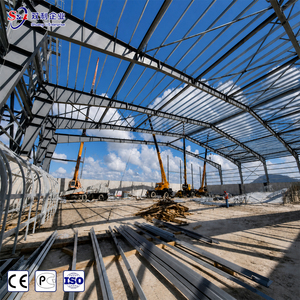
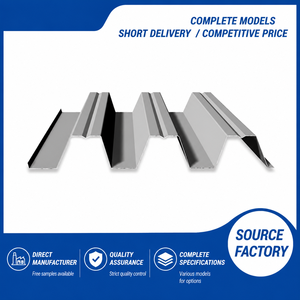
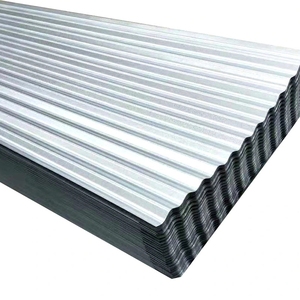
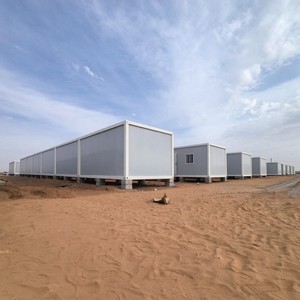
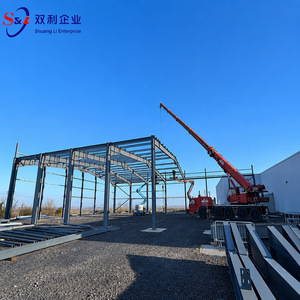
Corrugated steel sheets represent one of the most mechanically efficient building enclosures ever developed for modern architecture and heavy industry. Through continuous cold roll-forming, flat steel coils—whether carbon steel base metal conforming to ASTM A653 or high-strength structural grade ASTM A792—are converted into repetitive geometric wave or trapezoidal profiles. This geometric manipulation exponentially amplifies the sheet's cross-sectional area moment of inertia ($I_x$) and section modulus ($Z_x$), enabling lightweight gauges (from 24 gauge down to 32 gauge) to span significant purlin distances while resisting heavy uplift forces, concentrated live loads, and transient lateral wind shears.
For buyers and structural engineers in Uruguay, specifying the proper profile geometry and metallic coating chemistry is critical. Uruguay's territory lies in a transitional temperate zone flanked by the Río de la Plata estuary and the Atlantic Ocean. This maritime exposure subjects building envelopes to relentless airborne humidity, salt spray deposition, and violent cold-front wind events locally known as Pamperos. A standard thin-film galvanized sheet will suffer premature micro-pitting and white rust breakdown within years if specified incorrectly. As an international manufacturing partner with comprehensive fabrication lines since 2010, our facility engineers corrugated metal profiles tailored specifically to Uruguayan environmental realities, national logistical demands, and regional construction economics.
The operational lifecycle of a corrugated steel sheet is fundamentally governed by its metallic coating microstructure. In agricultural and coastal infrastructure throughout Montevideo, Canelones, and San José, specifying standard nominal zinc coatings leads to premature maintenance cycles. We supply corrugated profiles engineered under three rigorous metallurgical processes:
| Specification Parameter | Commercial Grade (General Enclosure) | Structural Agro-Industrial (Uruguay Inland) | Marine & Port Logistics (Montevideo Free Zones) |
|---|---|---|---|
| Base Metal Standard | ASTM A653 CS Type B | ASTM A653 / A792 SS Grade 50 (340 MPa) | ASTM A792 SS Grade 80 (550 MPa Full Hard) |
| Metallic Coating Type | Pure Zinc (Hot-Dip Galvanized) | Hot-Dip Galvanized or 55% Al-Zn Galvalume | Aluzinc AZ150 / Zinc-Alloy with PVDF Topcoat |
| Coating Mass Designation | Z120 – Z180 (120 - 180 g/m²) | Z275 (275 g/m²) or AZ100 (100 g/m²) | AZ150 (150 g/m² 55% Al-Zn) / Triple Protective Film |
| Standard Thickness (B.M.T) | 0.25 mm – 0.35 mm (32 – 29 Gauge) | 0.40 mm – 0.50 mm (28 – 26 Gauge) | 0.50 mm – 0.70 mm (26 – 24 Gauge) |
| Atmospheric Durability (ISO 9223) | Category C1 - C2 (Dry Rural / Interior) | Category C3 (Temperate Ag Zone) | Category C4 - C5M (High Marine / Industrial Solvents) |
| Salt Spray Resistance (ASTM B117) | 150 – 250 Hours to 5% Red Rust | 500 – 750 Hours to 5% Red Rust | 1,500 – 2,500+ Hours with PVDF barrier |
From the intensive dairy basins of Colonia to the pulp-mill logistics corridors of Fray Bentos and Paso de los Toros, our steel envelopes are engineered for the specific chemical, aerodynamic, and structural challenges of the Southern Cone.
Uruguay's grain, cereal, and oilseed hubs across Soriano, Río Negro, and Paysandú require expansive bulk storage sheds. Corrugated trapezoidal profiles provide the necessary transverse flexural stiffness to withstand grain lateral pressures and shifting internal equipment loads. When paired with siliconized polyester coatings, our panels prevent chemical breakdown from grain fermentation gases and condensation drip.
In the primary dairy zones of Florida, San José, and Colonia, ambient barn atmospheres are heavily saturated with animal urine fumes, high humidity, and biogenic ammonia ($NH_3$). Standard bare galvanized sheets corrode rapidly under these alkaline conditions. We engineer high-zinc Z275 coatings or insulated sandwich panels with protective internal vinyl/epoxy skins that neutralize ammonia attack while maintaining stable thermal environments for dairy cows.
The Port of Montevideo, Zonamerica, and the Free Zones along the Río de la Plata estuary endure dense salt-mist cycles and elevated atmospheric chloride concentrations. Our Galvalume ASTM A792 AZ150 and heavy-duty pre-painted corrugated sheets deliver maximum barrier longevity. Designed with reinforced overlapping crests and EPDM-bonded washer fasteners, they eliminate sea-mist capillary infiltration and withstand storm surges.
Residential and commercial developments across Maldonado, Canelones, and Ciudad de la Costa are rapidly shifting to light steel framing (construcción en seco). Corrugated profiles serve as both durable structural sub-flooring (composite steel decks) and external rainscreen cladding. This system offers exceptional structural efficiency, fire resistance, and seismic compliance with Uruguayan construction norms.
The architecture, engineering, and construction (AEC) landscape in Uruguay is undergoing a structural shift driven by modern procurement standards, industrialization, and sustainability commitments:
Operating since 2010 with a team of over 100 dedicated structural engineers and steel fabrication specialists, we deliver structural reliability, custom manufacturing flexibility, and predictable international supply chains.
From primary coil decoiling and continuous roll-forming to sub-arc welded H-beam fabrication and multi-layer sandwich panel lamination, all processes are executed within our own facilities, preventing subcontractor markups and quality lapses.
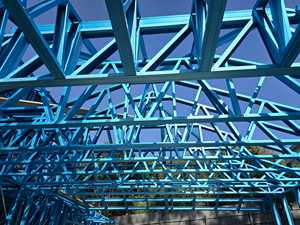
Our in-house design office performs comprehensive FEM and frame analyses for your project's wind, live, and seismic load criteria, producing erection blueprints, connection detailing, and full fabrication packing lists for local construction teams.
With more than 352 pre-engineered structures and major roofing contracts completed across 120+ corporate clients worldwide, our export procedures, packaging standards, and metallurgical consistency are proven across diverse markets.
Every shipment is accompanied by comprehensive Mill Test Certificates confirming yield strength, tensile elongation, zinc coating mass adherence (triple spot test), and cross-hatch paint adhesion before dispatch.
We bundle all corrugated profiles with waterproof kraft paper, desiccant packs, galvanized edge protectors, and heavy steel strapping mounted on treated wooden runners to prevent inter-sheet friction, salt fogging, and wet-storage white rust during ocean transit.
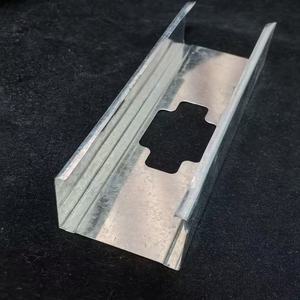
Beyond corrugated sheeting, we provide fully compatible composite decking profiles, purlins (C/Z shapes), CNC roll-forming machinery, flashings, structural fasteners, and thermal sandwich panels under a single consolidated purchase order.
Practical technical, logistical, and commercial answers for project developers, procurement agents, and steel distribution executives evaluating our manufacturing capabilities.
For installations situated within 15 kilometers of the coastline—including Montevideo's port perimeter, Ciudad de la Costa, and Maldonado—we recommend either 55% Al-Zn Galvalume (ASTM A792 AZ150) or hot-dip galvanized steel with a heavy zinc mass of no less than Z275 (275 g/m²). For premium architectural or municipal structures, a high-durability polyester (HDP) or fluoropolymer (PVDF) pre-painted coating over an AZ150 substrate provides the ultimate protection against airborne chloride deposition and UV photodegradation, delivering an expected functional lifespan exceeding 25 to 30 years before first maintenance.
In the Uruguayan commercial sector, steel sheeting is typically referenced by nominal millimeters or gauge designations (often Birmingham Wire Gauge / BWG or US Gauge). For instance, commercial 30-gauge sheets correspond approximately to 0.28–0.30 mm base metal thickness (BMT), which is suitable for standard rural sheds and residential partitions. Heavy industrial specifications across Uruguayan free trade zones frequently demand 26-gauge (nominal 0.45 mm to 0.50 mm) or 24-gauge (nominal 0.60 mm to 0.70 mm). We provide precise caliper certifications on all export orders, clearly differentiating Base Metal Thickness (BMT) from Total Coated Thickness (TCT) to ensure engineering compliance without unexpected gauge deviations.
Every commercial consignment exported to the Port of Montevideo includes an export documentation suite consisting of: a clean on-board Ocean Bill of Lading (B/L), an itemized Commercial Invoice with harmonized tariff schedule (HS) codes (such as HS 7210.41 for corrugated galvanized flat-rolled steel, or HS 7210.61 for Al-Zn coated sheets), a detailed Packing List categorized by bundle identification marks, a Certificate of Origin, and complete Mill Test Certificates (EN 10204 3.1) showing metallurgical chemical composition, tensile yield parameters, and coating weight per square meter to verify alignment with UNIT / ISO specifications.
The Uruguayan plains periodically experience severe Pampero convective windstorms with localized gusts exceeding 110–130 km/h, which generate strong aerodynamic uplift along building eaves, ridges, and corners. Our structural corrugated profiles are roll-formed with engineered pitch-to-depth ratios (such as trapezoidal ribs with 25 mm to 38 mm crest heights) that provide superior cross-sectional rigidity against dynamic deflection. Furthermore, our engineering division supplies fastener calculation schedules that prescribe the proper density of carbon steel self-drilling screws with bonded EPDM washers, fastened strictly through the profile crests on roofs to prevent water pooling while resisting negative suction loads.
Yes. Because we operate automated continuous CNC roll-forming lines, we fabricate corrugated sheets cut exactly to your specified project dimensions—up to 11.8 meters for safe loading in standard 40-foot high-cube maritime shipping containers, or even longer lengths for specialized break-bulk vessels. Specifying single-run sheets from ridge to eave eliminates transverse end-laps entirely, drastically accelerating site erection, minimizing material waste, and eliminating common capillary water leakage points on shallow roof slopes (down to a 5% pitch).
Standard fabrication time for custom-profiled corrugated orders, composite decks, or structural components ranges from 15 to 25 days depending on total tonnage and coating specifications. Maritime freight transit to Terminal Cuenca del Plata (TCP) at the Port of Montevideo typically requires 32 to 42 days via premier global container lines. Our export logistics desk closely monitors vessel departures and provides advance documentation sets, allowing your customs broker (Despachante de Aduana) to initiate pre-clearance and avoid port storage delays.