Explore our full line of CE certified industrial doors, structural framing units, pre-engineered building systems, and cold-chain modular units customized for direct export and turnkey deployment in Nigeria.
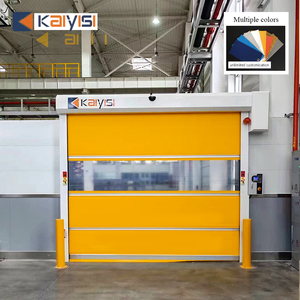
In the modern Nigerian industrial landscape—stretching from the massive port extensions of the Lekki Free Trade Zone to the bustling manufacturing hubs of Ogun State, Ikeja, Kano, and Port Harcourt—the entrance portal is no longer treated merely as a physical closure. It is recognized by structural engineers and facility directors as an integral operational valve controlling facility security, thermodynamic efficiency, air filtration, and supply-chain throughput. Industrial sectional overhead doors engineered under rigorous European CE directives (EN 13241-1, EN 12453, EN 12604) represent the pinnacle of automated access engineering, offering tangible performance superiority over antiquated single-skin rolling shutters.
As a leading international manufacturer and comprehensive engineering partner with roots established in 2010 and over 352 completed major industrial projects, our production lines fabricate CE-certified sectional overhead systems designed specifically to conquer the unique environmental and logistical rigors of West Africa. Generic industrial doors installed across Nigerian facilities frequently suffer catastrophic operational failures: premature spring fracturing due to uncontrolled duty cycling, panel oxidation driven by salt-laden coastal humidity in Lagos and Calabar, mechanical jamming provoked by the fine, abrasive dust of the Harmattan season, and motor coil burnout caused by erratic local grid voltage fluctuations. Our engineering approach directly addresses these physical failure vectors through tailored metallurgical, mechanical, and electrical configurations.
Our CE certified sectional panels feature a heavy-duty 40mm to 50mm composite sandwich architecture. The exterior and interior facings are roll-formed from 0.45mm to 0.6mm high-tensile hot-dip galvanized steel coils complying with DX51D+Z standards, boasting an uncompromising zinc coating weight of no less than 275 g/m² (Z275 coating grade). To ensure long-term resistance against UV radiation and corrosive tropical rain, the steel substrate receives a multi-stage chemical pretreatment, an epoxy corrosion-inhibiting primer (5-7 μm), and a durable finish of high-grade architectural polyester or PVDF coating (20-25 μm), delivering Class RC4 corrosion resistance and Class RUV3 UV resistance.
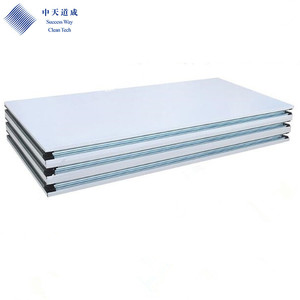
Between these double steel skins lies a high-pressure injected polyurethane (PU) rigid foam core with an optimal closed-cell content exceeding 95%. Formulated at an industry-leading density of 45–48 kg/m³, this core is completely free of CFCs and HCFCs. The automated continuous lamination line guarantees continuous structural bonding between the steel skin and the polyurethane matrix, eliminating panel delamination under extreme thermal cycling—a frequent affliction in northern Nigerian regions like Kano and Maiduguri where diurnal ambient temperatures swing by over 25°C within twelve hours. The resulting panel assembly achieves an exceptional thermal conductivity rating of λ = 0.022 W/(m·K), yielding an installed door assembly U-value as low as 1.10 W/(m²·K). For temperature-sensitive cold storage warehouses and pharmaceutical facilities in Nigeria, this thermal barrier drastically curbs thermal bridging, cutting facility HVAC refrigeration load by up to 34% compared to non-insulated commercial shutters.
From coastal maritime corridors to high-dust inland manufacturing dry ports, our sectional overhead doors are adapted to local climatic, mechanical, and logistical realities.
In high-throughput intermodal freight terminals, port logistics facilities, and customs bonded warehouses around the Lekki Deep Sea Port and Apapa, our doors feature reinforced heavy-gauge structural tracks and marine-grade anti-corrosive hardware. Continuous EPDM weatherstripping blocks high-salinity coastal spray, preventing rust propagation while maintaining swift loading dock turnarounds.
In Ogun State (Agbara, Sagamu) and Ikeja, food, beverage, and consumer goods manufacturers require hermetic temperature isolation. Our 50mm thermal break sectional doors integrate seamlessly with inflatable dock seals and hydraulic dock levelers, locking in chilled air, eliminating condensation, and preventing pest entry in GMP and HACCP compliant operations.
Heavy engineering workshops across Port Harcourt, Warri, and Onne handle corrosive vapors, abrasive blasting particulates, and high mechanical shock. We configure explosion-proof (ATEX-rated) motor drive systems, Class 4 wind-load reinforcement struts, and high-impact lower panel sections capable of withstanding heavy material handling traffic.
Across Kano, Kaduna, and Jos, dry-port facilities and agricultural processing centers face seasonal Harmattan winds bearing dense airborne silt. Our double-lip Santoprene side and lintel seals provide an airtight seal against particulate infiltration, protecting stored grains, machinery, and electrical control switchgear from microscopic abrasive wear.
Structural transformation driven by AfCFTA logistics expansion, agro-industrial processing zones (SAPZ), and power-resilient warehouse automation.
The implementation of the African Continental Free Trade Area is transforming Nigeria into the premier transit transshipment hub for West and Central Africa. Modern Class-A logistics parks no longer tolerate slow, manual entrance barriers. Multinational logistics operators demand European CE certified automated sectional overhead doors capable of 40 to 60 operational cycles per hour, integrated with automated warehouse management systems (WMS) and optical safety sensors.
With billions of dollars invested in Special Agro-Industrial Processing Zones (SAPZ) across Oyo, Kaduna, Kano, Ogun, and Imo States, preventing post-harvest loss has emerged as a top national economic priority. Maintaining an unbroken cold chain requires loading portals with rigorous thermal sealing. CE-certified PU-insulated sectional doors act as thermodynamic shields, curtailing the thermal degradation typical of standard corrugated iron structures.
Because Nigerian industrial facilities depend heavily on hybrid microgrids combining solar PV, diesel generator sets, and intermittent national grid supplies, industrial operators cannot afford high inrush-current drive motors that trigger inverter trips. Our sectional doors feature Variable Frequency Drive (VFD) motors with soft-start and soft-stop algorithms, drawing minimal starting amperage and effortlessly operating on backup solar batteries or generator power.
A detailed side-by-side engineering comparison between standard Nigerian commercial roller shutters and our European CE-certified industrial sectional overhead doors.
| Engineering Parameter | Conventional Nigerian Roller Shutter | CE Certified Heavy-Duty Sectional Door | Operational Impact in Nigeria |
|---|---|---|---|
| Panel Architecture | Single-skin 0.6–0.8mm corrugated steel slat | Double-skin 0.5mm Z275 steel + 42-50mm rigid PU core | High thermal barrier, structural rigidity, noise reduction |
| Thermal Transmittance (U-Value) | U ≈ 6.5 W/(m²·K) (Virtually zero thermal insulation) | U = 1.10 – 1.35 W/(m²·K) (Full thermal break) | Reduces warehouse HVAC & cold storage power cost by up to 34% |
| Corrosion Protection | Standard commercial paint over light electro-zinc (<60g/m²) | Hot-dip galvanized (275 g/m² Z275) + 25μm PVDF/Polyester | Prevents severe salt corrosion in Lekki, Apapa & Port Harcourt |
| Wind Load Rating (EN 12424) | Class 1 (< 66 km/h) — Prone to track blow-out | Class 3 to Class 4 (up to 120 km/h wind resistance) | Withstands extreme coastal monsoons and sudden storm fronts |
| Mechanical Safety Devices | None (Gravity fall risk upon chain or spring failure) | Spring Break Device (SBD) + Cable Break Device (CBD) | Eliminates catastrophic free-fall hazard, protecting personnel |
| Operational Lifespan | 10,000 – 15,000 cycles before fatigue rupture | 25,000 – 100,000 continuous industrial cycles | Triples the mean time between servicing; reduces plant downtime |
| Acoustic Isolation (EN 717-1) | R ≈ 14 dB (Rattles excessively under wind loads) | R ≈ 25 – 28 dB (Quiet nylon rollers with ball bearings) | Creates a low-noise, vibration-free factory environment |
| Motor & Drive Integration | Basic single-phase chain motor (High inrush current) | VFD 3-phase/single-phase drive with soft start/stop & UPS | Zero inverter overload trips on diesel generators or solar microgrids |
Direct technical, customs, regulatory, and mechanical answers addressing the top concerns of Nigerian EPC contractors, structural engineers, and facility owners.
All our industrial access equipment, structural steel products, and sandwich panels fully satisfy the Standards Organisation of Nigeria Conformity Assessment Programme (SONCAP). Because our doors are manufactured under strict European harmonized standards (CE EN 13241-1) and ISO 9001:2015 quality control protocols, we easily provide comprehensive Product Certificates (PC) and facilitate the final SONCAP Certificate (SC) required by the Central Bank of Nigeria (CBN) for Form M processing and customs clearance at Tin Can Island, Apapa, or Onne Ports.
Our industrial drive systems are built specifically with high-tolerance electrical switchgear engineered for unstable industrial power environments. Featuring wide-voltage motor coils (rated 380V–415V ±15% for 3-phase or 220V–240V ±15% for single-phase) and integrated intelligent Variable Frequency Drives (VFD), they prevent motor burnout during sudden voltage drops or generator cutovers. In the event of a total blackout, every door is equipped with a floor-level mechanical emergency manual chain hoist and an optional 24V DC battery backup power pack.
For coastal industrial installations located within 20 kilometers of the Atlantic Ocean, we specify an elevated metallurgical defense: panels feature Z275 hot-dip galvanization with a minimum 25-micron PVDF finish coat. Vertical and horizontal guide tracks are fabricated from 2.0mm thick heavy hot-dip galvanized steel, and the side hinges, roller brackets, and fasteners are supplied in either heavy zinc-flake coated steel (rated for 1,000+ hours salt spray test) or marine-grade AISI 304/316 stainless steel to eliminate galvanic oxidation.
Yes. Backed by our extensive in-house pre-engineered steel structure manufacturing division, we provide complete structural coordination. We supply custom wind-resisting jamb sub-framing, header bracing beams, track suspension brackets, and color-matched flashing profiles. Our structural engineering department coordinates directly with your local civil contractors or PEB suppliers, providing CAD/BIM shop drawings, anchor bolt layouts, and point-load structural calculation sheets prior to container dispatch.
Doors are crated in export-grade reinforced fumigated wooden cases with individual panel protective film, edge protectors, and vapor-barrier desiccant bags to prevent moisture damage during sea transit. Typical factory production requires 15 to 25 days depending on project size. Sea freight from factory ports to Lagos (Apapa/Lekki) or Onne typically ranges from 28 to 38 days. We provide comprehensive export documentation including Clean Report of Inspection (CRI), Bill of Lading, Commercial Invoice, Packing List, and SONCAP documentation.
Safety is our primary engineering requirement under CE EN 12604. Every sectional overhead door we supply includes two mechanical safety brakes as standard: an integrated Spring Break Device (SBD) that mechanically locks the torsion shaft within 4mm of travel if a spring fractures, and a bottom-bracket Cable Break Device (CBD) featuring hardened steel eccentric wedges that bite directly into the vertical guide track if cable tension drops, arresting panel drop instantly.
Selecting an access equipment and industrial building partner for large-scale infrastructure investments in Nigeria requires rigorous verification of manufacturing pedigree, quality control systems, and structural engineering depth. Our enterprise has operated continuously since 2010, expanding from a specialized pre-engineered steel structure fabricator into an international powerhouse delivering pre-engineered industrial buildings, high-performance insulated sandwich panels (EPS, PU, and mineral Rock Wool cores), and CE certified automated portal systems.
With an engineering team exceeding 100+ dedicated design engineers, structural fabricators, and certified technical specialists, our organization has successfully delivered over 352 completed capital projects for more than 120 multinational industrial corporate clients. Our comprehensive capability spans the full project lifecycle: architectural concept analysis, structural load calculation to BS 5950 and Eurocode standards, in-house roll forming and robotic welding, polyurethane continuous chemical foaming, rigorous pre-dispatch factory testing, and export container consolidation designed to minimize marine freight volume while safeguarding critical mechanical assemblies.
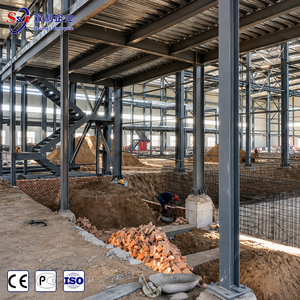
By delivering a unified turnkey scope—seamlessly integrating the primary steel frame, open-web joists, composite floor decking, insulated wall cladding, cleanroom partitioning, and automated CE sectional overhead doors under a single accountable contract—we completely eliminate the catastrophic interface misalignments, track clashing, and split contractual disputes that frequently plague Nigerian industrial construction sites. Every sectional door frame, bracket, seal, and drive unit arrives with detailed shop drawings, marked installation guides, and complete certification records, ensuring rapid and straightforward erection by local mechanical teams or supervised site crews.
Consult with our senior industrial access engineers today for complete technical proposals, custom wind-load calculations, CE/SONCAP compliance documentation, and competitive export pricing for your warehouse, logistics hub, or factory development.
Get a Quote