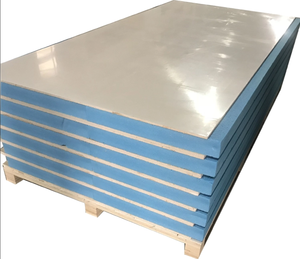
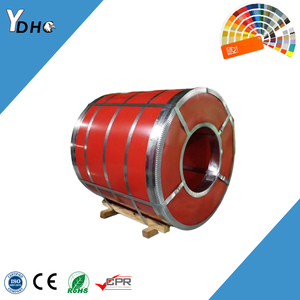
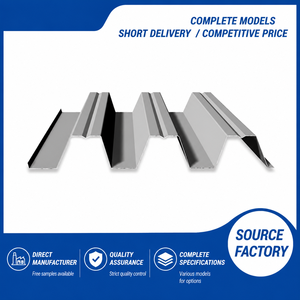
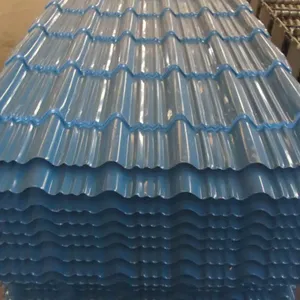
Explore our rigorously inspected, CE-aligned insulated building components, pre-engineered structural steel systems, and exterior architectural envelopes manufactured for rapid installation and maximum thermal efficiency.
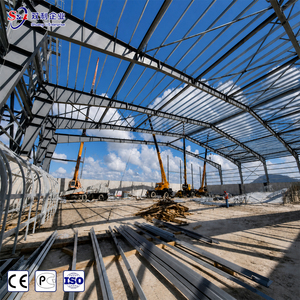
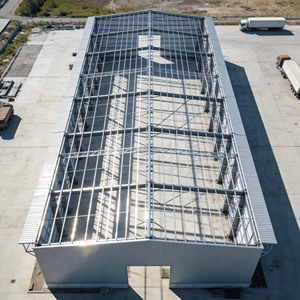
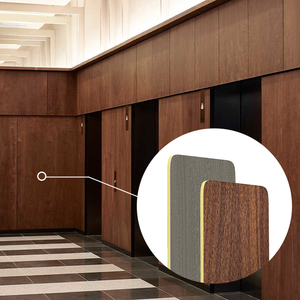
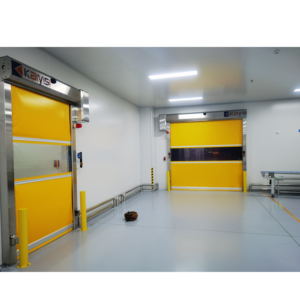
Delivered Industrial Projects
Years Manufacturing (Since 2010)
Engineers & Erection Experts
Corporate & Global EPC Clients
In modern industrial architecture and temperature-critical logistics facilities, the exterior envelope is no longer a simple weather shield. It acts as an engineered thermodynamic boundary directly governing operating expenditures (OPEX), carbon emissions, fire safety liabilities, and structural lifespan. Polyisocyanurate (PIR) cores represent the pinnacle of thermosetting polymer insulation technology. Unlike conventional Polyurethane (PUR), PIR is formulated through the trimerization of polymeric methylene diphenyl diisocyanate (pMDI) and specialized polyester polyols at high isocyanate index ratios (typically exceeding 250 to 300). This molecular reaction yields highly stable, thermally resistant six-membered isocyanurate ring structures that resist pyrolysis up to 350°C.
When selecting building envelope materials, procurement officers and structural engineers must evaluate core materials across thermodynamic stability, load-bearing capability, moisture resistance, and fire response. The table below outlines empirical performance metrics across primary industrial cores:
| Insulating Core Material | Thermal Conductivity (λ Value) | Euroclass Reaction to Fire | Nominal Core Density | Closed-Cell Content | Structural Span Capacity |
|---|---|---|---|---|---|
| Continuous PIR (Polyisocyanurate) | 0.020 – 0.022 W/m·K | B-s1, d0 / B-s2, d0 | 40 – 42 kg/m³ | > 95% | High (Up to 6.5m without intermediate purlins) |
| Standard PUR (Polyurethane) | 0.024 – 0.026 W/m·K | B-s3, d0 / C-s3, d0 | 38 – 40 kg/m³ | > 90% | Moderate (Up to 5.0m depending on gauge) |
| Structural Mineral / Rock Wool | 0.038 – 0.044 W/m·K | A1 / A2-s1, d0 | 100 – 140 kg/m³ | Open Fibrous Matrix | Moderate (High dead load burden on frames) |
| EPS (Expanded Polystyrene) | 0.035 – 0.040 W/m·K | E / F (Combustible) | 15 – 20 kg/m³ | Sintered Beads | Low (Requires continuous support purlins) |
Sandwich panels operate mechanically as composite beams: the high-tensile outer steel skins (typically 0.45mm to 0.70mm PPGI/PPGL) absorb compressive and tensile bending stresses, while the rigid PIR foam core resists transverse shear forces. Under cyclic positive wind pressure and negative uplift vacuums, certified PIR panels prevent skin wrinkling (face yielding) and core shear failure through micro-porous adhesion verified via automated 40-meter continuous lamination processes. This structural synergy allows architects to widen purlin spans, drastically trimming structural steel tonnage in Pre-Engineered Building (PEB) frameworks.
How international industrial developers, cold chain operators, and EPC contractors are reshaping specifications to secure supply chain resilience, carbon compliance, and lower life-cycle cost.
European and North American buyers are strictly requiring third-party verified Environmental Product Declarations (EPDs). Procuring factories must demonstrate low embodied-carbon steel skins and HFO/Pentane blowing formulations that yield zero Ozone Depletion Potential (ODP=0) and Global Warming Potential (GWP < 1).
The rapid expansion of pharmaceutical and frozen food cold chains demands panel joints engineered to negative tolerances. Sourcing protocols now favor double labyrinth tongue-and-groove systems with factory-injected continuous neoprene vapor barriers that eliminate thermal bridging at -30°C operation.
Global procurement teams are discarding disjointed multi-vendor purchasing. Specifiers are shifting towards vertically integrated manufacturers capable of fabricating structural primary/secondary steel, profiling matching flashings, and supplying custom-cut CE panels under one unified technical warranty.
Technological advancement in PIR manufacturing is driven by chemistry enhancements, digital continuous production lines, and architectural versatility. Leading exporters are implementing breakthrough systems that elevate panel durability under harsh climates:
Novel core chemistry integrates bio-succinic acid and recycled PET polyester polyols, dropping petrochemical consumption by up to 28%. Concurrently, micro-encapsulated phosphorus flame retardants eliminate toxic halogenated compounds while maintaining B-s1, d0 smoke suppression.
Architectural facade engineering utilizes concealed fastener joints with deep interlocking male-female connections. This eliminates through-fastener thermal leaks, reduces moisture ingress to zero under 1200 Pa driving rain tests, and preserves clean building facades.
Modern production facilities utilize high-speed continuous double-caterpillar laminators exceeding 40 meters in length. Controlled temperature zones ensure homogeneous foam expansion, pore uniformity (>95% closed cell), and absolute skin adhesion preventing micro-delamination.
Founded in 2010 in Dhaka under the steadfast motto “Your Future in Your Home”, Joint Star Steel Structure Ltd. has established an unyielding benchmark in pre-engineered steel buildings (PEB) and high-performance sandwich panel production.
We solve the critical challenge faced by international buyers: interface risk between steel fabricators and panel cladders. By controlling 100% of the value chain — from primary structural beam cutting, sub-arc welding, and purlin roll-forming to PIR insulated panel fabrication and complete erection consultancy — we guarantee that every bolt, joint, panel tolerance, and flashing aligns flawlessly on site.

Direct engineering answers addressing compliance, testing, joint geometry, thermal performance, and global shipping protocols.
Our continuous-line PIR sandwich panels are tested and certified according to the European standard EN 13501-1, reaching reaction-to-fire class B-s1, d0 or B-s2, d0. The “B” designation verifies very limited contribution to fire and superior self-extinguishing behavior without flame spread; “s1” denotes the highest smoke control rating with virtually zero dense toxic smoke generation; and “d0” certifies that no flaming droplets or particles fall from the burning panel during extreme thermal exposure. For dedicated 2-hour or 4-hour structural firewalls, we also supply rock wool core systems with A1/A2 non-combustible ratings.
Polyisocyanurate foams exhibit a closed-cell content exceeding 95%. During foaming, low-conductivity cyclopentane is encapsulated within micro-cells. To account for potential gas diffusion over time, our certified panels are declared under aged lambda values per EN 13165 (λdeclared = 0.020 – 0.022 W/m·K). Because our steel facings (0.5mm – 0.7mm PPGI/PPGL) serve as impermeable vapor barriers, core gas exchange is virtually blocked, preventing moisture absorption and insulation drift even across 30+ year service lives.
For medium-temperature cold storage (0°C to +4°C), a 100mm PIR panel is standard. For deep-freeze warehouses operating at -18°C to -30°C, we engineer 150mm to 200mm PIR panels featuring a double or triple interlocking labyrinth tongue-and-groove profile. This joint configuration integrates factory-applied non-hardening butyl or closed-cell EPDM seals on both cold and warm faces to eliminate vapor transmission, icing, and frost heave.
Yes. Operating since 2010 with over 100 in-house engineers and specialists, we provide complete design packages including structural steel analysis (STAAD.Pro, Tekla Structures), wind load resistance calculations, sandwich panel span-load charts, anchor bolt foundation layout drawings, and bill of quantities (BOQ). We tailor every calculation package to regional codes including Eurocodes, AISC, and the Bangladesh National Building Code (BNBC).
All exported sandwich panels are covered with a protective UV-resistant PE film (50–70 microns) on both metal skins. Bundles are packed with high-density EPS corner buffers, wrapped in waterproof stretch wrap, and stacked on customized wooden/steel dunnage palettes that allow smooth forklift and container loading. We verify bundle height against 40ft High Cube (HC) internal container dimensions to ensure sea transit stability without compression deformation or edge damage.
Yes. Our corrugated structural PIR roof panels feature elevated crowns engineered to accept direct standing seam clamps or self-tapping bracket systems without penetrating the lower waterproof core layer. When solar arrays are planned, our engineering team recalculates the dead load, purlin spacing, and wind-uplift resistance to ensure the total structural envelope easily accommodates the specified photovoltaic system.
Whether you require CE-certified PIR sandwich panels for a high-efficiency cold chain facility, prefabricated clear-span steel warehouse frameworks, or turnkey EPC building solutions, our engineering team is ready to prepare a competitive technical proposal and bill of materials.