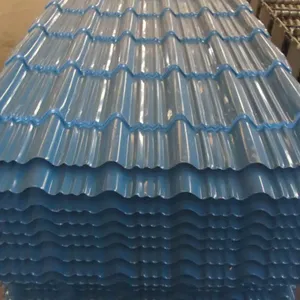
Corrosion Proof Enclosure

Precision-manufactured building envelopes and heavy-duty closure hardware for Northern European logistics hubs, cold-storage warehouses, and industrial production facilities.
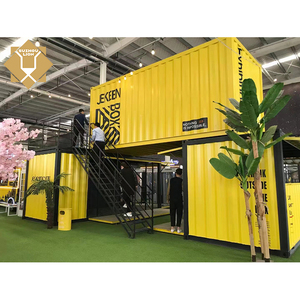
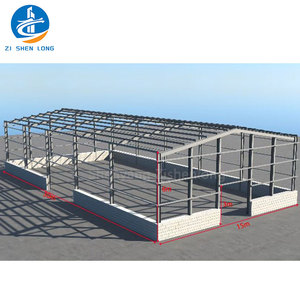
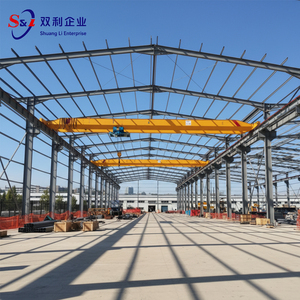
The Free and Hanseatic City of Hamburg represents the beating logistical heart of Northern Europe. As Germany's maritime gateway connecting Scandinavia, Central Europe, and global ocean routes, Hamburg's infrastructure is subject to demanding environmental and operational criteria. Facilities surrounding the Port of Hamburg—from the container hubs of Waltershof and Altenwerder to the manufacturing belts of Billbrook and Harburg—operate under severe maritime climatic conditions characterized by salty Elbe river moisture, relentless seasonal storm gales, and round-the-clock throughput schedules.
For Hamburg logistics engineers, technical facility managers, and commercial building contractors, an industrial shutter door is far more than a simple closure mechanism. It serves as an active barrier against high convective energy losses, a safety boundary meeting strict statutory DIN EN standards, and a critical control point for high-speed automated material handling. Sourcing industrial shutter doors and integrated steel envelope systems directly from leading Chinese original equipment manufacturers (OEMs) has transitioned from an opportunistic cost-reduction tactic to a sophisticated, value-engineered procurement strategy.
"In coastal Northern Germany, building openings account for up to 34% of unwanted heat dissipation in logistics buildings. By implementing high-speed spiral doors with polyurethane thermal-break slats certified to DIN EN 12424 Wind Class 4, operators reduce HVAC operational overhead while upholding high dock turnover."
By bypassing multiple intermediary markups and collaborating straight with audited Chinese manufacturing leaders, European procurement directors achieve tailored industrial architectural envelopes, custom motorizations, and enhanced anti-corrosive finishes built to German statutory thresholds at unmatched capital return.
Evaluating architectural door designs according to the unique geographic, thermal, and regulatory operating environments of Hamburg's commercial districts.
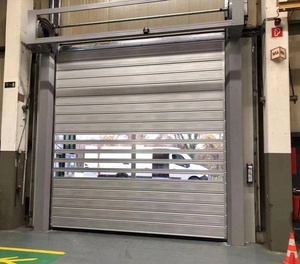
Automated intermodal freight hubs require doors capable of over 300,000 cycles annually with operating speeds reaching 2.5 m/s. High-speed aluminum spiral hard doors maintain internal climates, resist North Sea wind gusts, and eliminate truck queue bottlenecks at cross-docking distribution platforms.
Handling temperature-sensitive imports such as fruits, seafood, and pharmaceuticals demands strict compliance with European cold chain norms. High-density PU-insulated rolling shutters and composite sandwich panel cold storage doors prevent condensation, stop frost formation, and preserve thermal integrity.
Maintenance hangars and air freight terminals demand large-span clear openings exceeding 12 meters in width. Reinforced galvanized composite steel rolling doors provide structural integrity under negative pressure conditions while meeting stringent German fire compartmentation standards.
Compact industrial estates subject to German TA Lärm (Technical Instructions on Noise Abatement) require sound-attenuating acoustic industrial shutters. Our double-skinned mineral wool and acoustic foam infill designs dampen mechanical noise from manufacturing plants adjacent to residential quarters.
Evaluating engineering performance across primary industrial door categories for Northern European logistics facilities.
| Performance Parameter | High-Speed Spiral Hard Door | Insulated PU Roller Shutter | Sectional Overhead Door | PVC Rapid Fold Door |
|---|---|---|---|---|
| Opening Velocity | Up to 2.5 m/s (Inverter Driven) | 0.20 – 0.35 m/s | 0.25 – 0.40 m/s | 1.0 – 1.8 m/s |
| Wind Resistance (DIN EN 12424) | Class 4 to 5 (> 133 km/h) | Class 3 to 4 (> 110 km/h) | Class 3 (> 90 km/h) | Class 2 (> 60 km/h) |
| Thermal Insulation (U-Value) | 0.85 – 1.2 W/m²K (PU-Foam Slat) | 1.1 – 1.6 W/m²K | 0.9 – 1.3 W/m²K | 4.5 – 5.8 W/m²K (Uninsulated) |
| Acoustic Isolation (DIN EN 717-1) | 24 – 28 dB(A) | 22 – 26 dB(A) | 25 – 30 dB(A) | 12 – 15 dB(A) |
| Service Life Cycle Expectancy | 1,000,000+ Cycles | 250,000 Cycles | 150,000 Cycles | 500,000 Cycles |
| Anti-Corrosion Surface Finish | Anodized Aluminum / C5-M Coating | Galvanized & Fluorocarbon Coated | Zinc-Plated Coil Coat | Powder Coated Frame |
| Ideal Hamburg Application | Port Container Terminals, High Frequency | Heavy Storm-Facing Warehouses | Standard Loading Bays | Internal Partitioning, Clean Rooms |
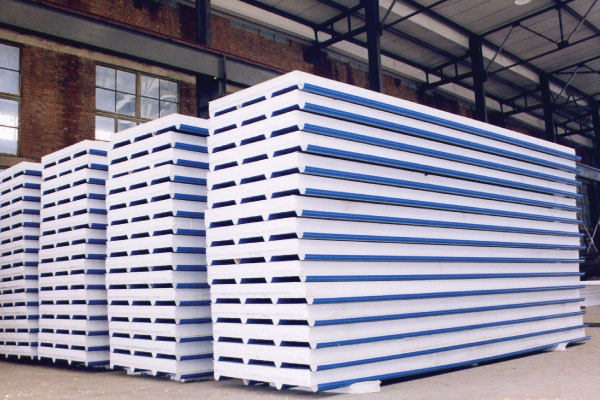
German energy efficiency regulations have become progressively tighter under the Building Energy Act (Gebäudeenergiegesetz - GEG). Commercial warehouses in Hamburg can no longer rely on uninsulated, slow-moving metal shutters that create thermal drafts and strain warehouse heating systems. The modern standard demands composite insulated laths featuring polyisocyanurate (PIR) or high-density polyurethane (PU) injection, creating an unbroken thermal seal along the door perimeter.
Concurrently, automated material handling in Hamburg's state-of-the-art logistics properties involves autonomous mobile robots (AMRs) and automated guided vehicles (AGVs). These intelligent logistics networks require doors with fieldbus communication interfaces (Profinet, Modbus-TCP, and Ethernet/IP). Our high-speed spiral doors are engineered with smart PLC controllers, dynamic optical light curtains (DIN EN 12978), and integrated radar presence detection that sync seamlessly with enterprise warehouse management systems (WMS).
From an ESG (Environmental, Social, and Governance) framework, reducing lifecycle carbon footprints is a primary requirement for German commercial developers seeking DGNB or LEED Platinum building certification. Our closed-loop aluminum extrusion recycling and low-energy frequency-inverter drives significantly cut operational kilowatt-hours over the door's mechanical lifespan.
Combining over 15 years of large-scale manufacturing excellence with end-to-end quality control, from raw metallurgy to direct ocean delivery at the Port of Hamburg.
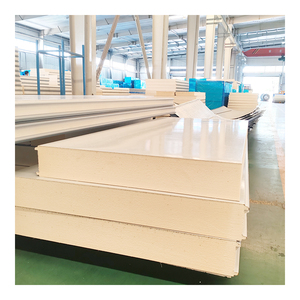
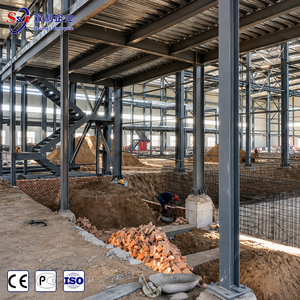
Unlike single-line door workshops, our factories manufacture structural steel frames, sandwich panel cladding, and industrial door solutions in unified production plants. This integrated approach ensures matched thermal tolerances, accurate framing connections, and streamlined onsite erection without architectural interface clashes.
Every industrial shutter batch undergoes automated continuous run-in tests (5,000 unbroken cycles pre-shipment), ultrasonic weld integrity inspections, slat tension load verification, and electronic safety curtain calibration before shipping container pack-out.
We pack doors in customized steel-reinforced timber crates, palletized for direct uncrating into warehouse door structural framing. Goods ship via direct container freight lines straight into HHLA Container Terminals (CTA/CTB) with streamlined customs paperwork (Eur-1, CE conformity, packing lists, and bill of ladings).
Clear answers addressing regulatory standards, lead times, wind resilience, and spare parts supply for Hamburg commercial buyers.
Yes. All industrial doors manufactured for the European Union market are engineered and verified in accordance with harmonized European standard DIN EN 13241-1 (Industrial, commercial, garage doors and gates - Product standard, performance characteristics).
Our product dossiers include Declarations of Performance (DoP), validated thermal transmittance calculations, fall-back safety catch certifications according to DIN EN 12604, and safety sensor loop conformity according to DIN EN 12978. Technical files are prepared for verification by German building control authorities (Bauaufsichtsbehörden).
Hamburg falls within ISO 12944 atmospheric corrosivity category C4 (Industrial/Marine) to C5-M (Coastal/Offshore with high salinity). To eliminate red rust and galvanic corrosion, our slats undergo continuous hot-dip galvanization with a minimum zinc coating weight of Z275 (275 g/m²) followed by a 25-micron fluorocarbon (PVDF) or polyurethane-polyamide anti-corrosion coil coating.
For high-speed spiral doors, slats are extruded from marine-grade 6063-T6 aluminum alloys and finished with an anodized layer of 15–20 microns or customized electrostatic powder coating. Guide rails and bottom structural retainers are fabricated from AISI 304 or 316 stainless steel to prevent rust creep at floor moisture levels.
Under DIN EN 12424, wind loads on external building components in Hamburg are categorized into Wind Zone 3 and Zone 4 according to DIN EN 1991-1-4 (Eurocode 1). Our industrial rolling doors are engineered with internal reinforcement struts, articulated wind-hooks, and heavy-walled track profiles achieving verified Class 4 (differential pressure up to 1000 Pa, resisting gale winds over 133 km/h) and Class 5 on reinforced clear spans up to 8.5 meters.
Standard custom door production cycles range between 18 to 25 business days from final technical drawing approval. Ocean transit from major Chinese export terminals (Shanghai, Ningbo, or Qingdao) directly to the Port of Hamburg (Waltershof / CTA) averages 28 to 34 days via primary carrier routes.
For urgent retrofit schedules, we offer fast-track sea-rail multi-modal delivery options, as well as air freight dispatching for mission-critical motors, drives, and electronic controls.
We supply modular, non-proprietary automation components. Our drive systems utilize internationally standardized electric motors (such as SEW-Eurodrive compatible footprints or integrated German-engineered drive heads), high-grade GfA Elektromaten compatible gearboxes, and open-architecture inverter drives.
Every commercial order includes a 2% spare consumable kit (endlocks, guide rollers, sealing gaskets, and optical safety eyes). Replacement slats and mechanical assemblies are packed with clear part-number barcoding for quick identification. We provide direct factory engineering telemetry and remote technical diagnostics within 4 hours during European working shifts.
Connect directly with our senior structural and mechanical engineering team. Share your architectural drawings, aperture dimensions, wind load criteria, and thermal targets to receive a competitive technical proposal, verified static calculations, and factory-direct export pricing straight into Hamburg.