Galvanized C Purlin Manufacturer & Supplier for Istanbul

High-Tensile Cold-Formed Structural Profiles Engineered for Marmara's Marine Corrosion, Seismic Zone 1 Demands, and Advanced Industrial Architecture.
Integrated Envelope & Framing Solutions

Compatible Structural Steel Systems & Cladding Components

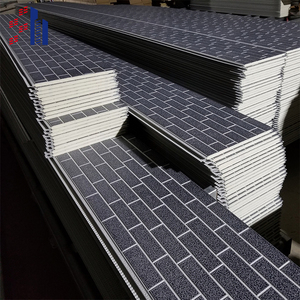
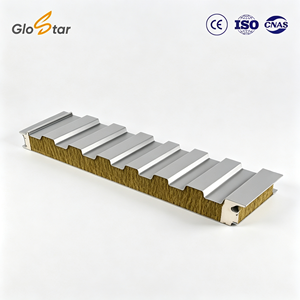
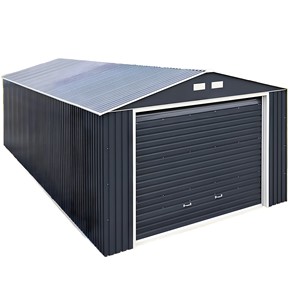
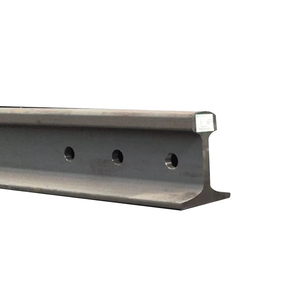
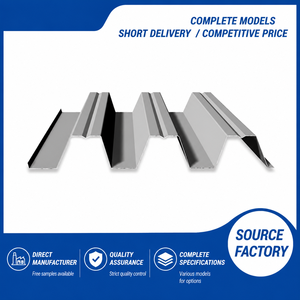
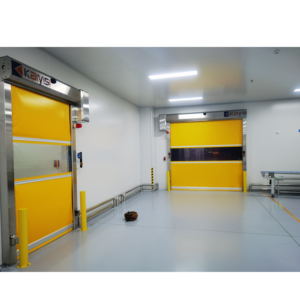
To optimize structural dead weight, thermal envelope efficiency, and fire safety ratings, our galvanized C purlins interface seamlessly with our full spectrum of modular industrial building components.
352+
Engineered Projects Built
120+
Tier-1 Industrial Clients
2010
Established Operational Roots
100+
In-House Engineers & Specialists

Cold-Formed Galvanized C Purlins in Modern Industrial Structural Engineering

In the structural engineering domain of modern industrial architecture, secondary framing accounts for up to 35% of total steel structure weight while directly dictating roof diaphragm stability, purlin-to-rafter force transfers, and exterior envelope integrity. Galvanized C Purlins (also recognized under Turkish technical designations as C-Aşık Profili or Hafif Çelik C Kesitler) serve as critical horizontal load-bearing members that transfer roof dead loads, snow accumulation, wind uplift pressures, and suspended utility arrays straight into primary portal frames or reinforced concrete rafters.

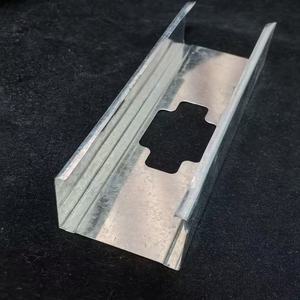
Unlike conventional hot-rolled structural steel shapes like UPN channels or IPE beams, cold-formed galvanized C purlins are fabricated from continuous hot-dip galvanized steel coils (yielding structural grades S280GD, S320GD, S350GD, and up to ultra-high tensile S550GD in accordance with EN 10346). Through cold continuous roll-forming lines, the flat sheet metal transitions into an engineered C-profile featuring inward returned lip stiffeners. These precise edge lips substantially increase the moment of inertia along the major flexural axis ($I_x$) and counteract local plate buckling phenomena under sustained compressive stress.

Our manufacturing protocol guarantees strict dimensional tolerances conforming to EN 10162 and structural verification based on Eurocode 3 (EN 1993-1-3: Cold-formed members and sheeting). By cold-rolling high-yield structural coils, we achieve a material strength-to-weight ratio that permits building designers to reduce overall structural superstructure self-weight by 35% to 50% compared to traditional hot-rolled profiles. This massive mass reduction yields exponential savings in primary frame tonnage, foundation footings, and baseplate anchorage requirements—a factor of paramount importance across the seismically active Marmara basin.

Engineered Section Properties: Standard Galvanized C-Purlin Profiles

Profile Designation (Depth × Flange × Lip) Gauge Thickness (mm) Cross-Sectional Area (cm²) Nominal Weight (kg/m) Major Inertia $I_x$ (cm⁰) Yield Strength $f_y$ (MPa) Standard Zinc Mass (g/m²)
C 100 / 50 / 15 1.50 - 2.50 3.15 - 5.08 2.47 - 3.99 51.2 - 79.4 S320GD / S350GD Z275 / Z350
C 150 / 65 / 20 1.50 - 3.00 4.50 - 8.64 3.53 - 6.78 162.4 - 296.8 S350GD Z275 / Z450 / Magnelis
C 200 / 70 / 20 2.00 - 3.20 7.22 - 11.26 5.67 - 8.84 420.5 - 634.2 S350GD / S550GD Z275 / Z450 / ZM310
C 250 / 80 / 25 2.00 - 3.50 8.82 - 15.02 6.92 - 11.79 812.0 - 1345.6 S350GD / S550GD Z275 / Z450
C 300 / 100 / 30 2.50 - 4.00 13.25 - 20.80 10.40 - 16.33 1780.4 - 2710.2 S350GD / S550GD Z275 / Z450 / ZM310

*Custom flange widths (40mm to 100mm), web depths (80mm to 400mm), stiffener return angles, and automated CNC slotted hole patterns (Ø14mm, Ø18mm, oblong 14×25mm) are produced to millimetric precision based on project structural shop drawings.

Localized Application Framework

Structural Deployments Across Istanbul & Marmara Logistics Corridors

From coastal humidity to extreme seismic shear demands, Istanbul presents distinct engineering challenges. Here is how our galvanized C purlin profiles excel in local operating environments.

Tuzla & Gebze Heavy Industrial Corridors

Heavy manufacturing, metalworking, and chemical production zones in Tuzla Organized Industrial Zone (OSB) and neighboring Gebze Dilovası contend with severe industrial atmospheric pollution combined with high ambient humidity from the Gulf of İzmit (Corrosivity category C4/C5-M per ISO 12944-2). Our high-coating-weight galvanized C purlins (Z350 to Z450 g/m² or Zinc-Aluminum-Magnesium alloys) provide barrier and galvanic protection against sulfurous airborne acids, preventing premature micro-pitting along purlin connection flanges.

Northern Marmara Logistics & Airport Cargo Hubs

E-commerce mega-fulfillment centers, customs warehouses, and multimodal logistics parks around Arnavutköy, Çatalca, and Hadımköy encounter intense northern wind loads originating from the Black Sea (Poyraz). Our deep-web C250 and C300 purlins deliver superior section modulus against negative wind uplift forces without excessive mid-span deflection, maintaining complete airtight joint sealing for insulated composite roof sandwich panels.

Urban Transformation & Industrial Mezzanines

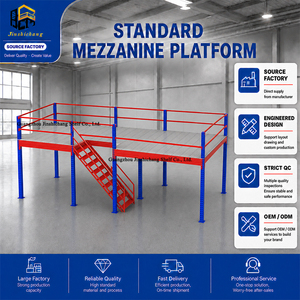
Istanbul's municipal urban regeneration (Kentsel Dönüşüm) across İkitelli OSB, Dudullu, and Beylikdüzü frequently demands lightweight interior floor framing to create high-density warehouse storage without exceeding existing building column loads. Our galvanized C-sections serve as high-capacity secondary mezzanine floor joists supporting open composite steel floor deck systems, maximizing internal clear height while ensuring structural fire resistance.

Seismic Engineering & Regulatory Trends in the Marmara Industrial Zone

Istanbul's geographic position straddling the active North Anatolian Fault (Kuzey Anadolu Fay Hattı) places its industrial superstructure under rigorous seismic safety protocols. Following the enactment of the Turkish Building Earthquake Code (TBDY 2018), structural engineering firms and general contractors in Istanbul are prioritizing seismic mass reduction, diaphragm stiffness, and non-linear dynamic drift control.

Galvanized cold-formed C purlins play an instrumental role in seismic mitigation strategies:

  • Minimization of Roof Mass: Under horizontal seismic acceleration ($S_{DS}$ and $S_{D1}$ spectral response factors), the total inertial base shear force acting upon a steel warehouse is directly proportional to roof dead weight. Replacing hot-rolled IPE 180 purlins (~18.8 kg/m) with high-strength cold-formed C 200/2.0mm purlins (~5.67 kg/m) cuts roof framing self-weight by roughly 70%, lowering lateral earthquake forces transmitted to foundation pilings.
  • In-Plane Diaphragm Action: When paired with profiled steel decking or fire-rated sandwich panels, galvanized C purlins serve as structural chord members and collector elements. Through calibrated diagonal tension rod bracing or fly-bracing (Kuşaklama) connected to the purlin bottom flange, lateral stability is maintained during major ground motion events.
  • Solar PV Retrofitting Trends (GES Entegrasyonu): Driven by Turkey's renewable energy initiatives and industrial self-consumption regulations, thousands of industrial facilities in Hadımköy, Dilovası, and Çorlu are converting warehouse rooftops into solar photovoltaic power stations. Retrofitting PV arrays adds an average dead load of 12 to 18 kg/m². Our engineering team designs C purlin layouts with augmented cold-formed thicknesses (2.5mm - 3.0mm) and optimized continuous spans, permitting dual-purpose support for both roof sandwich panels and high-efficiency solar racking systems without requiring structural strengthening later.
  • Adoption of High-Yield Low-Alloy Steels: Modern manufacturing in Istanbul is moving rapidly toward high-yield steel coils conforming to EN 10346 S420GD and S550GD. These grades allow structural engineers to specify thinner cross-sections while handling elevated bending moments, lowering lifecycle carbon footprints and import shipping costs.
Proven Manufacturing Authority

Why Istanbul Procurement Teams & Fabricators Rely on Our Supply Chain

With operational origins established in 2010 and over 352 successful industrial projects executed, our integrated engineering, roll-forming, and export packaging offer verifiable reliability.

Automated CNC Punching & Precision Roll-Forming

Our manufacturing plant operates high-speed multi-station cold roll-forming lines integrated with automated in-line CNC hydraulic punching units. We punch pre-engineered web holes, slotted clearance holes for cleat connection brackets, and flange penetrations at exact millimetric intervals, eliminating manual cutting, reaming, or drilling on Istanbul jobsites.

Optimized Ocean & Road Multimodal Logistics

Nested C-profile bundle packaging optimizes container volume for deep-sea freight routed directly to Istanbul's deep-water ports (Kumport, Marport, Mardas at Ambarlı Port Complex on the European side, or Haydarpaşa on the Asian side). We apply waterproof anti-humidity vapor barrier wrapping and timber skid bracing to prevent transit white rust corrosion during maritime transit.

End-to-End Single-Contract Scope

Leveraging 15+ years of engineering capability since 2010, our scope is not limited to bare steel rolling. We supply fully integrated building solutions—combining C purlins, galvanized open composite deck sheets, mineral wool fireproof panels, and secondary hardware under a single, accountable international commercial contract.

Technical Procurement Guide

Frequently Asked Questions for Istanbul Project Managers & Buyers

Critical engineering, compliance, and customs details regarding the procurement and site installation of cold-formed galvanized C purlins in Turkey.

What steel grades and zinc coating thicknesses are recommended for Istanbul industrial installations?
For general warehouse and industrial construction in inland Istanbul zones (e.g., Hadımköy, İkitelli, Çorlu), we supply S350GD + Z275 (minimum 275 g/m² total two-sided zinc coating mass, providing approximately 20 microns of sacrificial zinc per side). For coastal areas subject to maritime salinity (Tuzla naval shipyard zone, Pendik coastal belt, Ambarlı port terminals), we strongly advise specifying Z350, Z450, or proprietary Zinc-Aluminum-Magnesium (ZM) alloy coatings. ZM coatings deliver up to three times the corrosion resistance of standard pure zinc coatings in coastal chloride environments, preventing red rust formation at sheared cut edges through self-healing passivation chemistry.
How do C purlins compare with Z purlins for roof structures in Turkey?
Both C and Z purlins are cold-formed profiles, but their structural kinematics differ significantly. Z purlins possess asymmetric principal axes of inertia, allowing them to nest and overlap at intermediate rafter supports to form continuous multi-span beam systems. This makes Z purlins highly efficient for large-span portal frames where continuous beam action reduces peak mid-span bending moments. Conversely, C purlins are symmetric along their strong axis and inherently stable against lateral torsional roll during erection. They are simpler to detail at building end bays, gable walls, door and window framing, and interior floor mezzanines. C-profiles also facilitate flush connection details against wall girts and concrete spandrels. Many Istanbul engineers use continuous Z purlins across the primary roof slope while deploying C purlins for all perimeter eave struts, gable headers, wall girts, and framed openings.
Do your C purlins comply with Eurocode 3 (EN 1993-1-3) and Turkish Building Codes?
Yes. All cold-formed secondary members are engineered in strict alignment with EN 1993-1-3 (Eurocode 3: Design of steel structures – Cold-formed members and sheeting) and cross-verified against TBDY 2018 (Türkiye Bina Deprem Yönetmeliği) criteria. We supply complete 3.1 Mill Inspection Certificates (EN 10204 3.1) stating exact yield strength, ultimate tensile strength, elongation percentage, and chemical ladle analysis. Profile geometry and effective section modulus ($W_{eff}$) calculations consider distortional buckling, local buckling, and torsional-flexural buckling modes, ensuring full structural sign-off by municipal building inspection authorities (Yapı Denetim Firmaları) across Turkey.
What are standard lead times and delivery routes to Istanbul job sites?
Production turnaround typically requires 15 to 25 calendar days depending on tonnage and custom CNC punching requirements. Containerized cargo shipments are routed via direct ocean carrier services to Ambarlı Port (European side) or Haydarpaşa / Gebze ports (Asian side), with maritime transit times ranging between 22 and 30 days. For urgent construction schedules, expedited multimodal shipping combinations are available. Members arrive tagged, bundled, and accompanied by detailed packing lists matched to your structural erection sequencing plans.
Can you supply pre-punched C purlins matching our shop drawings?
Absolutely. Our manufacturing lines are equipped with programmable multi-axis CNC punching heads. We produce standard round bolt holes (Ø12mm, Ø14mm, Ø16mm, Ø18mm) and elongated slotted holes (e.g., 14×22mm or 18×26mm) along the web and flanges. Slotted holes are essential for absorbing thermal expansion/contraction across long industrial continuous spans and accommodating minor steel fabrication tolerances on site. Providing pre-punched members reduces site installation labor costs in Istanbul by up to 40% and completely prevents field zinc-coating damage caused by manual gas cutting or drill torches.
How do you prevent white rust during ocean transport to Turkey?
White rust (zinc hydroxide) forms when freshly galvanized steel is exposed to entrapped moisture in unventilated, oxygen-depleted environments. To ensure zero-defect arrival at Istanbul customs docks, we apply a high-grade surface passivation treatment (hexavalent-chromium-free eco-passivation or light chemical oiling). Furthermore, purlin bundles are tightly steel-strapped with heavy-duty plastic corner protectors, wrapped in high-density polyethylene (HDPE) vapor-barrier wraps, and elevated with desiccated wooden dunnage within sea containers to prevent condensation accumulation.
What documentation is provided for Turkish customs clearance?
We provide a comprehensive international export compliance dossier including Original Bill of Lading (B/L), Commercial Invoice, Packing List with detailed bundle mark breakdown, Certificate of Origin (COO), CE Declaration of Performance (DoP) under EN 1090-1 / EN 1090-2 execution standards, and EN 10204 3.1 Material Test Reports verifying mechanical tensile, yield, and zinc weight adherence. Our commercial documentation conforms completely with Turkish Customs Administration regulations (Gümrük Müsteşarlığı) and TAREKS safety certification protocols.
What spans are achievable with cold-formed C purlins without excessive deflection?
Depending on local snow load requirements (Zone 2 and Zone 3 per TS EN 1991-1-3 across Marmara) and purlin spacing (typically 1.2m to 1.5m on center), standard C150 profiles effortlessly span up to 6.0 meters within standard deflection limits ($L/200$ to $L/250$ for roof cladding). Deep-web C250 and C300 profiles with 2.5mm or 3.0mm gauge thicknesses can span 7.5 to 9.0 meters. For spans extending past 6.0 meters, sag rods (Gergiler) or bridging channels installed at mid-span are utilized to restrain lateral torsional buckling and maintain structural load-bearing performance.

Request Engineering Consultation & Mill-Direct Pricing

Send your project blueprints, bill of quantities (BOQ), or profile schedules. Our structural engineering department will prepare optimized section sizing, nesting calculations, and a comprehensive CIF Istanbul commercial proposal.
Inquire Now