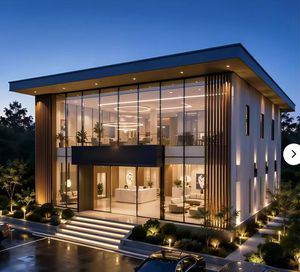
Manufactured on high-speed continuous lamination lines with certified fire-retardant EPS cores, high-tensile steel skins, and specialized anti-corrosion barrier coatings for modern German building enclosures.
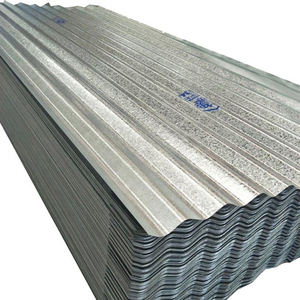
A structural, hygrothermal, and regulatory breakdown for German structural engineers, Generalbauunternehmen (general contractors), and technical facility planners.
Building envelopes within the German capital region face strict operating parameters dictated by the national Building Energy Act (Gebäudeenergiegesetz – GEG) and European standard DIN EN 14509. With Berlin's continental-influenced temperate climate—characterized by freezing winter spans with high relative humidity and increasingly hot summers exceeding 34°C—the building envelope must act as an uninterrupted thermal barrier, an air-tight diaphragm, and a vapor retarder. Expanded Polystyrene (EPS) core sandwich panels represent an extraordinarily cost-effective, chemically stable, and lightweight solution when engineered with high-density, flame-retardant polymer formulations.
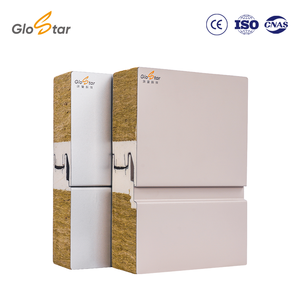
The closed-cell cellular structure of EPS (comprising approximately 98% trapped ambient air within a rigid polystyrene matrix) provides uniform thermal conductivity ($\lambda$) ranging from 0.034 to 0.038 W/(m·K). When continuously laminated under high-pressure polyurethane adhesive lines to structural-grade hot-dip galvanized or Aluzinc (AZ150) steel skins, the composite element achieves remarkable bending stiffness and shear rigidity. This composite action transforms slender steel facings (typically 0.50 mm to 0.70 mm S280GD/S320GD) into an integrated structural beam-column element capable of withstanding substantial suction wind loads and localized snow loads typical of German Wind Zone 2 and Snow Load Zone 2.
Furthermore, contemporary EPS manufacturing processes utilize polymeric flame retardants that achieve Euroclass B-s1, d0 or German DIN 4102-1 B1 (schwerentflammbar) compliance. This parameter ensures minimal smoke production, no flaming droplets during flashover tests, and full safety documentation necessary for commercial approvals through the Berlin Building Authorities (Bauaufsichtsamt).
| Nominal Thickness (mm) | EPS Core Density (kg/m³) | Thermal Transmittance U-Value [W/(m²·K)] | Acoustic Reduction Rw (dB) | Weight (Steel 0.5/0.5 mm) (kg/m²) | Span Capacity (L/200, 1.0 kN/m²) | Typical German Application |
|---|---|---|---|---|---|---|
| 50 mm | 16 - 20 kg/m³ | 0.66 W/(m²·K) | 24 dB | 9.45 kg/m² | 3.20 m | Interior partitions, clean room corridors, temporary site enclosures |
| 75 mm | 18 - 22 kg/m³ | 0.45 W/(m²·K) | 25 dB | 9.90 kg/m² | 3.80 m | Unheated / moderately heated logistics facilities (GEG 12°C–19°C) |
| 100 mm | 20 - 25 kg/m³ | 0.34 W/(m²·K) | 26 dB | 10.40 kg/m² | 4.60 m | Standard industrial production workshops, retail warehouses |
| 150 mm | 20 - 25 kg/m³ | 0.23 W/(m²·K) | 27 dB | 11.45 kg/m² | 5.80 m | Climate-controlled pharmaceutical & food processing hubs |
| 200 mm | 22 - 28 kg/m³ | 0.17 W/(m²·K) | 28 dB | 12.50 kg/m² | 6.90 m | Cold-chain storage, frozen goods distribution (Großbeeren GVZ) |
Tailored structural panel configurations meeting rigorous zoning requirements, industrial standards, and urban redevelopment projects across the Spree-Havel basin.
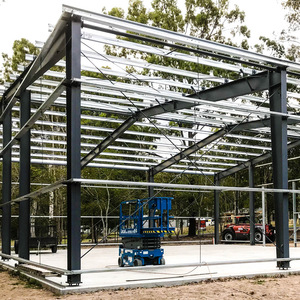
Deployed extensively across the Güterverkehrszentren (GVZ Großbeeren, GVZ Berlin Süd-West, and Wustermark). The high strength-to-weight ratio allows rapid horizontal mounting across wide purlin grids, cutting erection schedules while maintaining thermal stability for automated parcel routing and cold-chain operations.
The manufacturing boom surrounding southeast Berlin demands clean, high-precision industrial envelopes. Our EPS panels feature interlocking tongue-and-groove joint geometry with factory-injected closed-cell EPDM gaskets that prevent condensation penetration, minimizing HVAC cycling for cleanrooms, battery sub-assembly lines, and testing hangars.
Faced with urban density challenges in Mitte, Friedrichshain-Kreuzberg, and Charlottenburg, developers utilize lightweight modular EPS panels for residential and commercial rooftop expansions. Minimizing structural deadweight prevents the need for foundation strengthening in historical Altbau buildings while providing immediate thermal insulation.
The outskirts of Berlin require large-span agri-business facilities, biomass process facilities, and agricultural cold storage. Engineered panels protected by AZ150 Aluzinc and PVDF fluorocarbon coatings resist organic vapor emissions, chemical fertilizers, and moisture stagnation, providing decades of maintenance-free service.
Berlin's growing digital corridor requires decentralized server modules and telecommunications nodes. EPS sandwich panels provide a weather-tight, thermally constant envelope that lowers Power Usage Effectiveness (PUE) ratios by preventing summer solar heat gain and stabilizing indoor equipment temperatures.
Refurbishing aging GDR-era industrial complexes in Lichtenberg, Marzahn, and Schöneweide. EPS panels are installed as an external cladding envelope over compromised brickwork or deteriorating asbestos sheets, transforming drafty legacy structures into high-efficiency, visually striking BREEAM and DGNB-rated real estate.
Procuring envelope elements for the German market demands rigorous proof of conformance. Our precision production cycles guarantee tight quality tolerance controls verified under certified international standards.

How state-of-the-art EPS manufacturing aligns with German DGNB sustainability criteria, circular economy directives, and zero-carbon building envelopes.
The German construction industry is navigating an unprecedented transformation fueled by high energy prices, stringent decarbonization mandates from the federal government, and the rapid adoption of DGNB (Deutsche Gesellschaft für Nachhaltiges Bauen) green building certification. In this evolving regulatory landscape, EPS sandwich panels are moving far beyond being perceived as merely low-cost building materials; they are increasingly valued as highly optimized, resource-efficient components of a circular prefabrication workflow.
1. Demountability and Cradle-to-Cradle (C2C) Recyclability: Unlike conventional composite facades where mineral insulation is heavily adhered to concrete substrate walls via wet mortar beds, dry-installed EPS sandwich panels can be cleanly dismantled at the end of a building's lifecycle. Because modern pure polystyrene cores contain no fiber particles or toxic binding glues, the EPS insulation can be easily sheared from the high-grade steel facings and 100% recycled back into general polymer compounding or extruded polystyrene (XPS) boards. The steel facings (Z275/AZ150) are entirely recycled within electric arc furnaces, directly answering the EU's Waste Framework Directive.
2. Extreme Life-Cycle Carbon Payback: Life-cycle assessment (LCA) data consistently reveals that over 80% of an industrial building's environmental footprint in Berlin is incurred during its multi-decade operational heating and cooling phase, not during material manufacture. The embodied carbon of an EPS panel is significantly lower per square meter than heavy cellular concrete or stone cladding. Due to its superior air tightness and stable thermal boundary resistance, an EPS-clad structure pays back its embodied carbon footprint within just 14 to 22 months of operation under typical North-Central European weather conditions.
3. Prefabrication Speed Combating German Skilled Labor Shortages (Fachkräftemangel): Across Berlin and Brandenburg, general contractors face acute on-site labor shortages and tight urban erection windows. Modular, custom-cut EPS panels span up to 9 meters without intermediate purlins, allowing crane-assisted installation teams to enclose thousands of square meters of warehouse space per week. By eliminating wet trade delays and weather dependency, projects achieve rapid building envelope closure (Bauhülle regendicht), shielding internal mechanical and electrical work from winter weather and significantly lowering overall project financing costs.
Clear, definitive answers addressing specifications, logistics, fire classification, and local code compliance for German project engineers.
The German GEG (Gebäudeenergiegesetz) specifies maximum heat transfer coefficients (U-values) for exterior walls and industrial roofing depending on interior operating design temperatures. For buildings conditioned to normal internal temperatures (≥ 19°C), exterior wall U-values must achieve ≤ 0.28 W/(m²·K). Our 120 mm to 150 mm EPS panels achieve certified U-values of 0.28 to 0.23 W/(m²·K). For cold-storage applications or unheated logistics facilities (12°C–19°C), thinner specifications (75 mm – 100 mm) fully satisfy legal thermal insulation envelopes without wasting raw materials.
Our EPS cores are manufactured using certified flame-retardant polymers that classify as B1 (schwerentflammbar) under German standard DIN 4102-1, and achieve Euroclass B-s1, d0 / C-s2, d0 under DIN EN 13501-1 when tested inside bonded steel facings. This denotes self-extinguishing behavior, minimal smoke production (s1), and an absolute absence of flaming droplets (d0). For specific fire-break walls or areas with stringent fire-resistance requirements (EI30 to EI120), we supply alternating runs of our PU-sealed A1 Non-Combustible Rock Wool sandwich panels.
We provide full-scope international export packaging with complete shipping documentation. Panels are wrapped in protective polyethylene films, stacked on heavy timber pallets with reinforced edge-protectors, and bundled with moisture barrier desiccant packs inside 40ft High Cube containers. Shipments transit into major German hub ports (Hamburg, Bremerhaven) or inland water ports on the Havel/Spree, followed by scheduled multimodal flatbed truck transfers directly to job sites across the Berlin Ring (A10) and regional logistics centers.
Yes. We offer fully customizable external facings from 0.40 mm to 0.80 mm galvanized or Aluzinc steel. Facing profiles include Micro-ribbed, V-groove, Linear corrugated, and Flat architectural finishes. Coated in 25-micron polyester or 50-micron high-durability PVDF coatings, panels can be custom-matched to any European RAL specification (popular German industrial choices include Anthracite Grey RAL 7016, White Aluminium RAL 9006, and Pure White RAL 9010).
Our panels feature continuous precision male-female interlocking joints engineered with internal capillary grooves. During installation, pre-applied butyl sealing tape or site-applied elastomeric seals ensure an unbroken hermetic envelope that easily surpasses the air permeability coefficient requirements ($q_{50} \le 1.5\ \text{m}^3/(\text{h}\cdot\text{m}^2)$) required for DGNB gold/platinum ratings and KfW efficiency building standards.
Every project delivery is accompanied by comprehensive engineering submittal packages including certified factory test certificates (EN 10204 3.1), core density and compressive shear test data according to DIN EN 14509, load-span load tables calculating bending moments ($M$), shear resistance ($V$), and support reactions ($R$) based on Eurocode 3 load combinations (wind suction, thermal deflection, and snow loads).
EPS is the most economical insulated core on the market, offering 25% to 40% lower material costs per square meter than PIR and Rock Wool. While PU/PIR provides slightly higher thermal resistance per millimeter (and is optimal for tight deep-freeze storage), and Rock Wool is required for non-combustible A1 fire-wall compartments, EPS represents the absolute optimum balance of thermal performance, featherweight deadload, structural rigidity, and procurement savings for general warehouses, logistics envelopes, and modular offices.