Joint Star Steel Structure Ltd. manufactures complete structural frameworks, profile decking, fire-rated assemblies, and insulated cladding for seamless integration into Boston's demanding commercial and industrial building ecosystems.
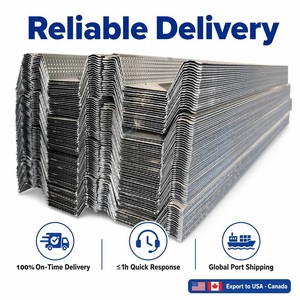
High-tensile zinc-coated C-studs and runners for curtain wall backup, seismic partition framing, and cleanroom ceiling suspension.
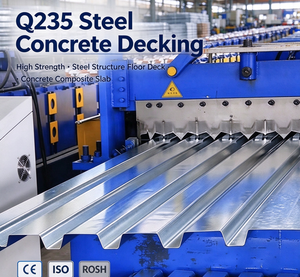
Interlocking ribbed structural formwork sheets providing high shear diaphragm capacity and composite action for multi-story floors.
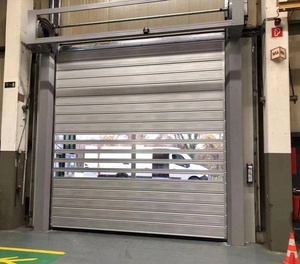
Thermal-break aluminum alloy spiral doors engineered for 100+ mph wind resistance and high-traffic cold chain terminals.
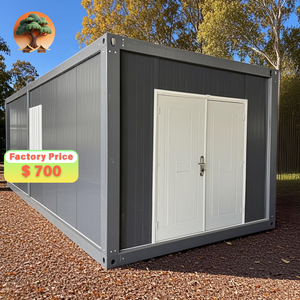
Heavy-gauge tubular framed ISO modules optimized for rapid deployment job-site command suites, lab pods, and retail spaces.
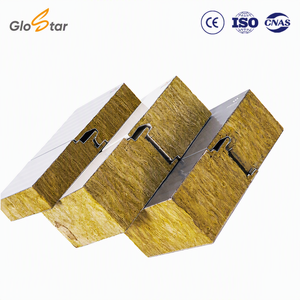
Continuous polyisocyanurate (PIR/PU) and non-combustible mineral wool wall/roof panels with R-values up to R-42 for clean energy envelopes.
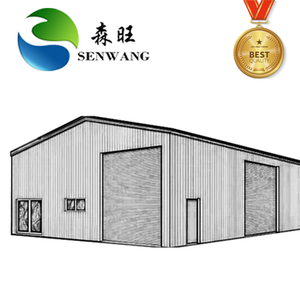
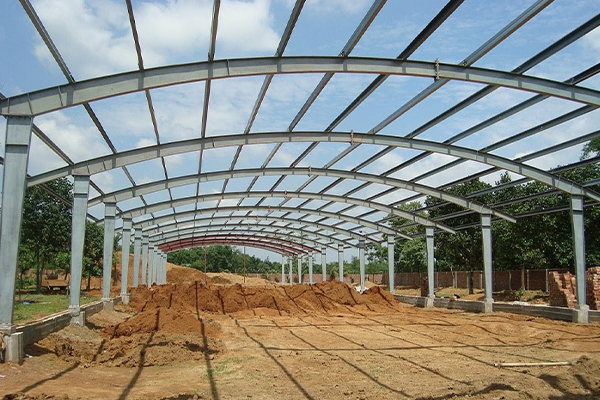
Clear-span engineered industrial facilities combining portal frames and tubular pipe roof trusses for maximum usable interior volume.
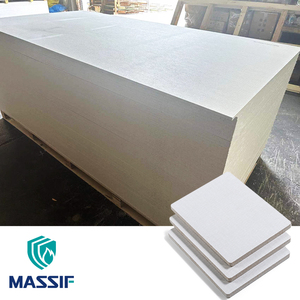
Zero-smoke toxicity, chloride-free magnesium oxide boards providing ASTM E119 2-to-4 hour fire assemblies in multi-family and commercial builds.
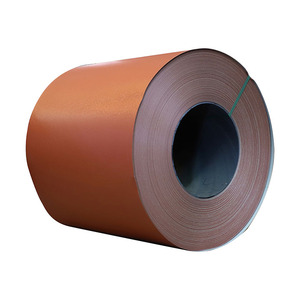
Kynar 500 / Hylar 5000 fluoropolymer architectural cladding sheets resistant to marine acid rain, severe UV degradation, and Atlantic sea salt spray.
Joint Star Steel Structure Ltd. delivers full-scope structural engineering, automated tubular profile manufacturing, and international export logistics of custom steel pipe trusses (tubular spatial trusses, planar Warren/Pratt tubular frames, and 3D bowstring space grids). Structural engineers and general contractors in Greater Boston, Cambridge, Somerville, and the Route 128 Technology Corridor face challenging project parameters: stringent coastal snow/wind load combinations under the Massachusetts State Building Code (780 CMR), strict zero-carbon lifecycle constraints under BERDO 2.0, and architectural demands for high-strength, vibration-damped, column-free interior spaces.
Unlike conventional open-web wide-flange (W-shape) joists that present extensive exterior surface area prone to wind drag and corrosion traps, tubular Circular Hollow Sections (CHS) and Rectangular Hollow Sections (RHS) offer ideal fluid aerodynamics, superior torsional stiffness ($J$), and minimal exposed surface area. Our specialized factory executes multi-axis CNC laser intersection profiling, full-penetration robotic submerged arc welding, and comprehensive Non-Destructive Examination (NDE) ensuring every node conforms to AWS D1.1/D1.1M Structural Welding Code.
Design-to-Delivery Integration: From finite element structural modeling in Tekla Structures and SAP2000 to automated CNC plasma profiling, multi-pass SAW welding, and ocean containerization direct to Boston Conley Terminal, we eliminate middle-tier markups and interface liabilities.
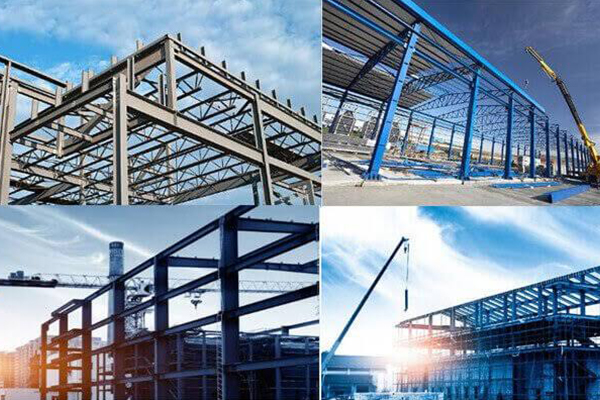
From seismic retrofits in historic brick-and-beam mill districts to high-vibration rooftop biopharmaceutical mechanical penthouses, our custom pipe trusses are fabricated to exact New England site dynamics.
Boston leads global biotechnology, demanding massive, column-free cleanroom footprints, vivariums, and heavy mechanical air-handling penthouses. Our high-stiffness tubular CHS pipe trusses suppress floor harmonics and meet strict Vibration Criteria (VC-A through VC-E: 50 to 3.12 µm/s) required for high-magnification electron microscopy and laser equipment.
Massachusetts building codes dictate ground snow loads up to $50\text{ psf}$ plus aggressive snow drifting ($C_s$ drift calculations per ASCE 7-22) and 130 mph coastal wind gusts. Circular tubular cross-sections exhibit a low shape coefficient ($C_d \approx 0.6$ compared to $2.0$ for open I-beams), drastically minimizing wind uplift and preventing ice dam load accumulations.
In Boston's South End, Fort Point Channel, and Lowell, historic unreinforced masonry (URM) structures undergo adaptive reuse into innovation offices. Custom lightweight tubular steel space frames introduce wide new spans and multi-tier mezzanines without transferring excessive dead loads onto aged granite foundations or soft Boston Blue Clay subsoils.
Modern automated e-commerce distribution centers and sub-zero frozen food hubs along the Mass Pike corridor require 160+ ft clear-spans without interior columns. Tubular steel pipe trusses support insulated PU/PIR sandwich ceilings directly, minimizing thermal bridging and eliminating dust-collecting horizontal beam flanges.
Boston's premier academic, airport (Logan Terminal extensions), and public civic atriums require structural members that serve as central visual focal points. We manufacture AESS 3 and 4 grade pipe trusses with contoured, smooth-ground welds, hidden internal bolted flange connections, and architectural PVDF finishes.

Fabricating structural steel for the Boston metropolitan area requires far more than generic welding. Massachusetts enforces strict building and carbon regulations that directly dictate how steel trusses, decking, and enclosures are engineered:
Comprehensive engineering criteria contrasting Circular Hollow Section (CHS) space trusses against standard structural I-beam systems under New England environmental conditions.
| Structural Parameter | Joint Star OEM Tubular Pipe Truss (CHS/RHS) | Standard Wide-Flange (W-Beam) Open Framing | Boston Engineering Impact & Benefit |
|---|---|---|---|
| Steel Grade & Metallurgy | ASTM A500 Grade B/C, ASTM A53 Grade B, or EN 10219 S355J2H | ASTM A992 / ASTM A36 Standard Hot-Rolled Beams | Higher yield strength ($F_y = 46\text{ to }50\text{ ksi}$), yielding 22–35% less structural dead load on footings. |
| Torsional Resistance ($J$) | Extremely high closed-section torsional constant; rigid in bi-axial bending | Low torsional stiffness; prone to lateral-torsional buckling (LTB) | Resists unbalanced Nor'easter wind gusts and localized snow drift load eccentricity with minimal bridging. |
| Aerodynamic Drag ($C_d$) | $C_d \approx 0.60$ to $0.75$ (smooth circular geometry) | $C_d \approx 1.80$ to $2.05$ (sharp perpendicular flanges) | Significantly reduces lateral wind shear transferred to perimeter moment frames in coastal Seaport sites. |
| Corrosion Trap Index | Zero internal exposure (hermetically sealed ends); smooth shedding of moisture | Flanges collect moisture, airborne sea salt, bird roosts, and condensation | Essential for Boston Harbor marine environments; eliminates salt accumulation and rust bleed onto architectural finishes. |
| AESS Architectural Merit | Certified AISC AESS Category 3 & 4; sculptural, clean, contoured tubular nodes | Industrial utilitarian appearance; visible web stiffeners and bolt flanges | Ideal for signature university atriums, public transit terminals, and exposed modern creative workspaces. |
| Envelope Thermal Performance | Narrow contact profile with continuous roof cladding; ideal thermal breaks | Wide flange footings form extensive linear thermal bridges across roofs | Prevents thermal short-circuiting, directly assisting developers in meeting strict BERDO 2.0 energy ratings. |
Established in 2010, Joint Star Steel Structure Ltd. combines elite structural engineering, automated large-scale fabrication, and flawless international delivery under one single-source contract.
We eliminate subcontractor disputes by managing the complete structural lifecycle: 3D structural modeling (Tekla/Revit), robotic pipe profiling, continuous submerged arc welding, shot blasting (SA 2.5), paint application, and pre-match shop assembly.
Complex K-, Y-, and T-joint tube intersections require surgical saddle cuts for proper weld penetration. Our 5-axis robotic laser and plasma profiling lines cut complex intersecting tube geometries with bevel angles accurate to $\pm 0.5\text{ mm}$.
Every structural weld is monitored by certified weld inspectors (CWI) in accordance with AWS D1.1/D1.1M. We perform 100% Visual Inspection (VT), Ultrasonic Testing (UT) on full-penetration groove welds, and Magnetic Particle Testing (MT) on tubular nodal points.
To endure the severe marine environment of Massachusetts Bay, our automated blasting facilities apply Hot-Dip Galvanizing (ASTM A123, up to $3.9\text{ mils}$ zinc) followed by 2-to-3 coat epoxy-polyamide primers and fluoropolymer/PVDF architectural topcoats.
With over 15 years of continuous international supply, our export logistics team coordinates flat-rack and high-cube ocean containerized shipping, custom piece barcoding, sequential packing lists, and clearance coordination directly into the Port of Boston.
Our dedicated engineering liaisons provide connection calculation reports stamped by licensed professionals, constructability feedback, crane lift center-of-gravity calculations, and 24/7 technical coordination across New England time zones.
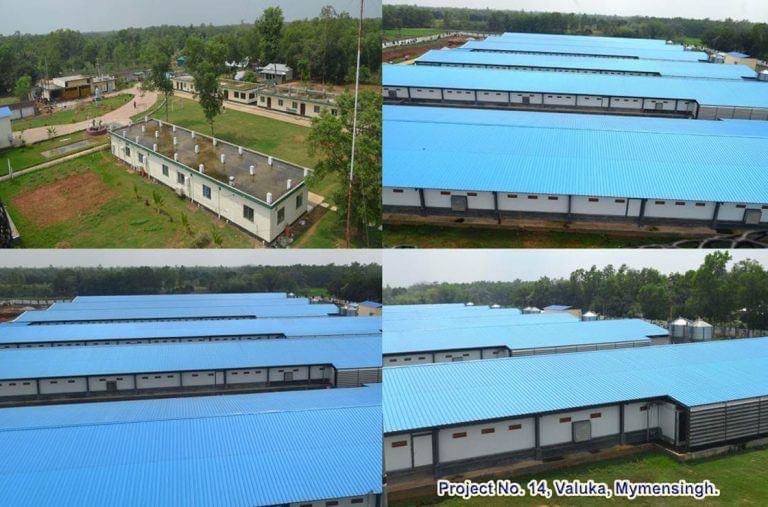
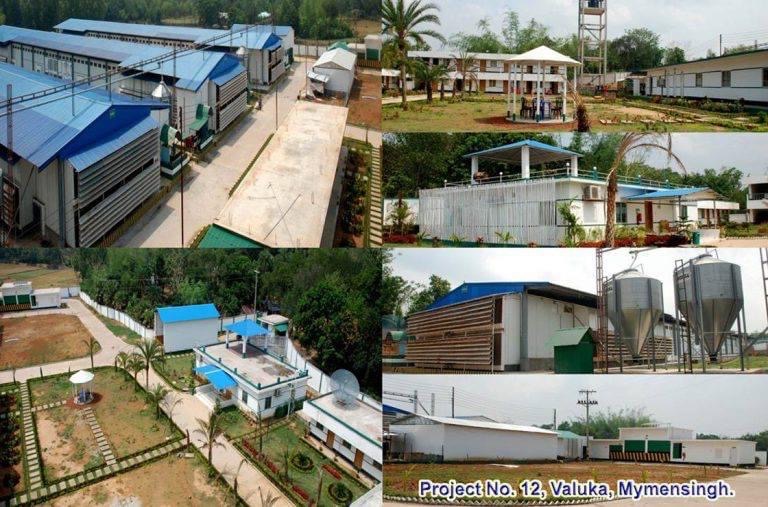
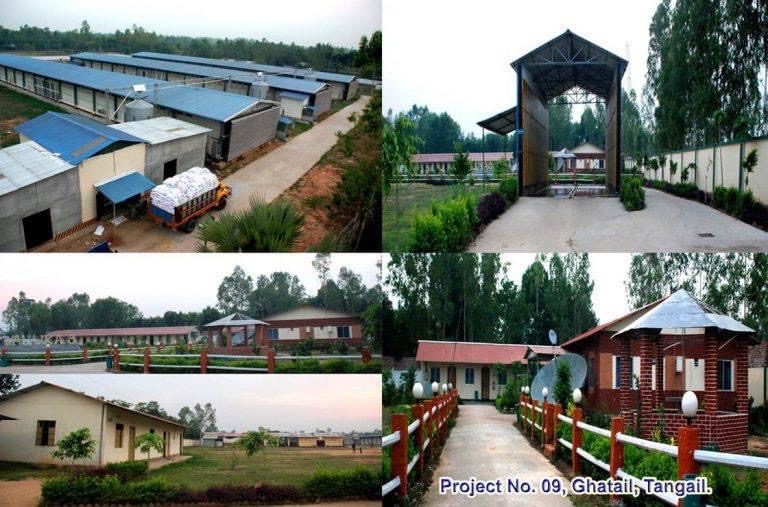
On-site photographic evidence from our completed capital projects, illustrating full-penetration welding, primary structural steel frames, and precision pre-engineered components.
Clear, authoritative technical answers addressing building codes, marine anti-corrosion, shipping logistics, and structural permitting in Massachusetts.
All structural designs are developed in strict conformance with the Massachusetts State Building Code (780 CMR), which adopts the International Building Code (IBC) with specific regional amendments. Our structural engineering package includes comprehensive design calculations prepared per AISC 360 (Specification for Structural Steel Buildings) and AISC 341 (Seismic Provisions).
All welding procedures and operator qualifications follow AWS D1.1/D1.1M. Every tubular joint is subject to full Quality Assurance documentation, including Welder Performance Qualification Records (WPQR), certified Mill Test Reports (MTRs) tracing heat chemistry per ASTM A500 Gr B/C, and Ultrasonic Testing (UT) non-destructive evaluation sheets stamped by our Certified Welding Inspectors (CWI).
Boston experiences demanding climatic load combinations under ASCE 7-16 / 7-22. The baseline ground snow load ($P_g$) is specified between $35\text{ and }40\text{ psf}$ along the immediate coast, escalating to $50\text{ psf}$ or higher in western and northern suburbs. Our engineers design 3D pipe trusses with special analysis for unbalanced snow loading and geometric drift surcharge against parapets and higher adjacent roofs.
Furthermore, coastal basic wind speeds of $120\text{ to }140\text{ mph}$ (Exposure Category C/D) are mitigated by the natural aerodynamic round contour of circular pipe sections ($C_d \approx 0.65$), minimizing lateral reaction forces on your primary structural columns and foundations.
For structures erected near Boston Harbor, Dorchester Bay, or exposed coastal environments, we recommend and supply heavy-duty duplex coating systems conforming to ISO 12944 Environmental Category C4 or C5-M (Marine). This entails automated surface abrasive blasting to SSPC-SP 10 / NACE No. 2 (Near-White Metal), followed by:
1. Hot-Dip Galvanizing (ASTM A123) with a minimum coating thickness of 85 to 100 microns ($3.4\text{ to }3.9\text{ mils}$); or
2. A 3-coat high-durability system: an inorganic zinc-rich primer ($2.5-3.0\text{ mils}$), an intermediate epoxy polyamide barrier coat ($4.0-5.0\text{ mils}$), and a topcoat of aliphatic polyurethane or fluoropolymer/PVDF ($2.0-3.0\text{ mils}$) to resist aggressive UV radiation and marine chloride deposition.
Yes. Many Boston higher-education atriums (MIT, Harvard, Northeastern) and corporate tech lobbies require AISC AESS Category 3 (Feature Elements) or Category 4 (Showcase Elements). We utilize 5-axis CNC laser cutting to create tight, uniform joint fits, grind all weld passes flush or to smooth uniform profiles, hide tubular vent and drain holes internally, and utilize concealed internal mechanical splices with countersunk bolts or hidden pin connections.
Trusses are engineered into modular transport sub-assemblies specifically proportioned for standard 40ft High Cube (40HC) ocean shipping containers or 40ft/45ft Flat Racks for oversized bowstring sections. All steel members receive hard-stamped piece marks matching the erection drawings, rust-inhibiting wrapping, and corner impact protectors.
Shipments land directly at the Conley Container Terminal in South Boston or through Port of New York/New Jersey with bonded domestic flatbed transport to your job site along I-90 / I-93. Comprehensive packing lists, mill certifications, and import documentation are dispatched well in advance for immediate customs clearance.
The Building Energy Reporting and Disclosure Ordinance (BERDO 2.0) sets declining emissions caps on commercial buildings. Our pipe trusses help clients achieve compliance through two major engineering advantages: first, by optimizing high-strength ASTM A500 Grade C steel, we reduce total embodied carbon through lower total steel tonnage; second, the reduced flange contact surface of tubular chords accommodates structural thermal isolator pads (such as Fabreeka or structural aerogel shims) between the truss and exterior cladding, drastically cutting thermal bridging and lowering building HVAC energy consumption.
Whether you are engineering a high-clearance life science atrium in Cambridge, a coastal distribution hub in the Seaport District, or an industrial manufacturing plant along Route 128, Joint Star Steel Structure Ltd. delivers certified structural integrity, precision CNC tubular fabrication, and comprehensive export logistics.