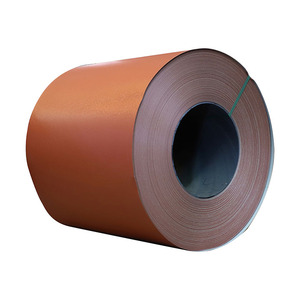
Ral 9016 Different Gauge Prepainted Galvanized 4x8 Colored Pvdf Coating Steel Sheets
Z275 zinc mass, 25/5μm architectural PVDF fluoropolymer coating, UV class RUV4, corrosion resistance RC5, high solar reflectance.

Manufactured on state-of-the-art continuous laminators and roll-forming profiles. Directly exported from Turkey's industrial hubs to EMEA logistics corridors with comprehensive mill test certificates.
Z275 zinc mass, 25/5μm architectural PVDF fluoropolymer coating, UV class RUV4, corrosion resistance RC5, high solar reflectance.
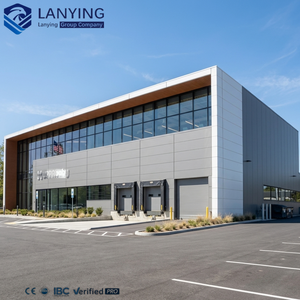
Integrated clear-span portal frame with high-efficiency PIR modular wall envelopes, earthquake resistant to Turkish Seismicity Standards.
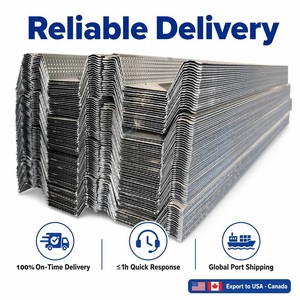
Precision roll-formed structural sub-framing, continuous hot-dip galvanization (DX51D+Z), high tensile strength for panel facade anchoring.
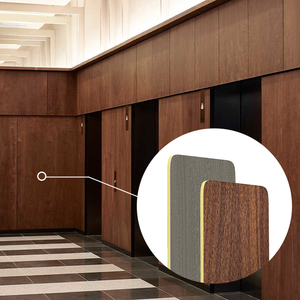
Moisture-impermeable architectural composite liner, antibacterial surface finish for commercial hospitality, cleanrooms, and executive partitions.
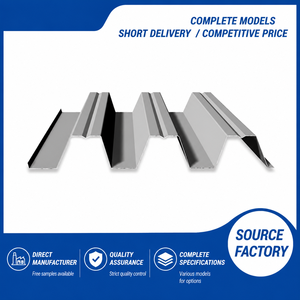
High composite action interlocking rib design, engineered for diaphragm shear stiffness in multistory industrial PEB warehouses.
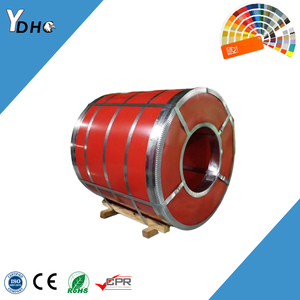
Direct-from-mill prime coil supply, EN 10346 certified base steel, 55% Al-Zn Galvalume coatings, engineered for continuous panel lamination lines.

Engineered trapezoidal pitch with anti-capillary drainage grooves, high snow load capacity, and corrosion-resistant hot dip zinc finish.
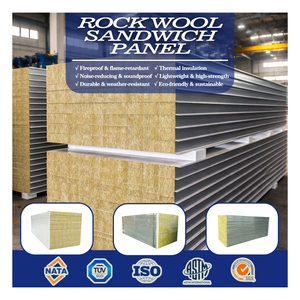
High-density basal mineral wool core pressure-bonded to moisture-resistant OSB-3 boards, achieving Euroclass non-combustible building envelopes.
A rigorous examination of metallurgy, polymer chemistry, supply chain logistics, and cost-to-performance metrics for global civil engineering and architectural consultants.
Unlike discontinuous batch-pressed panels prone to air voids and skin delamination, Turkish OEM manufacturing facilities utilize high-speed, continuous double-belt caterpillar conveyors reaching up to 40 meters in lamination length. This guarantees continuous high-pressure curing under precise infrared thermal zones.
Turkey's strategic chemical manufacturing cluster produces advanced Polyisocyanurate (PIR) cores achieving an isocyanate index exceeding 250%. This generates ring-shaped isocyanurate molecular bonds that carbonize upon flame exposure, providing superior structural integrity and low smoke generation.
Operating under the Customs Union agreement with the European Union, Turkish factories issue EUR.1 movement certificates, allowing zero-tariff importation into all EU member states. Direct maritime break-bulk and 40ft High Cube container shipping out of Gebze, Mersin, and Izmir ports ensures 3-7 day deliveries to Europe and MENA destinations.
| Insulation Core Type | Density (kg/m³) | Thermal Conductivity (λ) | Euroclass Reaction to Fire | Acoustic Reduction (Rw) | Primary Industrial Application |
|---|---|---|---|---|---|
| PIR (Polyisocyanurate) | 40 - 42 kg/m³ | 0.020 - 0.022 W/m·K | B-s1, d0 (EN 13501-1) | 26 - 28 dB | Cold Storage, Deep Freezers, Logistics Warehouses |
| PUR (Polyurethane) | 38 - 40 kg/m³ | 0.022 - 0.024 W/m·K | B-s2, d0 / C-s2, d0 | 25 - 27 dB | Agro-Industrial Hangars, Light Commercial Enclosures |
| Structural Rock Wool | 100 - 120 kg/m³ | 0.035 - 0.038 W/m·K | A1 / A2-s1, d0 (Non-combustible) | 32 - 35 dB (Perforated: >40dB) | Fire Compartment Walls, Power Plants, Petrochemical Facilities |
| EPS (Expanded Polystyrene) | 15 - 20 kg/m³ | 0.034 - 0.038 W/m·K | E / D-s3, d0 | 23 - 25 dB | Modular Prefab Buildings, Site Camps, Rooftop Extensions |
| OSB-SIP Rock Wool Core | 110 kg/m³ Core + 12mm OSB | 0.036 W/m·K | B-s1, d0 (Structural) | 36 - 38 dB | Eco-Modular Residential, Prefab Offices, Rapid Housing |
Architectural panels are not generic commodities. Turkish OEM exporters formulate facing metallurgy, paint polymers, and core chemistry specifically calibrated to local geotechnical and meteorological variables.
Engineered to satisfy stringent German EnEV, UK Building Regs Part L, and Scandinavian energy codes. Our panels utilize deep-labyrinth tongue-and-groove joint systems paired with factory-applied EPDM vapor gaskets, ensuring air leakage rates below 0.15 m³/(h·m²) at 50 Pa.
Coastal logistics parks and desalination facilities face severe airborne saline attacks. We produce panels utilizing minimum Z275 (275g/m² zinc) or AZ150 Galvalume coated with 50-micron high-build Polyvinylidene Fluoride (PVDF) or Plastisol coatings resistant to micro-cracking and blister rust.
Designed under Eurocode 8 and Turkish Building Earthquake Standards (TBDY 2018). Lightweight composite panels reduce total dead-load inertia on portal frame columns, while specialized slotted stainless steel sub-framing clips absorb lateral inter-story drift without skin buckling.
In regions where ambient temperatures exceed 48°C, our RAL 9016 architectural PVDF coatings deliver a Solar Reflectance Index (SRI) exceeding 82, reflecting thermal irradiance and cutting industrial cooling air-conditioning electrical loads by up to 34% annually.
Strategic structural shifts in B2B architectural procurement, circular economy mandates, and advanced exterior aesthetics driving industrial building envelope design.
Industrial clients are shifting away from visible screw-through fixing profiles to architectural concealed-fastener panels. These feature inter-locking male-female rebate designs where fastening screws are completely hidden within the joinery, mitigating water ingress points while delivering pristine monolithic corporate facades.
Global specifiers increasingly mandate Environmental Product Declarations (EPD) and low embodied carbon inputs. Turkish sandwich panel mills are adopting green hydrogen-reduced steel coils and bio-attributed polyols blown with zero-ODP (Ozone Depletion Potential) cyclopentane formulations.
Precision Turkish exporters now provide native Autodesk Revit BIM families with pre-calculated structural span tables, acoustic damping metrics, and thermal boundary coefficients. This drastically shortens the tender drafting lifecycle for consulting engineers in London, Frankfurt, and Dubai.
International Projects Delivered
Years Engineering Heritage (Since 2010)
m² Annual Production Capacity
Global Export Port Destinations
Drawing on an established engineering heritage founded in 2010, our integrated Turkish export facilities eliminate intermediary markups, mitigate interface risks, and guarantee total traceability from melt to installation.
From pre-engineered structural steel portal frames to cold-rolled C-channel sub-framing and sandwich cladding, we supply fully coordinated structural packages under a single commercial contract.
Custom facing steel thickness (0.40mm to 0.80mm), diverse micro-profiling (ribbed, linear, flat, wave), custom core thicknesses (40mm to 200mm), and non-standard custom lengths up to 16.5 meters.
Demonstrated delivery history across 120+ demanding tier-1 enterprise developers across Europe, Central Asia, and Africa, supported by 100+ dedicated in-house structural and facade engineers.
Every production batch undergoes continuous factory production control (FPC) testing: shear strength, cross-drum tensile bond evaluation, compressive modulus, and long-term creep verification.
Direct supply partnerships with primary Turkish blast furnace mills (Erdemir/Isdemir) ensure privileged coil pricing and guaranteed mechanical tolerances, shielding buyers from volatile raw material spot markets.
Panels are wrapped in heavy-duty polyethylene, corner-reinforced with rigid corrugated profiles, and separated by high-density EPS blocks to prevent transport deflection during long ocean transits.
Direct, transparent answers regarding customs tariffs, quality audits, logistics packing factors, and structural specifications for global commercial procurement officers.
Procuring from Turkey provides three decisive commercial advantages: 1) Zero Tariff (EUR.1): Under the EU-Turkey Customs Union, shipments enter Europe tariff-free without anti-dumping penalties. 2) Lead Times: Transit times from Turkish ports (Gebze, Gemlik, Izmir, Mersin) to European or North African ports average 3 to 10 days, compared to 35-50 days from Asia. 3) Strict Standards: Turkish manufacturers operate strictly under harmonized European Standards (EN 14509, EN 13501-1), guaranteeing immediate structural code acceptance by international municipal building authorities.
The choice hinges on thermal efficiency versus non-combustibility priorities: Choose PIR (Polyisocyanurate) if your project demands maximum thermal insulation per millimeter of wall thickness (λ = 0.022 W/m·K), light dead-loads, and excellent moisture barrier properties—vital for cold stores, temperature-controlled distribution hubs, and standard commercial envelopes. Choose Structural Rock Wool if your municipal building code or insurer requires a Euroclass A1 or A2-s1, d0 non-combustible classification (e.g., firewall compartments, power plants, petrochemical facilities, or projects demanding up to 120 minutes of fire resistance EI120).
For standard RAL color specifications (such as RAL 9002, 9006, 9016, 7016) in standard core configurations, typical MOQ is approximately 500 to 1,000 square meters (equivalent to one 40ft High Cube container or partial truckload). Bespoke OEM architectural colors, specialized PVDF or Plastisol coatings, and custom core formulations typically require an MOQ of 2,000 m². Standard factory manufacturing turnaround averages 10 to 18 business days following approved shop drawings.
Each individual panel is protected with a self-adhesive, UV-resistant protective PE film. Panels are stacked into rigid export bundles separated by EPS cushion blocks, encased in waterproof shrink wrap, and fitted with heavy-gauge edge guards. Bundles destined for 40ft High Cube containers are calculated to fit container aperture dimensions with dedicated nylon lifting slings and air-dunnage bags, allowing forklift and roll-on/roll-off unloading without core crushing or sheet abrasions.
Yes. International buyers routinely mandate third-party quality audits. Our production runs are fully accessible for pre-shipment inspections by independent testing agencies such as SGS, Bureau Veritas, TÜV Rheinland, or Intertek. Standard documentation packages provided with every export container include Mill Test Certificates (EN 10204 Type 3.1) for the steel facings, core density and compressive test logs, peel-test adhesion records, and Declaration of Performance (DoP) certificates supporting the CE mark.
For standard intermodal container shipping (40' HC), the maximum practical panel length is 11.85 meters (38.8 ft) to allow for container door closure and extraction clearance. For road transit across Europe and the Middle East via mega-trailers, panels can be continuously manufactured and shipped in lengths up to 13.6 meters. For special domestic or charter break-bulk maritime orders, our continuous double-belt lines can produce single-piece roof panels up to 16.5 meters, minimizing transverse endlap joints on large-span industrial buildings.