Open Rib
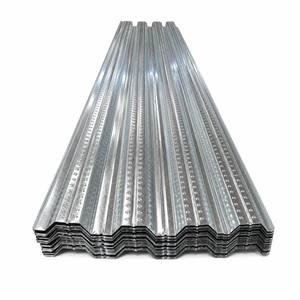
Modern Corrugated Open Rib Galvanized Steel Floor Decking Panel
- Standard: ASTM A653 / NSR-10
- Zinc Coating: Z180 - Z275 g/m²
- Thickness: 0.75mm - 1.20mm

Precision-manufactured structural decking profiles produced from high-tensile cold-rolled galvanized coils, tailored for Colombian multi-story residential towers, commercial mezzanines, and logistics hubs.
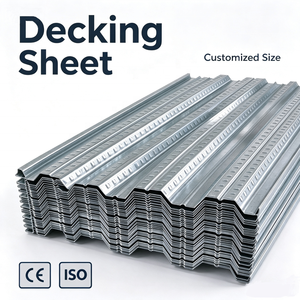
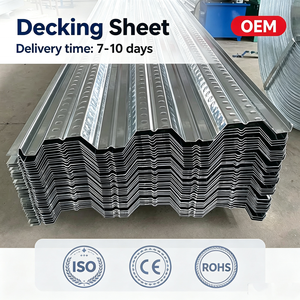
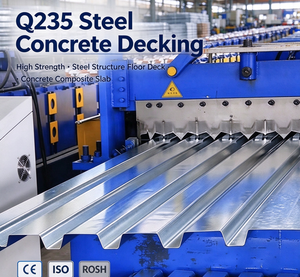
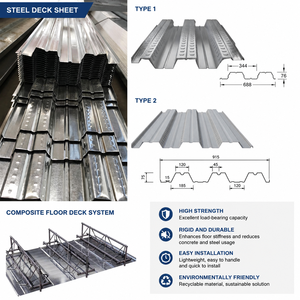
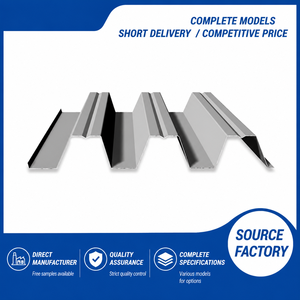
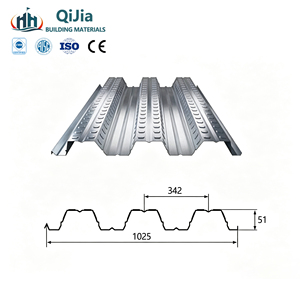
Composite steel floor decking—locally specified throughout Colombia as lámina colaborante, entrepiso metálico, or commercial brand derivatives like Steel Deck—has fundamentally redefined structural floor construction across Bogotá, Medellín, Cali, and Barranquilla. By acting as a dual-function cold-formed element, profiled steel decking performs initially as high-capacity formwork during the wet concrete placement phase, and subsequently as positive bending reinforcement once the cured concrete achieves composite action via mechanical embossment interlocks.
Under the Colombian Building Code for Seismic-Resistant Design (Reglamento Colombiano de Construcción Sismo Resistente - NSR-10), particularly Title F (Estructuras Metálicas) and Title C (Concreto Estructural), diaphragms constructed with profiled steel decking must transfer significant in-plane lateral forces generated by severe seismic accelerations along the Andean fault lines. The mechanical interaction between the corrugated profile ribs, the shear transfer studs (pernos de cortante Nelson studs), and the concrete topping establishes a semi-rigid or rigid horizontal diaphragm indispensable for drift control in framed structures.
"By eliminating propping shoring up to 3.5 meters and cutting dead-weight slab mass by 28% to 35% compared to solid reinforced concrete slabs, composite metal decking directly attenuates seismic base shear ($V = C_s \cdot W$) in Colombian high-hazard seismic zones."
Our direct-from-mill supply pipeline integrates certified Chinese roll-forming production lines utilizing prime structural coil feedstock (ASTM A653 / ASTM A1008 Grade 50) with precise metallurgical traceability, matching both Colombian national norms and international Steel Deck Institute (SDI) criteria.
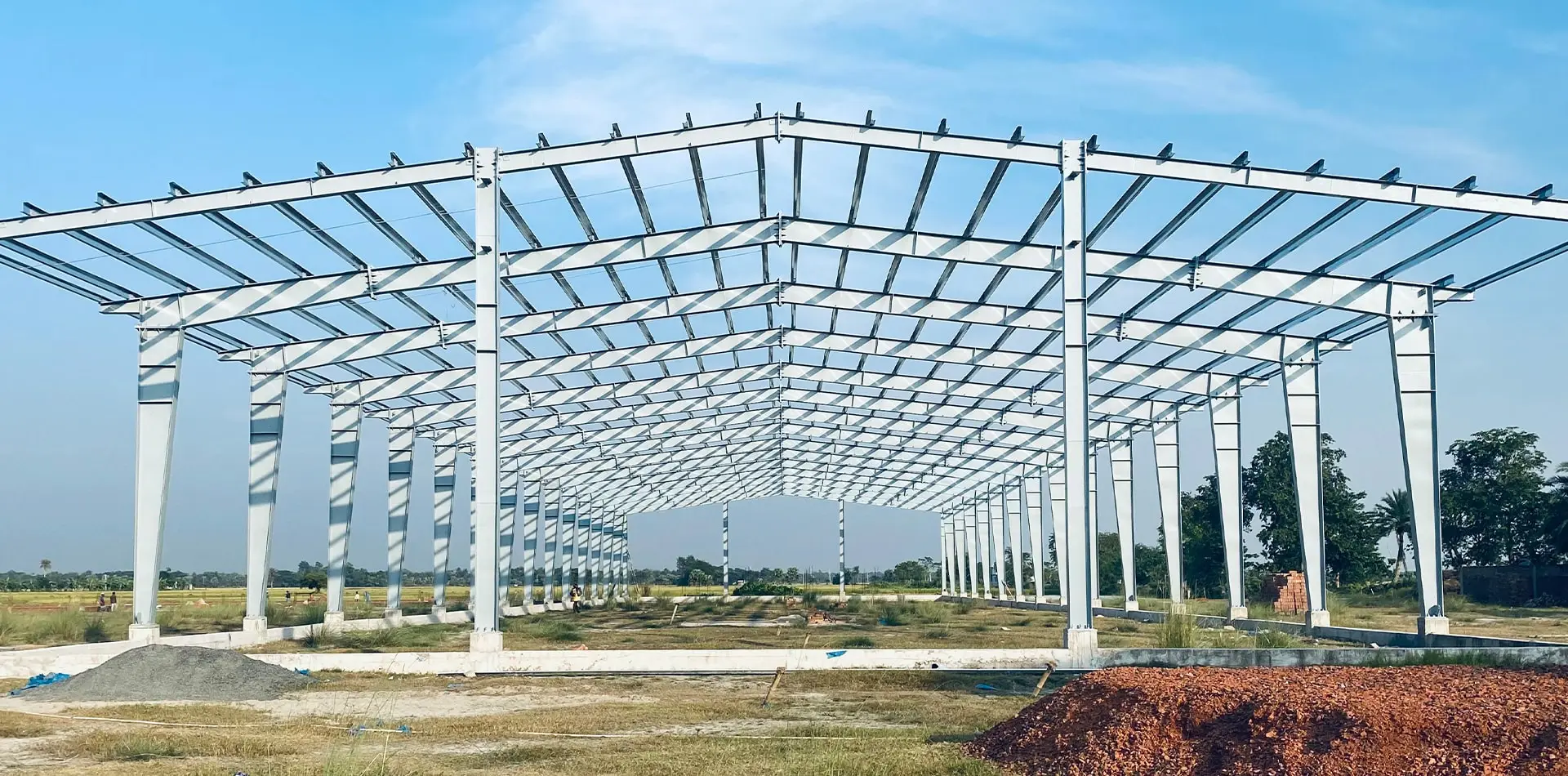
Colombia's extreme topography, spanning high-altitude volcanic soils in the Cordillera Central to hyper-saline coastal trade terminals, requires distinct profile depths, steel gauges, and anti-corrosive zinc masses.
Direct comparative engineering matrix aligning Chinese steel mill metallurgical outputs with Colombian construction codes, ensuring clear approvals through project supervision (Interventoría Técnica).
| Structural Parameter | Colombian Standard (NSR-10 / ICONTEC) | American Standard (SDI / ASTM) | Chinese Mill Equivalent Standard | Structural Significance for Project |
|---|---|---|---|---|
| Minimum Yield Strength ($F_y$) | NTC 4011 / NSR-10 Titulo F (Min. 230 - 345 MPa) | ASTM A653M Grade 50 (345 MPa / 50 ksi) | GB/T 2518 Grade S350GD / Q355B | Guarantees unpropped span capacity during wet concrete pouring stage. |
| Zinc Coating Mass ($Z$) | NTC 4015 (G60 minimum interior; G90 coastal) | ASTM A653 / A924 Z180 (180 g/m²) to Z275 | GB/T 2518 Z180 - Z275 (Triple Spot Test) | Prevents oxidation in humid Colombian microclimates before enclosure. |
| Embossment Depth ($h_r$) | NSR-10 C.12 & F.4 (Mechanical Interlock) | SDI ANSI/SDI C-2017 (Min. 0.90mm depth) | Proprietary High-Shear Chevron Indentation | Ensures composite action ($m-k$ calculation method) without slippage. |
| Dimensional Tolerances | ICONTEC Structural Tolerances | SDI Section 2.1 (Sheet Width $\pm 5$mm) | Continuous Optical Laser Gauging | Prevents side-lap gap leakages of wet concrete slurry on job site. |
| Shear Stud Compatibility | NSR-10 F.2.5 (Pernos de Cortante) | AWS D1.1 / ASTM A108 (Nelson Studs) | Through-Deck Arc Spot & Shear Connector Fusion | Anchors decking and floor beam to develop complete composite beam action. |
Every coil batch undergoes automated ultrasonic thickness measurement, zero-spangle zinc coating verification, 180-degree mandrel bend tests, and yield elongation testing with complete EN 10204 3.1 Mill Test Certificates (MTC).
Composite floor decking eliminates slow timber shoring and allows multiple elevations to receive concrete simultaneously. A 4-person crew can place up to 800 square meters of profiled sheets per eight-hour shift across urban job sites.
Profiles are rolled with precise taper angles so bundles nest tightly without scuffing the galvanized coating. Each 40ft High Cube container loads up to 26–28 metric tons, maximizing maritime freight space into Colombian ports.
Structural engineering in Colombia is experiencing a decisive shift toward composite steel construction, driven by labor efficiency, strict seismic regulations, and rapid growth in industrial logistics.
The rapid growth of the Bogotá Savanna (Funza, Cota, Mosquera) and Antioquia (Rionegro) logistics corridors has driven demand for wide-span distribution mezzanines. Profiled steel floor decks handle heavy live loads (15 to 25 kN/m²) without mid-span temporary props, allowing lower-level MEP installation to proceed concurrently.
Traditional wooden formwork (encofrado de madera) incurs high timber disposal costs, slow carpenter cycles, and elevated safety risks at heights. By utilizing custom cut-to-length steel deck panels from factory roll-forming mills, structural general contractors reduce sub-tier shoring labor by up to 60%.
Colombian builders seeking EDGE and LEED certification favor composite steel systems due to their 30% reduction in total concrete volume, lowering overall embodied carbon. Steel decks are 100% recyclable, and our mills operate modern electric arc furnace (EAF) and basic oxygen processing routes with recycled scrap inputs.
Years Engineering Export Experience
Global Structural Projects Delivered
Metric Tons Annual Cold Roll Capacity
Traceable Mill Test Reports (ASTM/GB)
Behind our supply chain is a vertically integrated fabrication framework built over fifteen years of structural engineering excellence, offering complete accountability from raw coil processing to job-site bundling.
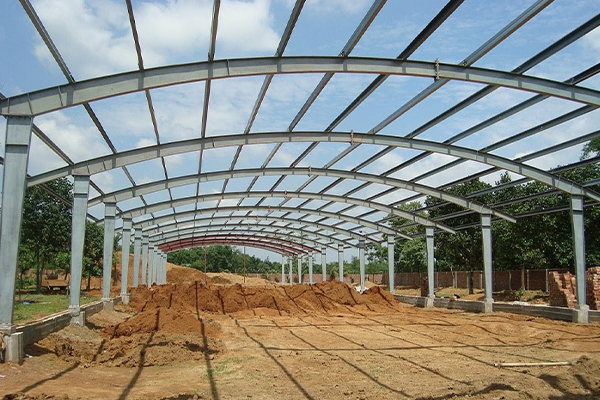
Our heavy-duty multi-station continuous roll-forming lines feature precision hardened alloy steel rollers (Cr12MoV). This prevents surface galvanize flaking and ensures profile cross-section uniformity across extended production runs.

Our in-house engineering team provides panel layout and deck orientation drawings based on architectural and structural framing plans, optimizing bundle cut lengths to minimize job-site scrap on Colombian projects.
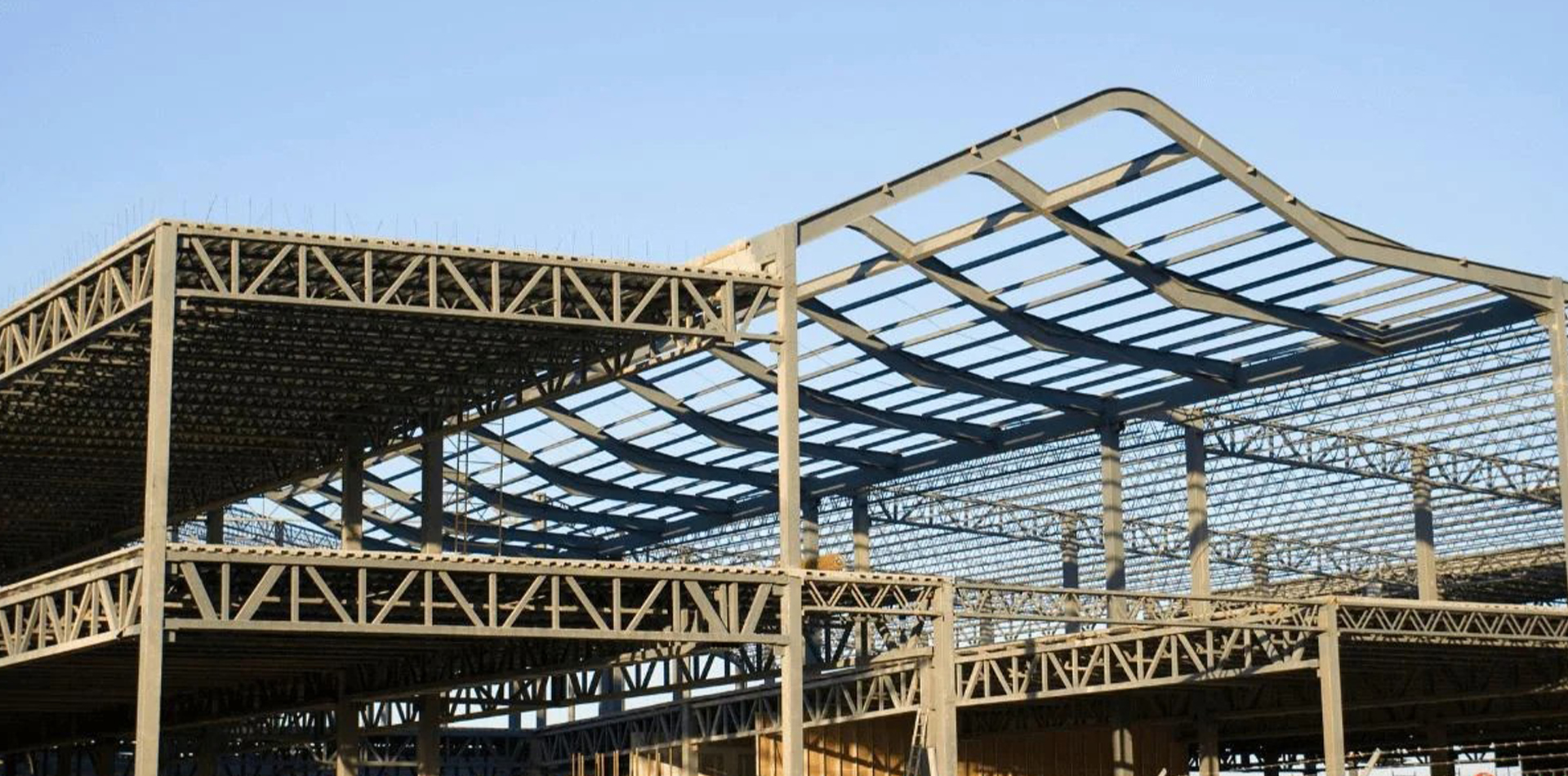
Beyond metal floor decking, our facilities manufacture pre-engineered steel structural columns, welded H-beams, C/Z purlins, and insulated sandwich panels, offering complete turnkey structural supply under a single export contract.
Comprehensive commercial, legal, and engineering guidance address the key questions faced by Colombian purchasing directors, structural consultants, and import agents.
In Colombia, profiled corrugated steel floor decking sheets generally clear under the Harmonized Tariff Code (Arancel de Aduanas DIAN) Subpartida Arancelaria 7210.49.00.00 (Productos laminados planos de hierro o acero sin alear, de anchura superior o igual a 600 mm, galvanizados de otro modo) or under 7308.90.00.00 when imported as prefabricated structural elements.
Depending on bilateral trade agreements and Ministry of Commerce (MINCIT) resolutions, custom tariffs (arancel) typically range between 5% and 10%, along with the standard 19% IVA (sales tax). Importers must verify that their chosen mill's export documentation meets MINCIT anti-dumping resolutions on flat-rolled coated products, ensuring smooth DIAN nationalization at Buenaventura or Cartagena.
Title F, Chapter F.4 of NSR-10 requires composite steel systems (sistemas compuestos) to demonstrate verified mechanical shear bond behavior between the steel profile and concrete slab. Our decking profiles feature embossed patterns designed according to the Steel Deck Institute (SDI C-2017) and AISI S100 specifications.
Our mill provides comprehensive section properties per meter of width—including effective moment of inertia ($I_e$), positive/negative section moduli ($S_p, S_n$), and shear bond parameters ($m$ and $k$) validated by laboratory testing. These values allow Colombian structural designers to verify deflection limits ($L/360$ under service live load, $L/180$ under wet concrete construction loads) and shear capacities directly in software like ETABS or SAP2000.
Shipments depart primary Chinese deep-water ports (Shanghai, Ningbo, Tianjin) directly to major Colombian maritime terminals. Transit times are approximately 25 to 35 days to Puerto de Buenaventura (serving Valle del Cauca, the Coffee Triangle, and Bogotá via the La Línea tunnel route) and 28 to 38 days through the Panama Canal to Cartagena / Barranquilla (serving the Caribbean coast and central river corridors).
Decking sheets are nested into rigid export bundles (typically 2 to 3 metric tons each), wrapped in VCI waterproof anti-corrosion barrier film, edge-protected with heavy-gauge galvanized steel angle guards, and secured with high-tensile steel strapping. Wooden dunnage runners enable seamless forklift and overhead sling discharge without panel rib distortion.
The choice of galvanization mass depends on ambient environmental corrosivity classes (ISO 9223). For indoor, climate-controlled residential and office high-rises in Bogotá, Tunja, or Medellín (Corrosivity Category C1/C2), a Z180 coating (180 g/m² combined both sides, equivalent to G60) provides reliable, long-lasting performance.
For open-air warehouses, parking structures, and coastal or industrial locations near Cartagena, Santa Marta, or Barranquilla (Corrosivity Category C3/C4), we recommend specifying a Z275 coating (275 g/m², equivalent to G90). This heavier zinc barrier prevents edge creep and pinhole oxidation during rainy season construction delays prior to full building enclosure.
We produce customized, project-specific panel lengths ranging from 1.5 meters up to 11.85 meters—the maximum practical nesting length for standard 40ft High Cube ocean shipping containers. This eliminates on-site torch cutting, decreases scrap loss to near zero, and ensures clean factory-sheared edges.
Every bundle is tagged with metal weatherproof barcodes indicating floor level, gridline designation, piece count, profile type, and panel length. This systematic labeling matches your project shop drawings, simplifying crane hoisting and distribution upon job-site arrival in Colombia.
For standard Profile 750 (with 51mm rib height) in 0.75mm (22 Ga) sheet thickness, safe unpropped clear spans typically reach up to 2.20 to 2.40 meters for a normal-weight concrete slab thickness of 100mm to 120mm. Upgrading sheet thickness to 0.90mm (20 Ga) or 1.20mm (18 Ga) increases the unpropped clear span capacity to 2.80 to 3.40 meters under standard SDI construction pour loads ($W_1$ dead load + 1.0 kN/m² live load during pumping).
Our engineering department provides load-span calculation tables for single, double, and triple spans with every commercial quotation, allowing site engineers to determine temporary propping requirements before starting concrete pours.
Connect directly with our metallurgical and structural engineering export team. Send your structural plans, bill of materials (BOM), or profile requirements to receive a fast, detailed quotation with CIF Buenaventura or Cartagena freight options.