Manufactured from ultra-tensile galvanized structural steel coils (S350GD/S450GD/S550GD) with hot-dip zinc coatings up to Z350 (350g/m²). Designed for composite slabs, high-capacity mezzanines, and lost-formwork construction across Algeria.
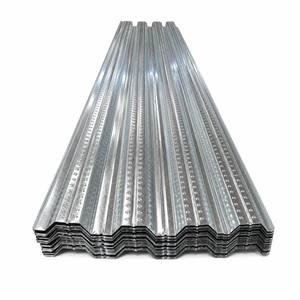
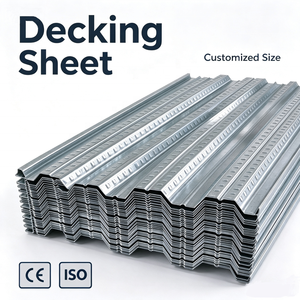
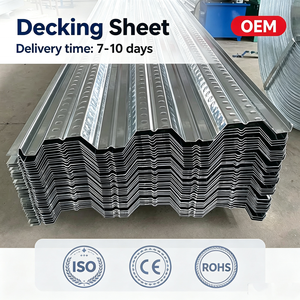
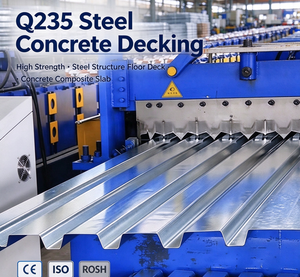
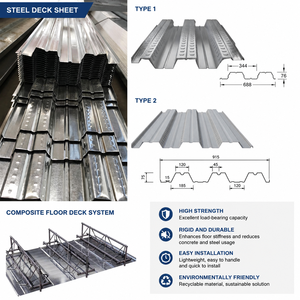
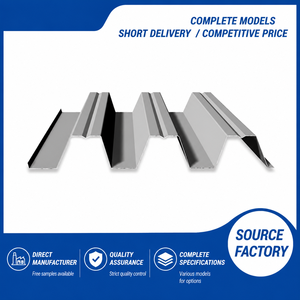
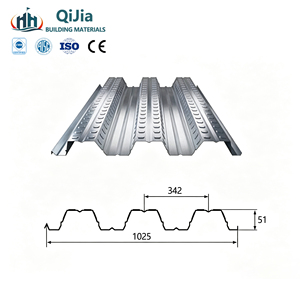
In-depth technical analysis for structural engineers, project managers, and Bureaux d'Études Techniques (BET) executing large-scale public and private infrastructure across Algeria.
Modern building construction across Northern Algeria—encompassing major demographic and industrial centers such as Algiers, Blida, Tipaza, Oran, and Boumerdès—operates under stringent structural performance demands dictated by the Règles Parasismiques Algériennes (RPA 99 / Version 2003). For decades, conventional casting methodologies relied on heavy cast-in-place hollow block slabs (hourdis béton) or solid reinforced concrete slabs. However, these systems inherently introduce immense seismic dead loads ($W$), substantially multiplying seismic base shear forces ($V = \frac{A \cdot D \cdot Q}{R} \cdot W$). As Chinese top steel decking sheets manufacturers and exporters, our cold-formed profile steel decking sheets (tôle bac collaborant pour plancher mixte) solve this challenge by transforming floor slabs into high-rigidity structural diaphragms while decreasing overall structural slab self-weight by 20% to 30%.
Structural Performance Axiom: In composite floor decking design, the profiled sheet serves a dual engineering role: initially acting as a continuous working platform and lost formwork capable of supporting wet concrete, construction loads, and reinforcement without intermediate shoring (unpropped span condition); subsequently acting as the principal tensile reinforcement ($\mathrm{A_p}$) in the cured composite slab under Eurocode 4 (EN 1994-1-1).
Under the Algerian seismic code DTR-BC 2-48, multi-story buildings subjected to severe lateral seismic accelerations must possess rigid floor diaphragms. A rigid diaphragm ensures uniform horizontal distribution of lateral seismic forces among vertical stabilizing lateral-resisting systems (steel moment frames, braced frames, or shear walls). Composite steel floor decking panels like our YX75-200-600 and YX51-226-678 achieve profound in-plane shear stiffness through three mechanical mechanisms:
Minimizing temporary prop installation (étaiement) during casting is decisive for reducing construction cycles in commercial high-rises in Bab Ezzouar (Algiers) and logistical hubs in Sétif. With profiled heights ranging from 51mm to 75mm, our decks supply elevated section modulii ($Z_x$) and second moments of area ($I_x$). This structural geometry allows unpropped casting spans reaching up to 3.20 to 3.80 meters under normal concrete density ($2400\,\text{kg/m}^3$). Furthermore, the corrugated re-entrant or trapezoidal rib geometry displaces concrete volume located below the neutral axis—where concrete serves no structural tensile purpose—slashing total concrete volume consumption by roughly 0.04 to 0.07 m³ per square meter of floor area.
| Profile Specification | Sheet Thickness (mm) | Total Slab Depth (mm) | Max Unpropped Span (m) | Composite Moment Capacity $M_{Rd}$ (kN·m/m) | Permissible Live Load ($q_k$ kN/m²) | Fire Rating Class |
|---|---|---|---|---|---|---|
| YX75-200-600 (S350GD+Z275) | 0.80 mm | 150 mm | 3.10 m | 28.4 kN·m | 6.50 kN/m² | REI 90 (Eurocode 4-1-2) |
| YX75-200-600 (S450GD+Z275) | 1.00 mm | 160 mm | 3.45 m | 36.8 kN·m | 8.20 kN/m² | REI 120 |
| YX51-226-678 (S350GD+Z275) | 0.75 mm | 120 mm | 2.70 m | 19.6 kN·m | 4.50 kN/m² | REI 60 |
| YX51-226-678 (S450GD+Z350) | 1.20 mm | 140 mm | 3.20 m | 31.2 kN·m | 7.80 kN/m² | REI 120 |
| YX51-250-750 (S350GD+Z275) | 0.90 mm | 130 mm | 2.90 m | 24.1 kN·m | 5.50 kN/m² | REI 90 |
| YX76-344-688 (S450GD+Z275) | 1.20 mm | 170 mm | 3.60 m | 42.5 kN·m | 11.00 kN/m² | REI 180 (with bottom rebar) |
*Note: Load calculations assume C25/30 concrete, normal deflection limits ($\delta \le L/250$ under total load, $\delta \le L/350$ under live load), and construction surcharge load $q_{ca} = 1.5\,\text{kN/m}^2$. Custom static reports conforming to project-specific Eurocode parameters are available upon request.
Algeria features stark climatic dichotomies. Our technical specifications address coastal saline degradation along the 1,600 km Mediterranean littoral as well as intense thermal expansions across Saharan industrial installations.
For port facilities, desalination plants, and coastal infrastructure in Algiers, Oran, Annaba, and Skikda, ambient relative humidity coupled with marine airborne chlorides creates an aggressive C4 to C5-M atmospheric corrosivity environment (ISO 12944). We supply continuous hot-dip galvanized coatings with a certified zinc mass of Z275 to Z350 (275g/m² to 350g/m²), or Galvalume (55% Al-Zn AZ150), preventing sacrificial zinc exhaustion throughout the design lifespan of the superstructure.
In inland oil and gas extraction fields such as Hassi Messaoud, In Salah, and Rhourde Nouss, daytime ground temperatures exceed 50°C, crashing to near-freezing temperatures at night. Our high-ductility structural grades (S350GD+Z conforming to EN 10346) exhibit uniform thermal coefficient properties ($\alpha \approx 12 \times 10^{-6}/\text{K}$), matching concrete hydration expansions and curtailing interface micro-fracturing along the mechanical embossing ridges during extreme diurnal cycling.
Due to intense heat conditions in Algerian summers, ready-mix concrete suppliers extensively dose mixes with plasticizers, retarders, and setting accelerators. Our passivation treatments (Cr-free chemical passivation and anti-fingerprint resin sealants) prevent destructive chemical interactions between aggressive alkaline wet cement slurries ($\mathrm{pH} > 12.5$) and the zinc surface, preventing premature hydrogen embrittlement or zinc-flaking.
Our galvanized steel decking sheets are custom roll-formed and bundled to service major infrastructure programs under the national economic diversification directives.
High-rise developments in Bab Ezzouar, Sidi Abdellah, and the Oran Waterfront demand swift crane turnaround and reduced structural self-weight. Profile decking delivers rapid floor cycle turnarounds of 4 to 5 days per floor, serving simultaneously as a safe working staging platform and eliminating fire-hazardous timber formwork.
From the Bellara Steel Complex (Jijel) to manufacturing hubs in Oued Tlelat and Rouiba, heavy vibratory machinery, high forklift dynamic axle loadings, and storage racking require high shear composite floor slabs. Our deep ribs (YX75 series) combined with continuous top mesh reinforcement withstand severe cyclic concentrated dynamic loads.
Logistics depots across the Autoroute Est-Ouest corridor (connecting Constantine, Sétif, Bordj Bou Arréridj, Algiers, and Tlemcen) rely on multi-tier structural steel mezzanine systems. Our wide-cover profiles (YX51-250-750) reduce structural purlin tonnage, lowering overall PEB steel procurement budgets significantly.
Mastering Algerian foreign trade mechanisms, document verification, and packaging engineering ensures customs clearance without demurrage fees at Algerian ports.
Our experienced export finance desk fully accommodates Algerian banking requirements governed by the Bank of Algeria (Banque d'Algérie) regulations. We routinely execute orders under Irrevocable, Confirmed Documentary Letters of Credit (Crédit Documentaire / Credoc) or Documentary Collections (Remise Documentaire). All commercial proformas incorporate necessary CNIS codes and exact HS Code declarations (typically HS 7210.49 for flat-rolled galvanized products or HS 7308.90 for profiled structural steel decking).
To satisfy the requirements of the Institut Algérien de Normalisation (IANOR) and the Ministry of Commerce, we furnish third-party inspected Certificates of Conformity (Certificat de Contrôle de Qualité des Marchandises) issued by internationally accredited inspection bodies (SGS, Bureau Veritas, or Intertek). Each heat batch is supplied with complete Mill Test Certificates (MTC conforming to EN 10204 Type 3.1), explicitly validating chemical composition, yield strength, tensile limits, elongation %, and zinc coating thickness mass.
Shipments destined for Port of Algiers (Alger), Port of Oran, Port of Djen Djen, or Port of Skikda endure an average ocean transit time of 25 to 35 days. We implement specialized ocean packaging: decking sheets are nested tightly in bundles weighing max 2.5 to 3.0 metric tons to conform to standard Algerian port quay crane limits. Bundles are protected with heavy-duty VCI (Vapor Corrosion Inhibitor) waterproof wrapping, corner edge protectors, and multiple high-tensile steel strapping bands on wooden dunnage blocks for safe 40ft High Cube container de-stuffing.
With an established legacy dating back to 2010 and over 352+ major structural steel projects executed across worldwide markets, we combine scale with rigorous engineering precision.
Equipped with 16 continuous precision cold-roll-forming stations featuring computerized flying shear cutoff systems, producing exact design bundle cut lengths up to 12.0 meters with a tolerance of $\pm1.5\,\text{mm}$.
Our in-house structural engineering department provides Tekla Structures detailing, shop drawings, shear stud layout schematics, and Eurocode 4 / RPA 99 static calculations for submission to Algerian technical control authorities (CTC - Organisme National de Contrôle Technique de la Construction).
In addition to structural floor decks, we manufacture heavy primary structural steel framing, C/Z purlins, and premium insulated sandwich panels (polyurethane, rock wool, EPS), providing comprehensive structural packages under a unified bill of lading.
Comprehensive engineering and commercial responses to critical inquiries encountered when importing cold-formed steel decking sheets from China to Algeria.
For maritime regions within 5 kilometers of the Mediterranean shoreline (such as the Algiers Port extension, Bologhine, or Oran Marina), atmospheric salinity mandates structural steel grade S350GD+Z or S450GD+Z with a minimum hot-dip galvanized coating of Z275 (275 g/m² total both sides). For critical, unconditioned environments or basements prone to maritime salt air intrusion, a Z350 (350 g/m²) zinc coating mass is strongly recommended under Eurocode 4 guidelines. For inland locations like Batna, Sétif, or Djelfa, Z180 to Z275 coatings deliver robust multi-decade structural protection against oxidation.
Yes. The Algerian state engineering control body, CTC, requires rigorous material traceability and mechanical verification before concrete casting permits are authorized. We supply each container shipment with factory Mill Test Certificates (EN 10204 3.1) stamped with heat numbers matching the steel tags bundled on each pallet. In addition, we provide full structural section properties (cross-sectional area, moments of inertia, neutral axis location, and plastic moment resistance under sagging bending) calculated in complete accordance with Eurocode 3 (EN 1993-1-3) and Eurocode 4 (EN 1994-1-1).
Yes, through-deck stud welding (soudage des goujons à travers le bac) is the international industry standard for composite beams. To guarantee structural sound welds without porosity, the steel decking profile features flat troughs designed to establish direct flush contact with the top flange of structural IPE/HEA/HEB beams. When welding through galvanized sheet with zinc coatings exceeding Z275, higher arc energy and ceramic arc shields (ferrules) conforming to ISO 13918 are specified to cleanly vaporize the zinc layer ahead of the molten weld pool.
For standard project orders between 5,000 m² and 25,000 m² (equivalent to 5 to 20 twenty-foot or forty-foot high cube containers), factory roll forming, bundle strapping, and container stuffing require 10 to 18 calendar days from formal L/C confirmation. Ocean transit from major Chinese load ports (Shanghai, Ningbo, Qingdao, Tianjin) to Northern Algerian ports (Algiers, Oran, Skikda, Djen Djen) typically requires 26 to 34 days, depending on selected carrier transshipment schedules in the Mediterranean.
Under fire exposure from below, unprotected bare steel decking heats rapidly, causing its yield strength to decrease after 30 minutes (REI 30). To achieve elevated fire ratings required by Algerian civil safety regulations (REI 60, REI 90, or REI 120), two verified engineering approaches are deployed: (1) Integrating nominal positive longitudinal tensile reinforcement rebar directly within the concrete troughs between ribs; and (2) Specifying top crack-control steel wire mesh (e.g., TS 150x150 mm) to maintain slab integrity and thermal insulation limits ($I$) during emergency egress scenarios.
We provide a comprehensive Algerian customs dossier comprising: Clean on-board Ocean Bills of Lading (B/L) issued to order of the opening Algerian bank; Detailed Commercial Invoices specifying the HS Code and bank domiciliation reference; Packing Lists detailing bundle serial numbers, net/gross weights, and exact sheet counts; Certificate of Origin (COO); Mill Test Certificates (EN 10204 3.1); and the required Certificate of Quality and Conformity (Certificat de Contrôle de Qualité des Marchandises) authenticated for customs release.
Submit your architectural CAD layouts or structural bill of quantities (BOQ). Our senior structural engineering department will prepare a comprehensive load-span analysis, optimization proposal, and transparent CIF Algiers/Oran commercial quotation.
Inquire Now