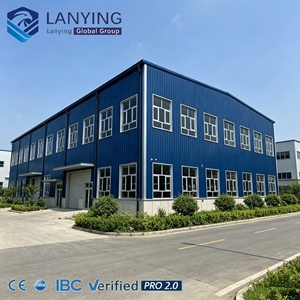
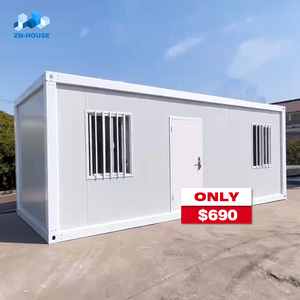
Engineered to integrate seamlessly with tubular steel trusses, long-span space structures, and modern logistics facilities. Factory-machined to ISO, JIS, ASTM, and EN building standards.
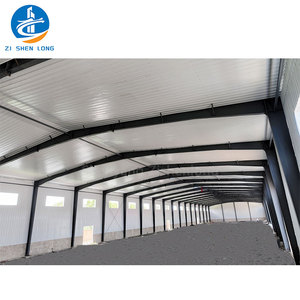
Why international EPC contractors, airport terminal planners, and heavy industrial facilities transition from standard hot-rolled I-beams to engineered Circular and Rectangular Hollow Section (CHS/RHS) pipe trusses.
In high-capacity industrial architecture and monumental infrastructure, structural efficiency is defined by the strength-to-weight ratio, wind drag resistance, and volumetric load distribution across expansive column-free interior spaces. Standard structural H-sections and welded plate girders suffer from major directional asymmetry: while their moment of inertia around the strong axis ($I_x$) is robust, their weak axis ($I_y$) remains vulnerable to lateral-torsional buckling (LTB) under flexural stress, requiring extensive transverse secondary bracing that adds dead weight without contributing to the primary load path.
By contrast, Circular Hollow Sections (CHS) and Square/Rectangular Hollow Sections (SHS/RHS) utilize closed geometric profiles where material is displaced radially from the neutral centroid. This delivers identical polar moments of inertia in all directions for CHS members, radically improving the radius of gyration ($r = \sqrt{I/A}$) and virtually eliminating lateral buckling tendencies. When deployed as three-dimensional triangular trusses or space frame systems, tubular pipe trusses can span uninterrupted distances exceeding 60 to 150 meters with lower total tonnage than conventional wide-flange frames.
Critical Engineering Principle: Under cross-wind forces and boundary atmospheric turbulence, the aerodynamic drag coefficient ($C_d$) of a circular steel tube is approximately 0.6 to 0.7, compared to 1.8 to 2.1 for a sharp-cornered standard I-beam. This 65% reduction in lateral wind pressure directly reduces foundation overturning moments and foundation anchor bolt pullout demands by up to 28%.
Engineered for high-torsion environments like cantilevered stadiums and automated crane hangars. Spatial triangular trusses resist out-of-plane buckling without continuous lateral purlin restraint.
Our 6-axis robotic CNC intersecting cutters contour saddle curves on bracing members with sub-millimeter tolerances, ensuring 100% full-penetration groove welds compliant with AWS D1.1 and EN 1090-2 EXC3.
For high-stress intersecting clusters where multiple CHS chords converge, customized GS-20Mn5 cast steel nodes distribute multiaxial stress concentrations, removing cyclic fatigue risks in extreme seismic zones.
| Engineering Attribute | CHS Tubular Steel Pipe Truss | Standard Hot-Rolled H-Beam Frame | Procurement Impact |
|---|---|---|---|
| Structural Weight per m² (Span > 48m) | 28 - 42 kg/m² | 48 - 72 kg/m² | Saves 25-40% total raw steel tonnage; reduced seismic shear. |
| Wind Resistance ($C_d$ Drag Coeff.) | 0.60 – 0.70 (Smooth Cylindrical) | 1.80 – 2.10 (Turbulent Flat Web) | Lower overturning forces on foundation piles and anchor bolts. |
| Torsional Resistance ($J$) | Extremely High (Closed Tube) | Very Low (Open Flange Profile) | Resists eccentric loads from monorails and overhead HVAC. |
| Surface Area for Painting / Coatings | 30% Lower Surface Area | Complex Reentrant Flange Surfaces | Lower C5-M marine coating costs; zero dust ledge traps. |
| Internal Corrosion Protection | Hermetically Sealed Interior | Dual-Sided Atmospheric Exposure | No internal rust risk once pipe ends are welded air-tight. |
Eliminating field assembly failures through strict material traceability, automated welding lines, certified NDT personnel, and systematic pre-shipping trial assemblies.
As an international structural steel exporter serving clients across Southeast Asia, the Middle East, Africa, and the Americas, structural integrity cannot rely on guesswork. Tube-to-tube welding nodes represent the most complex stress transfer mechanics in modern structural engineering. Joint Star Steel enforces comprehensive quality control throughout every step of production:
Our workshop utilizes computer-guided multi-axis pipe cutting machines capable of cutting continuous bevels along saddle-shaped intersection curves. This guarantees uniform root gaps (1.5mm to 2.5mm) across K, T, Y, and KT joints, enabling full penetration submerged and gas-shielded arc welding.
Every critical tension chord butt joint and branching intersecting weld undergoes Ultrasonic Testing (UT) according to AWS D1.1 Table 6.2 and Magnetic Particle Testing (MT) to eliminate hidden lack-of-fusion, inclusions, and lamellar tearing in thick-wall tubular nodes.
Steel surfaces undergo high-speed steel grit centrifugal blasting to ISO 8501-1 Sa 2.5 standard, creating a 45–75μm anchor profile. We apply high-build zinc-rich epoxy primers, epoxy micaceous iron oxide barrier coats, and polyurethane or fluorocarbon topcoats rated for severe C4/C5 marine environments.
To eliminate overseas erection surprises, representative multi-bay truss segments undergo full 1:1 scale trial pre-assembly at our facility. High-precision 3D total stations and laser scanners verify pin-to-pin center distances, camber offsets, and bolt hole alignments before shipping.
How progressive EPC conglomerates optimize material efficiency, carbon accounting, and robotic assembly in response to shifting global supply chains.
The global steel pipe truss fabrication sector is evolving from fragmented manual fabrication into an automated, data-driven ecosystem. Corporate project directors and procurement specialists must navigate changing technical and regulatory landscapes:
Modern procurement requires seamless Tekla and Revit LOD 400 integration. Every single tubular chord and nodal plate is laser-etched with unique QR codes connecting back to structural mill test certificates (MTCs EN 10204 3.1) and ultrasonic NDT test logs.
With the European Union Carbon Border Adjustment Mechanism (CBAM) and international ESG mandates, buyers increasingly specify hollow structural sections produced via Electric Arc Furnaces (EAF) utilizing high-recycled scrap, reducing Scope 3 embodied carbon by up to 60%.
Rising international break-bulk freight rates have reshaped truss engineering. Factories now design trusses with precision-bolted splice nodes engineered specifically to fit standard 40-foot High Cube (40HQ) containers, reducing ocean shipping costs by 45% compared to open-deck transport.
Furthermore, the integration of high-strength structural steels (such as S460NH and ASTM A500 Grade C) is replacing conventional Q235B/S235 grades in long-span designs. By taking advantage of higher yield strengths (up to 460 MPa), engineers can specify thinner tube walls while maintaining load-bearing capacity, reducing dead-weight loads and ocean freight charges.
From single-source structural steel design and insulated panel fabrication to on-site erection supervision, Joint Star Steel removes interface risks for international industrial buyers.
Operating continuously since 2010 with 352+ major projects completed, we eliminate the friction between separate design consultancies, steel fabricators, panel manufacturers, and civil contractors. We oversee initial engineering calculations, anchor bolt placement, framing, and final building envelope cladding under a unified warranty.
Unlike standard steel frame fabricators who outsource roofing, we manufacture our own EPS, Polyurethane (PU/PIR), and Rock Wool composite insulated sandwich panels. This ensures proper thermal break matching, integrated flashing, leak-proof standing seam fasteners, and verified fire ratings across every structure.
Our technical team consists of structural designers, Tekla detailers, AWS-certified welding inspectors (CWI), and erection superintendents. We tailor each structure to meet Eurocode 3, AISC 360, BS 5950, and local seismic and cyclonic requirements.
Exporting structural steel demands rigorous logistics planning. Members are grouped by erection phase, color-coded, labeled with stainless steel tags, and supported on wooden dunnage with protective steel banding to prevent transit damage and expedite on-site staging.
Clear answers to technical, engineering, and logistics questions commonly asked by procurement managers and structural engineering consultants.
All tubular sections are sourced from accredited primary steel mills accompanied by EN 10204 Type 3.1 Inspection Certificates verifying chemical composition and mechanical properties (including Charpy V-notch impact toughness at -20°C or 0°C). Standard supply grades include ASTM A500 Grade B/C, EN 10210 / EN 10219 S355J2H / S275J2H, and GB/T 6728 Q355B/D. Full traceability is maintained from mill billets through CNC fabrication to site delivery.
For international export via containerized freight (40ft High Cube containers), trusses are designed with precision modular field splices. Splices are strategically located at low-bending-moment points identified in structural analysis models (typically at the 1/3 or 1/5 chord points). These connections utilize high-strength friction-grip (HSFG) bolted flanges (Grade 8.8 or 10.9 bolts) or internal sleeve-couplers with field-welding backup rings. This approach allows large-span trusses to ship within standard shipping containers while maintaining full structural strength once assembled on site.
For high-corrosion coastal or chemical facilities (ISO 12944 categories C4, C5-I, or C5-M), we offer two primary systems:
1. Hot-Dip Galvanizing (HDG): Compliant with ISO 1461 / ASTM A123, providing a minimum zinc thickness of 85–100μm inside and out (achieved via internal vent/drain holes in the tubular chords).
2. Duplex Protective Coating: Sa 2.5 blast cleaning, followed by a zinc ethyl-silicate or epoxy primer (75μm), an epoxy micaceous iron oxide intermediate barrier coat (150μm), and an aliphatic polyurethane or fluorocarbon topcoat (75μm), providing a total dry film thickness (DFT) exceeding 300μm for a 25+ year service life.
Truss designs adhere strictly to vertical deflection limits established in AISC 360 Chapter L and Eurocode 3 (EN 1993-1-1), typically maintaining dead-load plus live-load deflections within L/400 to L/600, and up to L/800 for buildings supporting overhead traveling bridge cranes. To offset natural dead-weight sag, we calculate and introduce precamber profiles into the fabrication jigs (following parabolic or circular curves), ensuring the assembled truss sits level once dead loads are applied.
Curved tubular intersections cannot be properly inspected using standard visual checks alone. In our QA protocol, 100% of all branching tubular joints undergo Visual Inspection (VT) for profile uniformity and throat thickness, followed by Magnetic Particle Testing (MT) to detect surface micro-cracking in the heat-affected zone (HAZ). For primary tension chords and dynamic loads, certified ASNT Level II or Level III inspectors conduct Phased Array Ultrasonic Testing (PAUT) or specialized angle-beam ultrasonic testing (UT) according to AWS D1.1 Clause 9 for tubular structures.
Yes. We offer fully integrated solutions that include structural design, 3D modeling, component fabrication, and on-site construction management. Clients can provide basic architectural parameters (span, eave height, wind speeds, crane capacities), and our engineering team will develop detailed structural calculations, Tekla workshop fabrication models, and full packing schedules. We also dispatch experienced erection engineers to project sites worldwide to supervise local installation teams.
Connect with our structural engineering team to review your architectural concepts, evaluate preliminary steel tonnage calculations, and receive a competitive factory-direct proposal for your project.
Contact Us