
Global Structural Steel Decking Whitepaper

Top Trusted Steel Decking Sheets Manufacturer & Exporters

Precision-Engineered Composite Metal Floor Systems, Open-Rib Decking, and Galvanized Formwork Solutions Fabricated to ASTM A653, EN 10346, and BS 5950 Standards for Industrial PEB & Commercial High-Rise Infrastructure.

352+
Major Projects Delivered
120+
Multinational EPC Clients
15+
Years Engineering Pedigree
Z275
Max High-Zinc Galvanization
Precision Roll-Formed Profiles

High-Strength Profiled Steel Decking Portfolio

Engineered to replace conventional wooden formwork and provide continuous horizontal composite diaphragm action. Browse our certified floor decking panels manufactured for high-load durability, rapid erection, and concrete reduction.
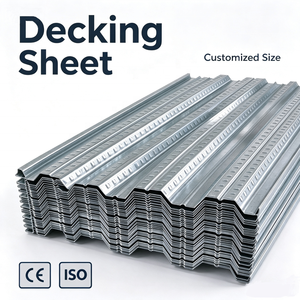
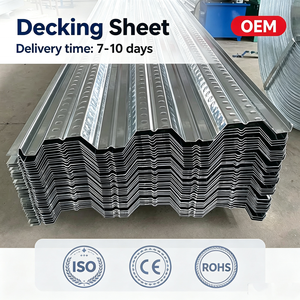
Structural Mechanics & Composite Action

Engineering Principles of Profiled Composite Floor Decking

In modern multi-story commercial and industrial framing, profiled steel decking sheets function not merely as sacrificial lost formwork, but as primary tensile reinforcement and lateral shear diaphragms.
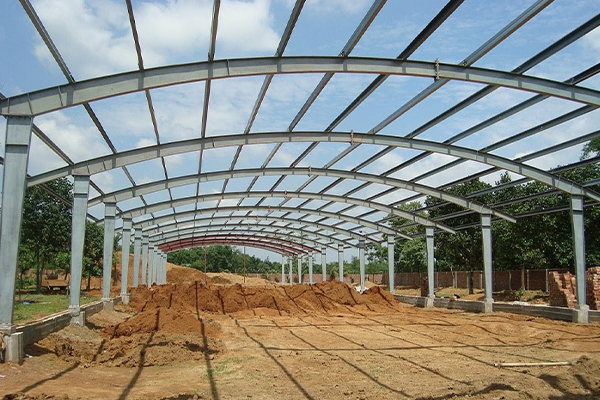
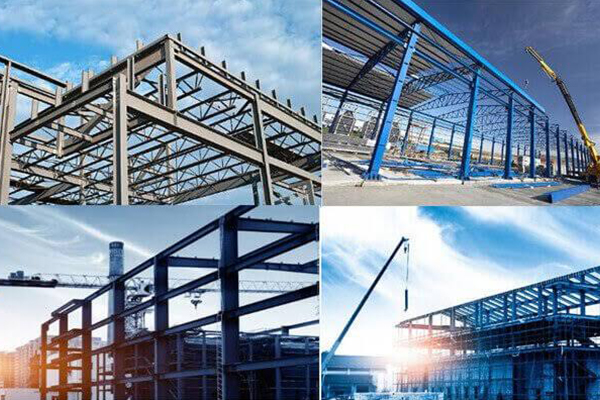
Steel Structure Fabrication and Beam Preparation

Composite Slab Action: Mechanical Interlock Mechanics

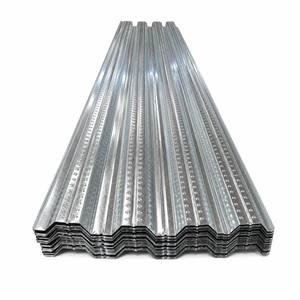
When concrete cures over profiled steel decking, structural integrity hinges upon the transfer of horizontal shear stresses at the steel-concrete interface. Conventional smooth steel sheets provide zero bond strength once thermal expansion or shrinkage cracking initiates. Joint Star Steel’s cold-formed decking sheets feature precise engineered chevron and spherical embossments along the vertical flutes.

These embossments generate a rigid mechanical interlock that prevents slip under cyclic dynamic loading, satisfying the composite interaction requirements outlined in Eurocode 4 (BS EN 1994-1-1) and the Steel Deck Institute (SDI-C) specifications. In the positive bending zone, the galvanized steel shell bears the full tensile yield stresses (up to 550 MPa), eliminating the need for tensile rebar within the slab belly.

  • Diaphragm Shear Distribution: Deep-rib profiles act as a horizontal truss distributing seismic and wind lateral loads directly into main frame columns.
  • Unpropped Span Lengths: Engineered web stiffness enables continuous casting spans up to 4.2 meters without mid-span temporary shoring.
  • Deflection Control: Optimized moment of inertia guarantees dead-load wet concrete deflection compliance within L/180 and service load thresholds of L/360.
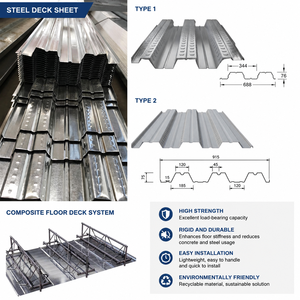
Profile Specification Rib Height (mm) Effective Width (mm) Standard Gauge (mm) Concrete Volume Savings Unpropped Max Span (Single) Primary Global Application
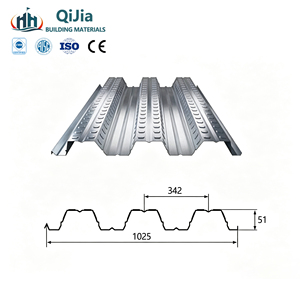
Open Rib 750 / Type 750 35 mm - 50 mm 750 mm 0.75 - 1.50 22% - 28% 2.6 m - 3.2 m Logistics Centers, Industrial Warehouses, Mezzanines
Deep Dovetail / Re-Entrant 50 mm - 54 mm 600 mm 0.80 - 1.20 18% - 24% 2.8 m - 3.4 m Hospitals, Commercial Towers, Acoustic Soffits
Trapezoidal Deep Rib (75-80) 75 mm - 80 mm 600 mm - 760 mm 0.90 - 1.60 30% - 38% 3.8 m - 4.5 m High-Bay Distribution Hubs, Car Parks, Heavy Fab Plants
Non-Composite Form Deck 15 mm - 25 mm 800 mm - 1000 mm 0.60 - 1.00 N/A (Uniform Slab) 1.4 m - 1.8 m Foundation Caps, Roof Plinths, Pre-Engineered Building Sheds

Zinc Coating Mass & Metallurgical Passivation

For industrial developers, structural longevity is governed by corrosion fatigue. Joint Star Steel exclusively sources structural-grade cold-rolled steel coils matching ASTM A653 / ASTM A653M Grade 50 (345 MPa) and EN 10346 S350GD + Z. Our decking profiles receive hot-dip zinc coatings from Z120 (120 g/m² total both sides) up to heavy marine-grade Z275 (G90).

The sacrificial zinc layer undergoes chemical chromate or trivalent non-hexavalent passivation, followed by light electrostatic oiling. This manufacturing safeguard entirely halts the formation of storage "white rust" (zinc hydroxycarbonate) throughout long-distance ocean container shipping and wet on-site marshaling.
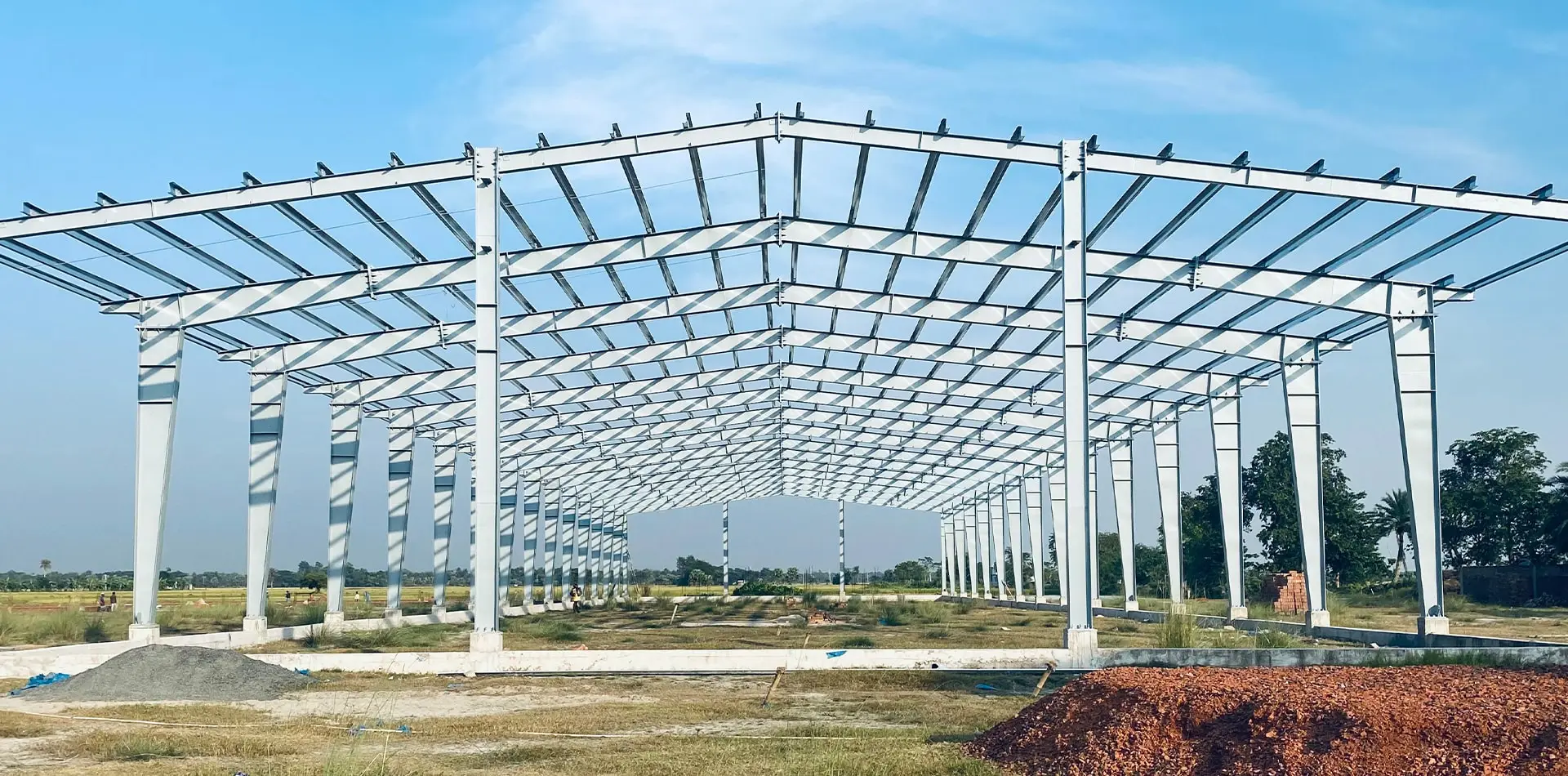
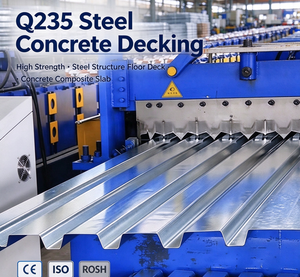
Continuous Automated Cold Roll Forming Decking Plant
Strategic Sourcing Insights

Future Procurement Trends in Global Steel Decking

As international EPC developers navigate volatile commodity cycles, carbon border adjustments, and modular construction mandates, procurement strategies for structural steel decking are undergoing seismic shifts.

1. Scope 3 Decarbonization & Green Steel Mandates

By 2026, European CBAM and North American LEED v4.1 certifications will require precise embodied carbon disclosures (EPDs). Sourcing is pivoting rapidly toward Electric Arc Furnace (EAF) steel coils processed with renewable grids, which slash carbon intensity from 2.1 tons of CO₂ per ton of steel (BOF blast furnace) down to below 0.6 tons of CO₂.

EPD & CBAM Verification

2. BIM 6D Integration & CNC Cut-to-Length Schedules

Procuring standardized 6-meter bundle lengths is becoming obsolete due to prohibitive site cutting waste and crane hoisting inefficiencies. Global Tier-1 contractors demand direct IFC model extraction from Tekla Structures, delivering customized mill-punched lengths tailored down to the millimeter to fit framing purlins exactly.

Zero Site-Waste Delivery

3. Freight Nesting Density & Export Reshoring

With ocean container freight representing 15% to 30% of landed steel decking sheet costs, manufacturers engineering high nest-taper ribs achieve 20% higher pallet consolidation within 40ft High Cube containers. Purchasing teams increasingly favor fully integrated PEB roll-formers capable of bundled shipments alongside anchor bolts and structural columns.

Landed Cost Optimization
Innovation Roadmaps

Evolutionary Leap: From Timber Shuttering to Smart Decks

Trace the four-decade evolutionary timeline of slab construction systems and understand why engineered cold-formed composite floor decking sheets dominate modern construction velocity.

Generation I: Timber & Plywood Formwork

High labor dependency, extensive temporary shoring trees, fire hazards on-site, and high material waste. Construction cycles averaged 14 to 21 days per floor slab.

Legacy System (Pre-1980s)

Generation II: Sacrificial Form Decks

Plain corrugated steel sheets used solely to eliminate timber shoring. The steel served no structural role post-curing, requiring full top and bottom tensile rebar meshes.

Interim Stage (1980-2000)

Generation III: Embossed Composite Decks

Integrated mechanical embossments, shear studs, and anti-corrosion zinc coatings. Floor cycle speeds shortened to 4-7 days per floor with significant deadweight cuts.

Current Industry Benchmark

Generation IV: Acoustic & Cellular Smart Decks

Perforated webs with integrated sound dampening, cellular wiring conduits for automated IoT cabling, and pre-welded shear studs delivered direct from factory jigs.

Next-Gen Frontier (2025+)
Enterprise Advantage & Global Footprint

Why International Buyers Trust Joint Star Steel Structure Ltd.

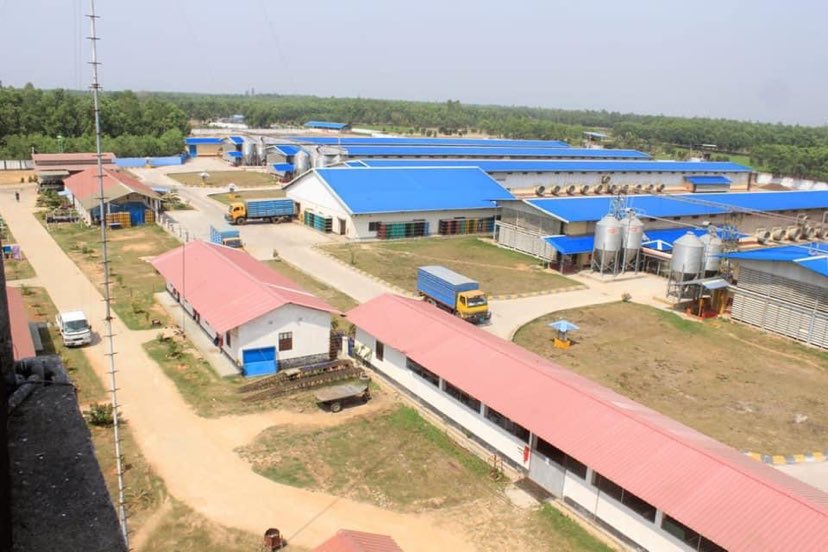
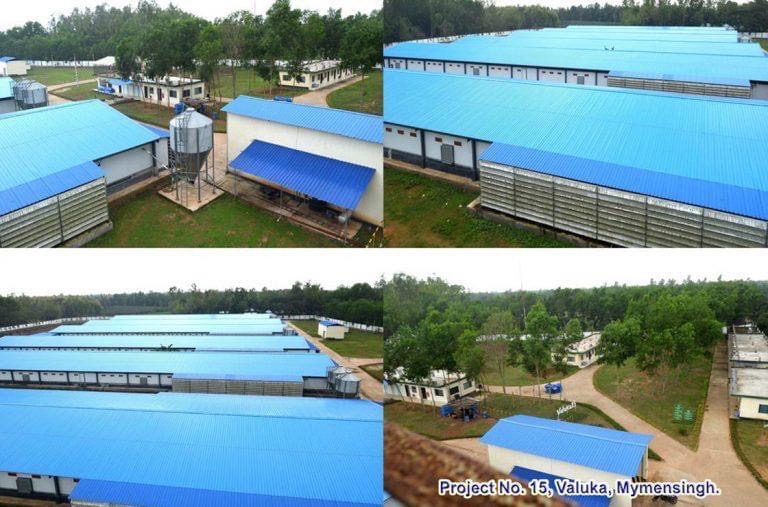
Established in 2010 in Dhaka, Bangladesh, Joint Star Steel Structure Ltd. operates state-of-the-art continuous roll-forming and pre-engineered steel fabrication facilities, bridging the gap between bespoke engineering precision and scalable bulk exports.

Joint Star Steel Engineering Project Management and Analytics

Single-Source Accountability: Concept, Mill, Port to Site

Unlike trading brokers or fragmented roll-forming shops, Joint Star Steel Structure Ltd. controls the complete supply lifecycle under a single contract. From our headquarters in Uttara, Dhaka, our engineering teams provide integrated structural analysis, automated fabrication, strict quality assurance, and site erection coordination.

With over 352 successful industrial projects completed across commercial complexes, pharmaceutical factories, high-span logistics warehouses, and textile powerhouses, we deliver seamless composite floor decking solutions engineered for international building codes.
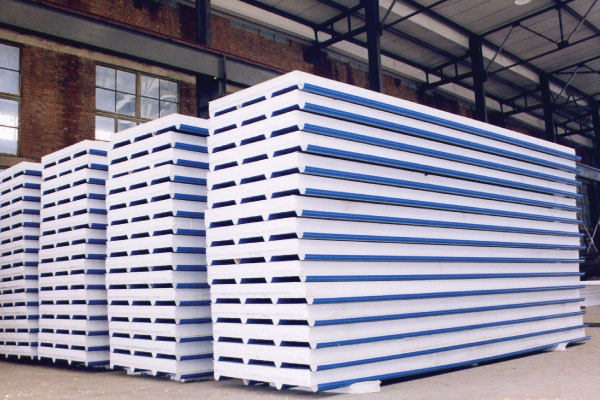
  • In-House PEB & Panel Synthesis: Simultaneous fabrication of primary structural beams, EPS/PU/Rockwool insulated sandwich panels, and cold-rolled steel decking sheets.
  • Certified QA/QC Protocols: 100% inspection including ultrasonic flaw detection, zinc coating thickness Elcometer verification, and MTC EN 10204 3.1 tracking.
  • Expert Engineering Support: Dedicated in-house team of 100+ structural engineers, detailing draftsmen, and certified erection supervisors.
  • Turnkey Civil & RCC Capability: Proven ability to execute hybrid cast-in-place reinforced concrete floors combined with structural steel decking.
Completed Pre-Engineered Industrial Factory
DELIVERED PROJECT

Pre-Engineered Factory Assembly

Large-Span Steel Structure Warehouse
DELIVERED PROJECT

High-Bay Multi-Floor Logistics Hub

Insulated Sandwich Panel Manufacturing
MANUFACTURING LINE

Continuous Thermal Panel Lines

Steel Building Design and Structural Engineering
ENGINEERING DESIGN

3D Structural Analysis & Detailing

Buyer Knowledge Base

Frequently Asked Questions on Steel Decking Procurement

Comprehensive engineering and commercial guidance compiled by senior technical sales directors to streamline your request for quotation (RFQ) and technical compliance evaluation.

What are the key differences between Open Rib (Type 750) and Dovetail Decking? +
Open rib profiles (like Type 750) feature trapezoidal flutes with wide bottom troughs. They offer broad effective coverage, exceptional concrete volume reduction (typically saving 20-30% of wet mix), and simpler nesting for low shipping rates. Dovetail (re-entrant) profiles have narrow neck openings that lock concrete tightly into an interlocking key, providing superior suspension points for MEP piping and mechanical ceiling hangers without drilling into the concrete matrix.
How does the composite steel decking sheet resist fire without fireproofing spray? +
Under standard ISO 834 or ASTM E119 fire conditions, the exposed bottom steel sheet is assumed to lose yield capacity as temperatures pass 550°C. Fire ratings (1 to 3 hours) are achieved through composite slab design incorporating negative reinforcement bars placed within the ribs and light anti-crack wire mesh (e.g., A142/A193) near the slab top, ensuring continuous catenary slab action even when bottom flange steel yields.
What minimum zinc coating thickness is recommended for industrial atmospheres? +
For controlled interior environments (dry commercial buildings), a Z120 or Z180 (180 g/m² total both sides) coating conforms to ASTM A653 and BS 5950 Part 4. For high-humidity facilities, chemical plants, coastal warehouses, or exposed parking garages, we strictly mandate hot-dip galvanization of Z275 (G90, 275 g/m²) or customized Galvalume / Aluzinc coatings to avoid premature oxidative corrosion.
How are steel decking bundles packaged to prevent transit corrosion (White Rust)? +
We employ heavy-duty automated nesting and export wrapping. Bundles are interleaved with dry vapor-corrosion-inhibiting (VCI) paper, strapped with high-tensile steel bands over plastic edge guards, and encased in waterproof polyethylene stretch film. Timber dunnage runners are securely fixed underneath each bundle to allow rapid forklift discharge at destination container freight stations without denting profile edges.
What criteria determine whether temporary props (shoring) are required? +
The necessity for propping depends on three parameters: the profile web height, sheet steel gauge thickness, and clear span between structural beams. Under wet concrete dead loads and construction impact allowances (usually 1.5 kN/m² per SDI criteria), spans exceeding 3.0m on 0.75mm decking typically require a temporary centerline timber or steel support until concrete compressive strength ($f'_c$) attains 75% of design capacity.
Can Joint Star Steel export customized bundle lengths matching Tekla models? +
Yes. Our computerized hydraulic shear lines cut profiles on-the-fly to exact millimeter tolerances (up to 14 meters maximum transportable container lengths). We label each pallet bundle with unique piece marks corresponding directly to your structural erection drawings and Tekla BIM scheduling, accelerating field deployment.
What documentation and mill test certificates accompany international shipments? +
Every export consignment is supplied with complete quality compliance packs: Mill Test Certificates (MTC conforming to EN 10204 Type 3.1), verification of base metal yield & tensile limits, coating mass adherence test reports, Elcometer micron certifications, commercial packing lists, and Certificates of Origin for preferential tariff entry.
What is the typical production lead time and Minimum Order Quantity (MOQ)? +
For standard profile gauges in our inventory coils (Z120-Z275, 0.8mm to 1.2mm), production can commence within 5 business days, with container loading at Chittagong or regional ports within 10 to 14 days. Our standard export MOQ is 500 square meters per profile type, or bundled mixed consignments combining decking sheets, sandwich panels, and pre-engineered steel members.

Request Technical Sizing & Global Export Quotations

Submit your architectural spans, floor load criteria, or structural framing layouts. Joint Star Steel’s engineering design department will generate a full load-span table, deck profile optimization analysis, and landed freight estimates within 24 hours.