
Engineering Authority • Global Sourcing Whitepaper

Top Trusted Corrugated Steel Sheets Manufacturers & Exporter

Engineered Pre-Engineered Building Systems, Structural Floor Decking, and Cladding Metallurgy Delivering Optimized Structural Efficiency Since 2010.

Engineered Steel Portfolio

Featured Industrial Systems & Core Enclosure Products

Manufactured to stringent international benchmarks including ASTM A653, ASTM A792, and EN 10346. Each system is calibrated for superior yield load limits, micro-climate anti-corrosion defense, and seamless pre-engineered structural alignment.

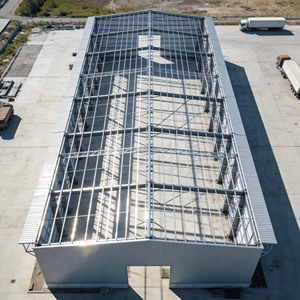
Multi Storey Steel Structure Workshop and Warehouse
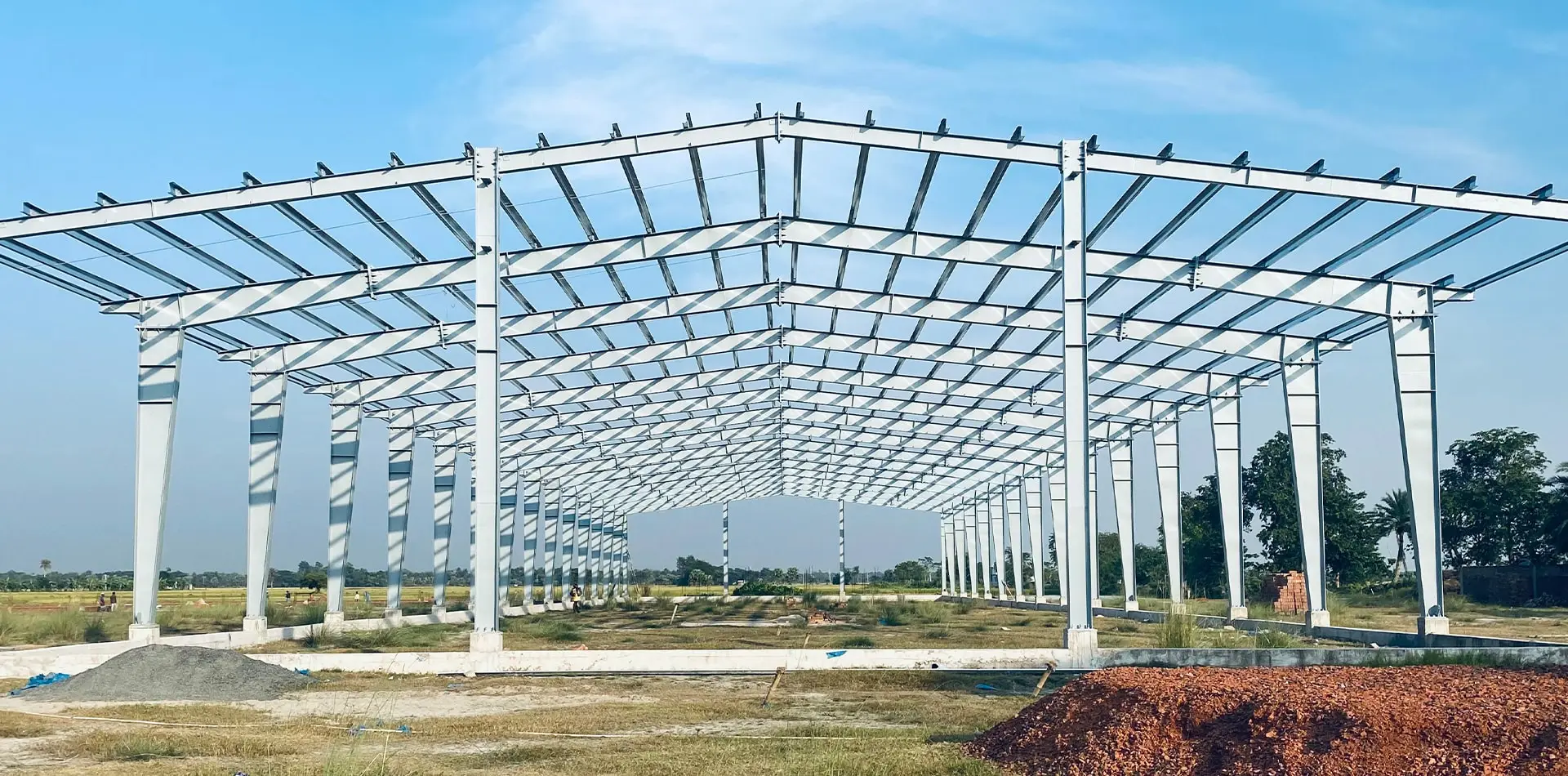
Structural PEB System

Multi Storey Steel Structure Workshop & Warehouse Mezzanine Floor

Engineering: Heavy portal frame / built-up H-beams Yield Strength: Q355B / ASTM A572 Grade 50 Application: Heavy logistics & manufacturing
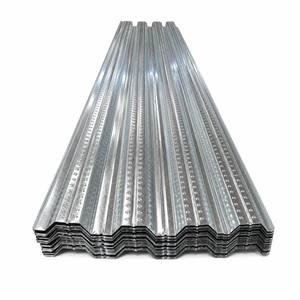
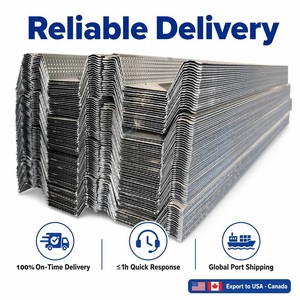
Corrugated Open Rib Galvanized Steel Floor Decking Panel
Composite Decking

Modern Corrugated Open Rib Galvanized Steel Floor Decking Panel

Profile: Open-rib high interlock tensile deck Coating: Z180 - Z275 Hot-Dip Galvanized Function: Structural composite floor slabs
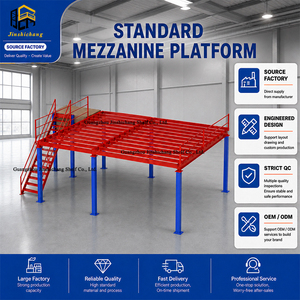
OEM Customized Steel Mezzanine Floor Manufacturer
Modular Storage

OEM Customized Steel Mezzanine Floor for Warehouse Storage Projects

Design Load: 3.0 to 12.0 kN/m² dynamic payload Framing: Cold-formed C/Z plus primary beams Integration: Bolt-together non-welded site assembly
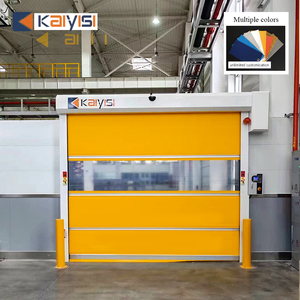
Automatic High Speed Door PVC Roller Shutter
Envelope Access

Automatic High Speed Fast Roller Shutter PVC Industrial Door

Operating Speed: 0.8 - 1.5 m/s frequency drive Wind Resistance: Class 2/3 structural reinforcement Suitability: Cleanroom & thermal buffer isolation
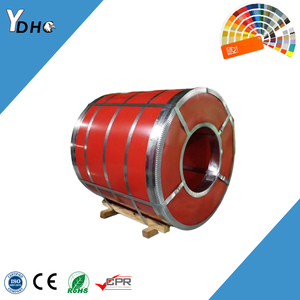
Prepainted Color Coated PPGI PPGL Steel Coil
Coated Coil Sourcing

Prepainted Color Coated Galvanized Aluzinc PPGI PPGL Steel Coil

Substrate: 55% Al-Zn (Galvalume) / HDG Paint Finishes: Regular Modified, SMP, or PVDF Standards: ASTM A755, JIS G3312, EN 10169
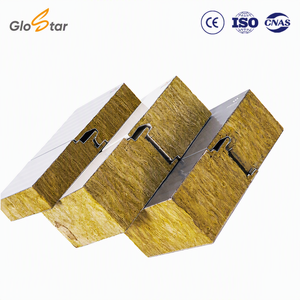
Insulated Sandwich Panel for Cold Room Container
Thermal Envelope

Insulated Sandwich Panel Steel Skin PU / Rock Wool Core

Insulation Core: Polyurethane (PUR/PIR) / Rockwool Thermal Value: Lambda values down to 0.022 W/m·K Fire Performance: Class A non-combustible available
Light Gauge Steel C Channel Framing Profiles
Secondary Framing

C-Channel Light-Gauge Steel Framing Profiles for Keel & Gypsum

Forming: High-precision continuous roll forming Corrosion Rating: Hot-dip zinc coating Z120-Z275 Structural Use: Secondary purlins, curtain walls, studs
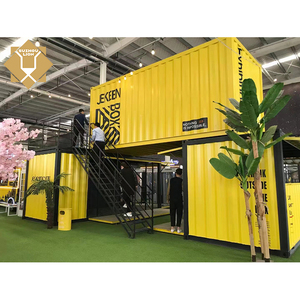
Quick Assembly Flatpack Shipping Container House
Modular Systems

Space Efficiency 20ft Quick-Assembly Flatpack Container Structure

Erection Time: Rapid deployment in under 3 hours Cladding: High-density insulated corrugated skins Interlock: ISO standard corner cast fittings
352+

Industrial PEB Projects Delivered

120+

Global Tier-1 EPC Clients

100+

In-House Engineers & Fabricators

2010

Established Operational Pedigree

Enterprise Manufacturing Excellence

Engineering Integrity Backed by Joint Star Steel Structure Ltd.

Founded in 2010 in Dhaka, Bangladesh, Joint Star Steel Structure Ltd. has developed from a specialized fabricator into an internationally acknowledged force in pre-engineered steel buildings, advanced sandwich panels, and industrial cold-formed corrugated sheet metal processing.

Operating under our founding principle of uncompromising structural reliability, our team unifies every phase of development: architectural detailing, finite-element computational structural calculation (using Tekla and SAP2000), CNC submerged arc welding, multi-stage anti-corrosion coating, and international marine export packaging. Unlike brokers, we own the full production cycle, eliminating coordination friction and guaranteeing total trace-ability from steel mill test certificate (MTC) to final on-site bolt torquing.

Joint Star Steel Continuous Production Facility

Comprehensive Product Line

From corrugated open-rib galvanized floor decking (Z180-Z275) to pre-painted Galvalume coils (AZ150) and insulated sandwich panels (EPS, PU, Mineral Rock Wool), we supply complete architectural envelopes tailored precisely to international codes.

Single-Contract Accountability

We eradicate contractor finger-pointing by bridging civil engineering, anchor bolt layout, structural steel frame fabrication, and exterior corrugated cladding installation under a unified, bonded turnkey execution agreement.

Rigorous Quality Verification

Our quality assurance laboratory conducts real-time checks on base metal thickness (BMT), zinc coating adherence, tensile/elongation properties (ASTM A370), cross-cut paint adhesion, and cyclic salt-spray endurance testing (ASTM B117).

Material Science & Envelope Engineering

Metallurgical Selection: Galvanized vs. Galvalume vs. Polymer-Coated Sheets

In contemporary industrial enclosure design, specification failures rarely originate from global structural collapse; rather, they stem from premature micro-corrosion, galvanic degradation around fasteners, micro-fissuring of the organic polymer during roll-forming, or inter-rib capillary water induction. Specifying corrugated steel sheets requires balancing mechanical load transfer with localized atmospheric corrosivity categories (C1 through C5-M under ISO 12944).

Traditional Hot-Dip Galvanized (HDG) sheets (ASTM A653) rely entirely on a zinc barrier and sacrificial galvanic action. In benign inland conditions, HDG performs adequately. However, in modern coastal, chemical processing, or tropical high-humidity environments, Galvalume / Aluzinc (55% Aluminum, 43.4% Zinc, and 1.6% Silicon) compliant with ASTM A792 provides two to four times the atmospheric service life of traditional zinc coatings. The microscopic aluminum dendrites act as a physical barrier preventing acidic penetration, while the inter-dendritic zinc regions furnish cathodic edge protection if the sheet is cut or punctured.

"Specifying Total Coated Thickness (TCT) without dictating Base Metal Thickness (BMT) and exact metallic coating mass represents an engineering vulnerability. A 0.50 mm TCT sheet with heavy paint and minimal zinc offers drastically inferior yield capacity and corrosion life compared to an authentic 0.50 mm BMT sheet featuring an AZ150 alloy substrate."
Profile & Product Type Standard Substrate Yield Strength (MPa) Coating Mass / Specs Optimal Engineering Scope
Sinusoidal Corrugated Roofing ASTM A792 AZ150 Aluzinc G300 / G550 (High Tensile) 150 g/m² (Double-Sided) Agricultural buildings, tropical factory roofing, architectural canopies
Trapezoidal Box Rib (R-Panel) ASTM A755 PPGL (PVDF / SMP) Grade 50 (345 MPa) / G550 20µm Top + 5µm Primer Modern industrial facades, large logistics warehouses, clean-span roofing
Open-Rib Composite Floor Decking ASTM A653 Structural Steel Grade 40 to Grade 50 Z275 (275 g/m² Zinc) Multi-storey steel workshops, mezzanine floors, commercial composite slabs
Insulated PUR/PIR Sandwich Panel 0.45 - 0.60 mm PPGI/PPGL G300 Base Steel Skin 40 - 45 kg/m³ Core Density Pharmaceutical facilities, cold chain storage, controlled food production
Mineral Rock Wool Fire Panel Double Pre-painted Steel Skin Structural Grade G300 100 - 120 kg/m³ Basalt Core Firewall compartments, high-risk industrial units (Class A non-combustible)

Micro-Capillary Design & Moisture Migration Controls

High-volume rainfall and monsoonal climates—common in export destinations across South Asia, Southeast Asia, Africa, and the Middle East—demand strict capillary break detailing at longitudinal panel overlaps. Joint Star Steel profiles incorporate a precision-engineered anti-capillary siphon groove rolled into the under-lap rib. This micro-channel disrupts the surface tension of driven rainwater, preventing moisture from siphoning upwards over the secondary rib into purlin zones. Combined with EPDM-bonded austenitic stainless steel self-drilling fasteners, this geometric profile prevents cut-edge oxidation and ensures envelope integrity throughout decades of severe thermal cyclicity.
Strategic Sourcing Horizon

Future Procurement Trends: Corrugated Sheets & PEB Envelopes (2025–2030)

Procurement officers and EPC engineering directors are transitioning from basic unit-cost buying toward lifecycle structural risk mitigation. Understanding these forward trends is essential for durable capital asset deployments.

Zn-Al-Mg (ZAM) Transition

Procurement is actively migrating from pure galvanized to Zinc-Aluminum-Magnesium ternary alloy coatings. The addition of 1.5% to 3% Magnesium forms an insoluble Simonkolleite protective film that dramatically enhances cut-edge self-healing in corrosive C4/C5 environments.

Solar-Ready Trapezoidal Ribs

Commercial rooftops now routinely mandate Building Integrated Photovoltaic (BIPV) installations. Sourcing specifications now favor trapezoidal standing-seam and box-rib panels designed for direct non-penetrating mechanical clamp mounts to avoid voiding envelope waterproofing warranties.

Decarbonized EAF Sourcing

With the phased rollout of the EU Carbon Border Adjustment Mechanism (CBAM) and corporate ESG mandates, international buyers demand documented Environmental Product Declarations (EPDs), driving supply shifts toward scrap-based Electric Arc Furnace (EAF) low-carbon substrates.

Full Turnkey Off-Site Prefab

Fragmented sourcing (buying loose coils, hiring third-party roll formers, and independent erectors) is rapidly declining. Tier-1 developers prefer single-source contracts where structural design, secondary purlins, sheeting, and cold rooms arrive pre-punched and erection-ready.

Automated Steel Structure Fabrication at Joint Star Facility
Manufacturing Modernization

Continuous Roll Forming & Automated QA Tolerancing

Modern high-tensile corrugated profiles (e.g., G550 yield strength sheets with tensile limits exceeding 550 MPa) present pronounced elastic spring-back challenges during manufacturing. Standard cold roll-forming lines can induce residual stress, micro-cracking across zinc boundaries, or profile cambering.

Joint Star Steel implements multi-pass gradual cold-forming lines fitted with optical laser profile gauge telemetry. By controlling forming strain across up to 24 progressive roll stations, we protect the metallic substrate bond, eliminate oil-canning waves across wide valleys, and preserve tight lap tolerances (+/- 1.0 mm) over continuous single-pass roof runs exceeding 14 meters.

Send an Inquiry
Procurement Clarity

Frequently Asked Engineering & Procurement Questions

Definitive technical guidance addressing compliance, coating durability, design calculations, and shipping logistics.

What is the critical distinction between BMT and TCT in corrugated sheet orders?
Base Metal Thickness (BMT) specifies the raw bare steel thickness prior to the introduction of any zinc coating, aluminum-zinc alloy layers, or chemical primer/topcoat paints. Total Coated Thickness (TCT) includes the bare steel, metallic alloy mass, and organic polymer coatings. Structural calculations (such as moment of inertia, section modulus, wind uplift resistance, and axial diaphragm shear values) must rely strictly on BMT under ASTM and ASCE codes. Ordering on a generic "thickness" metric exposes buyers to suppliers substituting thin 0.40 mm BMT steel padded with heavy coatings to measure 0.50 mm TCT, severely diminishing structural capacity.
How does an AZ150 Galvalume coating compare to a Z275 Hot-Dip Galvanized sheet?
An AZ150 coating (150 grams of 55% Al-Zn alloy per square meter, double-sided) generally provides 2 to 4 times the corrosion longevity of a conventional Z275 galvanized sheet (275 grams of zinc per square meter) in typical industrial and maritime atmospheres. While galvanized sheet metal depends exclusively on sacrificial zinc consumption, Galvalume's microstructure binds microscopic zinc within an inert aluminum matrix. The zinc protects cut edges cathodically, while the aluminum forms an impervious barrier against long-term oxidation.
What prevents capillary leakage and moisture ingress along low-pitch roofs?
For roof slopes lower than 1:10 (approximately 5.7 degrees), traditional corrugated sheets without engineered ribs risk capillary siphoning. To avoid water penetration during driving monsoons, Joint Star Steel profiles incorporate continuous anti-capillary relief channels on the mating under-lap rib. In addition, roof designs below 7 degrees must specify non-curing neutral-cure butyl mastic sealant tape along all end-laps and side-laps, fastened with Class 4 anti-corrosion drill screws fitted with integrated vulcanized EPDM backing washers.
Which insulated core panel is appropriate: EPS, Polyurethane (PU/PIR), or Rock Wool?
Selection depends on thermal targets, insurance underwriting, and building fire safety regulations:
  • Expanded Polystyrene (EPS): Most cost-effective and ultra-lightweight; ideal for temporary buildings, dry-storage sheds, and site offices.
  • Polyurethane / Polyisocyanurate (PU / PIR): Provides superior thermal barrier performance (Thermal Conductivity λ ≈ 0.022 W/m·K); standard for cold stores, frozen food logistics, and climate-controlled cleanrooms.
  • Rock Wool (Basalt Mineral Fiber): Completely non-combustible (Class A1/A2 under EN 13501-1); mandatory for industrial firewall partitions, textile manufacturing plants, and high-occupancy structures prioritizing life-safety.
How does Joint Star Steel pack and protect thin-gauge profiles for ocean freight?
Marine transport exposes metal bundles to severe humidity fluctuations, salt spray condensation, and inertial shifts. We package all export shipments using multi-layer weatherproof Kraft paper wrapping, complete poly-film moisture barriers, external galvanized steel corner guard angles, heavy-gauge perimeter steel strapping, and fumigated ISPM-15 compliant timber skids. Inside dry containers, shipments are systematically braced with heavy ratchet lashings and timber chocks to eliminate intra-transit abrasion that could damage protective polymer finishes.
Can your engineering team supply custom-cut lengths to eliminate job-site waste?
Yes. Our continuous CNC automated roll-forming lines feature flying hydraulic shears that produce millimeter-accurate custom cut-to-length sheets (ranging from 1.5 meters up to 11.8 meters for standard 40ft High Cube container stuffing, or longer for open-top transport). Custom cutting minimizes structural end-lap connections, substantially cuts site labor costs, and eliminates on-site abrasive cutting disk operations, which frequently damage protective zinc coatings and initiate premature rust.

Accelerate Your Industrial Project with Direct Engineering Consultation

Whether you require high-tensile structural open-rib decking panels, pre-painted Galvalume cladding, fire-rated rock wool sandwich panels, or a complete multi-storey pre-engineered building package, our in-house engineering team provides rapid structural take-offs, full profile CAD drawings, and factory-direct export proposals.