Directly manufactured to international structural specifications (ASTM A1003, EN 10346, GB/T 11981). Explore our heavy-duty profiles, automated roll forming lines, and precision pre-engineered building systems.
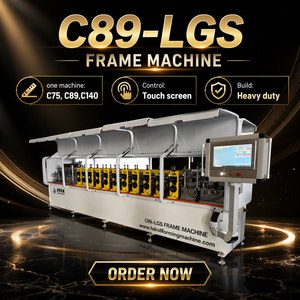
High-speed CNC roll forming equipment equipped with PLC motion controller, auto-chamfering, swaged ends, and pre-punching modules for industrial framing assemblies.
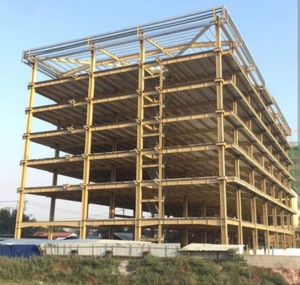
Precision-cut 40x60 gable portal frame structure engineered for residential garages, workshops, and light industrial applications with rapid bolt-together erection.
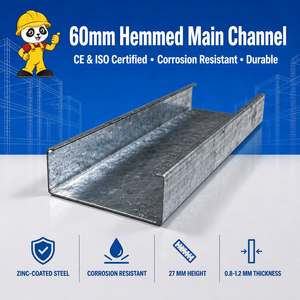
Hemmed safety-edge square channel (CD 60) featuring Z120–Z275 galvanized corrosion resistance, engineered specifically for high-load false ceiling assemblies.
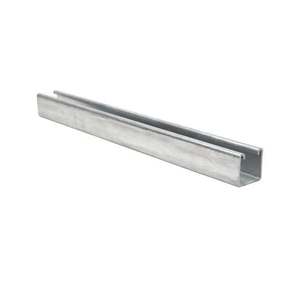
Continuous roll-formed galvanized structural U-channels designed for primary top/bottom plate tracks, high-tolerance perimeter framing, and modular structural joists.
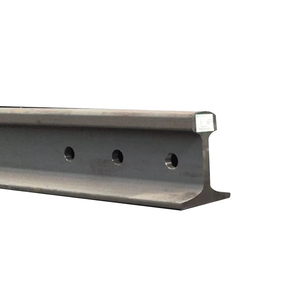
55Q heavy carbon grade light steel tracks built for internal quarry hauling, factory hoist cranes, transfer carts, and durable industrial warehousing railway lines.
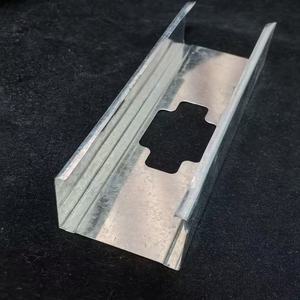
Anti-buckling knurled flange C-studs configured for dry-walling partition walls, offering optimized screw penetration and robust acoustic dampening properties.
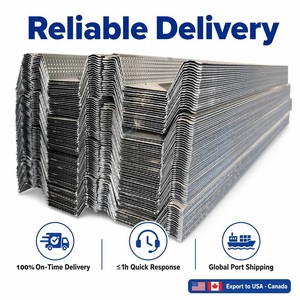
180g/m² certified hot-dipped zinc cladding profile providing superior corrosion resistance in 50mm, 75mm, and 100mm widths for humid coastal installations.
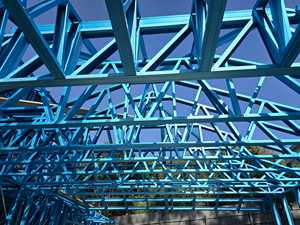
State-of-the-art CNC LGS villa frame roll forming machine featuring automatic servo feed, hard chrome alloy rollers, high-speed shear dies, and industrial PLC control.
Light Gauge Steel (LGS), also widely referred to as cold-formed steel (CFS), represents one of the most critical disruptive shifts in modern modular architecture and modern industrialized off-site construction (OSC). Manufactured from thin sheets of structural-grade carbon steel, LGS sections are roll-formed through cold processes at ambient temperatures rather than high-temperature molten rolling mills. This cold-forming process work-hardens the steel, enhancing yield strength substantially up to 550 MPa (G550 grade) while maintaining extreme precision tolerances within ±0.5 mm.
Historically utilized for secondary architectural partitions and drywall studs, cold-formed steel has transitioned into a primary load-bearing structural framework for multi-story residential buildings, commercial complexes, and industrial installations. Driven by advanced Building Information Modeling (BIM) integrations, high-output CNC roll-forming hardware can now directly parse digital architectural datasets into pre-punched, pre-dimpled, and pre-notched framing studs that assemble rapidly on-site with zero site hot-work.
LGS framing reduces dead structural load by over 60% compared to cast-in-place concrete and masonry. This dramatically curtails foundation excavation depth and concrete footing volume while providing superior seismic resistance.
Factory-controlled prefabrication allows framing components to arrive on-site pre-marked with structural IDs, shrinking overall assembly cycles by 40% to 70% and drastically reducing weather-related operational downtime.
Unlike structural timber, light gauge steel neither warps, shrinks, splits, nor sustains termite damage. Recognized globally under Class A1 non-combustible building codes, it produces zero toxic fumes under extreme fire exposure.
Procurement directors and commercial contractors are facing shifting regulatory requirements and supply chain challenges. When looking ahead at the next decade of light gauge steel sourcing, several core technological and procurement trends will dictate vendor competitiveness:
The standard procurement process of converting 2D architectural blueprints to manual shop drawings is being superseded by seamless BIM-to-CAM workflows. Structural engineering calculations derived from Revit, Vertex BD, or Tekla Structures export directly to CNC-driven cold roll forming machines (such as our C75/C89/C140 continuous systems). The roll former cuts, punches service holes, and labels every member automatically, eliminating human drafting errors and reducing site-level fitment adjustments to nearly zero.
While traditional hot-dip galvanizing (GI) remains a staple with Z180–Z275 coatings, high-end international procurement projects in marine and high-humidity environments are rapidly shifting toward Zinc-Aluminum-Magnesium (Zn-Al-Mg) coatings. ZAM coatings provide self-healing edge corrosion resistance at punch holes and cut edges, extending operational lifespans past 50 years without structural degradation.
Procurement departments no longer evaluate bare steel framing in isolation. The most efficient projects source integrated envelope packages combining cold-formed light steel studs with insulated EPS, Polyurethane (PU/PIR), or Non-combustible Rock Wool core panels. This hybrid model satisfies stringent thermal conductivity (U-value) targets and provides pre-engineered structural envelopes under a unified warranty.
| Evaluation Parameter | Cold-Formed Light Gauge Steel (LGS) | Structural Heavy Steel (Hot-Rolled H/I) | Cast-In-Place Reinforced Concrete (RCC) |
|---|---|---|---|
| Structural Self-Weight | Ultra-Low (~15-25 kg/m² of floor area) | Medium to High (~60-110 kg/m²) | Extremely Heavy (~280-450 kg/m²) |
| Fabrication Dimensional Tolerance | ±0.5 mm (Computer-controlled CNC) | ±2.0 - 5.0 mm (Welding / manual fitting) | ±10.0 - 25.0 mm (On-site formwork) |
| Assembly Speed & Labor Demand | Very Fast; Minimal on-site crew | Fast; Requires certified mobile cranes | Slow; Multi-week curing schedules |
| Seismic Performance | Superior (High flexibility & ductility) | Excellent (High strength & energy dissipation) | Moderate (High mass increases lateral loads) |
| Recyclability & Circularity | 100% Recyclable with zero quality loss | 100% Recyclable through electric arc mills | Difficult; Demolition yields massive landfill |
When selecting a tier-one light gauge steel manufacturer for industrial, commercial, or modular projects, enterprise procurement managers must evaluate suppliers across five structural criteria:
Always demand Mill Test Certificates (MTC) proving compliance with ASTM A1003 / EN 10346. Ensure yield strength matches structural specs (e.g., G550 for frames, G300 for partitions) and zinc coating mass is verified via gravimetric lab tests.
Top factories utilize hard-chromed alloy steel tooling dies (Cr12MoV or D2) coupled with rigid chassis to prevent edge flare, camber, and axial twist during high-speed rolling of heavy zinc-coated substrates.
International shipments require export strapping, water-resistant shrink wrap, member coding, and nesting to maximize container volume while preventing zinc abrasion during ocean transit.
Operating since 2010 under the philosophy of engineering precision, complete transparency, and high performance.
Founded in Dhaka, Bangladesh, Joint Star Steel Structure Ltd. has successfully executed more than 352 structural projects for over 120 global and domestic industrial clients.
We combine steel architectural analysis, automated framing fabrication, civil/RCC construction, and full envelope erection under one accountable master contract.
In addition to light gauge steel profiles, we manufacture our own EPS, PU, and non-combustible Rock Wool sandwich panels, giving you complete building envelope compatibility.
Send your structural specifications, CAD layouts, or project bill of quantities (BOQ) directly to our senior structural engineering team for a comprehensive structural review and quotation.
Practical engineering insights for project directors, procurement managers, and structural engineers.