
Every industrial project demands rigorous load analysis, seismic detailing, and precision manufacturing. Explore our proven pre-engineered building (PEB) systems and building envelope components manufactured in compliance with international engineering standards.
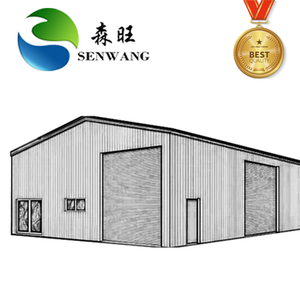
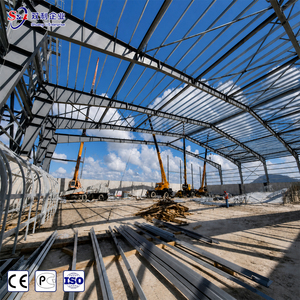
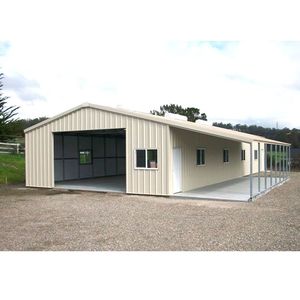
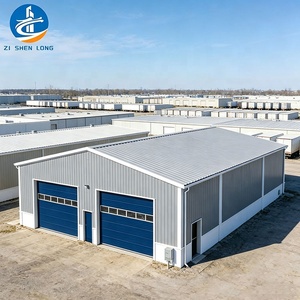
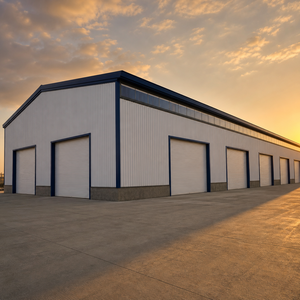
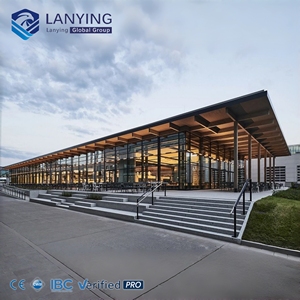
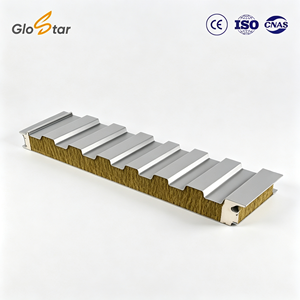
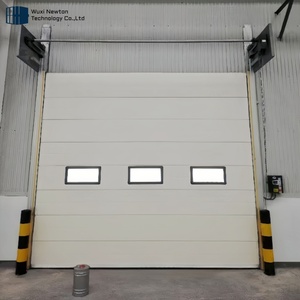
In modern industrial facility procurement, structural integrity is defined by rigorous metallurgical standards, precision welding codes, and engineered thermal envelopes. The technical benchmark below details our OEM/ODM fabrication capabilities.
| Component Group | Material Standard | Fabrication Process & Tolerance | Surface Treatment / Fire Rating | Applicable Design Codes |
|---|---|---|---|---|
| Primary Rigid Frames (Columns, Rafters, Bracing) | Q355B / Q355C / ASTM A572 Grade 50 (Yield Strength ≥ 355 MPa) | CNC Plasma cutting, submerged arc auto-welding (SAW), camber tolerance ±3mm | Shot blasting Sa 2.5 + Epoxy zinc-rich primer (70-120μm) or Hot-Dip Galvanized ≥ 85μm | AISC 360-16, AWS D1.1, EN 1090-2 EXC3, GB 50017-2017 |
| Secondary Structural Members (Purlins & Girts) | Q235B / Q355B Cold-formed C, Z, or Sigma sections | CNC continuous roll forming, automated pre-punching for bolt hole alignment (±1mm) | Hot-dip galvanized Z275 (275 g/m² zinc mass) for long-term atmospheric corrosion resistance | AISI S100-16, AS/NZS 4600, ASTM A653 |
| Insulated Envelope Panels (Wall & Roof Cladding) | Prepainted Galvanized / Galvalume (AZ150) steel skins + Rock Wool / PIR / PU Core | Continuous high-pressure lamination, double-tongue-and-groove joint with concealed fastener | Fire Resistance: Class A1 (Rock Wool) / Class B1 (PIR); Thermal Conductivity: 0.022 - 0.038 W/m·K | ASTM C1289, EN 14509, ISO 9001:2015, FM 4880 Class 1 |
| Overhead Crane Runways (5T to 50T Duty) | Built-up heavy H-beams with crane rails (QU70/QU80) & flexible clamping | Ultrasonic Flaw Detection (UT ≥ 98%) on all web-to-flange full-penetration butt welds | Polyurethane topcoat with high-visibility safety yellow runway indicators | CMAA Specification 70/74, DIN 4132, AISC Design Guide 7 |
| Fastener Systems & Anchors (Structural Connectors) | Grade 8.8s / 10.9s High-Tensile Friction Grip Bolts; ASTM A325 / A490 | Torque-controlled calibrated tightening, Dacromet / Geomet anti-hydrogen embrittlement coating | Salt Spray Resistance ≥ 1,000 hrs without red rust formation | RCSC Specification for Structural Joints, ASTM F3125 |
Joint Star Steel Structure Ltd. operates as an end-to-end design, manufacturing, and erection enterprise. By retaining 100% control over structural steel rolling, plate fabrication, and automated sandwich panel laminating, we eliminate sub-tier contracting risks.
We eliminate interface discrepancies between civil builders and steel contractors. From geotech footing design, anchor bolt casting, primary frame fabrication, and rock wool cladding to crane commissioning, your project is managed under a single unified engineering warranty.
Our detailing team executes 1:1 scale structural modeling via Tekla Structures, PKPM, and 3D3S. Every connection node, gusset plate, and bolt clearance is verified virtually before CNC cutting, preventing costly on-site modification and guaranteeing bolt-to-hole precision.
Leveraging tapered built-up sections with varying cross-sections matched to the internal bending moment curve, we reduce dead load steel consumption by 15% to 25% compared to conventional hot-rolled beams, drastically cutting freight and foundation costs.
Unlike simple steel assemblers who broker cladding from third parties, we own continuous automated panel production lines manufacturing high-density Rock Wool (Class A fire rating), polyurethane (PU/PIR), and EPS panels with superior thermal and acoustic performance.
Each raw steel coil and plate undergoes spectroscopic chemical analysis and tensile verification. All critical structural welds undergo Non-Destructive Testing (UT, MT, and radiographic testing) with complete Mill Test Certificates (MTC) supplied per heat number.
Components are systematically pre-assembled, color-coded, barcoded, and bundled into custom steel-skid shipping crates. This prevents container transit damage and enables site crews to achieve erect speeds of over 1,500 square meters per week with zero on-site hot work.
B2B supply chain managers, industrial developers, and institutional investors are navigating changing regulatory landscapes, decarbonization mandates, and digitized supply frameworks. These four core trends define industrial factory procurement over the next five years.
Procurement contracts are transitioning from 2D shop drawings to mandatory BIM Level 3 IFC data exchange. Industrial asset owners require native digital twins that integrate MEP, HVAC, and crane telemetry directly into the facility management software prior to ground-breaking.
Global environmental benchmarks (such as CBAM in Europe and LEED v5 globally) demand Environmental Product Declarations (EPDs). Forward-thinking procurement teams are prioritizing EAF (Electric Arc Furnace) recycled green steel and non-toxic, zero-ODP blowing agent sandwich panels.
Factory owners are turning rooftops into revenue-generating power plants. Modern workshop RFQs now mandate pre-engineered structural dead load allowances (≥ 0.25–0.35 kN/m²) and non-penetrating standing seam 360-degree double-lock clips for direct photovoltaic clamping.
Driven by rising extreme weather insurance premiums, procurement specifications now demand higher return-period factors. Workshops are engineered for Category 4+ cyclonic gust speeds, heavier localized snow drifts, and C5-M marine atmospheric micro-environments.
The manufacturing floor for structural steel has advanced from manual cutting and welding to automated, robotic processing. Here are the technological developments leading modern pre-engineered building manufacturing.
Multiaxis robotic 3D plasma processing cuts, copes, bevels, and drills steel sections in one pass. By eliminating manual layout marks, hole alignment achieves tolerances tighter than ±0.5mm, ensuring smooth on-site framing without reaming or drilling.
Automated twin-wire tandem submerged arc welding (SAW) systems ensure deep penetration on thick flange-to-web junctions of portal frame rafters. This delivers cleaner weld beads, reduced heat-affected zones (HAZ), and structural welds with zero porosity.
Next-generation sandwich panel lines run high-index PIR formulations that form a dense, charring carbon shield when exposed to open flame. This technology provides the light weight and high R-value of polyurethane with lower flame spread and smoke development ratings.
Direct technical answers addressing structural calculation, surface protection, cladding insulation, shipping economics, and turnkey erection protocols.