Precision-Engineered Polyurethane (PU/PIR), Basalt Rock Wool, Closed-Cell XPE, and Aluzinc/PPGI Cladding Systems for Climate-Resilient Industrial Envelopes and Cold Storage Infrastructure.
Export Catalog
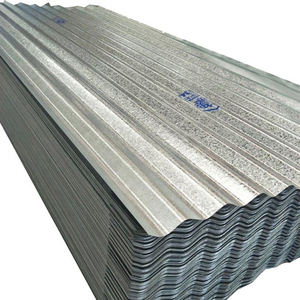
OEM High-Performance Roof & Building Envelope Systems
Engineered to international building codes (ASTM, JIS, EN, BIS, SASO). Browse our primary export lines with custom core densities, tailored profile geometries, and high-durability surface coatings.
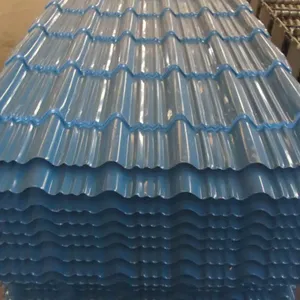
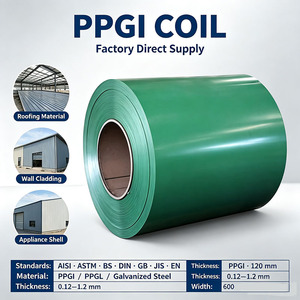
Premium color-coated galvanized coils tailored for continuous roll-forming sandwich panel facings, compliant with Middle East and South Asian standards.
Thermodynamics & Core Material Engineering for Roofing Assemblies
In modern industrial facilities, cold storage hubs, and pre-engineered buildings (PEBs), roof insulation is the frontline barrier against solar irradiance and conductive heat flux. Selecting the appropriate core specification determines building operational carbon, condensation risk, and structural fire ratings.
Insulation Core Type
Thermal Conductivity (λ)
Standard Core Density
Fire Classification
Moisture Vapor Permeability
Compressive Strength (10% Def)
Optimal Project Application
Rigid PU / PIR Foam
0.019 – 0.023 W/m·K
38 – 42 kg/m³
B1 / Class 1 (ASTM E84)
< 2.5% Vol (High Resistance)
≥ 150 – 220 kPa
Cold Storage, Deep Freeze, Agro-Processing
Basalt Rock Wool (Mineral)
0.034 – 0.040 W/m·K
100 – 140 kg/m³
A1 Non-Combustible
High (Requires Vapor Retarder)
≥ 80 – 120 kPa
Chemical Plants, Commercial Malls, High Fire Hazard
Expanded Polystyrene (EPS)
0.033 – 0.038 W/m·K
16 – 24 kg/m³
B2 Fire Retardant
Moderate (3.0 – 5.0%)
≥ 80 – 100 kPa
General Logistics Sheds, Rooftop Houses, Modular Camps
Standard through-fastened corrugated roofs lose up to 35% of their designed thermal performance via fastener thermal bridges and purlin contact. Our continuous tongue-and-groove jointing and concealed-fastener standing seam profiles eliminate continuous metal pathways, stabilizing overall building envelope U-values down to 0.16 W/m²·K.
Combustion Dynamics & Structural Integrity
Where NFPA 285 or EN 13501-1 standards govern industrial facilities, our 120 kg/m³ basalt rock wool cores provide up to 240 minutes of structural fire integrity without releasing toxic hydrogen cyanide or toxic smoke particulates, ensuring life safety compliance in heavy manufacturing zones.
Vapor Retardance & Interstitial Condensation
In humid tropical and sub-tropical environments, vapor pressure drives moisture outward-in during cooling seasons. By combining factory-bonded 0.5mm Aluzinc facing with continuous non-hygroscopic polyurethane cores, our panels prevent water vapor reaching internal dew points, eliminating rot, corrosion, and biological mold growth.
Manufacturing Excellence
Integrated Design, Fabrication & Envelope Engineering Since 2010
Joint Star Steel Structure Ltd. was founded in Dhaka in 2010 under the operational mission "Your Future in Your Home." As an early pioneer in industrial steel construction and insulated composite panels, we remove the multi-tier subcontractor gap by manufacturing primary structural steel, cold-formed purlins, and sandwich panels under a unified ISO-certified manufacturing protocol.
Complete Vertical Integration:
From architectural structural calculation and steel fabrication to automated continuous panel lamination and specialized erection, all contracts are managed internally with single-point accountability.
International Metallurgical Compliance:
Every batch of prepainted galvanized steel (PPGI) and Aluzinc/Galvalume coil conforms strictly to ASTM A792, JIS G3321, BIS, and SASO certification standards, offering AZ150 protective coatings resistant to coastal saline air.
Export-Ready Packaging & Marking:
Panels and structural members are color-coded, CNC-labeled with piece marks, and packaged with vapor-sealed protective films and reinforced edge-guards for zero-damage intermodal ocean transport.
352+ Turnkey FacilitiesEngineered, fabricated, and exported across global regions.
Industry Roadmap
Future Procurement Trends & Innovations in Roof Insulation
Global supply chain managers face shifting regulatory frameworks, rising carbon taxation (CBAM), and increasing climate volatility. The commercial procurement landscape for roof insulation materials is evolving across four distinct technological vectors.
Low-GWP Blowing Agents
Procurement specifications in North America and the EU now mandate hydrofluoroolefin (HFO) or cyclopentane blowing agents with Global Warming Potentials (GWP) < 1 and Zero Ozone Depletion Potential (ODP), cutting Scope 3 embodied carbon while maintaining high aged thermal resistance.
Prefabricated BIPV Integration
Next-generation insulated sandwich roof profiles are increasingly manufactured with pre-formed structural ribs and standing seam clips engineered specifically to accept frameless Building Integrated Photovoltaic (BIPV) arrays without drilling into the core envelope.
BIM & Digital Fabrication
Procurement processes have transitioned from static 2D schedules to LOD 400 Building Information Modeling (BIM). OEM panels are roll-formed and cut to length based on direct CAD-to-line datasets, reducing site waste from typical 8% down to under 0.5%.
High SRI & Super-Durable Coatings
Roof surfaces are moving from standard polyester to Polyvinylidene Fluoride (PVDF 70/30) and solar-reflective "Cool Roof" resins with a Solar Reflectance Index (SRI) exceeding 82, reducing surface temperatures by up to 28°C in desert and tropical climates.
Procurement Advisory
Frequently Asked Questions for International OEM Buyers
Direct technical answers addressing structural integration, fire regulations, container packaging, and material selection for project developers and purchasing heads.
What are the key technical differences when choosing between EPS, PU/PIR, and Rock Wool core materials?
Polyurethane (PU/PIR) delivers the highest insulation efficiency per millimeter (λ ≈ 0.021 W/m·K), making it the primary choice for cold storage, pharmaceutical depots, and high-energy-cost climates. Basalt Rock Wool (λ ≈ 0.038 W/m·K) is completely non-combustible (Class A1), essential for petrochemical complexes, boundary walls, and facilities with strict fire separation codes. Expanded Polystyrene (EPS) is the most cost-effective and lightweight option, well suited for general industrial warehouses, modular accommodation, site offices, and retrofit ceilings where budget efficiency is paramount.
How does your OEM facility ensure product compliance with ASTM, JIS, and local building codes?
All substrate metals undergo strict raw-material testing. Our Aluzinc sheets follow ASTM A792 and JIS G3321 mechanical yield and coating standards, while our color-coated galvanized coils hold verified BIS and SASO certification marks for Middle Eastern and Asian deployments. For every export batch, we provide Mill Test Certificates (MTC), independent laboratory fire reaction test reports (ASTM E84 / EN 13501-1), and core compressive strength verification data.
Can Joint Star Steel supply a full turnkey package including PEB structural frames and civil foundations?
Yes. Founded in 2010, our engineering team consists of over 100 civil, structural, and detailing specialists. We provide fully coordinated single-contract deliverables: primary portal frames, secondary C/Z purlins, roof and wall insulation sandwich panels, hardware accessories, guttering, and concrete RCC foundation designs. This integrated approach ensures anchor bolt drawings, purlin spacings, and panel clip locations align without site modification.
How are panels and roofing sheets bundled to prevent transit damage during international ocean freight?
Panels are manufactured with self-adhesive polyethylene protective film on both skins. Finished items are stacked with protective polystyrene bottom cushions, secured with longitudinal edge-protectors, wrapped in waterproof stretch film, and strapped onto heavy-duty wooden skids designed for fork-pocket loading. Bundles are dimensioned to maximize 40ft High Cube (40HC) container volume while allowing safe offloading on site.
What parameters are required to calculate the exact roof panel thickness for a project?
To size panel thickness and core choice, our engineering team reviews: (1) project geographic coordinates (design outdoor dry-bulb temp, solar radiation, relative humidity); (2) internal operating criteria (ambient warehouse vs +4°C cold storage vs -25°C blast freezer); (3) purlin spacing or structural spans (typically 1.5m to 3.0m); and (4) local environmental wind velocity and snow loads. We then deliver a thermal heat transfer simulation and load-deflection calculation to confirm panel integrity.
What is the minimum order quantity (MOQ) and production lead time for custom OEM panel specifications?
For standard colors (RAL 9002 White Gray, RAL 5012 Sea Blue, Aluzinc Natural) and core thicknesses (50mm, 75mm, 100mm), the standard MOQ is 500 square meters, with factory production timelines averaging 10 to 15 business days. For customized coil colors, specific fire retardants, or custom embossed sheet profiles, MOQs depend on master coil slitting schedules, typically starting at 1,500 square meters.
Request a Customized Structural & Insulation Proposal
Send our senior engineering team your structural layouts, required core material, or project BOQ. We provide detailed CAD submittals, thermal performance calculations, and competitive FOB/CIF export pricing within 24 hours.