EN 1090-1 / EN 1090-2 CE Certified Compliance

CE Certified Galvanized C Purlin Manufacturer & Global Supplier

Structural Cold-Formed Steel Profiles (EN 10346 S350GD+Z / S450GD+Z) with Advanced CNC Pre-Punching, High-Yield Tensile Reliability, and Turnkey Pre-Engineered Building Integration.

Integrated Steel Building Ecosystem

Featured Steel Framing, Cladding & Structural Solutions

Manufactured to ISO 9001 and CE execution class standards. Fully compatible with our cold-formed C/Z purlin secondary framing networks for rapid installation and optimum weight-to-strength ratios.
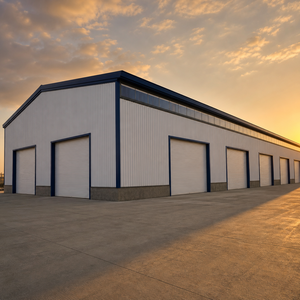
Modular Building Pole Barn Kits Customized Steel Warehouse Prefab Workshop Building
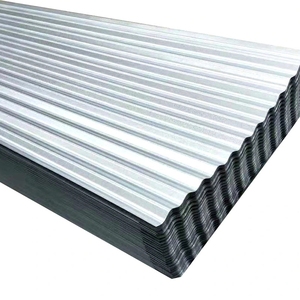
Metal Decking ASTM A792 30 Gauge Hot Dipped Corrugated Zinc Coated GI Roofing Sheet
Agri & Commercial Economic Prefabricated Workshop Prefab Steel Structure Farm Storage Warehouse
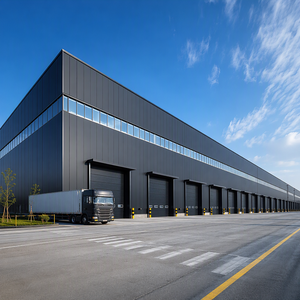
Heavy Industrial Custom Large Prefabricated Steel Structure Warehouse Industrial Workshop Building
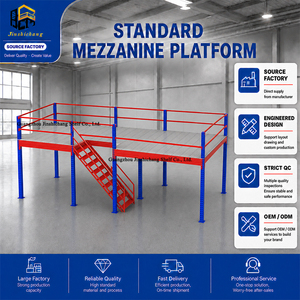
Internal Platform Industrial Steel Platform Mezzanine Floor with Stairs and Handrails
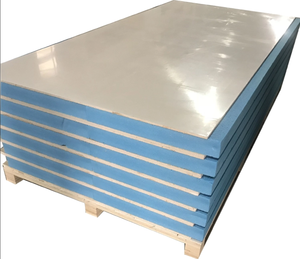
Thermal & Fireproof Fireproof Structural MGO SIP Panels Exterior Wall Sandwich Board
Fabrication Automation Automatic Light Gauge Steel Framing Machine for C75 C89 C140 Frame
352+

Completed Heavy Industrial PEB & Steel Framing Projects

15+

Years of Precision Engineering & Export Excellence (Since 2010)

100+

Structural Engineers, Metallurgists & Field Specialists

120+

Multinational EPC Contractors & Satisfied Developers

Technical Whitepaper: Structural Secondary Framing

Engineering Integrity of Cold-Formed Galvanized C-Purlins Under Eurocode 3

Cold-formed galvanized C purlins (Cee profiles) represent the critical load-transferring secondary framing member in modern pre-engineered steel buildings (PEB), high-bay logistics warehouses, and solar structural canopies. Certified according to EN 1090-1 and EN 1090-2 (Execution Classes EXC2 & EXC3), our C purlins are roll-formed from structural steel grades conforming to EN 10346 (such as S280GD, S350GD, and ultra-high tensile S450GD/S550GD).

The mechanical efficiency of a C-section lies in its asymmetric mono-symmetric cross-section, engineered with a precision-drawn lip return (typically 15mm to 25mm) that imparts superior lateral-torsional buckling resistance. Under transverse gravity loads (dead load, snow load, mechanical services) and uplift suction forces induced by cyclonic wind phenomena, the purlin’s second moment of area ($I_x$) and section modulus ($W_x$) govern the maximum span capability without exceeding serviceability deflection limits (typically constrained to span/200 for metal roofs and span/300 for brittle plasterboard ceiling assemblies).

Factory Production Control (FPC) Guarantee: Every batch leaves our facility backed by an EN 10204 Type 3.1 Inspection Certificate verifying heat chemistry, minimum yield strength ($R_{eH}$ ≥ 350 MPa), ultimate tensile strength ($R_m$), elongation at fracture ($A_{80}$ ≥ 16%), and zinc coating thickness measured via electromagnetic induction.
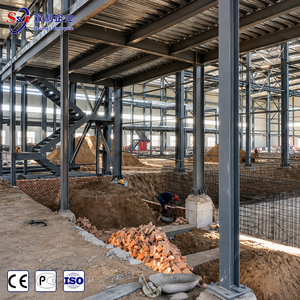
Interior steel building framing showing galvanized roof purlins and rafters
Design Dimension Matrix

Standard Galvanized C-Purlin Dimensional & Sectional Properties

Calculated in accordance with EN 1993-1-3 (Eurocode 3: Design of cold-formed thin-gauge members). Available in custom lengths up to 14.5 meters with CNC continuous pre-punched web and flange holes.

Profile Designation Web Depth (D mm) Flange (B mm) Lip (C mm) Nominal Gauge (mm) Weight (kg/m) Moment of Inertia Ix (cm⁴) Section Modulus Wx (cm³) Yield Strength (MPa)
C100/15 100 50 15 1.50 - 2.00 2.45 - 3.22 38.2 - 49.1 7.64 - 9.82 S350GD (≥ 350)
C140/18 140 60 18 1.60 - 2.50 3.58 - 5.48 104.5 - 156.2 14.93 - 22.31 S350GD / S450GD
C160/20 160 65 20 1.80 - 2.80 4.46 - 6.82 162.8 - 244.1 20.35 - 30.51 S350GD / S450GD
C200/20 200 70 20 1.80 - 3.00 5.25 - 8.62 295.4 - 472.1 29.54 - 47.21 S350GD / S450GD
C250/22 250 75 22 2.00 - 3.20 6.78 - 10.70 578.2 - 898.4 46.25 - 71.87 S350GD / S450GD
C300/25 300 85 25 2.20 - 3.50 8.64 - 13.56 1092.0 - 1690.5 72.80 - 112.70 High-Bay Logistics
C350/30 (Heavy) 350 100 30 2.50 - 4.00 11.85 - 18.72 1980.5 - 3080.0 113.17 - 176.00 Clear Span ≥ 12m

Optimized Steel Mass Economy

Cold-formed sections offer up to 35% steel weight savings compared to traditional hot-rolled IPE and channel sections, significantly trimming primary frame foundation footprints and freight tariffs.

CNC In-Line Pre-Punching

Multi-axis hydraulic punching accommodates round (14mm, 18mm) and slotted (14x22mm, 18x26mm) holes for standard M12/M16 cleat connection bolts, sag rods, and lateral anti-torsion bridging assemblies.

Tight Dimensional Tolerances

Manufactured strictly to EN 10162 tolerance criteria: web height camber within ±1.0mm, flange squareness within ±1.5°, and overall straightness deviation under L/1000, eliminating on-site reaming.

Metallurgical Longevity

Hot-Dip Galvanizing & Zinc-Aluminum-Magnesium (ZAM) Protection

Atmospheric durability is governed by zinc barrier density and galvanic sacrificial defense mechanisms. When secondary framing is subjected to industrial condensation, chemical off-gassing, coastal salinity, or high-humidity tropical microclimates, untreated carbon steel deteriorates rapidly. We provide hot-dip galvanized finishes spanning Z120 (120 g/m²) up to heavy marine-grade Z600 (600 g/m² combined both sides) in full compliance with EN ISO 1461 and ASTM A653.

For aggressive C4 and C5-M corrosive zones (fertilizer processing facilities, coastal livestock buildings, or marine logistics hubs), we manufacture C purlins using cutting-edge Zinc-Aluminum-Magnesium (ZM/ZAM/PosMAC) ternary alloy coatings. The addition of 1.5%–3.0% magnesium and aluminum activates a tenacious, insoluble Simonkolleite ($Zn_5(OH)_8Cl_2 \cdot H_2O$) protective boundary layer. This specialized patina self-heals cut edges, punched holes, and fastener scratches, delivering up to four times the atmospheric service lifespan of conventional pure zinc coatings at equivalent thickness.
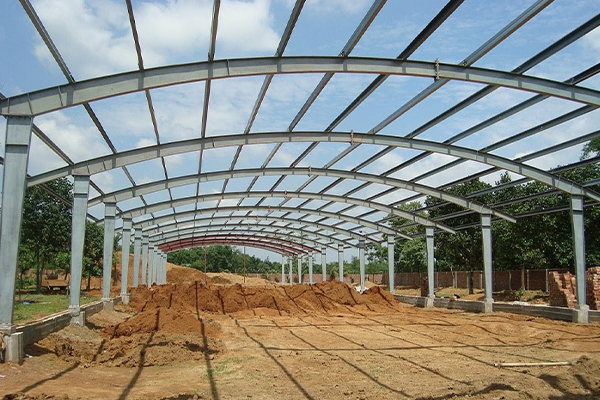
Steel structure workshop with galvanized purlin fabrication
Strategic Sourcing Horizon

Future Procurement Trends in Cold-Formed Steel Framing (2025–2035)

Procurement managers, structural specifiers, and EPC general contractors must navigate macroeconomic supply shifts, stringent building regulations, and digital transformation.

1. Direct BIM-to-Rollformer Fabrication

Traditional 2D shop drawings are rapidly being supplanted by direct digital workflows. Structural engineering models developed in Tekla, Revit, or Vertex BD export IFC and NC1 files directly to computerized roll formers, eliminating transcription discrepancies and guaranteeing millimeter accuracy for slotted hole patterns.

2. Carbon Footprint & CBAM Compliance

With the European Union Carbon Border Adjustment Mechanism (CBAM) fully implemented, supply chain transparency regarding embodied carbon (Scope 1, 2, and 3 emissions) has become paramount. Our purlin coils utilize Electric Arc Furnace (EAF) and optimized BOF steel feedstocks with full Environmental Product Declarations (EPD).

3. Rooftop Solar Photovoltaic Loading

Commercial and industrial roofs are universally designed as power-generating assets. Modern procurement demands C-sections with higher web-depth-to-thickness ratios capable of handling supplemental dead loads of 15 to 25 kg/m² for solar racking without requiring expensive secondary retrofitting.

4. High-Strength Thin-Gauge Metallurgy

The industry is shifting from mild S250/S280 grades toward S450GD and S550GD cold-rolled alloys. Using thermo-mechanically controlled rolling processes (TMCP), these high-strength steels permit substantial gauge reductions while maintaining section stiffness, significantly reducing maritime container freight costs.

Engineering planning and quality auditing for structural steel manufacturing
Enterprise Capability & Track Record

Why EPC Contractors & Global Importers Partner with Joint Star Steel

Joint Star Steel Structure Ltd. (operating since 2010 under the motto “Your Future in Your Home”) has evolved into an authoritative leader in pre-engineered steel buildings, heavy structural fabrication, and secondary envelope systems. Backed by 352+ successfully handed-over projects across multiple continents, our engineering department unites 100+ dedicated structural engineers, detailers, certified welding inspectors (CWI), and erection superintendents.

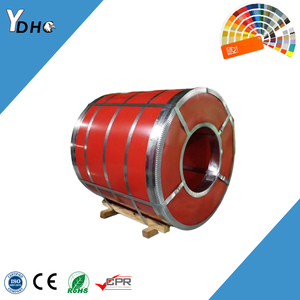
Unlike simple purlin roll-formers who operate as component traders, we manage the complete design-fabrication-erection lifecycle. We manufacture our own EPS, PU, and Rockwool sandwich panels, process prepainted steel coils, build heavy built-up portal columns, and supply all cold-formed structural members. This unified approach eliminates coordination gaps between primary steel frames and secondary purlins, ensuring zero on-site fitting conflicts.

  • Certified Compliance: Strictly conformant with EN 1090 (CE Marking Execution Class 2 & 3) and ISO 9001:2015 quality management procedures.
  • Turnkey Structural Synergy: Complete building kits including anchor bolt clusters, portal frames, purlins, bridging rods, and thermal insulated panels under a single accountable contract.
  • Export Packaging & Marking: Nested, strapped, and plastic-wrapped bundles with clearly color-coded member IDs keyed directly to site erection assembly drawings.
Send an Inquiry
Procurement Intelligence

Galvanized C-Purlin Procurement & Engineering FAQ

Detailed technical answers to common queries submitted by procurement officers, civil engineers, structural consultants, and warehouse developers.

What are the key technical differences between C Purlins and Z Purlins in structural design?
C purlins possess identical flange widths on either side and are inherently mono-symmetric, making them ideally suited for simply supported (single span) configurations, wall girts, door headers, window trimmers, and roof perimeter fascia systems. Because of their straight vertical webs, they bolt flush against rafter cleats with ease. Conversely, Z purlins have asymmetric flanges (one broad, one narrow) allowing them to nest and overlap at portal frame support cleats, creating a structurally continuous beam across multiple bays. This continuity substantially reduces mid-span deflection and allows for smaller profile heights over multi-bay configurations.
How does CE Certification (EN 1090-1 / EN 1090-2) safeguard structural buyers?
CE marking under Construction Products Regulation (CPR 305/2011) legally certifies that cold-formed structural members have undergone stringent Factory Production Control (FPC) audited by a Notified Body. It guarantees verified yield strengths, chemical composition limits (phosphorus and sulfur control preventing brittle fractures), accurate dimensional cross-sectional tolerances, and certified welding/punching procedures. For European, Middle Eastern, and Commonwealth infrastructure tenders, installing non-CE certified secondary members creates immense legal liability and risks non-approval by municipal building control inspectors.
What zinc coating weight (mass) should be specified for industrial and coastal projects?
For benign, low-condensation, heated indoor warehouse conditions (Corrosivity Class C1 & C2 per ISO 12944), a Z120 or Z180 (120–180 g/m² combined both sides) coating provides adequate service life. For standard unheated industrial spaces, rural agricultural sheds, and typical temperate conditions (Class C3), a Z275 coating (approx. 20 microns per side) is the global benchmark standard. In marine, coastal, high-humidity, or chemical industrial zones (Class C4 & C5), specifiers should mandate either heavy-galvanized Z450–Z600 or modern Zinc-Aluminum-Magnesium (ZAM / PosMAC) alloy coatings with enhanced resistance against chloride pitting.
What deflection limits are standard for roof purlins supporting sandwich panels?
Under Eurocode 3 (EN 1993-1-3), roof purlins supporting insulated sandwich panels (polyurethane or rockwool) are typically designed for a maximum serviceability deflection of L/200 under unfactored live and wind loads to prevent core-skin delamination, joint seal ruptures, and localized ponding. For roofs with single-skin corrugated metal sheets, L/150 to L/180 is frequently accepted. Where plasterboard or rigid architectural ceilings are directly suspended from purlins, deflection must be tightly constrained to L/300 or L/350 to prevent unsightly plaster joint cracking.
How do sag rods and bridging systems prevent lateral-torsional buckling in C-sections?
Because C-purlins are mono-symmetric, their shear center does not coincide with their centroid. When subjected to vertical gravity loads, they develop combined bending and twisting moments. While top roof sheets provide continuous diaphragm restraint to the top compression flange, strong wind uplift forces place the bottom flange in compression. Sag rods (threaded tie-rods, tubular bridging, or solid angle struts) installed at mid-span or third-points provide crucial lateral and rotational restraint to the unbraced bottom flange, dramatically elevating the critical buckling capacity ($M_{cr}$) of the profile.
Can you supply custom CNC slotted pre-punched holes for fast on-site erection?
Yes. Our roll-forming production lines incorporate fully automated in-line servo hydraulic punching heads synchronized with our CNC processing unit. We punch web holes (standard 14mm or 18mm round holes and 14x22mm / 18x26mm elongated slots for rafter cleat bolts) as well as flange holes for sag rod brackets and facade cladding brackets. All hole locations are programmed to millimeter accuracy based on the structural workshop detailing models, eliminating costly flame-cutting or magnetic-drilling on the construction site.
What lead times and shipping packaging can overseas buyers expect?
Standard mill orders of 50 to 500 metric tons are typically rolled, packed, and ready for vessel loading within 15 to 25 business days following drawing sign-off. Purlins are densely nested to maximize sea container weight limits (utilizing 20ft and 40ft High Cube containers or breakbulk for lengths surpassing 11.8m), strapped with high-tensile steel banding, cushioned with protective corner protectors, and wrapped in moisture-resistant vapor-inhibitor plastic. Bundles are equipped with certified lifting slings for safe container destuffing.

Connect Directly with Our Structural Engineering & Export Team

Seeking mill-direct pricing, load-span structural optimization, or custom-detailed CE Certified C/Z purlins for your upcoming commercial warehouse, logistics center, or solar project? Let our engineers run your calculations today.