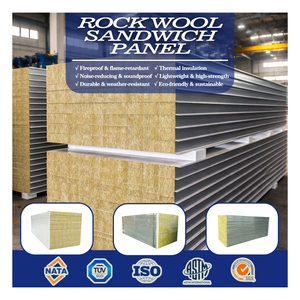
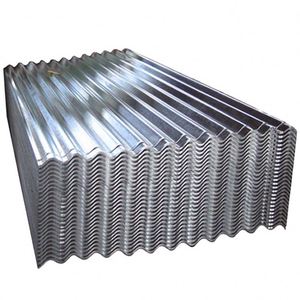
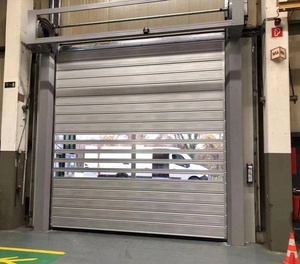
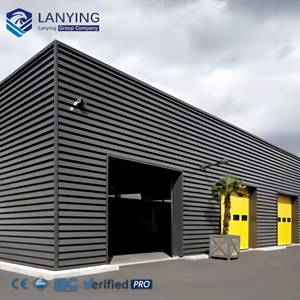
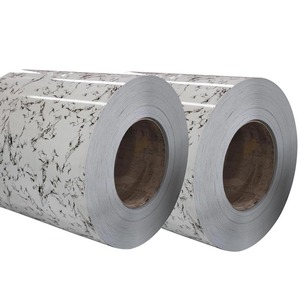
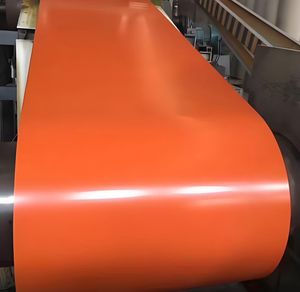
Direct manufacturer supply of precision roll-formed steel, insulated structural sandwich composites, automated portal closures, and heavy zinc-coated substrates engineered to European technical requirements.
In Poland’s commercial, warehousing, and manufacturing construction sectors, building envelope engineering is strictly governed by the technical standards outlined in the Polish Regulation on Technical Conditions to Be Met by Buildings and Their Location (Warunki Techniczne – WT 2021). Enacted to transpose the European Energy Performance of Buildings Directive (EPBD) into domestic law, WT 2021 enforces aggressive thermal efficiency thresholds that significantly impact structural roof assembly choices.
Under the WT 2021 criteria, the maximum permissible thermal transmittance coefficient for roofs, ceilings, and flat roof decks on buildings where indoor design temperatures exceed 16°C is:
WT 2021 Roof Requirement: Maximum Thermal Transmittance Umax ≤ 0.15 W/(m²·K). For cold storage and deep-freeze logistics facilities (temperatures ≤ 0°C to -25°C), targeted design U-values routinely reach down to U ≤ 0.09 to 0.11 W/(m²·K) to satisfy operational energy caps and eliminate internal condensation.
Meeting this standard requires more than merely increasing core thickness. Procurement directors and chief site engineers (Kierownik Budowy) must address the cumulative system heat loss, which accounts for point thermal bridges generated by self-drilling fasteners, purlin contact surfaces, linear joints between adjacent sandwich panels, and mechanical penetrations for smoke exhaust vents (klapy dymowe) and skylights. Joint Star Steel Structure Ltd. manufactures complete industrial envelope solutions engineered to achieve verified, laboratory-tested composite thermal values that fully meet and exceed PN-EN 14509 and PN-EN ISO 6946 parameters.
In humid Polish winters, where ambient external temperatures frequently drop below -20°C in thermal zones IV and V (such as the Podlaskie and Małopolskie voivodeships), vapor barrier integrity is paramount. Improperly calculated insulation cores risk internal interstitial condensation. Utilizing the Glaser method (PN-EN ISO 13788), our technical engineering department models the dew point distribution across the composite roof build-up to confirm that the internal saturation pressure never intersects the actual vapor pressure curve, preserving structural health and insulation longevity across multi-decade facility operational lifespans.
Selecting the optimal insulation material for Polish roofing projects depends on three interdependent design variables: thermal conductivity (λ), reaction to fire according to PN-EN 13501-1, and mechanical compressive strength at 10% deformation (CS(10)). Below is an objective technical comparison of primary core chemistries supplied across European infrastructure networks:
| Insulation Core Type | Thermal Conductivity (λ) | Euroclass Reaction to Fire | Density (kg/m³) | Compressive Strength (kPa) | Acoustic Reduction (Rw) |
|---|---|---|---|---|---|
| Structural Rock Wool (Mineral Stone Wool) | 0.038 – 0.040 W/(m·K) | A1 / A2-s1, d0 (Non-combustible) | 100 – 140 kg/m³ | ≥ 60 – 100 kPa | 31 – 35 dB (High damping) |
| Polyisocyanurate (PIR / Rigid PU) | 0.022 – 0.024 W/(m·K) | B-s1, d0 or B-s2, d0 | 38 – 42 kg/m³ | ≥ 120 – 150 kPa | 24 – 26 dB |
| Expanded Polystyrene (EPS 100 / Neo-Graphite) | 0.031 – 0.036 W/(m·K) | E (Self-extinguishing) | 15 – 25 kg/m³ | ≥ 80 – 100 kPa | 22 – 25 dB |
| Rock Wool OSB Structural SIP Panels | 0.038 W/(m·K) (Core) | B-s1, d0 (Assembled) | 120 kg/m³ (Core) | Composite Shearing Beam | 33 – 38 dB |
Under Polish building safety codes (Dz.U. 2019 poz. 1065), roofing assemblies must achieve a mandatory Broof(t1) rating pursuant to PN-EN 13501-5, certifying resistance to external fire exposure from burning embers and radiant heat. Where industrial facilities house high fire load densities (e.g., automated tire storage, chemical distribution, wood processing), structural fire compartmentalization requires EI 30, EI 60, or even REI 120 fire-resistance durations. Our high-density rock wool core composite panels feature vertically oriented mineral fibers bound with thermosetting resin, providing non-combustible fire breaks that ensure structural integrity and prevent thermal collapse during emergency evacuations.
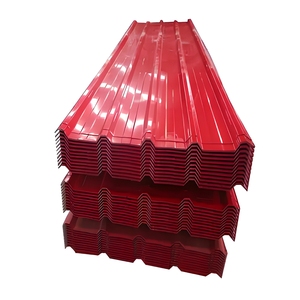
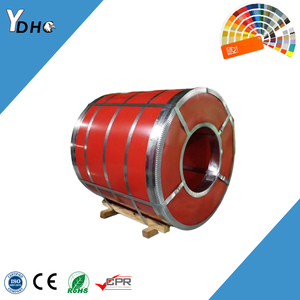
The durability of the exterior steel sheet skin directly dictates the operational life of the insulated roof system. Joint Star Steel Structure Ltd. supplies steel coils and profiled sheets coated to exacting European atmospheric corrosivity classes:
Standard 275 g/m² zinc mass providing sacrificial galvanic protection for C2/C3 dry warehouse and light assembly environments.
55% Aluminum, 43.4% Zinc, and 1.6% Silicon composite coating delivering 3 to 6 times longer service life against acidic atmospheres.
Thick 50μm – 200μm organic plastisol barrier formulated for C4/C5 heavy industrial zones, chemical processing, and coastal installations.
Fluoropolymer system boasting RC5 UV resistance and Rct thermal stability, preventing chalking and color fading across decades.
Poland's strategic geographical location as the logistical backbone of Central and Eastern Europe (CEE) creates distinct microclimatic and structural demands across its diverse voivodeships. Below are specific technical applications engineered for regional project parameters:
Central Poland represents the highest concentration of speculative and built-to-suit (BTS) mega-distribution warehouses. Projects here demand long-span trapezoidal decking (profiles 135mm to 200mm) combined with high-compressive-strength rock wool boards or PIR sandwich systems. Fast-track installation speeds, automated panel handling, and air tightness ratings of n50 ≤ 1.5 h⁻¹ are critical to securing BREEAM Excellent or Outstanding green certification.
Silesia's dense automotive and metalworking corridor requires roofs designed for heavy dynamic loads and high interior acoustic damping. Acoustic roof systems featuring perforated lower metal skins, sound-absorbing mineral wool cores, and anti-vibration damping layers attenuate stamping press noise to comply with Polish industrial environmental noise emission standards (PN-B-02151-3).
Marine atmospheric conditions near Baltic coastal ports (C4/C5-M marine salinity) and severe sanitary cleaning regimes in poultry and dairy processing facilities require rigid continuous-line PU/PIR sandwich panels. Coated with food-safe PVC-P coatings and engineered with hermetically sealed labyrinth joint profiles, these systems prevent mold propagation and eliminate thermal loss across refrigerated storage units.
Across eastern and central Poland’s agricultural hubs, older livestock and grain storage facilities are undergoing comprehensive modernization under the European Union's decarbonization support programs. Replacing decaying, hazardous asbestos-cement roofs with Joint Star Steel’s corrugated insulated composite panels eliminates condensation drips, regulates indoor temperature during sweltering summers, and resists corrosive biogenic ammonia gases generated within animal husbandry environments.
Driven by volatile energy pricing and mandatory Corporate Sustainability Due Diligence, almost every new industrial roof in Poland is now designed as a "Solar-Ready" asset. Ballasted or mechanically anchored photovoltaic (PV) arrays introduce concentrated point loads, wind uplift vortices, and maintenance foot traffic. To prevent compressive collapse of the insulation layer—which leads to membrane ponding, thermal bridge formation, and catastrophic water ingress—insulation cores must exhibit a minimum point load resistance of Fp ≥ 500 N (per EN 12430) and compressive strength at 10% strain of CS(10) ≥ 60 to 80 kPa. Mineral wool and PIR insulation manufactured by Joint Star Steel are specifically rated to support high-density solar racking configurations without long-term material fatigue.
General contractors operating in Poland—including Skanska, Budimex, Strabag, and Porr—increasingly mandate verified Environmental Product Declarations (EPD Type III) for structural steel and sandwich panels. Steel skins fabricated with recycled scrap metal and mineral insulation produced from natural basalt rock align directly with circular building principles, helping developers maximize points under BREEAM Mat 01 and LEED Building Product Disclosure and Optimization categories.
Operating continuously since 2010, Joint Star Steel Structure Ltd. has established an international engineering reputation, delivering more than 352 successful industrial installations across diverse geographies. We eliminate the systemic risks, subcontractor finger-pointing, and margin compounding common in fragmented construction supply chains by integrating the entire envelope lifecycle under a single contract:
Detailed technical, regulatory, and logistics answers for procurement managers, structural designers, and general contractors evaluating roof insulation suppliers for projects in Poland.
Equip your estimation and engineering teams with our complete 2025/2026 Structural Steel & Roof Insulation Technical Manual—including thermal bridging coefficients, load-span tables, Broof(t1) test reports, and factory-direct pricing for the Polish market.