Direct factory supply for Malaysian developers, general contractors, and pre-engineered building (PEB) fabricators. Fully compatible with Port Klang and Penang port logistics protocols.
A rigorous examination of thermodynamic resistance, moisture repellency, and acoustic attenuation under equatorial environmental loads.
Industrial facility construction across the Malaysian peninsula demands an envelope solution capable of balancing extreme radiant heat, prolonged relative humidity (frequently exceeding 85% RH), and statutory non-combustibility directives governed by the Jabatan Bomba dan Penyelamat Malaysia (BOMBA). As an established manufacturer and international exporter founded in 2010 with more than 352 structural installations delivered worldwide, our production framework integrates inorganic, high-purity molten glass centrifugally spun into micro-fibers with thermosetting resins, forming structural glass wool sandwich panels that outperform conventional insulation cores in life-cycle safety and environmental durability.
Engineering Core Benchmark: Our glass wool sandwich cores achieve an ultra-low thermal conductivity ($\lambda \le 0.034 - 0.038\text{ W/m}\cdot\text{K}$) with Class 'O' fire spread resistance under BS 476 Parts 6 & 7. Reinforced with continuous hydrophobic additives (>98% water repellency rate), the fiber matrix eliminates tropical moisture absorption and prevents insulation sagging under prolonged thermal cycling.
The structural composition of our glass wool panels utilizes external facings made from AZ150 to AZ200 Aluzinc / Galvalume steel skins (compliant with ASTM A792 and JIS G3321). This substrate provides sacrificial cathodic protection against coastal salt-spray and high humidity prevailing across Port Klang, Pasir Gudang, and Penang's industrial free trade zones. Between these skins, fiberized glass wool cores with uniform densities ranging from 48 kg/m³ to 80 kg/m³ are oriented perpendicularly through mechanical grooving and multi-directional cross-lamination, creating exceptional compressive and shear resistance capable of supporting significant cyclonic wind-uplift loads without core-to-steel delamination.
Optimized envelope performance aligned with the micro-climatic and statutory demands of primary Malaysian manufacturing and data clusters.
High-density electronics fabrication demands strictly inert, non-outgassing partitions with high sound transmission loss. Our glass wool sandwich panels feature anti-static PVDF surface finishes and zero-fiber shedding tongue-and-groove joints, mitigating airborne micro-particulates while dampening continuous low-frequency vibrations generated by central chiller plants and cleanroom air handling units (AHUs).
With Malaysia emerging as Southeast Asia's core data center hub, thermal management and strict zero-flame-spread envelopes are non-negotiable. Our 100mm to 150mm thick glass wool wall and roof cladding configurations provide continuous $U$-values down to 0.24 W/m²K, drastically reducing thermal loads on server hall cooling loops while satisfying BOMBA requirements for 1 to 2-hour structural fire barriers without combustible toxicity.
Warehouse structures adjacent to maritime coastal corridors face accelerated salt-induced pitting corrosion paired with condensation issues beneath roof purlins. Our glass wool panels incorporate proprietary inner-face aluminum vapor barriers and heavy AZ coating layers, preventing interstitial condensation and rust-induced sheet perforation common to uninsulated single-skin metal sheds.
In food-grade manufacturing, bacterial growth, pest harborage, and high washdown moisture must be eliminated. Glass wool is naturally inorganic, rot-proof, and inhospitable to mold or vermin. Configured with antimicrobial food-safe polyester or PVC plastisol coatings, these panels allow intensive sanitation without compromising structural core adhesion.
Equatorial urban developments demand localized acoustic decoupling for rooftop mechanical penthouses, generator enclosures, and event auditoriums. Glass wool's open-cell fibrous weave exhibits high sound absorption coefficients (NRC up to 0.85 - 0.90), eliminating ambient reverberation and limiting mechanical noise breakout into commercial office suites.
An objective engineering evaluation based on international building codes (BS, EN, ASTM) and Malaysian statutory criteria.
| Performance Metric | Glass Wool Core | Rock Wool (Stone Wool) | Polyurethane (PU / PUR) | Expanded Polystyrene (EPS) |
|---|---|---|---|---|
| Nominal Core Density | 48 – 80 kg/m³ (Lightweight structural core) | 80 – 140 kg/m³ (High deadweight) | 38 – 45 kg/m³ (Rigid cellular foam) | 14 – 20 kg/m³ (Ultra-lightweight) |
| Thermal Conductivity ($\lambda$) | 0.034 – 0.038 W/m·K (Consistent) | 0.038 – 0.044 W/m·K (Moderate) | 0.020 – 0.024 W/m·K (Superior) | 0.036 – 0.041 W/m·K (Average) |
| Combustibility & Fire Rating | Non-Combustible (BS 476 Class 'O' / A1-A2) | Non-Combustible (BS 476 Class 'O' / A1) | Combustible Core (Class B2/B1; releases smoke) | Combustible (Class B3; rapid flame propagation) |
| BOMBA Structural Approval | Fully Accepted for Perimeter & Roofs | Fully Accepted for Fire Walls | Strictly Conditioned (Requires Sprinklers) | Restricted under UBBL By-Laws |
| Acoustic NRC (Sound Absorption) | 0.80 – 0.90 (Exceptional acoustic dampening) | 0.80 – 0.85 (Good dampening) | 0.15 – 0.20 (Reflective closed cell) | 0.10 – 0.15 (Poor acoustic dampening) |
| Moisture & Water Absorption | < 1.0% by vol. (Hydrophobic treated) | < 1.5% by vol. (Hydrophobic treated) | < 2.0% (Closed-cell core) | 3.0% – 5.0% (Capillary water uptake) |
| Environmental & Recycled Content | Up to 80% recycled post-consumer glass | Basalt stone / slag matrix | Petrochemical derived polymer | Non-biodegradable petrochemical plastic |
| Freight & Handling Cost Index | Moderate (Optimized strength-to-weight) | High (Substantial container weight penalty) | Low (Lightweight handling) | Lowest (Prone to edge crushing during transit) |
The Malaysian construction sector is undergoing a profound structural transition driven by stringent enforcement of the Uniform Building By-Laws 1984 (UBBL amendments) and aggressive adoption of Green Building Index (GBI) certification. Developers and multinational engineering consultancies are eliminating combustible insulation cores (such as unprotected EPS and early-generation polyurethanes) in favor of verified Class 'O' non-combustible solutions.
Simultaneously, the Construction Industry Development Board (CIDB) Malaysia has mandated higher IBS Content Scores for both public and private industrial complexes. Our prefabricated glass wool panels directly satisfy IBS criteria by transferring labor-intensive thermal and acoustic insulation processes from wet, uncontrolled job sites into automated factory settings. This prefabrication speed reduces on-site erection schedules by up to 45%, eliminating rain delays during Malaysia’s northeast and southwest monsoon periods.
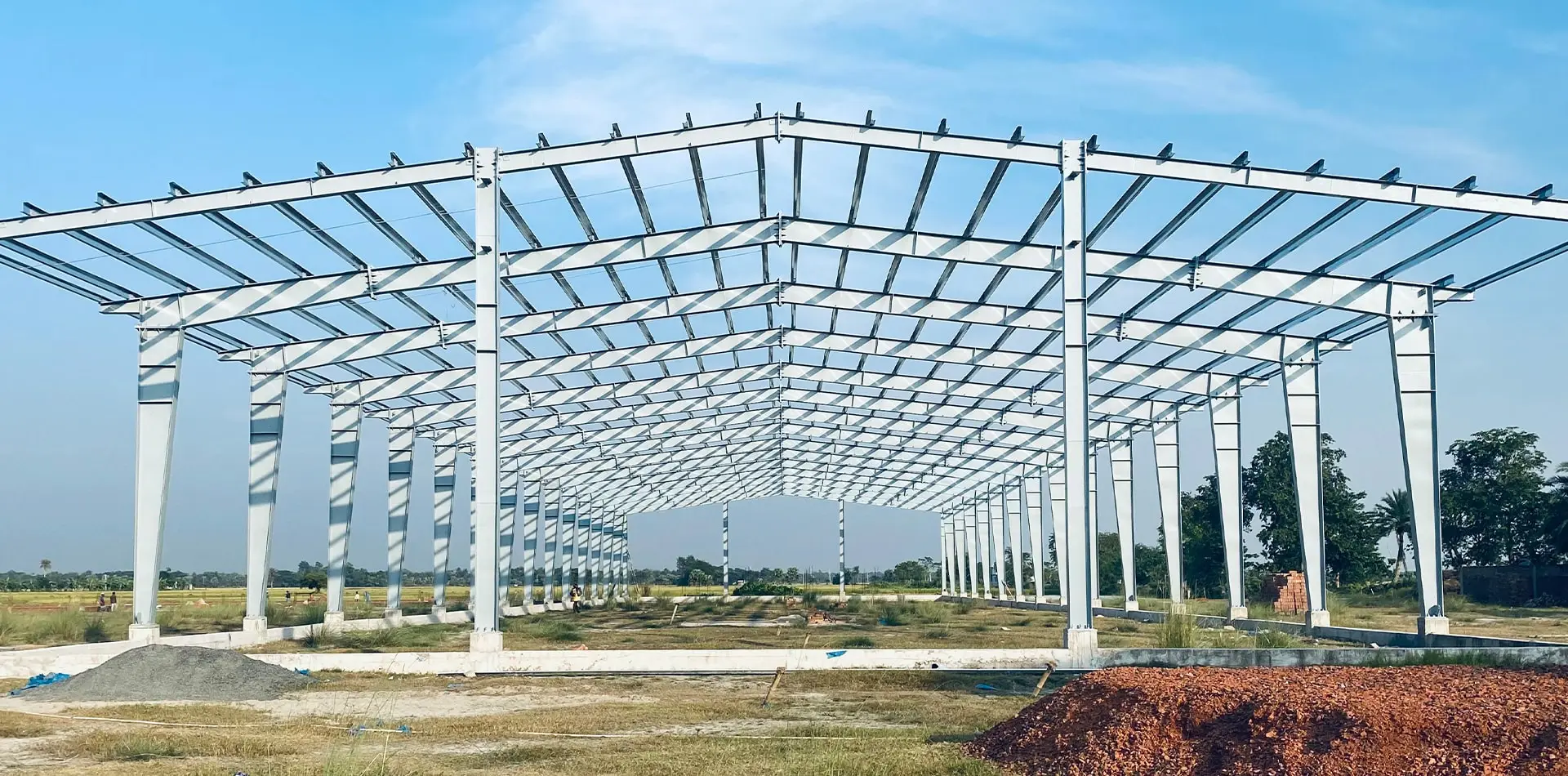
Founded in 2010 with complete end-to-end design, automated continuous lamination, and heavy structural pre-engineering under one single-source contract.

We eliminate trading intermediaries. From cold-rolled steel skin decoiling, roll-forming, and high-pressure adhesive distribution to continuous fiber slicing, our multi-tier automated line controls surface flatness and joint interlocking tolerances within $\pm 0.5\text{ mm}$.
Every export shipment to Port Klang or Penang is packed with water-tight multi-layer polymer wrapping, edge-corner corner protectors, desiccants, and heavy steel-pallet strapping designed to prevent sea-fog oxidation, surface scratching, and fork-pocket crushing during container drayage.
Unlike panel-only converters, our in-house engineering team designs secondary framing—including purlins, girts, eaves struts, and flashing details—alongside the cladding package, guaranteeing zero clashing between panel fastener layouts and primary structural steel rafter flanges.
Each production batch includes mill certificates, Aluzinc coating mass verification ($150\text{ g/m}^2 - 200\text{ g/m}^2$), fire retardancy documentation, and destructive core tensile testing ensuring bonding integrity exceeding $0.08\text{ MPa}$.
Critical commercial, regulatory, and technical considerations when importing glass wool sandwich panels into Malaysia.
Yes. Our glass wool sandwich panels are engineered in strict accordance with British Standard BS 476 Part 6 (Fire Propagation) and Part 7 (Surface Spread of Flame), attaining the highest Class 'O' rating recognized under the Uniform Building By-Laws (UBBL 1984) of Malaysia. Unlike thermoplastic cores that liquefy and feed structural flashovers, our inorganic glass wool fibers do not support combustion, contribute zero fuel load, and produce virtually zero toxic smoke, making them fully submissible for Bomba project clearance.
Untreated thermal batts can absorb ambient moisture through capillary action, leading to thermal bridging and biological growth. Our panels resolve this through three defenses: First, the continuous glass fibers receive a hydrophobic siliconized emulsion treatment during centrifugation (>98% water repellency per ASTM C1104). Second, the exterior skins use high-tensile Aluzinc/Galvalume with impermeable airtight tongue-and-groove joints. Third, high-grade butyl vapor seals applied along panel laps prevent humid air from reaching the dew point within the core.
We routinely execute shipments under FOB, CFR, and CIF terms directly serving Port Klang (North/West Port), Penang Port, and Pasir Gudang (Johor). For standard 50mm thick roof or wall panels, a standard 40ft High Cube (40'HQ) shipping container accommodates approximately 650 to 750 square meters. Manufacturing lead time averages 10 to 18 operational days depending on volume, with direct ocean transit to Peninsular Malaysia typically ranging from 8 to 14 days. Full export customs documentation—including Certificate of Origin (COO), Bill of Lading (BL), Commercial Invoices, and Mill Test Certificates—is provided seamlessly.
For ambient-temperature industrial logistics sheds and manufacturing plants seeking thermal relief from solar radiation, a 50mm to 75mm thickness is standard, providing an overall heat transfer coefficient ($U$-value) of approximately 0.45 – 0.65 W/m²K. For conditioned electronics cleanrooms, pharmaceutical spaces, and data centers where interior temperatures must maintain 20°C–22°C against exterior solar ambient peaks of 35°C, we specify 100mm to 150mm thicknesses ($U$-value 0.24 – 0.35 W/m²K) to eliminate wall condensation risk and lower HVAC compressor power demand.
Yes. We manufacture both hidden-screw (concealed fastener) architectural wall joint systems and corrugated trapezoidal high-rib roof profiles. Standard external skin colors are matched to international RAL palettes (popular regional choices include Off-White RAL 9002, Pure White RAL 9010, Light Grey RAL 7035, and Marine Blue). Custom coatings—including high-durability PVDF for high-UV exposure or chemical resistance—can be formulated based on project specifications.
From initial wind-load structural engineering calculations and thermal envelope optimization to sea-freight logistics directly into Port Klang or Penang, our engineering team delivers precision, safety, and speed. Talk directly to our technical consultants now.