
Pre-engineered structural components, insulated panels, and automated exterior assemblies designed for direct containerized logistics into the Port of Tokyo and Port of Yokohama.
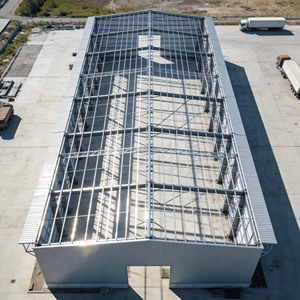
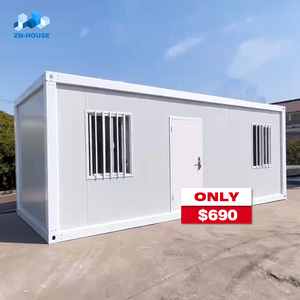
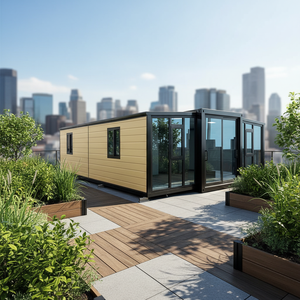
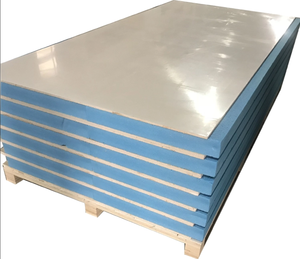
Procuring insulated roof panels and structural enclosures for projects across the Greater Tokyo Area—spanning the coastal Tokyo Bay logistics zones (Koto-ku, Shinagawa, Jonanjima), Kanagawa industrial corridors (Kawasaki, Yokohama), and the expanding distribution centers along the Ken-O Expressway—requires navigating a distinct set of engineering hurdles. Building developers, general contractors (Zenekon), and architectural consultants cannot simply source generic sandwich panels; structural envelopes must operate under the stringent requirements of the Building Standard Act of Japan (Kenchiku Kijun-hō / 建築基準法).
In Tokyo, roof envelope engineering is governed by three primary forces: extreme wind uplift induced by coastal typhoons moving across the Kanto Plain (with basic design wind speeds $V_0$ reaching 34 to 38 m/s), horizontal inter-story drift triggered by severe seismic acceleration from subduction earthquakes, and non-combustible material certification dictated by Japan's Ministry of Land, Infrastructure, Transport and Tourism (MLIT / 国土交通省). As a high-capacity China manufacturer and direct-to-site exporter, we configure our continuous polyurethane (PIR) and basalt rock wool sandwich production lines to deliver continuous exterior skins with interlocking concealed fasteners (standing seam profiles) that mitigate thermal bridging while tolerating dynamic cyclic loading.
Under Japanese fire codes, roof coverings in urban quasi-fire prevention districts (Junkashichiki) across Tokyo's 23 wards must possess either ministerial non-combustible material approval (Fukensei / 不燃材料) or qualify as 30-to-60-minute fire-resistive assemblies. Sourcing managers must make calculated choices regarding core material chemistry to harmonize low thermal conductivity ($U$-values) with mandatory life-safety requirements.
| Panel Core Type | Standard Density | Thermal Conductivity ($\lambda$) | Fire Performance (MLIT Equivalent) | Seismic Ductility | Typical Tokyo Application |
|---|---|---|---|---|---|
| Hydrophobic Basalt Rock Wool | 100 – 140 kg/m³ | 0.038 – 0.042 W/m·K | Non-Combustible (Grade A1) | High Shearing Modulus | Tokyo Bay multi-tenant warehouses, fire-compartment walls, data centers |
| PIR (Polyisocyanurate Foam) | 40 – 45 kg/m³ | 0.019 – 0.022 W/m·K | Self-Extinguishing (Class B1) | Flexible Cellular Bond | Cold storage distribution hubs (Saitama/Chiba), sub-zero food logistics |
| Fireproof Structural MGO SIP | Core Variable (MGO Skin) | 0.032 – 0.036 W/m·K | Zero Flame Spread (Incombustible) | Rigid Diaphragm | Rooftop additions, seismic modular enclosures, industrial partitions |
| EPS (Expanded Polystyrene) | 15 – 20 kg/m³ | 0.033 – 0.037 W/m·K | Fire Retardant Grade | Lightweight Elastic | Temporary logistics storage, site accommodation units, cost-driven shelters |
The Tokyo Port waterfront, stretching from Odaiba to Daikoku Pier in Yokohama, subjects commercial buildings to severe airborne sodium chloride aerosols combined with industrial sulfuric emissions. Standard commercial prepainted galvanized steel (PPGI) exhibits premature micro-cracking and zinc depletion within 5 to 7 years in such environments. Our manufacturing facilities supply high-performance metallic coatings designed to resist these aggressive microclimates.
We deploy Galvalume (55% Aluminum, 43.4% Zinc, 1.6% Silicon) and advanced Zinc-Aluminum-Magnesium (ZAM) alloy coatings ($Z275$ to $Z350$ equivalent), finished with Polyvinylidene Fluoride (PVDF) containing a minimum 70% Kynar 500 resin or High-Durability Polyester (HDP). This coating structure withstands over 2,000 hours of continuous neutral salt spray testing (JIS Z 2371 / ASTM B117) without blistering, chalking, or delamination. This offers Japanese asset holders a documented 25-to-30-year design life before first maintenance, supporting the LCC (Life Cycle Costing) criteria required by major Japanese real estate investment trusts (J-REITs).
From waterfront multi-story fulfillment facilities to seismic overbuilds in central urban hubs, our panel engineering directly mirrors the topography and operational demands of the Kanto region.
Multi-ramp, large-span distribution hubs in Shinagawa, Jonanjima, and Kawasaki require non-combustible basalt rock wool roofing with exceptional sound attenuation (STC 32 dB) to damp rain resonance over automated sorting mezzanines.
PIR continuous panel installations along the outer ring routes (Ken-O, Chiba Outer) achieve ultra-low thermal bridging through cam-lock joints, sustaining -25°C environments while reducing refrigeration compressor load by 28%.
Lightweight MGO and PIR composite boards utilized across Tokyo's 23 wards provide rapid structural envelope expansions on existing reinforced concrete (RCC) floorplates without exceeding seismic deadweight limits.
Factory environments producing electronic sub-components in Kanagawa rely on flush-jointed panels coated with anti-static, antimicrobial resins that withstand washdown routines and prevent volatile organic compound (VOC) outgassing.
The Tokyo Metropolitan Government has enacted some of Asia's most ambitious environmental policies, targeting a 50% greenhouse gas reduction by 2030 and mandating Net Zero Energy Building (ZEB) metrics across new commercial and logistics properties. To achieve ZEB Ready and ZEB Oriented status, roof panels must demonstrate stringent continuous overall heat transfer coefficients (approaching $U = 0.20 \text{ W/m}^2\text{K}$). Our panels accommodate high-thickness cores (up to 150 mm) equipped with factory-formed PV module clip rails that eliminate through-roof perforations, preserving thermal integrity while facilitating rooftop solar array installations.
Simultaneously, Japan's construction sector is navigating the profound impacts of the "2024 Problem" (statutory caps on driver and construction labor overtime hours). Traditional roof assemblies involving multi-layered deck sheeting, loose fiberglass rolling, vapor barrier taping, and cap flashing require extended on-site labor crews. Our prefabricated composite sandwich panels offer a single-step installation cycle: a single crane pick places an all-in-one fire barrier, insulative core, and weatherproof exterior roof shell spanning purlin spacings up to 3.5 meters. This compresses site envelope enclosure cycles by 60%, delivering a decisive commercial advantage for Japanese general contractors working against tight liquidated damages deadlines.
Backed by more than 15 years of precision engineering since 2010, our end-to-end integration ensures full single-point accountability from raw coil processing to containerized arrival in Tokyo Bay.
We do not operate merely as a roll-former. Our dedicated in-house structural engineering department designs primary framing, mezzanine systems, and exterior envelopes simultaneously. This ensures purlin layout, deflection limits, and panel fastener load-distributions align without subcontractor friction.
Every batch of raw coil undergoes laser coating-thickness measurement, T-bend adhesion testing, and color spectrophotometry. Our fully automated Italian continuous foaming and rock wool lamella insertion line ensures uniform core density and eliminates unbonded pocket voids.
To eliminate shipping transit damage, all roof panels are bundled with high-density protective film, perimeter corner guards, and vacuum-sealed wrapping on custom heavy-duty steel runners. Sequential packing lists allow rapid offloading in tight Tokyo job site staging zones.
Direct technical answers addressing Japanese regulatory compliance, delivery lead times, structural tolerances, and custom profile detailing.
Yes. Our basalt rock wool insulated roof panels are manufactured using high-purity inorganic rock fibers (100–140 kg/m³) bound with low-organic-content adhesives between high-grade Galvalume or steel skins. These components align with the test criteria of ISO 1182 / ISO 1716 and qualify under the performance targets of Article 2, Item 9 of the Japanese Building Standard Act. We supply comprehensive factory test certificates (FTC), mill test certificates (MTC), and third-party combustion test reports required by your Japanese registered architect (Kenchikushi) for submission to local designated inspection agencies (such as Urban Center or local municipal building departments).
Tokyo coastal installations require panel fasteners to withstand severe negative wind pressures, frequently exceeding -2.8 kN/m² along corner and perimeter roof zones. We employ concealed heavy-gauge stainless steel clips (SUS304/SUS316) that mechanically anchor the bottom metal facing directly to structural purlins, complemented by structural cap-seaming tools. This standing-seam engagement resists extreme cyclic aerodynamic suction forces without shearing screw heads or elongating fastener holes.
Standard fabrication lead time for custom-cut panels (cut to precision lengths up to 11.8 meters for 40ft HQ containers or open-top shipping frames) is 14 to 20 days. Direct sea-freight transit from Chinese major ports (Shanghai, Ningbo, Qingdao) to the Port of Tokyo (Oi Container Terminal, Aomi Terminal) or Port of Yokohama (Honmoku Pier) is exceptionally fast, taking only 3 to 5 days. Total procurement cycle from approved shop drawings to dock arrival typically ranges between 3 to 4 weeks.
Absolutely. We source coils conforming precisely to JIS G 3312 (prepainted galvanized steel sheets) and JIS G 3322 (prepainted 55% aluminum-zinc alloy-coated steel sheets). Yield strengths (typically $SGH340$ or $SGH440$), zinc coating mass, and dry film paint thickness are certified in rigorous inspection logs delivered alongside each export container manifest.
Tokyo encounters significant diurnal temperature variations and extreme atmospheric humidity between June and September. Our panel systems utilize a dual-barrier tongue-and-groove joint configuration fitted with factory-injected polyisocyanurate thermal barrier tape and elastomeric closed-cell butyl gaskets. This prevents humid internal warehouse air from migrating to the outer cold metal skin, eliminating interstitial condensation that causes concealed corrosion or insulation mold.
Yes. A roof system is only as secure as its flashings. We supply computer-folded perimeter flashings, eaves trims, foam closure strips, vented ridge assemblies, and heavy-duty box gutters made from the exact same master coil lot as the roof panels. This guarantees an identical aesthetic color match, uniform UV aging rates, and precise structural fit across every edge interface.
Submit your architectural concept, structural load criteria, or site layout. Our engineering team will return a comprehensive structural proposal, thermal performance modeling, and delivered pricing directly to the Port of Tokyo or Port of Yokohama.