Structural Steel Fabrication Factories & Exporters for Finland
Certified EN 1090-2 (EXC2/EXC3) Structural Fabrications, High-Yield Sub-Zero Steels (S355J2/NL), and Ultra-Insulated Cladding Systems Tailored for Nordic Industrial Infrastructure
SFS-EN 1993 (Eurocode 3) Compliant
Charpy V-Notch Tested (-20°C / -50°C)
Direct Maritime Delivery: Helsinki, Kotka & Turku
Nordic Ready Product Portfolios
High-Integrity Structural Systems & Thermal Envelopes
Engineered to counter severe Arctic freeze-thaw fatigue, heavy dynamic snow loads, and corrosive coastal saline atmospheres across Finnish industrial, maritime, and warehousing zones.
Structural Engineering Capability Built on Strict Metrics
Operating continuously since 2010, our integrated manufacturing plants synthesize heavy structural welding, robotic detailing, and international trade compliance under one accountable roof.
352+
Global Projects Completed
120+
Institutional Industrial Clients
100+
Engineers & CSWIP Weld Specialists
15+
Years Operational Excellence
Whitepaper Specification
Cold-Climate Metallurgy: Overcoming Brittle Fracture & Extreme Snow Loads in Finland
Procuring structural steel for industrial assets in the Republic of Finland presents exceptional engineering requirements governed by SFS-EN 1993 (Eurocode 3), the Finnish National Land Use and Building Act (Maankäyttö- ja rakennuslaki), and local decree mandates (Ympäristöministeriön asetus kantavista rakenteista). In areas ranging from southern logistics hubs in Vantaa and Vuosaari to arctic mining regions in Sodankylä and Kittilä, standard structural steel grades like ASTM A36 or basic S235JR fail to address the critical transition temperature where ductile steel transforms into dangerously brittle material.
For Finnish structural installations subject to design service temperatures of -20°C to -40°C, all primary load-bearing members (columns, crane runways, primary roof trusses) must specify fine-grain structural steels with certified Charpy V-Notch (CVN) impact toughness testing at minimum 27 Joules at -20°C (Grade S355J2+N) or -50°C (Grade S355NL / S355ML thermomechanically rolled).
Snow Load Dynamics According to SFS-EN 1991-1-3
Unlike Central European structural envelopes, Finnish structural steel designs must withstand severe ground snow loads ($s_k$) that range from $2.0\text{ kN/m}^2$ along the southwest coast to over $3.5\text{ to }4.0\text{ kN/m}^2$ in Northern Ostrobothnia and Lapland. In heavy industrial buildings featuring multi-span roofs, solar installations, or varied parapet lines, wind-driven snow drift profiles ($\mu_i$) can elevate localized roof design loads beyond $6.5\text{ kN/m}^2$.
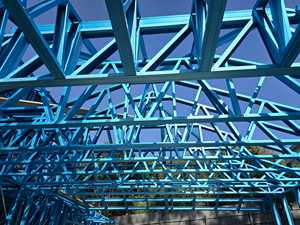
Our structural design engineering team models all portal frames, rafters, bolted joints, and secondary purlin systems within Tekla Structures 3D BIM environments. This accounts for second-order ($P-\Delta$ and $P-\delta$) sway stability under simultaneous combinations of extreme snow deposition, asymmetric gusting, and seismic vibrational loads.
Corrosion Protection Classes under ISO 12944-5
Finland’s coastline along the Gulf of Finland and Bothnian Bay experiences persistent high-humidity, marine salts, and freeze-thaw cycles requiring corrosion category C3 (Urban/Industrial Continental) to C4/C5-M (Marine Coastal) protective surface coats. Structural steelwork exported to Finland undergoes automated centrifugal shot-blasting to Sa 2.5 (ISO 8501-1), followed by calibrated multi-layer zinc-rich epoxy primers, micaceous iron oxide (MIO) intermediate barriers, and aliphatic polyurethane topcoats with a minimum Dry Film Thickness (DFT) of 240 μm to 320 μm, ensuring a nominal design life to first major maintenance exceeding 25 years.
Heavy industrial plants, forestry mills, crane runways, Northern Finland
S460ML (TMCP High Strength)
460 MPa
27 J @ -50°C
High-Performance Approved
Large-span distribution centers, high-capacity cantilevered systems
Local Ecosystem Relevance
Localized Engineering Applications Across Finland
Custom-fabricated steel structures precision-designed for the distinct operating constraints of key Finnish industrial sectors and municipal development zones.
Forestry, Pulp & Paper Processing
Heavy-duty portal frames and pipe racks engineered to resist organic acids, chemical caustic vapors, and high-frequency vibratory machinery loads typical of Finnish bio-refineries.
Hubs: Kotka, Kouvola, Kemi, Lappeenranta
Cold Chain Logistics & High-Bay Distribution
Large clear-span configurations with thermal-break column shoes and PIR insulated panel envelopes, keeping operating temperatures consistently between -25°C and +4°C.
Hubs: Vantaa Logistics Park, Turku, Tampere
Cleantech & Battery Value Chain
EXC3 execution class structural framework for battery gigafactories and green hydrogen processing facilities, offering electrostatic grounding and non-combustible A1 wall partitions.
Hubs: Vaasa GigaVaasa, Harjavalta, Kokkola
Modular Arctic Living & Administrative Pavilions
Galvanized light-gauge and steel box frame assemblies built for rapid, pre-insulated off-site modular assembly in sub-zero mining, sports, and tourism infrastructure.
Hubs: Rovaniemi, Oulu, Kittilä, Kajaani
Strategic Horizon
Emerging Trends in Finnish Structural Steel Procurement
Navigating Finland’s aggressive climate goals, European Union directives, and digital construction workflows shaping commercial contracts.
01
Carbon-Neutral Finland 2035 & EPD Mandates
Finland’s Ministry of the Environment has mandated building-level Life Cycle Assessments (LCA) with strict limits on embodied carbon per square meter. Our fabrications can be supplied with cradle-to-gate Environmental Product Declarations (EPD) verified in accordance with EN 15804+A2, tracking low-carbon electric arc furnace (EAF) steel sourcing to lower project carbon taxes under the EU Carbon Border Adjustment Mechanism (CBAM).
02
Stringent EN 1090-2 CE Execution Class Auditing
Finnish municipal building control authorities (Rakennusvalvonta) strictly inspect CE marking on all imported load-bearing steel components. Projects increasingly mandate Execution Class 3 (EXC3) for dynamically stressed structures, requiring 100% full penetration butt-weld Non-Destructive Testing (NDT), calibrated welding procedure specifications (WPS), and European IWE/EWE welding coordinator oversight.
03
Ultra-Low U-Value Building Envelopes
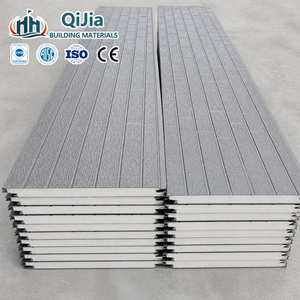
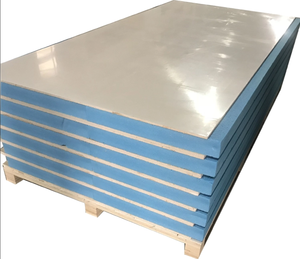
Under Finnish Building Code regulations, industrial thermal envelopes must achieve rigorous thermal transmittance values: external walls $U \le 0.17\text{ W/m}^2\text{K}$ and roof assemblies $U \le 0.09\text{ W/m}^2\text{K}$. This requires the integration of thick PIR/Rockwool composite sandwich panels (150 mm to 240 mm) paired with engineered thermal bridge isolation shims at all steel-to-cladding interfaces.
Combining design flexibility, high-throughput manufacturing, and strict European quality standards to deliver turnkey pre-engineered structures across Scandinavia.
Single-Contract Accountability
We eliminate subcontractor disputes by managing structural engineering design, shop fabrication, surface coating, and containerized export directly under one accountable contract.
Verified QC & EN 10204 3.1 Traceability
Every beam, column, and plate is fully heat-number traced with original Mill Test Certificates (MTC 3.1), radiographic/ultrasonic weld records, and dry film thickness inspection logs.
Direct Multimodal Baltic Delivery
FOB or DDP port options servicing Helsinki (Vuosaari), HaminaKotka, Turku, and Rauma. Members are bundled with anti-corrosion VCI covers and color-coded labels for rapid on-site assembly.
BIM Tekla 3D & CNC Interoperability
Fully coordinated model sharing using open IFC and NC-DSTV machine files, allowing effortless integration with local Finnish architectural and MEP engineering consultants.
Procurement Due Diligence
Frequently Asked Questions by Finnish Project Directors
Direct technical and commercial answers addressing compliance, logistics, and site erection requirements for structural steel exported to Finland.
How does your factory ensure compliance with CE marking and EN 1090-2 execution standards in Finland?
Our structural fabrication production operations strictly adhere to European standard EN 1090-2 (Execution of steel structures and aluminium structures) up to Execution Class EXC3. Every shipment to Finland is accompanied by an authentic Declaration of Performance (DoP), complete CE marking documentation under Construction Products Regulation (CPR 305/2011), and Factory Production Control (FPC) audit documentation. Welders are certified according to EN ISO 9606-1, and Non-Destructive Testing (Visual, Magnetic Particle, and Ultrasonic testing) is performed by independent level II/III NDT technicians, ensuring seamless municipal building permit approval by Finnish Rakennusvalvonta authorities.
What steel grades are recommended to prevent brittle fracture in Northern Finland (Lapland/Oulu)?
For installations north of Tampere or in exterior unheated environments subjected to ambient temperatures below -30°C, we mandate S355NL (normalized fine grain) or S355ML (thermomechanically rolled) steel plate and profiles. These grades guarantee Charpy V-notch impact absorption of at least 27 Joules at -50°C, satisfying the verification rules in Eurocode 3 (SFS-EN 1993-1-10). For southern coastal installations, S355J2+N (tested to 27 J at -20°C) is typically sufficient for primary columns and trusses.
Can your engineering team support custom snow load calculations for Lapland conditions ($s_k \ge 3.5\text{ kN/m}^2$)?
Yes. Our in-house structural engineering department calculates load combinations using the Finnish National Annex to SFS-EN 1991-1-3. We evaluate local topographic elevation, exposure coefficients ($C_e$), thermal factors ($C_t$), and potential snow drift accumulation against parapets, clerestories, and roof steps. Rafter profiles, web thickness, and purlin spacing are systematically adjusted to ensure deflection limits remain within $L/250$ to $L/350$ under full characteristic winter service loads.
What are typical shipping schedules and transit routes to Finnish container and breakbulk ports?
We provide full multimodal export shipping under Incoterms 2020 (FOB, CIF, or DDP site delivery). Fabricated steel members are containerized (40ft High Cube / Open Top) or transported via breakbulk vessels directly to major Finnish commercial terminals including Helsinki (Vuosaari Port), HaminaKotka, Turku, and Rauma. Typical ocean transit duration ranges from 28 to 36 days. All components are packed in nested steel bundles separated by kiln-dried hardwood dunnage, protected with waterproof vapor-corrosion-inhibiting (VCI) shrink wrap, and labeled with durable barcode/part-ID tags matched to the 3D Tekla erection erection drawings.
How do you manage EU CBAM (Carbon Border Adjustment Mechanism) reporting for imported steel?
As an experienced global exporter, we supply comprehensive greenhouse gas emission documentation for every batch of structural steel, conforming to EU CBAM transitional and definitive reporting methodologies. We provide specific embedded direct and indirect emissions data ($\text{tCO}_2\text{e}$ per ton of finished fabricated product) sourced from verified raw material mill reports, allowing Finnish customs clearance agents and buyers to fulfill quarterly Finnish Customs (Tulli) declarations accurately.
Can your company supply complete envelope packages (sandwich panels, flashings, fastener systems)?
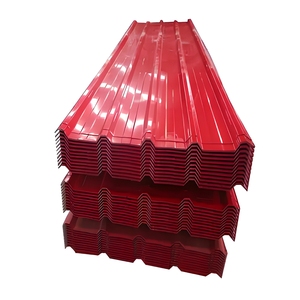
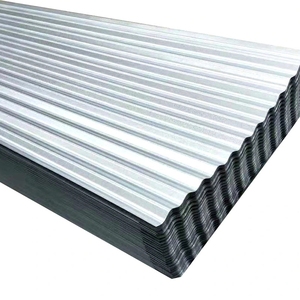
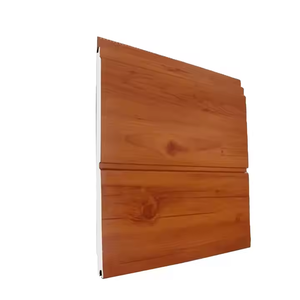
Absolutely. In addition to primary structural framework, we manufacture and supply high-performance polyurethane (PIR) and non-combustible rock wool core insulated sandwich panels, deep-rib roofing sheets, self-tapping anti-corrosion screws (bimetal stainless steel A4/316 grade), factory-formed thermal break pads, and bespoke architectural flashings. Sourcing the structural frame and building envelope together ensures that manufacturing tolerances, thermal boundary alignments, and bolt patterns match precisely on site.
Plan Your Next Project with Our Nordic Structural Engineering Team
Send us your general arrangement drawings, Tekla model, or tender specifications. Our senior structural engineers will prepare an optimized structural design, preliminary tonnage calculation, and comprehensive delivery proposal for your Finnish jobsite.