Factory-certified primary steel members, cold-formed light steel channels, composite sandwich panels, and pre-engineered envelope systems tailored for Hellenic civil works, industrial hubs, and island construction logistics.
Constructing in the Hellenic Republic demands strict compliance with Greek Seismic Code (EAK 2000) and Eurocode 8 (EN 1998-1). Here is how engineered steel framing outperforms heavy reinforced concrete in ductility, foundation load economy, and installation velocity.
Greece sits at the convergence of tectonic plates, classified into Seismic Hazard Zones I (0.16g), II (0.24g), and III (0.36g). Reinforced concrete structures incur high inertial shear forces due to self-weight.
Cold-formed light gauge steel framing (LGSF) and pre-engineered steel frames (PEB) achieve a strength-to-weight ratio over 60% higher than traditional masonry. This drastically lowers lateral seismic base shear force ($V = C_s \cdot W$), offering superior energy dissipation through ductile eccentric or moment-resisting connections.
With thousands of kilometers of coastline and over 200 inhabited islands, Greece's building envelopes endure severe salt aerosol exposure, elevated relative humidity, and intense Mediterranean UV degradation.
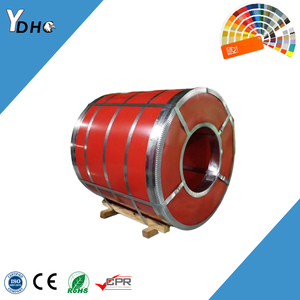
Our steel members and cladding profiles undergo continuous hot-dip galvanizing (Z275/Z350) or Aluzinc alloy application (55% Al, 43.4% Zn, 1.6% Si - AZ150). Finished with factory-cured Polyvinylidene Fluoride (PVDF) or High-Durability Polyester (HDP), the assemblies achieve ISO 12944 Corrosivity Category C4 to C5-M durability thresholds.
Under the Greek Regulation on the Energy Performance of Buildings (KENAK), new industrial, agricultural, and hospitality facilities must attain Class A or A+ energy ratings across Climatic Zones A through D.
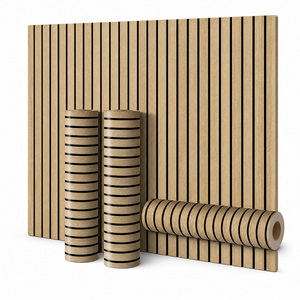
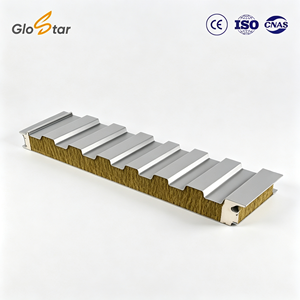
Our continuous Polyurethane (PU/PIR) and Rock Wool insulated core sandwich panels completely eliminate thermal bridging across purlins and cold-formed studs. Thermal transmittance ($U$-values) can achieve as low as $0.18 \text{ W/m}^2\text{K}$, drastically reducing HVAC operational loads during scorching Aegean summers.
Calculated structural parameters conforming to European Standards (EN 1993, EN 1998, EN 14509) for Greek territory procurement.
| System / Profile Category | Standard Yield & Alloy | Corrosion Protection Specification | Thermal / Fire Performance | Primary Greek Regional Target | Regulatory Verification |
|---|---|---|---|---|---|
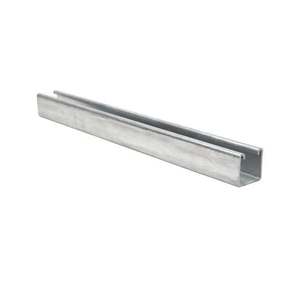
| LGSF Cold-Formed C/U Channels | S350GD to S550GD (EN 10346) | Z275 Galvanized / ZM310 Zinc-Magnesium | Non-combustible A1 structural framing | Attica, Peloponnese (High Seismic Zone III) | EN 1090-2 CE Marked |
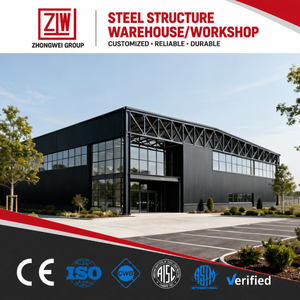
| Heavy PEB Built-up Portal Frames | S355JR / S355J2 (EN 10025-2) | Blast clean Sa 2.5 + 160μm Epoxy/Polyurethane | Fireproofing intumescent paints compatible | Industrial Zones: Aspropyrgos, Sindos, Larissa | EN 1993-1-1 Approved |
| PIR Core Insulated Wall/Roof Panels | 0.5mm + 0.5mm Prepainted Aluzinc | AZ150 + 25μm PVDF top-coat | $U$-Value: $0.21 \text{ W/m}^2\text{K}$ (100mm thickness) | Central Macedonia, Thessaly Agro-Cold Logistics | KENAK Class A+ / EN 14509 |
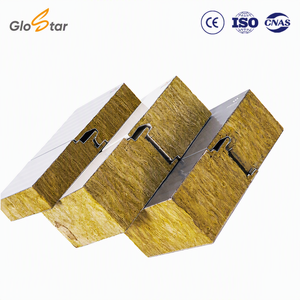
| Basalt Mineral Wool Sandwich Panels | High-strength structural steel facings | Z275 galvanized polyester coated facings | Reaction to Fire: Class A1 / EI120 fire barrier | Hospitality Resorts, Cyclades, Cleanrooms | EN 13501-1 Certified |
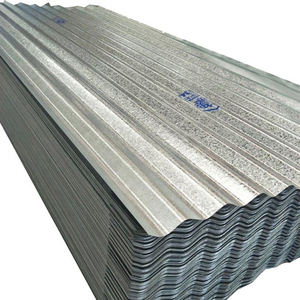
| Corrugated Aluzinc Hard Roofing | G550 Structural Hard ASTM A792 | 55% Al-Zn alloy hot-dip barrier layer | Reflective Cool-Roof Index (SRI > 78) | Aegean Archipelago (Wind gusts > 120km/h) | Eurocode 1 Wind EN 1991 |
From mainland logistics corridors and wine production facilities to remote Aegean island hotel projects, our steel framing systems resolve the toughest geographic, logistical, and environmental constraints.
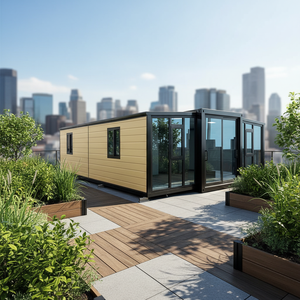
Traditional wet concrete construction on Greek islands (e.g., Mykonos, Santorini, Rhodes, Corfu) is heavily constrained by summer construction bans, acute freshwater shortages, expensive aggregate barging, and narrow hillside access roads.
Greece’s strategic emergence as the Mediterranean supply-chain gateway (focused around the Port of Piraeus, Thriasio Pedio in Aspropyrgos, and Thessaloniki) has accelerated demand for vast clear-span distribution centers.
Hellenic agricultural exporters in regions like Larissa, Volos, Heraklion, and Kalamata require hygienic, temperature-controlled packaging plants, olive processing units, and cold storage facilities.
Established in 2010, our integrated industrial operations eliminate middleman markups and subcontractor misalignments. We provide full structural design, automated fabrication, sandwich panel laminating, and international export packing under one accountable roof.
Our in-house design office creates comprehensive 3D Tekla structures, structural calculation packages under Eurocodes 1, 3, and 8, and production shop drawings tailored precisely to your land topography.
By producing both the primary steel portal framing and the insulated sandwich panel skins, we guarantee airtight envelope fitment, matching tolerances, and cohesive project scheduling without trade clashes.
Every single member is steel-stamped, color-coded, bundle-strapped, and cataloged into seaworthy container stowage plans for prompt, damage-free customs arrival at Piraeus, Thessaloniki, or Heraklion.
Clear, technically rigorous answers for Hellenic civil engineers, general contractors, developers, and import purchasing directors.
Our structural design division develops structural calculations strictly aligned with Eurocode 3 (EN 1993 for steel design) and Eurocode 8 (EN 1998-1 for earthquake-resistant structures). For installations across Greece’s designated Seismic Hazard Zones (Zone I $a_g = 0.16g$, Zone II $a_g = 0.24g$, Zone III $a_g = 0.36g$), our engineers establish suitable structural behavior factors ($q$ values up to 4.0 for ductile moment frames or tension-compression diagonal bracing).
Because structural steel frames carry significantly less deadweight than cast-in-place concrete or masonry blocks, base shear loads imparted to foundation anchor bolts are reduced by up to 55%. Complete calculation files, stress diagrams, connection bolt shearing calculations, and foundation reaction tables are provided to your local Greek supervising civil engineer for municipal building permit approval.
For coastal and insular environments classified under ISO 12944 as Corrosivity Categories C3 (urban/industrial coastal), C4 (marine coastal), or C5-M (extreme maritime splash/island edge), we deploy multi-tier defensive treatments:
1. Light Gauge Profiles (LGSF): Hot-dip galvanization with heavy zinc coatings from Z275 (275 g/m² total both sides) up to ZM310 (Zinc-Aluminum-Magnesium alloy, offering unmatched self-healing edge corrosion resistance).
2. Heavy Fabricated PEB Columns & Rafters: Automated centrifugal shot-blasting to Swedish Standard Sa 2.5, immediately primed with high-build zinc-rich epoxy primers followed by polyurethane or micaceous iron oxide (MIO) topcoats to a nominal dry film thickness (DFT) of 160μm to 240μm.
3. Metal Cladding & Panels: High-purity 55% Aluzinc (AZ150) substrates combined with fluoropolymer PVDF paint coatings featuring exceptional resistance to high UV exposure, salt spray, and micro-cracking.
The Greek Energy Performance of Buildings Regulation (KENAK) establishes strict maximum thermal transmittance ($U$-values) across Greece's four climatic zones (Zone A in southern islands to Zone D in Western Macedonia). Our continuous polyurethane/polyisocyanurate (PUR/PIR) insulated panels have an extremely low thermal conductivity ($\lambda = 0.022 \text{ W/m}\cdot\text{K}$).
With panel thicknesses between 80mm and 120mm, $U$-values easily reach $0.27$ down to $0.18 \text{ W/m}^2\text{K}$, comfortably exceeding KENAK requirements for roof and external wall envelopes. Where strict Class A1 non-combustibility or fire barrier regulations apply (e.g., public buildings or high-hazard warehouses), our high-density Rock Wool panels ($\ge 120 \text{ kg/m}^3$) deliver up to EI120 fire resistance without compromising acoustic performance.
We routinely manage export logistics for international buyers. Shipments to Greece are dispatched via ocean freight in 40-foot High Cube (40' HC) or 40-foot Open Top (40' OT) containers depending on member length and geometry.
Primary ports of discharge include Piraeus (Athens), Thessaloniki, and Heraklion (Crete). For island developments, freight forwarders in Piraeus smoothly coordinate feeder vessel transfers or direct Ro-Ro trucking to island harbors across the Cyclades or Ionian chains. Every container is stowed with moisture-absorbing desiccants and custom dunnage. All packages include numbered shipping tags, full packing lists, and steel mark references corresponding to the 3D erection drawings for effortless site sorting.
Yes. Our delivery scope covers the complete prefabricated envelope. This includes primary structural portal frames, wind cross-bracing rods, secondary galvanized C/Z purlins, eaves struts, wall girts, sag rods, Grade 8.8 or 10.9 high-strength structural connection bolts, chemical foundation anchor bolt sets, self-drilling weather-sealed fasteners with EPDM washers, corner flashing, ridge caps, and architectural trims.
Clients receive a comprehensive erection drawing set and structural installation manual. Every column, rafter, and purlin carries a punched alphanumeric mark that maps directly to the step-by-step assembly diagrams, allowing local Greek installation teams to erect the structure swiftly without on-site cutting or welding.