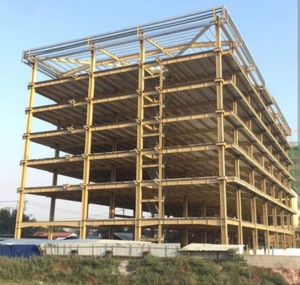

Precision-fabricated components manufactured in full compliance with ASTM, BS EN, and Qatar Construction Specifications (QCS 2018). Optimized for rapid consolidation, containerized sea freight to Hamad Port, and heavy-duty structural performance across Qatar's extreme marine-desert interface.

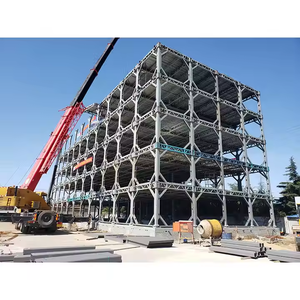
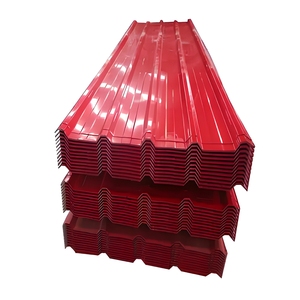
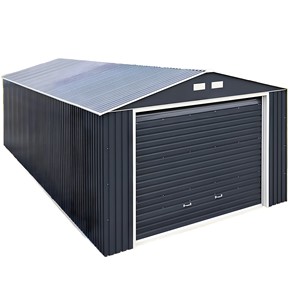
Joint Star Steel operates as an integrated industrial design, manufacturing, and export conglomerate. We resolve the common interface failures between cast-in-place civil contractors, structural fabricators, and cladding suppliers under single-point structural warranties.
We unify substructure civil engineering, deep raft and anchor-bolt layout, precision fabrication of primary built-up members, and high-performance sandwich panel cladding under one rigorous QA/QC contract.
All structural calculations, weld procedures (WPS), non-destructive testing (NDT), and concrete formulations align strictly with Qatar Construction Specifications, BS 5950, Eurocode 3, and ASTM standards.
Standardized containerization, bundled profile nesting, marked component manifests, and moisture-barrier seaworthy packing ensure rapid customs clearance and immediate sequence-based site erection in Doha.
An exhaustive analysis of structural load transfer mechanisms, coastal saline mitigation, thermal lag coefficients, and fast-track steel-composite integration within Greater Doha's challenging soil strata.
Traditional construction in the Doha metropolitan area has historically leaned toward cast-in-place Reinforced Cement Concrete (RCC). While monolithic RCC provides exceptional thermal mass inertia and natural acoustic isolation against turbulent Shamal desert winds, it imposes massive dead-load penalties on Qatar's limestone and sabkha-laden soils. This leads to costly over-excavation, extensive dewatering, and prolonged construction cycles that clash with aggressive project commissioning deadlines.
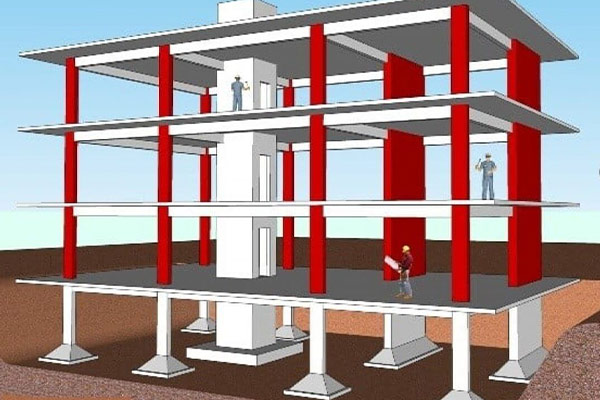
Joint Star Steel has pioneered the export and structural supply of Hybrid RCC-PEB Structural Systems for Tier-1 contractors in Qatar. By consolidating subterranean raft foundations, basement retaining perimeters, and vertical shear cores into grade 60 high-performance concrete, we pair the superstructure with high-tensile pre-engineered structural steel frames (ASTM A572 Grade 50 / S355JR).
This hybrid methodology drastically reduces the total foundation load by up to 38%, expands clear-span floor columns to exceed 48 meters without intermediate transfer girders, and shortens the structural envelope erection window by over 45% compared to conventional cast-in-situ framing.
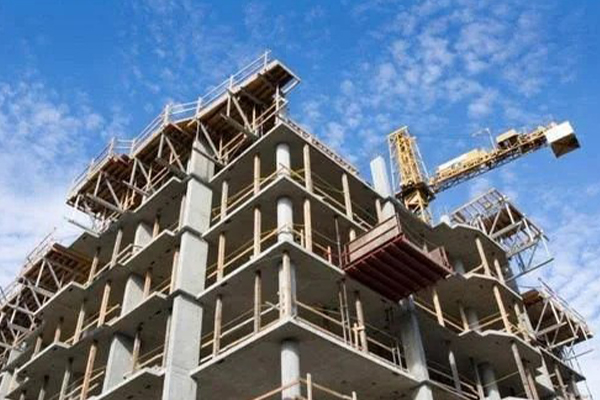
Doha's coastal groundwater tables—particularly across Ras Bufontas, the Old Doha Industrial Area, and Lusail Marina perimeters—feature high concentrations of corrosive dissolved sulfates and chlorides. When pore water evaporates under intense ground radiant temperatures exceeding 55°C, salt-crystallization pressures cause severe concrete spalling, carbonation, and accelerated rebar oxidation in substandard structures.
Our engineering export package provides localized engineering designs for Doha foundations that mandate Sulfate-Resisting Portland Cement (SRPC / ASTM C150 Type V) blended with micro-silica and blast furnace slag (GGBS). This delivers an impermeable concrete matrix with a water-cement ratio maintained strictly below w/c 0.38.
At the column-foundation interface, our pre-engineered baseplate systems utilize heavy hot-dip galvanized ASTM A123 assemblies coupled with sacrificial epoxy coatings. This shields critical shear keys and holding-down anchor assemblies from the severe capillary draw of subterranean saline moisture, guaranteeing structural lifespans in excess of 50 years.
| Performance Dimension | Monolithic Cast-in-Place RCC | Structural Pre-Engineered Steel (PEB) | Joint Star Hybrid RCC + Composite Steel Deck |
|---|---|---|---|
| Structural Self-Weight | Extreme (~24-25 kN/m³) - Requires massive footings | Ultra-Light (~7.85 kN/m³) - Vulnerable to uplift | Optimized (~16 kN/m³) - Balances wind-downforce & raft sizing |
| Clear-Span Capability | Restricted (Typically 8m - 12m without post-tensioning) | Superior (30m - 60m economical clear frames) | Unrestricted (Up to 75m clear span with RCC stiffening) |
| Thermal Envelope U-Value | Poor (High thermal bridge through concrete facade) | Moderate (Demands exterior insulation retrofits) | Superior (0.19 W/m²K achieved via Rock Wool / PIR panels) |
| Construction Cycle (10,000m²) | 12 - 16 Months (Prolonged formwork & curing delays) | 4 - 6 Months (Vulnerable to local civil interfaces) | 5 - 7 Months (Turnkey parallel off-site production) |
| Compliance Pathway | Standard Ashghal / QCS 2018 Section 13 | QCS 2018 Section 16 & AISC 360-16 | Full Dual-Standard Approval (QCS / Ashghal / GSAS 4-Star) |
Engineered solutions explicitly addressing the regulatory, mechanical, and logistical realities of Qatar's specialized economic zones, manufacturing corridors, and infrastructure developments.
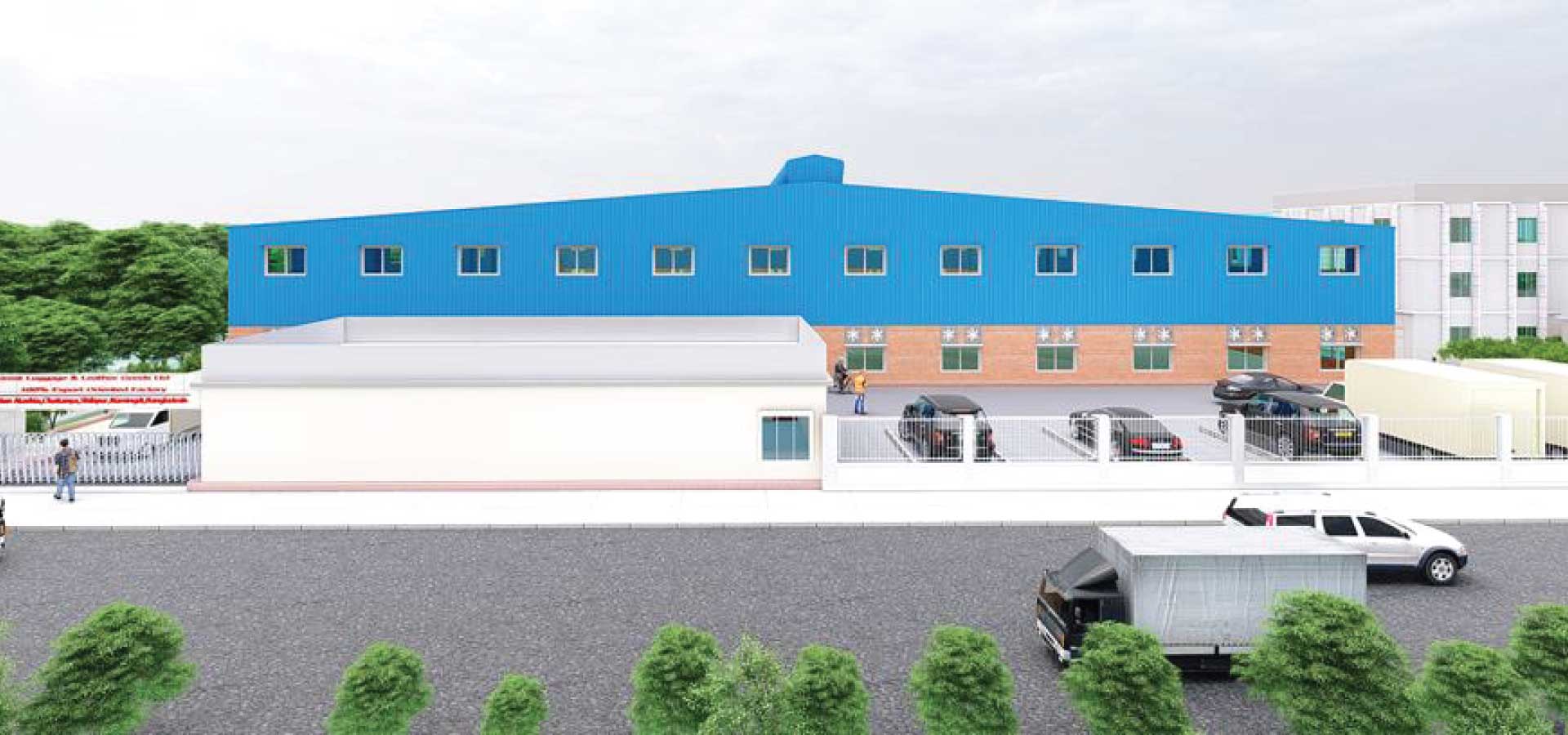
High-throughput distribution terminals requiring hyper-flat industrial floors, heavy dynamic axle-load resistances, and clear-span portal frames capable of supporting automated high-density rack systems and overhead gantry cranes.
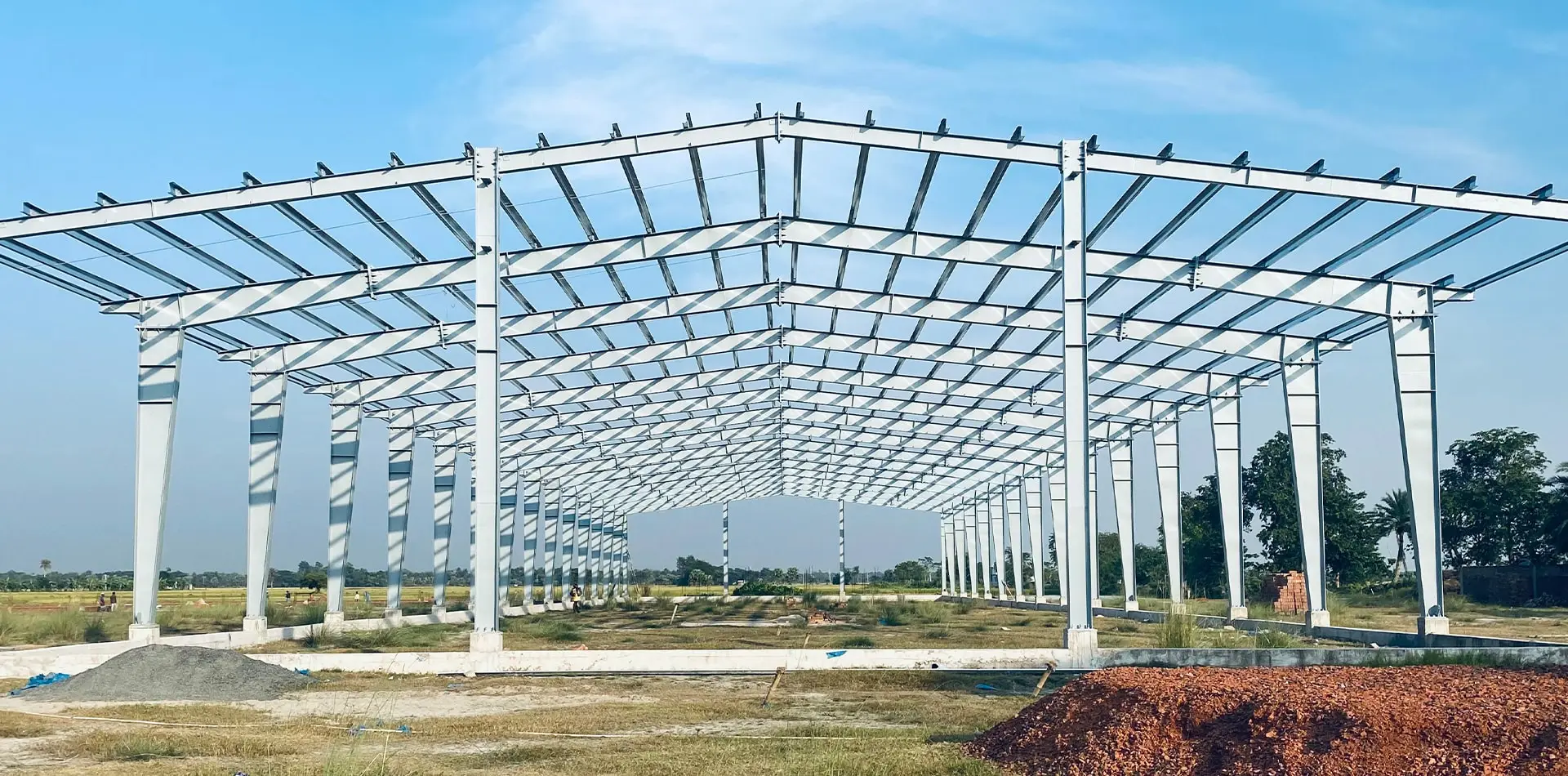
Sanitary and ultra-low temperature cold stores handling pharmaceutical and perishables distribution. Demands continuous thermal envelopes, air tightness, and non-combustible partition walls preventing thermal bridging under summer solar radiant temperatures.

Multi-tier composite parking structures, commercial mixed-use retail decks, and hospitality modular superstructures requiring acoustic damping, fire ratings up to 4 hours, and architectural flexibility.
Regulatory imperatives are permanently transforming procurement in Doha. Learn how GSAS certifications, embodied carbon benchmarks, and Modern Methods of Construction (MMC) mandate precision off-site engineering.
With Qatar's Global Sustainability Assessment System (GSAS) mandatory across public works, our pre-engineered steel frames deliver up to 95% recyclability and drastically lower lifecycle embodied carbon relative to deep monolithic concrete structures.
Kahramaa power allocation caps demand strict overall thermal transfer value (OTTV) compliance. By pairing continuous composite mineral wool and PU sandwich envelopes with thermal break framing, air conditioning electrical loads drop by 28-34%.
By exporting our automated light gauge steel framing roll-forming machines directly to Qatari construction compounds (Product #5), EPC contractors can manufacture C75/C89/C140 framing profiles locally, saving significant freight volume.
Proximity to the Arabian Gulf subjects structural elements to severe salt spray. All exported primary members receive shot-blast Sa 2.5 preparation followed by zinc-rich epoxy primers and polyurethane topcoats engineered for C5-M high-salinity zones.
Joint Star Steel operates state-of-the-art multi-torch CNC oxy-fuel cutting centers, automated submerged-arc welding (SAW) column assembly lines, and high-speed drilling beds. Primary structural rafters and columns are produced from high-tensile structural steel plates conforming to ASTM A572 Grade 50 and BS EN 10025-2 S355JR.
Prior to sea freight dispatch to Doha, complex node connections undergo shop trial assembly. We verify bolt-hole alignments, gusset tolerances, and camber geometry using 3D laser scanning against Tekla Structures LOD 400 BIM models. This rigorous trial assembly guarantees that field operations in Qatar require zero site torch-cutting or structural field modification.
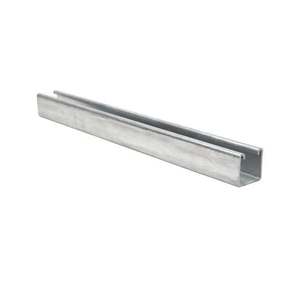
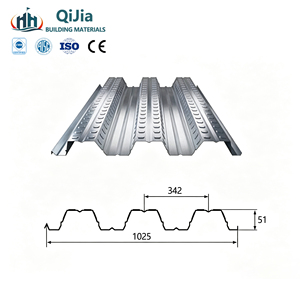
Secondary framing components—including cold-formed galvanized Z and C purlins, U-channels, and ASTM A653 floor decking profiles—are precision roll-formed with minimum zinc coatings of Z275 (275 g/m²) up to Z600 for enhanced longevity in harsh environments.
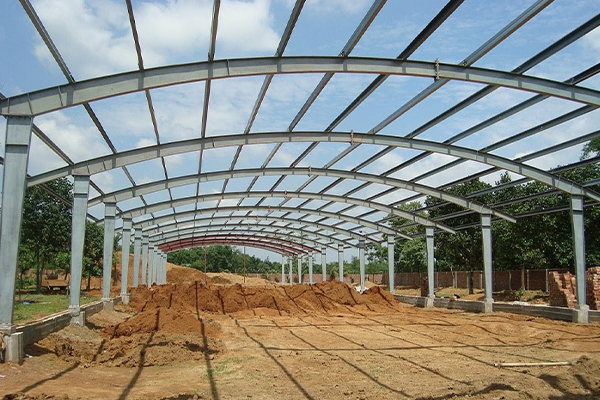
Direct technical, logistical, and compliance answers addressing the primary concerns of Qatari engineering authorities, Ashghal project consultants, and commercial developers.
Our dedicated quality assurance division enforces rigorous compliance protocols mapped explicitly to QCS 2018 Section 16 (Structural Steelwork) and Section 13 (Concrete). We provide full material traceability with original EN 10204 Type 3.1 Mill Test Certificates (MTC), certified Procedure Qualification Records (PQR), and Welding Procedure Specifications (WPS) aligned with AWS D1.1/D1.1M. Ultrasonic Testing (UT), Magnetic Particle Testing (MT), and 100% Visual Testing (VT) reports by independent third-party testing agencies (such as SGS or Bureau Veritas) are included with each export shipment.
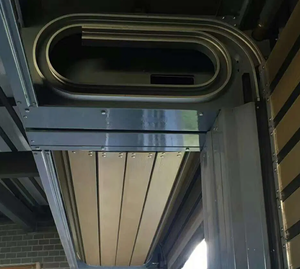
Average maritime transit times from our specialized deep-water export wharves to Hamad Port (Doha) range from 14 to 21 operational days. We handle breakbulk shipments for heavy oversized rafters (exceeding 18 meters) and standard open-top or 40ft HQ containerized freight for roll-formed decking, light gauge framing profiles, rapid spiral doors, and modular kits. All packaging features moisture-resistant VCI covers, marine-grade timber cradles, color-coded tag matching erection sequence drawings, and customs-certified commercial packing manifests that streamline Qatar Customs clearance at Mesaieed and Hamad Port terminals.
In Doha, roof envelope temperatures routinely climb from 25°C at dawn to exceeding 80°C under peak direct solar exposure, generating substantial thermal expansions and contractions. When steel structural framing interfaces with monolithic RCC columns, differing coefficients of thermal expansion (Steel α ≈ 12×10⁻⁶/K vs Concrete α ≈ 10×10⁻⁶/K) create thermal shear stresses at base connections. Our structural engineers integrate slotted PTFE Teflon slide bearings, elastomeric expansion joints, and pre-engineered thermal isolation breaks that dissipate expansion forces without stressing concrete column heads or creating masonry shear cracks.
Yes. Our Hot Galvanized Corrugated Steel Floor Decking Sheets (Product #3) are manufactured according to ASTM A653 and BS 5950 Part 4 standards. The cold-rolled re-entrant profiles and mechanical embossments create an exceptional interlock with concrete, functioning as permanent tensile rebar reinforcement. This profile is engineered for high-slump, micro-silica-modified concrete formulations approved by Ashghal, eliminating the need for temporary bottom propping over spans up to 4.2 meters and significantly accelerating multi-story construction.
For coastal industrial environments such as Ras Laffan, Mesaieed, and Lusail Marina, we specify a high-performance C5-M paint system per ISO 12944. This starts with automated centrifugal abrasive blasting to Sa 2.5 cleanliness, followed by a two-component zinc-rich epoxy primer (75 µm DFT with >80% metallic zinc in dry film), an intermediate polyamide-cured micaceous iron oxide (MIO) epoxy barrier coat (150 µm DFT), and a finish coat of aliphatic polyurethane (60 µm DFT), providing a total dry film thickness exceeding 285 µm for exceptional resistance to UV degradation and saline air.
We work seamlessly with Qatari and international financial institutions via Confirmed Irrevocable Letters of Credit (L/C at sight) and milestone-based telegraphic transfers (T/T). Before factory production starts, our engineering office delivers comprehensive technical submittal packages—including structural calculations validated by STAAD.Pro and Tekla 3D structural models, material sample boards, and anchor-bolt general arrangements—ready for immediate submission to supervising engineering consultants.
Whether you are designing a high-bay logistics center in Ras Bufontas, a cold chain terminal in Doha New Industrial Area, or an urban commercial structure in Lusail, Joint Star Steel provides the engineering precision, manufacturing capacity, and export reliability your project requires.