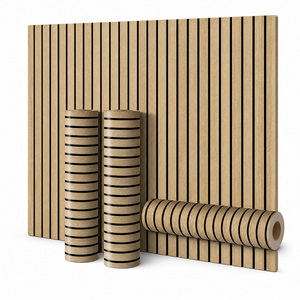
Interior Cladding

Manufactured to ASTM, EN 1090-2, and SS EN Eurocode benchmarks. Every prefabricated component is fabricated in automated facilities, batch-coded for erection traceability, and pre-packaged for sea-freight through PSA Singapore and Jurong Port.
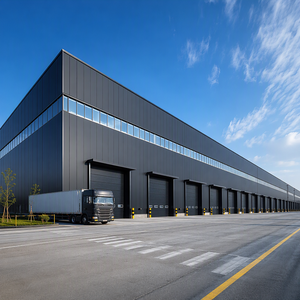
Developing industrial facilities within the Republic of Singapore demands an entirely distinct structural engineering methodology compared to conventional Western or regional land-rich territories. Operating under the jurisdiction of the Building and Construction Authority (BCA), industrial land allocators like JTC Corporation impose stringent constraints on plot ratio maximization, foundation load transfers on reclaimed land, and construction timelines.
Singapore's tropical maritime climate (Köppen Af), characterized by continuous relative humidity hovering between 70% and 95%, intense solar radiation, and aggressive airborne marine chlorides from the Singapore and Malacca Straits, makes material degradation an urgent structural liability. Pre-engineered metal building kits exported to Singapore must not merely satisfy static load criteria; they must be holistically configured against high corrosion risks (ISO 12944 C4/C5 marine environments) and comply with stringent thermal Envelope Thermal Transfer Value (ETTV) parameters under the BCA Green Mark: 2021 certification scheme.
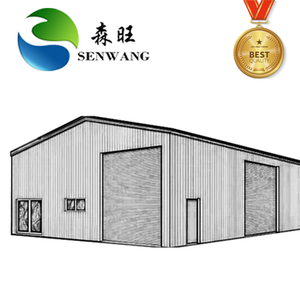
Joint Star Steel Structure Ltd. combines over 15 years of Tier-1 structural prefabrication, supplying turnkey metal building kits, heavy mezzanine storage systems, and non-combustible sandwich roof and wall envelope systems engineered to integrate effortlessly with local Singapore site logistics.
Wind Loading Standard: SS EN 1991-1-4 Singapore National Annex. Basic reference wind velocity $V_{b,0} = 20\text{ m/s}$ with localized wind turbulence models for high-rise proximity and monsoon storm squalls.
Thermal Transmittance Thresholds: Building envelopes must meet Roof Thermal Transfer Value (RTTV) ≤ 25 W/m² to comply with BCA Green Mark 2021 energy efficiency mandates.
Coating Durability: Surface preparation to ISO 8501-1 Sa 2.5 blast standard with High-Build Epoxy Primer and Polyurethane / PVDF finishes exceeding 1,500 hours salt-spray resistance.
Singapore’s industrial topography varies dramatically across districts. Our factory-prefabricated metal building kits and high-performance components address the precise micro-environmental challenges of Singapore's key manufacturing zones.
District: Tampines, Changi South & Pioneer Logistics Nodes
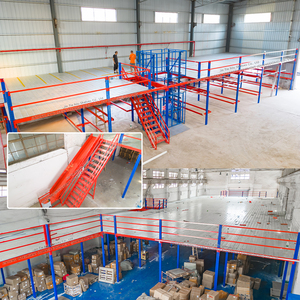
Due to exorbitant industrial floor space rental rates, single-level storage is commercially obsolete in Singapore. Our pre-engineered second-floor elevated mezzanine systems provide load bearing capacities up to 500–1,200 kg/m², doubling usable square footage without altering external foundation footprints.
District: Jurong Island, Tuas South & Benoi Marine Sector
Positioned along tidal seawater edges and petrochemical refineries, steel structures face aggressive airborne hydrogen sulfide, saltwater spray, and constant UV radiation. We fabricate specialized portal frames with heavy hot-dip galvanizing (>85 microns, ASTM A123) and high-build C5-M marine epoxy systems.
District: Tuas Biomedical Park & Woodlands Industrial Hub
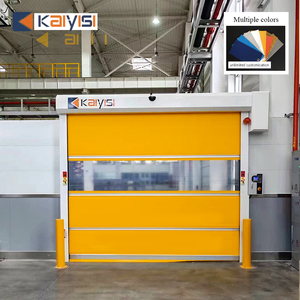
Precision biopharmaceutical manufacturing requires airtight, thermal-bridge-free building envelopes. Our PU (PIR) and Rockwool insulated sandwich panels, coupled with automated high-speed PVC roller shutter doors, deliver sterile containment, stable cleanroom thermal environments, and airtight seals.
District: Central Business District (CBD) & Ubi Light Industrial
Structural dead-weight limitations on existing concrete rooftop slabs preclude heavy masonry works. Our lightweight EPS and Rockwool sandwich panel rooftop kits, combined with ultra-light cold-formed C/Z purlin frames, enable commercial operators to quickly construct compliant rooftop offices and testing laboratories.
District: Megaproject Infrastructure Sites (Cross Island Line / T5)
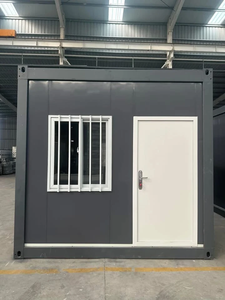
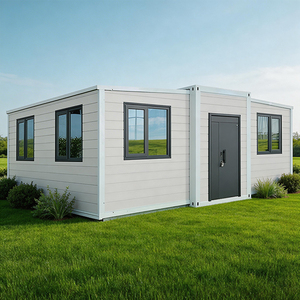
Major infrastructure civil contracts require demountable, relocatable command centers. Our flat-pack 20ft/40ft expandable container houses offer thermal insulation, rapid crane-pick mobility, and pre-integrated electrical circuits ready for immediate deployment on site.
District: Jurong Cold Hub & Mandai Food Zone
Singapore’s 30-by-30 food security initiative has catalyzed massive demand for multi-temperature cold chain logistics. We supply high-density polyurethane (PU) sandwich panels featuring cam-lock joints, providing continuous $U$-values down to 0.16 W/m²K to prevent floor condensation and refrigeration energy losses.
The Singaporean construction market is transitioning rapidly under strict national mandates for productivity, safety, and decarbonization. Here is how modern prefabricated metal systems align with future requirements.
Under the BCA Built Environment Industry Transformation Map (ITM), projects on state land must incorporate Design for Manufacturing and Assembly. Pre-engineered steel frames with high prefabrication ratios drastically cut on-site foreign worker levies and shorten installation cycles.
The Singapore Green Building Masterplan aims to green 80% of buildings by 2030. Metal building systems with high recycled steel scrap content, EPD (Environmental Product Declaration) certificates, and high-performance composite insulation earn critical points under the BCA Green Mark framework.
Automated Storage and Retrieval Systems (ASRS) demand extremely tight structural tolerances (+/- 2mm) in column plumbness and rail deflections. Factory-welded built-up H-beams guarantee the geometric precision required by advanced warehouse robotics.
JTC land leases often run for shorter durations (20 to 30 years). Structural metal building kits allow full demountability, relocation, and steel material recycling at end-of-lease, avoiding massive demolition waste and asset depreciation.
A breakdown of our structural fabrication standards, panel materials, and regulatory certifications for the Singapore market.
| System Component | Material & Grade Standard | Singapore Code Compliance | Protective Finish / Core Spec | Typical Application |
|---|---|---|---|---|
| Primary Steel Frame | Q355B / ASTM A572 Gr. 50 / S355JR | SS EN 1993-1-1 / EXC2 | Blast Sa 2.5 + 85µm HDG / Marine Epoxy | Heavy Warehouses, Workshops, Plants |
| Secondary Frame (Purlins/Girts) | Cold-Formed High-Tensile Galvanized Z/C | SS EN 1993-1-3 | Z275 / AZ150 Continuous Hot-Dip Zinc | Roof purlins, wall framing, sag rods |
| Rock Wool Sandwich Panel | High-density basalt core (100–120 kg/m³) | SCDF Class 0 / EN 13501-1 | 0.5mm PVDF pre-painted steel sheet | Fire separation walls, hazardous storage |
| Polyurethane (PU/PIR) Panel | B1/B2 Grade Rigid Polyisocyanurate | Green Mark RTTV Compliant | Thermal conductivity ≤ 0.022 W/m·K | Cold storage, biomedical facilities |
| Expanded Polystyrene (EPS) Panel | Self-extinguishing virgin EPS foam | General Enclosure Standard | Economy lightweight insulation core | Site offices, worker quarters, partitions |
| Second Floor Mezzanines | Integrated I-Beam + Chequered Deck | SS EN 1991-1-1 | 500–1,200 kg/m² point & uniform load | Logistics picking floors, office lofts |
| Automated High-Speed PVC Doors | 0.8–1.5mm high-density polymer curtain | EN 12424 Wind Class 2/3 | Infrared safety sensor + 1.2 m/s motor | Cleanroom airlocks, loading dock portals |
Operating continuously since 2010, Joint Star Steel Structure Ltd. combines structural engineering expertise with integrated sandwich panel manufacturing under one roof.
Major Structures Delivered
Global Industrial Clients
Structural Engineers & QC Specialists
Years Manufacturing Excellence (Since 2010)
We eliminate interface clashes between structural steel fabricators and architectural cladding providers. From 3D Tekla shop models and CNC plasma beam-line cutting to panel profiling, every element is matched and trial-assembled before shipping.
Our quality management systems follow automotive-grade IATF 16949 and ISO 9001 standards. Every beam weld undergoes Non-Destructive Testing (NDT) including Ultrasonic Testing (UT) and Magnetic Particle Testing (MT) with full verification dossiers provided.
Our packaging teams follow strict export crating guidelines. Steel members are bundled with color-coded tags matching erection drawings, wrapped in moisture-resistant vapor barriers, and loaded directly into 40ft OT / FR containers for delivery straight into Singapore ports.
Essential guidance on regulatory compliance, BCA certifications, shipping logistics, and site installation for Singapore-based projects.
Yes. Our in-house structural engineering department generates full 3D finite element structural analysis models using Tekla, STAAD.Pro, and SAP2000 formatted directly to Singapore Eurocodes (SS EN 1993, SS EN 1991). We provide native calculation sheets, connection detail analyses, and material Mill Test Certificates (MTC EN 10204 Type 3.1) so your appointed local Qualified Person (QP) or Professional Engineer (PE) can review, endorse, and submit to the BCA without structural redesign delays.
The Singapore Civil Defence Force (SCDF) Fire Code 2023 enforces strict non-combustibility rules for industrial external claddings and internal partitions. For fire-rated applications, we supply Rock Wool (Mineral Wool) sandwich panels certified to EN 13501-1 Class A1 non-combustible and BS 476 Part 4/6/7 (Class 0 surface flame spread). For cold rooms and climate-controlled spaces, our PIR panels achieve ASTM E84 Class A flame spread ratings.
For installations exposed to marine salt spray and industrial emissions, we apply a multi-tier protective strategy. The steel frame is grit-blasted to ISO 8501-1 Sa 2.5, followed by hot-dip galvanizing to ASTM A123 / SS EN ISO 1461 (>85 microns coating thickness). Alternatively, we provide a duplex marine coating system consisting of a zinc-rich epoxy primer (75µm), an epoxy micaceous iron oxide (MIO) intermediate coat (100µm), and an aliphatic polyurethane topcoat (50µm), rated for ISO 12944 C4 to C5-M high-durability environments.
Standard fabrication lead time for a 1,000 to 5,000 square meter metal building kit runs between 3 and 5 weeks following final approval of shop drawings. Ocean transit to PSA Singapore or Jurong Port takes approximately 7 to 14 days depending on vessel scheduling. Components are crated in containerized, color-coded sequences to enable direct-from-container installation, avoiding congesting tight Singapore site laydown areas.
Our building envelopes assist projects in securing BCA Green Mark points in two main areas: Energy Efficiency and Embodied Carbon. The high thermal resistance of our PU/PIR and Rock Wool roof systems drastically lowers the Envelope Thermal Transfer Value (ETTV) and Roof Thermal Transfer Value (RTTV ≤ 25 W/m²), reducing cooling loads. In addition, our structural steel is manufactured using electric arc furnace (EAF) methods with high scrap metal ratios, reducing upfront embodied carbon.
Yes. Depending on your project requirements, we can provide senior structural erection supervisors to guide your local main contractor's lifting team. For clients seeking a full turnkey solution, we partner with BCA-registered local builders who hold the appropriate General Builder licenses and CoreTrade-certified crane and rigging crews to carry out civil foundation casting, bolt setting, and frame erection in full compliance with Ministry of Manpower (MOM) workplace safety regulations.
Whether you are engineering a high-load warehouse mezzanine in Tuas, a climate-controlled logistics hub near Changi, or a marine-grade workshop along Jurong Island, our structural engineering team will deliver a cost-optimized, Eurocode-compliant structural proposal.
Inquire Now