
Engineered for continuous thermal containment, extreme snow deflection, and rapid industrial modular assembly across Greater Chicagoland logistics corridors and Midwest submarkets.
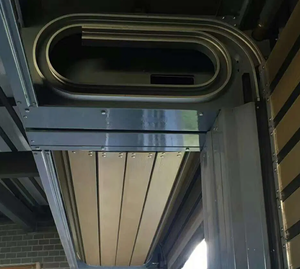
High-speed spiral insulated turbo door designed to arrest thermal bridging at high-traffic logistics loading docks during severe sub-zero winter blasts.
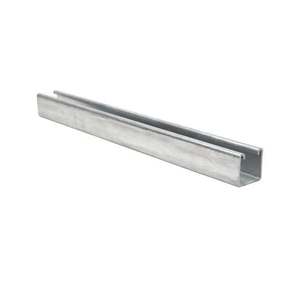
Hot-dip galvanized structural secondary framing purlins, engineered to support heavy insulated panel spans and handle Midwest ground snow loads.
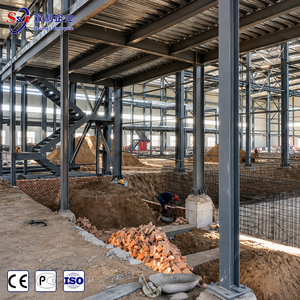
Integrated PEB steel framing configured specifically for rapid skinning with high R-value composite insulated roof and wall panels.
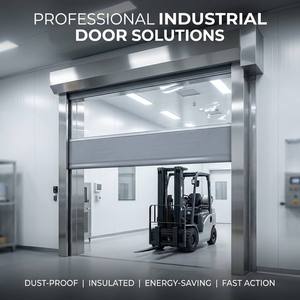
Stainless steel sanitary rapid curtain door designed for cold-chain refrigerated distribution facilities, eliminating condensation air exchange.
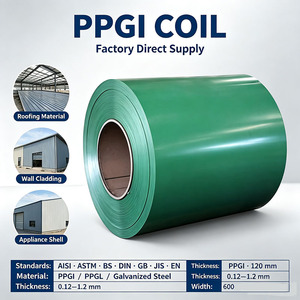
Heavy-gauge prepainted steel outer skins with fluoropolymer coatings, offering exceptional UV reflectance, corrosion barrier, and weatherproofing.
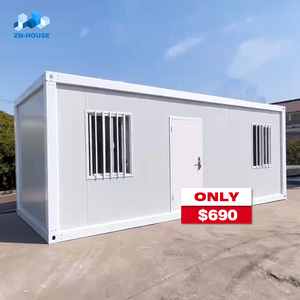
Thermal-tight modular units assembled using continuous polyurethane sandwich roofing, engineered for rapid field deployment and harsh climate shelter.
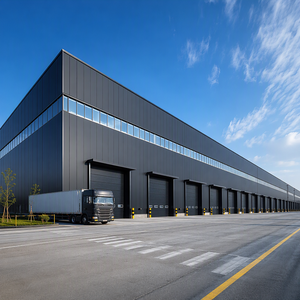
Heavy portal-frame structure equipped with factory-foamed insulated roof sandwich decking, delivering complete single-source industrial building shells.
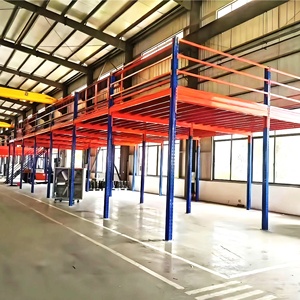
Heavy-load interior mezzanine platforms custom-fabricated to integrate beneath insulated portal frame rafters, maximizing cubic warehouse utilization.
A comprehensive examination of continuous insulation, sub-zero vapor drive management, and structural diaphragm performance under ASHRAE Zone 5A and Illinois building regulations.
Chicago encounters extreme temperature swings, dropping below -20°F during polar vortex episodes and surging above 95°F in summer humid waves. Conventional multi-layer built-up roofs suffer severe thermal bridging through mechanical fasteners. Our continuous insulated roof panels utilize proprietary double-tongue-and-groove joinery with concealed fasteners, locking out air infiltration to exceed the stringent air barrier thresholds mandated by ASTM E2178 (<0.004 cfm/ft² at 75 Pa).
Sourced along Lake Michigan's western shore, Chicagoland structures face severe lake-effect snow accumulations paired with relentless gust velocities exceeding 90 mph (ASCE 7-16/22 criteria). Joint Star's composite panels bond high-tensile 24–26 gauge Galvalume® structural facings to rigid core insulation. This achieves incredible composite beam action, maintaining allowable deflection tolerances of L/240 under intense unbalanced snow drifts without core delamination.
Severe indoor-outdoor vapor pressure gradients during Chicago winters threaten uninsulated or poorly sealed assemblies with interstitial condensation. Our factory-foamed polyurethane and mineral wool systems feature a completely impermeable internal steel liner with an integrated factory-applied butyl seal at the side lap. This design shifts the calculated dew point entirely within the closed-cell core, preventing moisture damage, mold growth, and structural corrosion.
| Core Material Option | Initial R-Value / Inch | Aged R-Value (LTTR) | Combustibility & Fire Rating | Acoustic Attenuation (STC) | Prime Midwest Application |
|---|---|---|---|---|---|
| PIR (Polyisocyanurate) High Thermal | R-7.2 to R-7.5 | R-6.5 / inch @ 75°F (R-6.8 @ 40°F) | Class 1 / Class A (ASTM E84 <25 FSI), FM 4880 Class 1 approved | STC 26 - 28 dB | High-throughput cold storage, food distribution, e-commerce fulfilment hubs. |
| Structural Rockwool Fire Wall Barrier | R-4.0 to R-4.2 | R-4.0 / inch (Zero thermal drift over lifetime) | Non-combustible (ASTM E136), 1 to 3-hour fire barrier (ASTM E119) | STC 32 - 37 dB (High acoustic absorption) | Industrial chemical storage, urban boundary setbacks, high-density manufacturing. |
| EPS (Expanded Polystyrene) Cost Engineered | R-3.9 to R-4.1 | R-3.8 / inch (Stable thermal performance) | Combustible with flame retardant additive (ASTM E84 compliant) | STC 24 - 26 dB | Agricultural facilities, unconditioned warehouse retrofits, temporary structures. |
From the O'Hare cargo corridor to the sprawling I-80/I-55 distribution centers, our insulated roofing systems deliver measurable operational cost savings across diverse local industrial archetypes.
In high-density industrial corridors like Bedford Park, Cicero, and Elk Grove Village, temperature-controlled food distribution demands thermal envelopes with continuous R-40 to R-50 ratings. Our panels integrate seamless thermal breaks that reduce compressor cycling frequency by up to 28% during peak summer loads.
Spanning millions of square feet across Joliet, Elwood, and Minooka, massive cross-dock e-commerce facilities require swift roof skinning before winter freeze-up. A single crane crew can install up to 10,000 sq.ft. of standing-seam insulated panels per day, delivering dry-in status weeks ahead of multi-step built-up roof membranes.
Revitalizing legacy masonry and structural steel plants along the Calumet River and Rockford industrial zones presents distinct challenges. Our lightweight rockwool and polyurethane panels replace deteriorating corrugated sheet metal and uninsulated gypsum decks without requiring costly structural column and foundation underpinning.
Under Illinois' accelerated renewable portfolio standards, our panels are engineered with high-strength standing ribs compatible with non-penetrating PV solar clamps. This eliminates roof penetration leaks while supporting ballast and live maintenance loads effortlessly.
Joint Star manufactures panels designed to interface with American Standard (AISC) purlin configurations and custom pre-engineered steel frames.
All assemblies undergo factory non-destructive testing for core-to-skin adhesion strength (ASTM D1623) to eliminate blistering and wind-suction delamination.
Send an InquiryHow the Illinois Climate and Equitable Jobs Act (CEJA), modern building energy benchmarks, and prefabrication economics are transforming procurement.
The City of Chicago's Building Energy Performance Standards (BEPS) impose stringent greenhouse gas emission caps on commercial buildings over 50,000 square feet. Insulated roof sandwich panels provide the fastest path to complying with the Chicago Energy Conservation Code (Title 14N), mitigating building envelope penalties and reducing HVAC cooling tonnage requirements by up to 35%.
Traditional wet roofing systems (EPDM adhesives, hot asphalt, fluid-applied membranes) face severe curing failures below 40°F, frequently stalling Midwest job sites from November through April. Because insulated roof panels are 100% dry-assembly systems installed with mechanical fasteners and factory-injected sealants, contractors maintain steady enclosure schedules regardless of freezing conditions.
Midwest developers are increasingly prioritizing embodied carbon calculations. Insulated composite metal panels combine structural decking, insulation, and finished weatherproofing into a single lightweight element. This drastically cuts raw material shipping weights, optimizes structural steel usage by up to 18%, and delivers significant credit contributions across Materials and Resources (MR) categories.
Joint Star Steel Structure Ltd. combines 15+ years of structural steel fabrication with world-class continuous sandwich panel production, providing complete engineering certainty to global developers.
Unlike regional panel distributors who rely on disparate fabricators for frames, purlins, fasteners, and flashings, we produce the entire structural ecosystem in-house. Primary built-up H-beams, cold-formed U-channels, insulated roof and wall panels, and high-speed thermal doors are detailed under a unified engineering BIM model.
Every export production batch undergoes stringent laboratory verification, including ASTM C518 thermal transmission checks, ASTM E84 flame spread and smoke development testing, and accelerated salt-spray corrosion chamber evaluations. Full mill test reports and CE/ISO 9001 compliance dossiers accompany all export consignments.
International containerized shipping demands flawless export packaging. Panels are packaged with protective PE shrink-wrapping, corner guards, and high-density polystyrene spacers within heavy-duty steel cradles. Every bundle includes waterproof part-marking tags coordinated with site assembly erection drawings.
Authoritative technical answers covering local code compliance, core selection, logistics, and winter installation protocols.
Under Title 14N of the Chicago Municipal Code (adopting the 2021 International Energy Conservation Code with regional amendments for Climate Zone 5A), commercial and industrial roofs with insulation entirely above deck must achieve a minimum of R-30 continuous insulation (c.i.), equivalent to a maximum overall U-factor of U-0.032. For semi-heated warehouses, standards vary between R-19 and R-25 c.i. depending on space conditioning. Our 4-inch (100mm) continuous polyurethane (PIR) insulated roof panels comfortably provide R-30 to R-32, while 5-inch panels deliver R-38+, readily surpassing code mandates while mitigating thermal bridging through structural framing.
Chicago's wind environment requires compliance with ASCE 7 standards for basic wind speeds of 115–120 mph (3-second gust), resulting in uplift pressures at roof corners and perimeters exceeding -45 to -65 psf. Our insulated standing-seam panels utilize 24-gauge high-strength structural steel facings roll-formed with heavy longitudinal stiffening ribs. Fastening systems feature continuous hidden clips and structural self-drilling carbon steel fasteners that bite directly into purlins. This composite construction achieves Factory Mutual (FM) 4471 and UL 580 Class 90 uplift resistance ratings while supporting unbalanced snow drift loads of 50+ psf.
PIR is ideal when maximum thermal efficiency per inch and minimal dead load are primary objectives, such as in cold storage facilities and high-volume e-commerce distribution centers. Conversely, Rockwool (mineral wool) is required when passive fire safety, zero flame propagation, and acoustic dampening take precedence. Rockwool panels are non-combustible (ASTM E136) and are specified for manufacturing plants housing flammable materials, facilities built within dense municipal zoning setbacks requiring ASTM E119 1- to 3-hour fire-rated barrier walls, or facilities situated near O'Hare Airport requiring sound attenuation (STC > 35 dB) against jet engine noise.
Export orders are loaded at our facility into heavy-duty 40ft High Cube containers or breakbulk configurations for long lengths up to 48 feet. Consignments are routed via international ocean freight to coastal entry ports (such as Newark or Norfolk) or transferred via intermodal rail directly to Chicago's massive rail interchange hubs (BNSF Logistics Park Chicago in Elwood or UP Global IV in Joliet). Flatbed trailers then provide final transport to the job site. We supply complete customs documentation, Harmonized Tariff Schedule (HTS) classifications, and piece-marked bills of materials to ensure streamlined clearance and unloading.
Yes. Installing conventional multi-layer EPDM, TPO, or modified bitumen roofing during cold weather often leads to adhesive failure, brittle membranes, and moisture entrapment. Insulated metal panels are completely prefabricated offsite. Erection is an all-weather mechanical process using structural fasteners, mechanical seamers, and non-curing polyisobutylene (butyl) sealants rated for application down to -20°F. This allows general contractors to close the building envelope on schedule, enabling interior slab finishing and MEP rough-ins through sub-zero winter months.
Our standing-seam insulated roof panels feature an engineered 2-inch vertical double-lock standing rib. Solar racking attaches using precision aluminum standing-seam clamps that grip the folded seam mechanically without penetrating the weatherproofing sheet metal. This preserves the watertight integrity of the roof and maintains warranty coverage while supporting high-efficiency mono-crystalline solar arrays to meet Illinois CEJA and net-zero energy targets.
Collaborate directly with our engineering team for wind uplift calculations, custom R-value configurations, structural PEB layout optimization, and direct export scheduling for your Midwest facility.