Our turnkey OEM structural building components and pre-engineered metal kits are engineered to European (EN 1993) and Central Asian (KMK/SNiP) structural design criteria. Directly exported to Tashkent, Navoi, Samarkand, and throughout the CIS region.
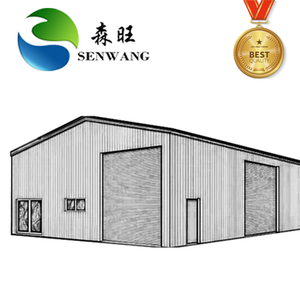
Clear-span portal frame geometry engineered with Q355B high-tensile structural steel. Accommodates 10T–32T overhead traveling cranes for heavy equipment fabrication and assembly.
View Specifications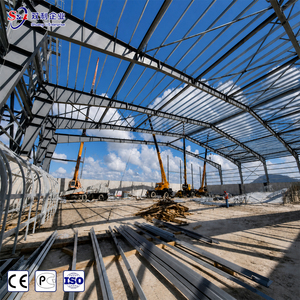
Reinforced snow-drift rafter engineering with high-capacity drainage systems. Designed specifically for highland and steppe wind shear conditions up to 140 km/h.
View Specifications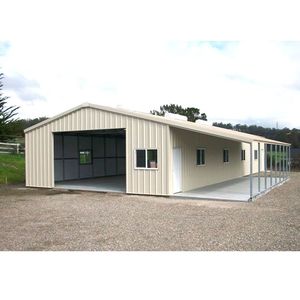
Modular agricultural grain storage, equipment sheds, and agro-processing sheds. Bolt-together structural joints facilitate rapid on-site assembly with minimal specialized tools.
View Specifications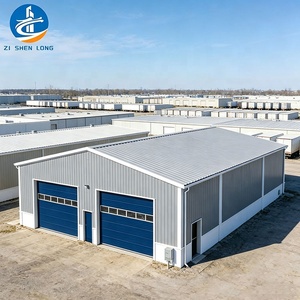
Hybrid architectural solutions combining double-story administrative mezzanine offices with unobstructed high-bay aircraft or vehicle hangar space.
View Specifications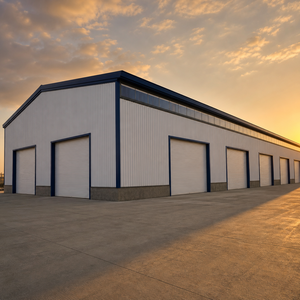
Cost-effective light-gauge steel framing packages engineered for secondary storage, auxiliary workshops, and farm implement preservation.
View Specifications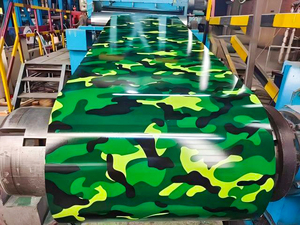
Hot-dipped zinc coating (Z120–Z275 g/m²) with PVDF/HDP high-durability color finish. Designed for maximum UV resistance against intense Central Asian solar radiation.
View Specifications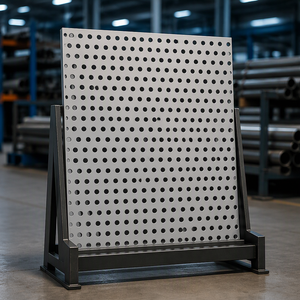
Precision CNC perforated architectural stainless steel and galvanized sheets for industrial catwalks, internal safety balustrades, ventilation, and decorative louvers.
View Specifications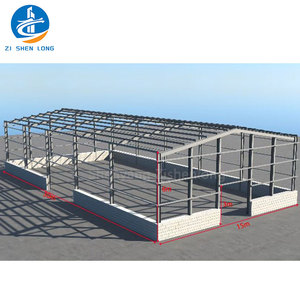
Engineered for large logistics terminals and dry ports in Tashkent and FEZ Navoi. Multi-span layout equipped with insulated PU sandwich panels and docking canopies.
View SpecificationsAn authoritative engineering assessment of structural steel framework adaptation within Uzbekistan’s Special Economic Zones, driving national development targets under the Uzbekistan 2030 Vision.
Uzbekistan has emerged as the foremost industrial manufacturing hub and transit corridor in Central Asia. Under sweeping structural economic reforms, privatization initiatives, and the aggressive expansion of Free Economic Zones (FEZs) such as Navoi, Angren, Jizzakh, and Syrdarya, the demand for industrial factory space has outstripped traditional construction capacity. Historical monolithic reinforced concrete framing methods, widely implemented during the mid-20th century, exhibit fundamental bottlenecks for contemporary manufacturing: prohibitive construction durations (14–24 months), excessive self-weight that exacerbates seismic forces, high lifecycle thermal conductivity, and structural inflexibility that prevents subsequent machine retooling.
As an OEM structural steel building fabricator and international exporter established in 2010 with more than 352 completed industrial installations across worldwide export markets, Joint Star Steel supplies turn-key pre-engineered steel buildings (PEB) calibrated to meet the exact geographical, seismic, and thermal requirements of the Republic of Uzbekistan. Modern prefabricated structural steel workshops eliminate the severe constraints of cast-in-place concrete by shortening construction timelines by up to 60%, delivering unobstructed internal clear spans exceeding 48 meters, and optimizing total project CapEx through automated CNC beam fabrication, submerged arc welding, and factory-certified quality control.
Heavy industrial fabrication shops and metallurgy equipment maintenance facilities. Configured with reinforced stepped column designs to support multiple 20T to 50T electric overhead traveling (EOT) cranes, high-capacity runway beams, and high-frequency dynamic machinery vibrations.
Textile manufacturing requires immense clear spans free of interior load-bearing columns to maintain clean automated weaving lines. Our structural frameworks integrate roof-mounted HVAC truss channels, maintaining steady humidity (55–65%) and continuous air filtration vital for raw cotton spinning.
Specialized agro-export logistics centers for fresh fruit, vegetables, and dried produce. Incorporates thermal-break PU (polyurethane) sandwich panels (100–150 mm) ensuring an internal climate of -18°C for freezing chambers and 0°C to +4°C for chilling bays without cold-bridge losses.
Precision OEM fabrication buildings for Tier-1 automotive suppliers (supporting UzAuto Motors ecosystem) and consumer electronics assembly. Provides high-tolerance subframe framing for suspended ductwork, cleanroom air showers, anti-static epoxy flooring, and Class 100,000 cleanroom environments.
Cross-dock distribution terminals positioned along the China-Kyrgyzstan-Uzbekistan corridor and the International North-South Transport Corridor (INSTC). Designed with 12m clear eave heights, integrated high-speed automated dock levelers, wide bay spacing (9m–12m), and heavy-duty floor slab connections.
Addressing the geotechnical realities of Central Asia through finite element structural analysis, ductile connection detailing, and thermal envelope integrity.
Industrial structural design within the Republic of Uzbekistan requires strict adherence to localized construction norms, specifically KMK 2.01.03-96 ("Construction in Seismic Regions") and KMK 2.01.07-96 ("Loads and Actions"). Regions such as Tashkent, the Fergana Valley, and the foothill zones of Samarkand are categorized within MSK-64 seismic intensity zones 7, 8, and 9. Traditional rigid structures frequently suffer irreversible structural damage during seismic shaking due to high mass accumulation and brittle shear failures.
Joint Star Steel engineers resolve these seismic challenges by designing ductile moment-resisting steel portal frames and eccentrically braced frames (EBF). Because structural steel possesses the highest strength-to-weight ratio among all civil construction materials, the total effective mass ($M$) of a prefabricated steel building is approximately 40% to 50% lower than an equivalent concrete building. Under seismic design formulations where the base shear force $V = C_s \times W$, reduced weight directly lowers the total horizontal seismic force imparted on the foundations. Furthermore, high-strength friction-grip bolted joints (Grade 8.8 or Grade 10.9) provide regulated energy dissipation during cyclic lateral load events.
| Engineering Metric | OEM Prefab Steel Structure (Joint Star) | Traditional Monolithic Concrete | Uzbekistan Field Impact |
|---|---|---|---|
| Seismic Performance (KMK 2.01.03-96) | Ductile Response – High energy dissipation, flexural capacity up to Grade 9 | Brittle Tendency – Risk of shear wall cracking and joint separation | Lower foundation mass; safety in active seismic zones (Tashkent, Fergana) |
| Erection Speed (10,000 m² Facility) | 8 to 12 Weeks (Pre-welded, bolted assembly on site) | 36 to 52 Weeks (Formwork, curing, winter heating required) | Accelerated ROI for foreign investors in Free Economic Zones (FEZs) |
| Max Unobstructed Clear Span | Up to 60 Meters without internal columns | 12 to 18 Meters (Heavier cross-sections required) | Unrestricted warehouse layouts and flexible crane coverage |
| Thermal Insulation Envelope | Continuous PU/PIR (U ≤ 0.22 W/m²K) – Eliminates thermal bridging | Thermal Bridge Sensitive – High conductivity requires external insulation | Withstands extreme temperatures from -25°C winters to +45°C summers |
| Crane Load Capacity Integration | Integrated Stepped H-Columns (Up to 50T EOT cranes) | Bulky Concrete Brackets – Costly formwork modifications | Streamlines heavy manufacturing in Navoi & Almalyk metallurgical belts |
In addition to seismic criteria, structural durability requires overcoming the extreme continental climate of Central Asia, characterized by severe annual temperature variations of up to 70°C. Standard single-skin corrugated metal sheets result in severe condensation, excessive HVAC loads, and rapid thermal fatigue. Joint Star Steel integrates high-density, tongue-and-groove Polyurethane (PU/PIR) and non-combustible Rock Wool core insulated sandwich panels manufactured on fully automated continuous production lines. Equipped with internal and external pre-painted hot-dipped galvanized steel sheets (ASTM A653 / JIS G3302 standard with Z120 to Z275 zinc coatings), our envelopes guarantee thermal stability, acoustic dampening, and reliable condensation control across decades of operational life.
Selecting optimal insulation materials to achieve strict energy conservation standards, fire safety compliance, and maximum cost efficiency for your manufacturing plant.
Made with high-density mineral basalt fibers (100–140 kg/m³) arranged perpendicular to the metal face for maximum shear strength. Provides up to 4-hour fire endurance ratings (GOST 30247.0 compliant). Essential for chemical warehouses, textile mills, power plants, and facilities with stringent fire compartment regulations.
Featuring a closed-cell content of >95% and thermal conductivity as low as 0.020 W/m·K. PIR delivers self-extinguishing fire performance (B-s1, d0) and unparalleled thermal resistance per unit thickness. The industry standard for pharmaceutical facilities, electronics manufacturing, and deep-freeze logistics across Tashkent.
A cost-effective, ultra-lightweight envelope system for standard ambient temperature warehouses, site offices, equipment enclosures, and agricultural storage. Delivers clean aesthetics and dependable weather resistance while reducing overall dead load on secondary steel purlins.
Established in 2010 with a mission focused on quality and precision engineering, we offer full design, fabrication, and export services under a unified EPC contract model.
From architectural concept drawings and TEKLA 3D structural detailing to automated CNC plate cutting, submerged arc welding, shot blasting (Sa 2.5), and painting. We eliminate middleman markup, keeping responsibility with one trusted manufacturer.
We provide complete turnkey coordination: structural steel engineering, anchor bolt placement templates, sandwich panel production, and civil construction consulting. We ensure that our building kits match local foundation interfaces on site.
Every workshop is custom-engineered using structural analysis software (STAAD.Pro, PKPM, 3D3S) to match your exact floor layouts, future crane upgrades, bay expansions, mezzanine loads, and architectural facade styles.
With 352+ delivered projects, our logistics teams are well-versed in multimodal rail container shipping and break-bulk flat-rack methods via Central Asian routes. We deliver safely packed, clearly labeled parts straight to your site in Uzbekistan.
Clear, direct answers to common questions regarding customs clearance, KMK seismic compliance, multi-modal transport logistics, and technical project coordination.
Yes. Our in-house engineering department utilizes specialized finite element analysis software calibrated to both International Building Code (IBC/AISC) and Central Asian KMK standards (specifically KMK 2.01.03-96 for seismic design and KMK 2.01.07-96 for wind and snow load parameters). We provide comprehensive structural calculation books (including load combinations, nodal displacement checks, and member stress ratios) along with stamped shop drawings and connection details ready for review by your local licensed architectural bureau or State Gosstroy expertise.
Shipments destined for Uzbekistan are typically dispatched via direct rail freight (using 40ft High Cube containers for sandwich panels and secondary cold-formed C/Z purlins, and specialized open railway wagons or 40ft Flat Racks for heavy built-up primary columns and crane girders). Primary routes proceed through the regular China-Kazakhstan-Uzbekistan railway corridors (entering via Saryagash or Dostyk border stations) or cross-border intermodal road transport via TIR Carnet trucks. All components are labeled with weatherproof tags matching erection blueprints, accompanied by detailed packing lists for smooth customs inspection.
Equipment and prefabricated structural components brought into registered Free Economic Zones (such as FEZ Navoi, FEZ Jizzakh, or FEZ Angren) frequently qualify for statutory customs duty exemptions and tax privileges under Uzbekistan investment promotion legislation. We supply a full set of certified export documentation: Commercial Invoices, Packing Lists itemized by HS Code (e.g., 7308.90 for prefabricated structures, 7308.20 for towers/masts), Mill Test Certificates (MTC) conforming to EN 10204 3.1, Certificates of Origin, and Factory Quality Inspection Reports.
Given the continental temperature extremes (-25°C in January to +45°C in July), we recommend a minimum of 100mm Polyurethane/PIR or 120mm to 150mm Rock Wool for standard heated and air-conditioned manufacturing plants to keep heat transfer below $U = 0.22 \text{ W/m}^2\text{K}$. For controlled-atmosphere fruit storage or meat and poultry cold storage facilities in Samarkand or Tashkent regions, wall and ceiling thicknesses should be upgraded to 150mm–200mm PIR panels to ensure reliable cooling and reduce compressor energy consumption.
Yes. We offer flexible technical supervision options. Our team can dispatch senior structural erection engineers and technical advisors directly to your site in Uzbekistan to oversee anchor bolt positioning, monitor 3D alignment of primary frames, inspect high-strength bolt torqueing, and guide sandwich panel installation. Alternatively, we provide full 3D assembly models, detailed sequence videos, and comprehensive installation manuals for experienced local general contractors.
All fabricated primary steelwork undergoes automatic shot blasting to ISO 8501-1 Sa 2.5 grade, removing all surface rust, mill scale, and foreign matter. It is then coated with an inorganic zinc-rich epoxy primer (dry film thickness ≥ 60–80 μm) and finished with heavy-duty epoxy or polyurethane topcoats tailored to ISO 12944 atmospheric corrosivity categories (C2 to C4). For chemical plants, fertilizer storage, or wet industrial areas, we provide hot-dip galvanizing per ISO 1461, achieving zinc coating thicknesses ≥ 85 μm for exceptional service life.
Whether you are expanding manufacturing operations in Tashkent, establishing logistics hubs in Navoi FEZ, or building agro-processing facilities in Fergana, our engineering team provides complete structural concepts, steel tonnage optimizations, and CIF/CPT cost estimates tailored to your timeline.