Nordic Building Regulation (BBR) Compliant Envelopes
China Wholesale PU Sandwich Panels Factories & Supplier in Sweden
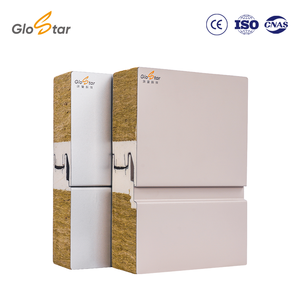
High-Performance Polyurethane (PUR/PIR) Insulated Wall & Roof Cladding Systems Engineered for Sub-Zero Swedish Thermal Envelopes, Strict Eurocode Fire Codes & Low-Carbon Industrial Construction.
Direct Factory Supply
Engineered Sandwich Panels & Metal Building Systems
Precision-manufactured structural insulated components and prepainted metal profiles tailored for Swedish cold-storage logistics, commercial warehouses, and modular building specifications.
Sourcing Polyurethane (PU/PIR) Sandwich Panels for the Swedish Industrial Market
A comprehensive technical evaluation of cold-climate thermal insulation, air-tightness dynamics, Eurocode structural integrity, and direct factory procurement protocols for Swedish contractors and building developers.
Sweden’s commercial construction sector operates under some of the most rigorous thermal performance and energy-efficiency standards across the European Union. Guided by the Swedish National Board of Housing, Building and Planning (Boverket) through its mandatory Boverkets byggregler (BBR) building regulations, structural envelopes must demonstrate near-zero thermal bridging, air infiltration rates below $q_{50} \le 0.3\text{ l}/(\text{s}\cdot\text{m}^2)$, and verified lifecycle stability under aggressive Arctic freeze-thaw cycles. For Swedish general contractors (byggentreprenörer), pre-engineered building developers, and cold-chain facility operators, sourcing Polyurethane (PUR) and Polyisocyanurate (PIR) insulated panels directly from Tier-1 Chinese manufacturers represents an optimal balance between cost-efficiency, precision automation, and stringent compliance with SS-EN 14509.
Since our foundation in 2010, our integrated manufacturing plants have engineered and exported over 352 pre-engineered buildings and hundreds of thousands of square meters of insulated composite panels globally. Combining advanced continuous double-track high-pressure foaming machinery with fully automated Italian OMS/Hennecke chemical dosing technology, our sandwich panels ensure continuous core densities of 40–42 kg/m³ with over 95% closed-cell structure. This metallurgical and chemical consistency prevents thermal drifting, moisture ingress, and delamination across temperature differentials spanning from -35°C in northern Norrland down to +30°C in southern maritime Skåne.
"Thermal performance in Scandinavia cannot be treated as a static laboratory metric. Real-world envelope efficiency demands joint air-tightness, continuous vapor seals, and core polymers blown with eco-friendly cyclopentane that resist long-term thermal degradation over a 50-year structural design life."
Core Parameter Comparison: PUR, PIR, and PU Edge-Sealed Rock Wool for Swedish Climate Codes
Performance Metric
Rigid Polyurethane (PUR)
Polyisocyanurate (PIR)
PU Edge-Sealed Rock Wool
Swedish Verification Code
Thermal Conductivity (Declared λ)
0.022 – 0.024 W/(m·K)
0.020 – 0.022 W/(m·K)
0.038 – 0.040 W/(m·K)
SS-EN 12667
Reaction to Fire (EN 13501-1)
B-s2, d0 / C-s2, d0
B-s1, d0 (Low Smoke)
A1 / A2-s1, d0 (Non-combustible)
BBR Fire Classification
Closed-Cell Ratio
> 92%
> 95%
Open fiber (PU Sealed edges)
ISO 4590
Core Density (kg/m³)
38 – 40 kg/m³
40 – 42 kg/m³
100 – 120 kg/m³ (Core)
SS-EN 1602
Water Vapor Permeability (δ)
Impermeable (Steel faced)
Impermeable with EPDM Gasket
Vapor permeable core, dry edges
EN 12086
Swedish Climate Application
Distribution hubs, agri-sheds
Pharma, cold stores, automated high-bays
Fire separation walls, hotels, hospitals
Boverket EKS 12
As demonstrated in the specification matrix above, selecting between rigid PUR, PIR, and hybrid PU edge-sealed rock wool depends heavily on the functional requirements of the project. While PIR serves as the gold standard for high-bay freezer facilities requiring minimal panel thicknesses to achieve $U$-values down to $0.10\text{ W}/(\text{m}^2\cdot\text{K})$, hybrid PU-sealed mineral wool provides the non-combustibility needed for party walls (brandcellsgränser) in compliance with Swedish Class EI60 to EI120 fire compartmentation standards.
Nordic Deployment
Localized Application Scenarios Across Sweden's Industrial Infrastructure
Engineering tailored insulated panel solutions to meet specific microclimates, operational demands, and regional zoning standards from Malmö to Kiruna.
Cold-Chain & Deep-Freeze Logistics Hubs
Logistics centers in Helsingborg, Gothenburg, and Jönköping demand panel thicknesses between 150mm and 200mm. With PIR core thermal conductivity of 0.020 W/(m·K), our systems maintain uninterrupted -28°C environments with zero interstitial condensation.
Key Hubs: Port of Gothenburg, Helsingborg, Torsvik
Battery Gigafactories & Arctic Tech Facilities
North Sweden’s green industrial corridor (Skellefteå, Luleå, Boden) experiences extreme snow loads exceeding $3.5\text{ kN/m}^2$ and external temperatures below -35°C. Our heavy-gauge steel skin profiles prevent freeze-thaw face micro-cracking and skin delamination.
Key Hubs: Skellefteå, Luleå Industrial Park, Sundsvall
Automated High-Bay Distribution & Retail Parks
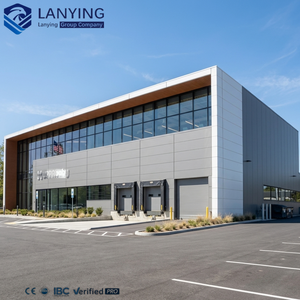
Major e-commerce and retail developments along the E4 corridor in Mälardalen and Stockholm North rely on continuous-length panels (up to 16.5m) with hidden-fastener joint profiles, achieving sleek corporate facade aesthetics while meeting airtightness specifications.
Key Hubs: Arlandastad, Brunna, Eskilstuna Logistics Park
Agri-Industrial & Controlled Atmosphere Storage
In southern agricultural areas like Scania (Skåne) and Halland, fruit cold storage and agro-processing facilities require chemical washdown resistance. Our internal panels are coated with 120-micron food-safe PVC Plastisol or antimicrobial PVDF finishes.
Key Hubs: Kristianstad, Halmstad, Ängelholm
Market Evolution
Emerging Trends in Sweden's Building Envelope & Insulation Sector
How progressive EU decarbonization targets, tightening Nordic energy taxonomies, and fossil-free steel transformations are redefining panel manufacturing.
The Swedish architectural landscape is experiencing a structural pivot influenced by environmental certifications such as Miljöbyggnad Silver/Guld, BREEAM-SE, and Svanen. To remain competitive in Nordic public tenders and commercial master-developments, sandwich panel suppliers must innovate beyond simple thermal transmission ratings. Our engineering teams have adapted our manufacturing lines to align with three primary macro trends shaping Swedish construction:
Key Regulatory Drivers Transforming Swedish Specifications
1. Mandatory EPD & Embodied Carbon Caps
In accordance with Sweden's Klimatdeklaration law for new buildings, developers must record the lifecycle greenhouse gas footprint (GWP). Our factory provides third-party verified Environmental Product Declarations (EPD) reflecting optimized scrap recycling and eco-efficient cyclopentane blowing chemistry.
2. Strict Air Infiltration & BBR Compliance
Standardizing on factory-applied closed-cell EPDM soft gaskets in both tongue and groove edges reduces reliance on field-applied caulking in sub-zero Scandinavian weather, comfortably satisfying air leakage limits of $q_{50} \le 0.30\text{ l}/(\text{s}\cdot\text{m}^2)$.
3. C4/C5 Maritime Corrosion Coatings
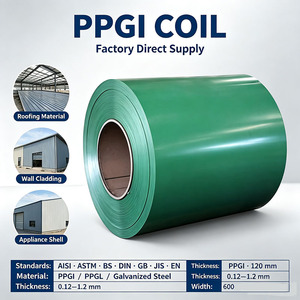
Given Sweden's extensive coastlines along the Baltic Sea and Kattegat, standard polyester coatings frequently fail under de-icing salt exposure and marine condensation. We offer Swedish specifiers high-performance Polyurethane-Polyamide (PUR-PA) and PVDF surface layers certified to ISO 12944-6.
Furthermore, the Nordic shift toward circular construction has heightened interest in demountable structural assemblies. By utilizing high-load steel fasteners fitted with vulcanized EPDM sealing washers alongside custom flashing profiles, our pre-engineered sandwich systems enable non-destructive building disassembly, structural relocation, or panel recycling at end-of-life.
Why Partner With Us
Factory Capabilities & Engineering Provenance
Over a decade of turnkey steel manufacturing, precision quality management, and international logistics integration tailored for Scandinavian procurement teams.
Integrated Structural System Supply
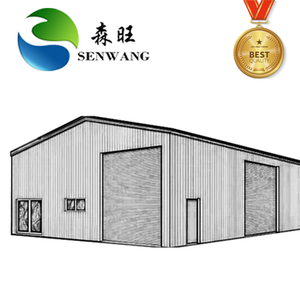
Unlike brokers who merely trade panels, we manufacture both primary pre-engineered steel frames (PEB columns, rafters, purlins) and sandwich panels under a single accountable contract. This guarantees zero interface conflicts between framing cleats and panel fasteners on your Swedish job site.
Automated Continuous Foaming Lines
Our plants operate continuous 40-meter double-belt laminating machines with high-pressure foaming heads that eliminate core voids, thermal bridges, and delamination pockets. Every batch is rigorously monitored for dimensional stability, compressive strength (> 120 kPa), and density uniformity.
Custom Scandinavian Lengths & Profiles
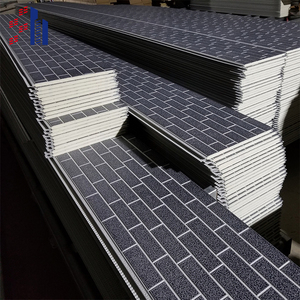
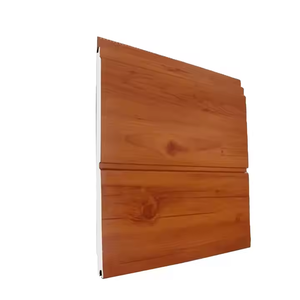
We supply continuous panel lengths up to 16.5 meters, eliminating horizontal wall joints that are vulnerable to Swedish wind-driven rain and snow infiltration. We offer 3D architectural profiles, micro-ribbed finishes, and non-standard colors matching RAL Scandinavian palettes (e.g., Falu Red, Anthracite Grey).
Supply Chain Blueprint
Seamless Ocean Freight & Port Logistics to Sweden
Managing international maritime transit, anti-condensation packaging, and direct-to-site sequencing to ensure trouble-free deliveries across Sweden.
Importing heavy architectural components across intercontinental supply lines requires rigorous protective engineering. Panels transported across maritime routes are subjected to dynamic acceleration, relative humidity exceeding 90%, and saltwater vapor. To protect aesthetic coatings and steel substrates, every stack produced in our factory is sealed in multi-layer protective PE film with protective corner profiles and rigid EPS packaging dunnage designed for forklift and crane offloading.
We maintain scheduled containerized and break-bulk shipping partnerships serving primary Swedish maritime gates including Port of Gothenburg (Göteborgs Hamn), Stockholm Norvik Port, Malmö Hamn, and Port of Gävle. For inland delivery across Jönköping, Örebro, or Västerås, our logistical teams coordinate standard 40ft High Cube open-top or flat-rack containers with export fumigation (ISPM 15 compliant), accompanied by clear erection pack lists and color-coded member markings to simplify site staging.
Procurement Clarity
Frequently Asked Questions for Swedish Buyers
Essential technical, regulatory, and logistics answers for Swedish architects, structural engineers, and commercial procurement directors.
Do your PU/PIR sandwich panels carry mandatory CE Marking according to SS-EN 14509?
Yes. All polyurethane and polyisocyanurate panels manufactured for the Swedish and broader EU market are fully compliant with EN 14509:2013 (Self-supporting double skin metal faced insulating panels). Every production run is backed by a formal Declaration of Performance (DoP), factory production control (FPC) audit documentation, and testing reports covering reaction to fire (EN 13501-1), shear strength, compressive modulus, and thermal conductivity.
How do your PIR panels satisfy Boverket's fire safety requirements (BBR Avsnitt 5)?
Our PIR formulations achieve a European fire reaction classification of B-s1, d0 in accordance with EN 13501-1, which is the highest achievable reaction-to-fire class for organic core sandwich panels. The "s1" rating certifies virtually zero smoke generation, while "d0" guarantees zero burning droplets or particles during combustion. For fire compartment boundaries (brandcellsgräns) requiring EI60, EI90, or EI120 ratings, we recommend our hybrid PU edge-sealed rock wool panel assemblies.
What core thickness is recommended to meet Sweden's BBR U-value requirements?
For heated commercial and logistics warehouses (ambient indoor temp +18°C), Swedish BBR rules generally target roof $U$-values of $\le 0.12\text{ W}/(\text{m}^2\cdot\text{K})$ and wall $U$-values of $\le 0.15\text{ W}/(\text{m}^2\cdot\text{K})$. Utilizing our high-grade PIR core ($\lambda = 0.021\text{ W}/\text{m}\cdot\text{K}$), a 150mm wall panel achieves a $U$-value of approximately $0.14\text{ W}/(\text{m}^2\cdot\text{K})$, while our 180mm to 200mm roof systems comfortably achieve $U$-values down to $0.11\text{ W}/(\text{m}^2\cdot\text{K})$, ensuring full compliance without requiring supplementary insulation quilts.
Can the panel skins withstand high snow load deflections in Norrland (Zone 3.0 to 4.5)?
Yes. For Northern Sweden where the design snow load ($s_k$) reaches 3.0 to $4.5\text{ kN/m}^2$, we configure roof panels with a top steel face thickness of 0.60mm to 0.70mm featuring high trapezoidal corrugations (e.g., 40mm rib height) bonded to high-compressive-strength cores (> 140 kPa). Our structural engineering department provides span-load static calculations verified against Eurocode 3 (EN 1993-1-3) and Eurocode 9 to confirm safe purlin spacing under extreme snow and drifting loads.
How do you prevent galvanic and atmospheric corrosion in Sweden's coastal zones?
For projects located within 15 km of Sweden's western coastline (Gothenburg, Halmstad, Helsingborg) or exposed Baltic industrial zones, we utilize hot-dip galvanized steel substrates with a minimum zinc coating mass of $275\text{ g/m}^2$ (Z275) or Aluzinc (AZ150). Facing options include 50-micron Polyurethane-Polyamide (PUR-PA) or 25-micron Fluorocarbon PVDF coatings, certified to Corrosivity Category C4 and C5-M under ISO 12944.
What is the typical manufacturing lead time and sea freight schedule to Gothenburg or Stockholm?
Standard production turnaround for custom panel runs (1,000 m² to 20,000 m²) is typically 15 to 22 business days following shop drawing approval and color confirmation. Ocean freight transit from our deep-water export berths in China to the Port of Gothenburg or Stockholm Norvik takes approximately 32 to 38 calendar days via direct container carriers. We supply complete customs clearance paperwork (Bill of Lading, Certificate of Origin, EUR.1, Commercial Invoice, Packing List with piece numbers).
Can you provide custom flashings, vapor barriers, and erection accessories with the panels?
Yes. We supply comprehensive envelope packages including precision CNC-folded flashings fabricated from identical coil lots (ensuring 100% color consistency), ridge vents, drip profiles, stainless steel self-drilling fasteners with vulcanized EPDM washers, expanding butyl sealing bands, and thermal break PVC sub-profiles. This turnkey approach prevents on-site procurement delays for installation contractors.
How does the factory guarantee core adhesive bonding under extreme freeze-thaw cycles?
Our automated continuous lines use inline atmospheric corona surface treatment on the inner steel facings immediately prior to chemical injection, alongside two-component polyurethane primers. This chemical-mechanical bond undergoes cyclic temperature shock testing (-25°C to +70°C) according to EN 14509 Annex B, certifying that cross-shear strength remains intact without blistering, face separation, or delamination across decades of Nordic winters.
Engineered for Swedish Climates. Delivered Direct from the Manufacturer.
Accelerate your next logistics park, industrial development, or cold storage facility in Sweden. Share your architectural drawings or specifications for a comprehensive technical review, U-value validation, and competitive direct-factory quotation.