Precision-manufactured cold-formed steel decking, insulated structural panels, high-cycle industrial rolling doors, and clear-span prefabricated frameworks manufactured for Korean industrial engineering projects.
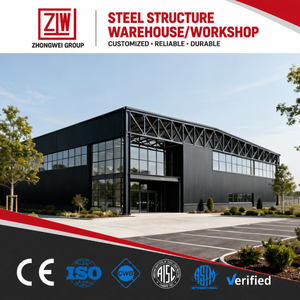
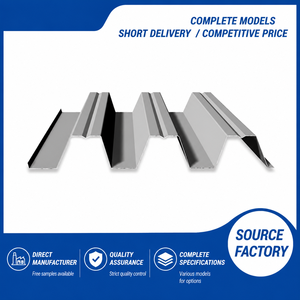
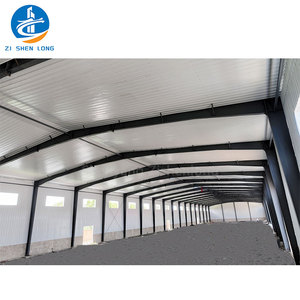
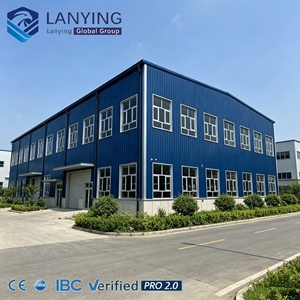
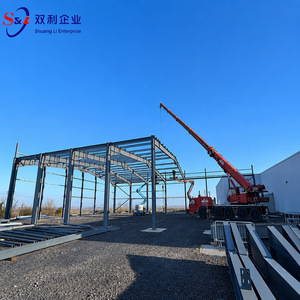
South Korea’s manufacturing, logistics, and heavy industrial infrastructure has consistently driven substantial demand for high-performance structural steel cladding. While domestic mills like POSCO and Hyundai Steel supply premium-grade primary materials, tier-1 Korean general contractors (종합건설사), prefabricated panel laminators, and regional steel distributors (유통상사) frequently face domestic supply bottlenecks, lengthy lead times, and escalating procurement costs. As an established direct manufacturing partner operating since 2010 with over 352 structural installations globally, our China-based fabrication and coil-processing centers bridge this critical supply gap.
By engineering cold-rolled substrates, high-yield hot-dip galvanized (GI) coatings, and 55% Aluminum-Zinc Galvalume (GL) alloy sheets directly mapped to Korean Industrial Standards (KS D 3520 and KS D 3506), we deliver predictable pricing models, certified mechanical integrity, and direct sea-freight routes connecting major Northern Chinese ports (Tianjin, Qingdao, and Shanghai) with South Korea’s principal maritime trade terminals including Busan Port, Incheon Port, and Pyeongtaek-Dangjin Port in as little as 48 to 96 hours.
The structural longevity of corrugated steel sheets across the Korean Peninsula depends heavily on matching core steel chemistry and exterior barrier coatings to specific microclimates. From the high-salinity maritime atmospheres of the southern coastline (Ulsan, Changwon, Gwangyang) to the extreme seasonal thermal swings (-20°C in winter to +36°C in summer) across northern Gyeonggi and Gangwon provinces, sheet degradation typically manifests as edge creep, chalking, or delamination if lower-grade organic coatings are deployed.
| Substrate / Coating Grade | Yield Strength & Zinc Coating Mass | Resin System Options | KS / ISO Equivalent Spec | Recommended Korea Regional Application |
|---|---|---|---|---|
| Galvanized Iron (GI) Profile | Yield: 250 - 550 MPa Zinc: Z180 to Z275 g/m² |
Regular Polyester (RMP) / Silicon Modified (SMP) | KS D 3506 / ASTM A653 CQ, Commercial Quality |
Inland general warehousing, dry-storage agricultural facilities in Chungcheong and North Gyeongsang. |
| Galvalume (GL / 55% Al-Zn) | Yield: 300 - 550 MPa AZ100 to AZ150 g/m² |
High-Durability Polyester (HDP) / PVDF (70% Kynar 500) | KS D 3770 / ASTM A792 Superior Barrier Passivation |
Semiconductor auxiliary plants, cold chain distribution hubs in Pyeongtaek, Icheon, and Hwaseong. |
| PosMAC / ZAM Compatible Alloy | High Tensile (S350GD - S550GD) Zn-Al-Mg 3.0% Mg, 6.0% Al |
Super Polyester / Fluorocarbon (PVDF 2-Coat / 2-Bake) | KS D 3030 / ISO 9223 Self-Healing Cut Edge Action |
High-saline coastal zones: Busan New Port, Geoje shipyards, Incheon Free Economic Zone (IFEZ). |
| Composite Decking Steel | Yield: 350 - 450 MPa Heavy Hot-Dip Z275 g/m² |
Unpainted Profiled Chemical Passivation / Oiled | KS D 3602 (Structural Floor Deck) Embossed Web Interlocking |
Multi-story logistics centers, smart factory mezzanine composite slabs across Seoul Metropolitan Area. |
All raw coils utilized in our production lines are supplied with complete EN 10204 3.1 Mill Test Certificates (MTC), guaranteeing strict verification of chemical composition (Carbon, Manganese, Phosphorus, Sulfur, Silicon) and mechanical parameters (Yield Strength, Tensile Elongation, 180° Bend Formability, and Pencil Hardness tests exceeding 2H).
Every industrial sector across Korea demands customized corrugated steel solutions that withstand local wind-load classifications, heavy snow drifts, and rigorous fire-safety legislation.
Industrial buildings situated along Korea’s southeastern coastal belt are subjected to aggressive ISO 12944 C4 to C5-M marine corrosion categories. Airborne chlorides accelerate electrochemical pitting at structural seams. We supply AZ150 Galvalume and PosMAC-grade corrugated sheets protected by 25-micron PVDF topcoats with high ultraviolet resistance (RUV4). These sheets resist salt-fog exposure exceeding 1,500 hours without red rust, delivering multi-decade service life for marine auxiliary workshops and container logistics sheds.
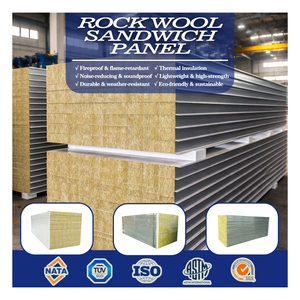
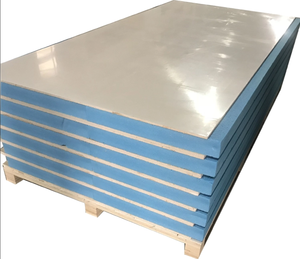
The Gyeonggi southern corridor represents the nerve center of South Korea's e-commerce fulfillment infrastructure. Cold-chain storage facilities demand precision cladding systems that mitigate vapor drive and prevent interior condensation. Our continuous-line PIR and Rock Wool insulated sandwich panels, paired with profiled corrugated exterior roof skins and concealed-fastener standing seams, provide superior thermal break performance (U-values < 0.18 W/m²K), dramatically reducing industrial refrigeration power consumption.
In facilities supporting Korea’s semiconductor and secondary lithium battery supply chains, roofing and exterior walls must prevent electrostatic discharge, chemical vapor erosion, and micro-particulate shedding. We engineer continuous anti-static prepainted corrugated sheets and non-combustible MGO/Rock Wool structural SIPs that deliver fire barriers up to 2 hours while maintaining structural stiffness across expansive clear spans without secondary deflection.
Procuring corrugated steel sheets and composite metal envelopes in South Korea requires deep awareness of sweeping regulatory shifts enacted by the Ministry of Land, Infrastructure and Transport (MOLIT). Following severe historical warehouse fires, South Korean construction authorities substantially revised the Korean Building Act, mandating stringently verified fire-retardant structural materials, certified real-scale fire testing, and verifiable carbon reporting.
Recent amendments to Korea's Building Act require sandwich panel assemblies and insulated wall systems to undergo full-scale fire performance testing (KS F ISO 13784-1). Conventional EPS cores are increasingly replaced with Class A non-combustible Rock Wool or self-extinguishing polyisocyanurate (PIR) cores, coupled with 0.5mm+ pre-painted galvanized steel skins.
Korean conglomerate supply chains face intense pressure to satisfy international RE100 renewable energy directives. Industrial roofs are universally engineered to accommodate rooftop photovoltaic (PV) arrays. Our standing-seam klip-lok profiles allow seamless solar panel clamp installations without through-fastener penetrations, entirely eliminating leak hazards.
Under KDS 41 (Korean Building Structural Design Code), roofs in coastal and mountainous zones (such as Gangwon Province) must accommodate basic wind speeds up to 45 m/s and ground snow loads exceeding 2.0 kN/m². Our cold-formed corrugated profiles feature high-depth ribs (35mm-75mm) that dramatically elevate moment of inertia and load-bearing spans.
Operating with end-to-end manufacturing oversight since 2010, our engineering organization delivers technical certainty, rapid roll-forming output, and full project lifecycle accountability.
Continuous coil-coating lines equipped with precision dry-film thickness (DFT) gauges, verifying paint layer consistency across Primer, Topcoat, and Backcoat to match POSCO and Dongkuk benchmarks.
Backed by a multidisciplinary team of 100+ structural engineers, we produce Tekla structural models, load deflection analyses, and exact shop drawings optimized for crane loads and clear spans.
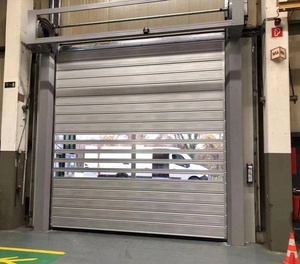
Beyond corrugated sheeting, our facility produces high-capacity composite floor deck sheets, high-speed industrial rolling doors, SIP panels, and portal frame structural members under a unified contract.
Sea-worthy heavy-duty packaging with VCI anti-corrosion barrier wrapping, desiccants, heavy wooden pallets, and steel rim banding to prevent transit oxidation on roll-on/roll-off or containerized vessels.
Practical technical guidance for Korean procurement officers, import trading companies, and EPC project managers evaluating wholesale corrugated steel supply from China.
We supply color-coated corrugated sheets that cross-certify between GB/T 12754 and Korean KS D 3520. Substrates produced with hot-dip galvanized base metal correspond to KS D 3506 (grades SGCC, SGCD, SGCE). For high-strength structural profiles, our S350GD and S550GD materials match Korean structural standards for yield and ultimate elongation.
Under the China-Korea Free Trade Agreement (CKFTA) and RCEP (Regional Comprehensive Economic Partnership), qualified steel shipments bearing a certified Certificate of Origin (Form E or RCEP) enjoy preferential or zero tariff rates under specific HS codes (such as 7210.70 and 7308.90). We provide full customs clearance documentation packages directly to your Korean customs broker.
From order confirmation and shop drawing approval, production lead times for custom-profiled sheets typically range between 12 to 20 working days. Direct maritime shipping from our coastal loading ports in Qingdao, Tianjin, or Shanghai to Incheon Port requires approximately 2 days, and to Busan Port approximately 3 to 4 days, ensuring rapid delivery schedules.
For installations within 5 km of the Korean coast (Busan, Incheon, Ulsan, Yeosu), we recommend our minimum AZ150 Galvalume or high-zinc Z275 substrate coated with 70/30 PVDF fluoropolymer paint. This achieves exceptional performance in neutral salt-spray testing (exceeding 1,000 to 1,500 hours under ASTM B117), backed by an anti-perforation warranty up to 20 years.
For standard RAL color profiles (such as RAL 9002 White Grey, RAL 5012 Light Blue, RAL 7016 Anthracite Grey), our flexible MOQ is 15-20 metric tons (one standard 20-foot container). For bespoke custom coatings, MOQ is 25 metric tons. Every bundle is wrapped in anti-rust VCI film, cushioned with corrugated paper, and banded on custom heavy wooden skids with steel corner protectors.
Yes. Every batch leaves our automated lines accompanied by an EN 10204 3.1 chemical and mechanical inspection certificate. Furthermore, Korean clients frequently commission third-party testing agencies (including SGS, Bureau Veritas, or TUV) to verify coating thickness, T-bend adhesion, impact resistance, and zinc adherence prior to container sealing.
Whether you require standard trapezoidal roofing profiles, high-load composite decking, or custom-engineered insulated sandwich panels compliant with South Korean fire codes, our engineering and export team is prepared to review your CAD layouts, provide structural load calculations, and submit an all-inclusive FOB or CIF Busan/Incheon quotation.