
Explore our core pre-engineered structural assemblies, thermal acoustic wall systems, and high-duty building hardware manufactured under strict ISO and CE certifications for rapid airside erection.
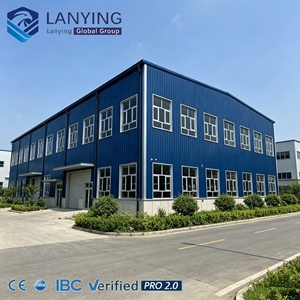
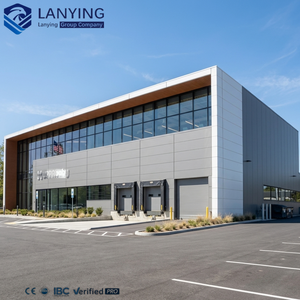
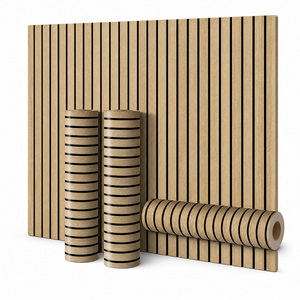
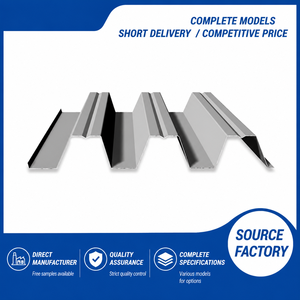
A rigorous structural analysis combining Chinese steel manufacturing cost efficiencies with Argentina's stringent CIRSOC 102 (Wind Actions) and CIRSOC 103 (Seismic Regulations).
Designing modern aviation infrastructure requires an uncompromising balance of clear-span geometric agility, aerodynamic resistance, thermal containment, and strict adherence to international safety codes (ICAO and FAA). When delivering pre-engineered structural steel aircraft hangars to the Argentine Republic, manufacturers face severe regional environmental variance—ranging from the extreme cyclical wind loads of southern Patagonia to seismic activity along the Andean ridge in Mendoza and San Juan, and high-humidity maritime conditions along the Atlantic coast.
Our direct-mill Chinese manufacturing facilities bridge this technical gap. Utilizing certified Q355B and Q355D structural steel plate components, advanced multi-wire submerged arc welding (SAW), and computer-controlled roll-forming lines, we supply completely demountable portal frames, truss arches, and space grid systems specifically optimized to reduce oceanic freight volume while exceeding local geotechnical and structural specifications.
| Structural Parameter | Standard Commercial Specification | Argentine Specialized Profile (CIRSOC Code) | Compliance Verification Protocol |
|---|---|---|---|
| Primary Framing Steel | Q235B / ASTM A36 standard carbon steel | High-yield Q355B / Q355D (equivalent to ASTM A572 Gr 50) | Mill Test Certificates (EN 10204 3.1) & Charpy V-notch testing at -20°C |
| Clear-Span Capacity | 24m to 48m standard column-free spacing | Up to 90m clear span via three-dimensional steel space frame or hollow section tubular trusses | Finite Element Analysis (FEA) through PKPM, STAAD-Pro & 3D3S modeling |
| Surface Corrosion Protection | Epoxy primer + Alkyd enamel finish (80–100μm) | Hot-Dip Galvanizing (ISO 1461, min 85μm) or Heavy C5-M marine-grade Polyurethane paint | Salt spray testing up to 1,500 hours; thickness gauge ultrasonic verification |
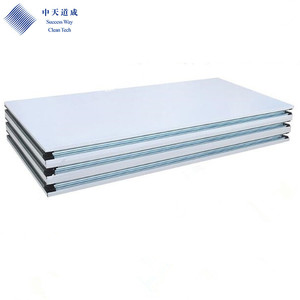
| Roof & Wall Cladding | Single-skin 0.45mm corrugated metal sheet | 50mm–150mm High-Density Rock Wool (non-combustible) or Polyurethane (PIR/PUR) continuous sandwich panels | CE & ISO class fire resistance; ASTME84 flame spread index < 25 |
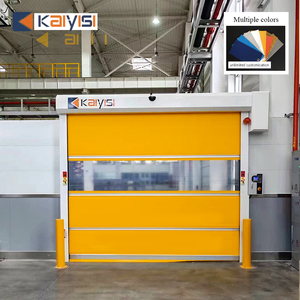
| Hangar Access Openings | Manual bi-fold or light rolling shutters | Automated bottom-rolling telescoping doors or vertical fabric lifting mega-doors with high wind resistance | Continuous operational cycling testing up to 140 km/h localized wind pressure |
Custom-engineered structural solutions built to match regional climatic vulnerabilities and logistics nodes.
Patagonian air bases and private corporate hangars face continuous, intense wind squalls exceeding 160 km/h. We engineer low-profile aerodynamic trusses, reinforced secondary C/Z purlins with overlapping continuity, and specialized panel clip assemblies designed under CIRSOC 102 guidelines to guarantee zero envelope flutter and airtight thermal barrier retention.
Situated within Argentina’s Zone 4 maximum seismic risk zone, aviation workshops in the Andean foothills require structural ductility. Our structural engineers deploy energy-dissipating buckling-restrained bracing (BRB) and high-strength friction-grip bolted joints, minimizing dead weight load on concrete foundations while maximizing post-elastic displacement capacity.
Flight facilities positioned near the Río de la Plata estuary and Atlantic shipping terminals experience high humidity and aggressive salt mist. We implement full hot-dip galvanization on all secondary steel framing, closed-cell polyurethane insulated sandwich panel cladding, and stainless steel fluorocarbon-coated self-drilling fasteners to prevent premature galvanic degradation.
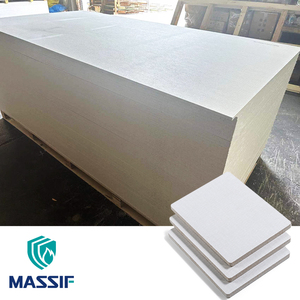
Serving Argentina’s vast agribusiness belts, rural airstrips require versatile, cost-efficient multi-bay hangars capable of housing agricultural aircraft (air tractor planes) alongside integrated chemical storage. Our structures incorporate fireproof MGO board internal dividing partitions and washdown-safe interior coatings that safely resist chemical vapors.
Northern airstrips face intense ultraviolet exposure and sustained high ambient temperatures. By integrating continuous PIR/Rock Wool sandwich panels with high solar reflectance index (SRI) external color-coated steel sheeting, indoor hangar temperatures are lowered by up to 10°C, drastically reducing cooling loads for ground operations and avionic electronics calibration.
Heavy commercial Maintenance, Repair, and Overhaul (MRO) facilities require overhead traveling cranes (5-ton to 20-ton capacity), multi-level interior mezzanine offices, and high-speed automatic industrial doors. We fabricate unified primary portal frames with integrated runway girders designed to transfer heavy dynamic equipment loads directly down into reinforced foundation piers.
Macroeconomic structural dynamics shifting Argentine aviation procurement toward direct Sino-Argentine engineering supply chains.
Argentina's civil, cargo, and regional aviation ecosystem is navigating a structural transformation. With increased decentralization of regional hub airports, modernization of private lithium and mining runways in the Puna plateau (Catamarca, Jujuy, Salta), and expanding agricultural operations in the central plains, demand for industrial-grade hangars has surged. However, local project developers frequently face raw domestic steel supply constraints, high fabrication markups, and extended lead times for large hot-rolled sections.
By engaging in direct wholesale sourcing from our Chinese manufacturing headquarters, Argentine contractors, engineering EPCs, and aeroclubs bypass intermediate distribution premiums. We deliver containerized, completely pre-drilled, and part-numbered building kits ready for rapid field assembly via bolt connections—cutting overall on-site erection schedules by up to 45% while preserving scarce capital reserves.
Zero on-site welding required on primary structural assemblies. Built-up H-beams, structural trusses, and cold-formed purlins are 100% pre-cut, CNC punched, and test-fitted in our plant prior to international shipping, guaranteeing rapid site assembly with local mechanical crews.
Avionics maintenance requires climate stability. By using advanced polyisocyanurate (PIR) and mineral rock wool composite sandwich panels, our hangars deliver high R-values, preventing condensation drips that compromise expensive aircraft instrumentation.
From anchor bolts, high-strength grade 8.8/10.9 fasteners, and structural steel frameworks to rolling shutter doors, translucent polycarbonate skylights, and ventilated ridge louvers, all materials are packed systematically in numbered shipping containers with comprehensive erection manuals.
Proven operational excellence with over 352 delivered facilities across international markets.
Founded in 2010 under the philosophy of engineering excellence, our dedicated design division creates optimized Tekla, PKPM, and AutoCAD structural models tailored to client aircraft fleet dimensions, overhead bridge crane specifications, and architectural requirements.
Equipped with heavy CNC plasma cutting, automatic submerged arc welding lines, and shot blasting facilities achieving Sa 2.5 surface cleanliness, we fabricate built-up box columns, cross-shaped columns, and variable cross-section H-beams up to exacting international tolerances.
As a specialized pioneer in sandwich panel technology, we manufacture continuous EPS, PU (polyurethane), and non-combustible rock wool core panels featuring roll-formed color-coated galvanized steel skins that provide structural durability and maximum thermal insulation.
We understand the interface between steel superstructures and civil foundations. Our engineering documentation includes exhaustive foundation reaction forces, base plate anchor embedment templates, and composite floor deck layouts for maintenance offices.
All raw coils and steel plates undergo rigorous chemical composition and tensile testing. Every fabricated member receives individual barcoding, guaranteeing seamless tracking from factory production lines to containerized sea transit and field erection.
Our experienced logistics department coordinates streamlined sea freight to major Argentine ports, including Puerto Nuevo (Buenos Aires), Zárate, and Bahía Blanca, supplying complete customs clearance documentation, packing manifests, and mill test certificates.
Detailed answers addressing shipping, customs clearance, building code compliance, and structural options.
Yes. Our in-house engineering team calculates structural loads and member sizing in compliance with CIRSOC 102 (Reglamento de Acción del Viento sobre las Construcciones) and CIRSOC 103 (Reglamento para Construcciones Sismorresistentes). We provide comprehensive structural calculation books and Tekla structural models that can be directly submitted to local Argentine registered civil engineers (ingenieros matriculados) for local municipal permitting.
To eliminate expensive breakbulk cargo rates, our clear-span trusses and long portal rafters are engineered with precision flanged splice connections. This allows them to be fabricated into modular segments that pack efficiently inside standard 40ft High Cube (HQ) shipping containers or 40ft Open Top (OT) containers, drastically decreasing sea freight expenditures while preserving structural continuity upon bolted on-site assembly.
For standard general aviation and private hangars, EPS provides a cost-effective, lightweight envelope. However, for commercial MRO operations and hangars housing high-value jet aircraft, we recommend either Polyurethane (PIR/PUR) for superior thermal resistance and condensation prevention, or Rock Wool panels where airport fire codes strictly dictate non-combustible construction.
We manufacture and supply heavy-duty bottom-rolling sliding steel doors, electric multi-leaf telescoping hangar doors, and vertical bi-folding fabric lifting mega-doors. All door systems are fully integrated into our primary end-wall portal frames, complete with reinforced head guide trusses, bottom rails, high-torque industrial gear motors, and wind-locking security pins.
Standard engineering modeling and shop drawing approval take 10 to 15 days. Factory fabrication for a medium-to-large hangar structure (1,500m² to 5,000m²) requires approximately 25 to 35 days. Ocean shipping from major Chinese ports (Shanghai, Qingdao, or Tianjin) to the Port of Buenos Aires typically spans 35 to 45 days, enabling complete turnkey project delivery within 3 to 4 months.
Every building project is delivered with detailed 3D installation drawings, a comprehensive connection bolt layout, and sequentially numbered component identification tags matching the master packing list. In addition, our senior technical advisors are available for digital installation support or on-site deployment to manage and supervise local assembly crews.
Contact our structural engineering team today with your aircraft dimensions, site location coordinates, and operational requirements. We will prepare an optimized structural preliminary calculation and factory-direct quotation within 48 hours.
Inquire Now