
Direct from our CNC roll-forming facilities: discover our rigorously tested structural members, high-tensile cold-formed Z purlins, insulated paneling, and prefabricated metal building assemblies crafted to meet stringent European structural performance criteria.
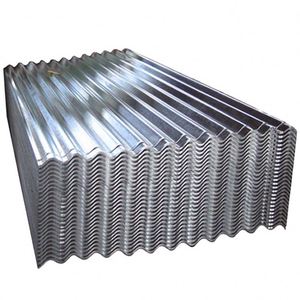
Premium coil-coated corrugated steel roof sheets offering C4 corrosion resistance, enhanced UV durability, and seamless structural continuity with cold-rolled secondary framing.
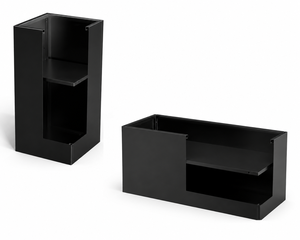
Heavy-duty CNC bending, automated robot welding, and structural punching for purlin cleats, lap connections, eave struts, and base connection nodes.
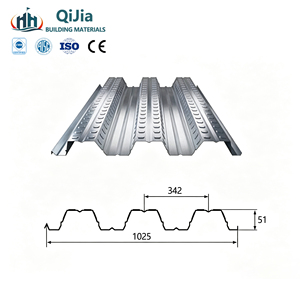
High-tensile zinc-coated composite floor decking sheet engineered for mezzanine diaphragms, multi-story industrial framing, and dynamic shear wall systems.
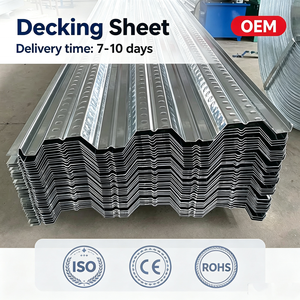
Optimized rib geometry with integrated embossments to maximize composite steel-concrete bond strength in high-bay logistics warehouses across northern Italy.
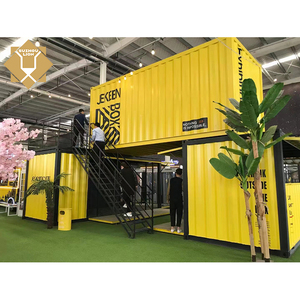
Rapid-deployment, cold-formed light gauge steel framing unit engineered for construction site offices, operations cabins, and modular industrial living units.
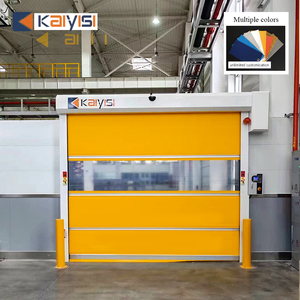
Rapid cycle industrial roll-up portal doors with cold-drawn galvanised steel guide tracks designed for temperature-sensitive warehouses and distribution hubs.

Architectural interior finishing panels featuring moisture-proof acoustic insulation, suited for modular office interiors, technical labs, and modular partitions.

Fully engineered prefabricated steel modular housing conforming to European building codes, complete with cold-formed structural base frames and wall cassettes.
A rigorous examination of section optimization, continuous overlap lapping, seismic resistance under NTC 2018, and anti-corrosive galvanic metallurgy for the Mediterranean climate.
In contemporary European industrial architecture—particularly across the expanding logistics corridors of the Po Valley (Pianura Padana) and mechanical manufacturing clusters in Emilia-Romagna and Lombardy—structural efficiency dictates project feasibility. Cold-Formed Steel (CFS) Z-purlins (profili Z a freddo per coperture) provide an unrivaled strength-to-weight ratio compared to traditional hot-rolled I-sections or welded secondary channels. Because of the asymmetric flanging geometry where top and bottom flanges feature differing dimensions (e.g., 68mm top flange vs 62mm bottom flange), Z-profiles nest into one another with geometric precision.
This nesting capability enables continuous multi-span structural configurations via moment-resistant lap joints over primary portal frames. In accordance with UNI EN 1993-1-3 (Eurocode 3: Design of steel structures – Cold-formed members and sheeting), structural continuity reduces peak mid-span bending moments by up to 35% compared to simple single-span C-sections. By utilizing continuous purlin runs where laps extend between 10% to 15% of the span on either side of the rafter, structural engineers achieve significant section depth reductions, lightening primary truss loads and driving substantial steel tonnage savings across sprawling roof footprints.
Furthermore, our production lines execute automated, high-precision in-line CNC punching. Web and flange holes are stamped prior to cold-roll forming, maintaining exact bolt-pitch tolerances (±1.0 mm) compatible with 3D structural BIM software including Tekla Structures and Autodesk Advance Steel. This eliminates all on-site reaming, drilling, or field welding, which ensures that factory-applied galvanic protective layers remain uncompromised during field erection.
Italy presents one of the most complex seismic engineering landscapes in the European Union. Designers and structural consultants must conform strictly to the NTC 2018 (Norme Tecniche per le Costruzioni - D.M. 17 gennaio 2018) and the corresponding Eurocode 8 seismic provisions. Roof structures cannot be treated merely as gravity load carriers; they must act as rigid or semi-rigid horizontal diaphragms that transfer inertial forces reliably to primary vertical lateral force-resisting frames (braced bays and moment frames).
Cold-formed Z-sections manufactured from certified high-strength steel grades S350GD, S390GD, and S420GD+Z/ZM maintain minimum elongation values exceeding 16%, satisfying the ductility demands required under capacity design principles. When integrated with anti-sag bars (tirantini di collegamento), diagonal fly braces (controventi di falda), and corrugated floor/roof deck diaphragms, our Z purlins restrain lateral-torsional buckling (instabilità flesso-torsionale) even under severe ground acceleration scenarios characteristic of Central and Southern Italian seismic zones (Class 1 and 2 hazard areas).
Italy’s geographic positioning creates aggressive microclimates. Coastal industrial districts around Genoa, Livorno, Naples, and Taranto experience marine salt spray combined with industrial sulfur deposits (Corrosivity Category C4 to C5 according to UNI EN ISO 12944-2). Conversely, the intensive swine, poultry, and dairy farming sectors of Brescia, Cremona, and Mantova expose structural roof frameworks to heavy atmospheric ammonia concentrations. Standard low-micron galvanizing fails prematurely in such environments.
We manufacture our Z purlins and structural deck sheets utilizing continuous hot-dip zinc-aluminum-magnesium alloy coatings (such as Zn-Al-Mg / Magnelis-type alloy systems with ZM250 to ZM310 weights), as well as heavy zinc coatings (Z275 to Z600 g/m² according to UNI EN 10346). The unique microstructural behavior of magnesium ions in the alloy provides self-healing galvanic barrier protection along sheared cut edges and punched holes. In addition, our manufacturing complies with Italy's CAM Edilizia (Criteri Ambientali Minimi) requirements, incorporating certified recycled scrap content and non-toxic passivation, vital for Italian public tender bidding (Codice dei Contratti Pubblici).
Cold-formed Z section dimensions roll-formed to EN 10162 tolerances for Italian structural engineers and steel framing contractors.
| Profile Model | Web Depth H (mm) | Flanges B1 / B2 (mm) | Lip C (mm) | Thickness t (mm) | Steel Grade & Yield | Standard Surface Protection |
|---|---|---|---|---|---|---|
| Z140 / 60-65 | 140 | 65 / 60 | 18 – 20 | 1.5 – 2.5 | S350GD (fy ≥ 350 MPa) | Hot-dip Z275 / ZM250 |
| Z180 / 65-70 | 180 | 70 / 65 | 19 – 22 | 1.8 – 3.0 | S350GD / S390GD | Hot-dip Z275 / ZM310 |
| Z200 / 68-74 | 200 | 74 / 68 | 20 – 23 | 1.8 – 3.2 | S350GD / S420GD | Zinc-Magnesium ZM310 |
| Z250 / 72-78 | 250 | 78 / 72 | 22 – 25 | 2.0 – 3.5 | S350GD / S450GD | Heavy Galvanized Z350+ |
| Z300 / 80-86 | 300 | 86 / 80 | 24 – 28 | 2.2 – 3.5 | S390GD / S450GD | ZM310 Self-Healing Alloy |
Engineered cold-formed steel solutions optimized for the unique climatic, topographic, and structural demands of Italian sub-regions.
Extensive distribution hubs located across Bologna, Verona, and Piacenza require expansive spans exceeding 8 meters between rafters. Our lapped Z250 and Z300 continuous purlins carry heavy automated sprinkler lines, photovoltaic arrays, and insulated acoustic rock wool roof systems without mid-span sag.
Mountainous sub-regions throughout Trentino, Piedmont, and the central Apennines face substantial snow loads (Carico Neve > 2.5 kN/m² under NTC 2018). High-tensile S420GD Z purlins with custom web depths provide high sectional moment capacity while avoiding thermal bridging under thick insulated sandwich panels.
In Puglia, Sicily, and Sardinia, massive agro-industrial buildings are retrofitting rooftops with high-yield bifacial solar panels. Our Zinc-Magnesium coated Z purlins withstand intense UV radiation, high operational temperatures, and thermal expansion while ensuring zero galvanic degradation between aluminum frames and steel purlins.
Harbor warehouses in Trieste, Genoa, and Salerno, as well as refrigerated cold storage facilities (celle frigorifere), encounter severe condensation and aggressive salinity. Custom-perforated Z-profiles paired with polyurethane sandwich panels guarantee airtight envelope performance under C5 atmospheric exposure.
Navigating European Green Deal directives, decarbonized manufacturing, CE compliance, and digital fabrication workflows.
Under EU Construction Products Regulation (CPR 305/2011), structural purlins cannot be commercialized in Italy without Factory Production Control (FPC) certification according to EN 1090-1 and EN 1090-2 (EXC2 or EXC3). Our automated roll-forming lines provide mill traceability, CE labels, and 3.1 Material Test Certificates (EN 10204) for every single heat batch shipped.
With the gradual enforcement of the EU Carbon Border Adjustment Mechanism (CBAM), Italian general contractors and EPCs require full transparency regarding embodied carbon emissions. We leverage scrap-recycled Electric Arc Furnace (EAF) feedstocks and green electricity-powered roll forming to supply Verified Environmental Product Declaration (EPD) documentation.
Italian structural engineering consultancies (studi di ingegneria strutturale) increasingly require direct integration with Tekla, Revit, and CNC machine files (.nc / .dstv). Our automated manufacturing workflow reads raw CAD model exports, pre-punching slotted holes, web penetrations, and identification stampings directly onto each Z-profile.
Combining primary steelmaking access, state-of-the-art roll forming lines, and end-to-end turnkey structural engineering support.
Beyond isolated purlin production, we deliver complete prefabricated building envelope packages: built-up welded rafters, polyurethane sandwich panels, cold-formed decking, high-speed industrial doors, and prefabricated modular cabins under one coordinated delivery.
Founded on rigorous engineering discipline with over 352 completed industrial steel structures worldwide. Our dedicated structural design team coordinates directly with Italian structural engineers to optimize member tonnage without sacrificing deflection compliance.
Strategic export coordination to key Italian maritime hubs: regular 40ft High-Cube containerized shipping direct to Genoa, La Spezia, Naples, Venice, and Trieste. Bundled nesting of Z-profiles dramatically reduces ocean freight cube cost.
Every batch undergoes automated dimensional laser verification, zinc coating thickness checking (elcometer gauge), tensile and yield coupon destructive testing, and salt spray fog chamber testing according to ISO 9227 standards.
Clarifying technical compliance, customs clearance, shipping logistics, and structural engineering interfaces.
All our cold-formed steel Z-sections and C-channels are engineered utilizing structural steel coils conforming strictly to UNI EN 10346 (S350GD, S390GD, or S420GD). We perform continuous in-house metallurgical verification and provide certified EN 10204 Type 3.1 Material Test Certificates (MTR) detailing chemical analysis, tensile strength (Rm), yield strength (ReH), and elongation (A80), fully meeting the structural ductility requirements stipulated by the Consiglio Superiore dei Lavori Pubblici.
Every shipment is dispatched with an exhaustive export documentation pack: CE Declaration of Performance (DoP), EN 10204 3.1 Mill Certificates, Bill of Lading (B/L), Commercial Invoice, Packing List with clear component piece-marks correlated to erection shop drawings, and Certificate of Origin (Form A or COO). We assist Italian customs clearing agents (doganalisti) to ensure rapid clearance without port demurrage.
Because Z-profiles feature asymmetric flanges (e.g., 68 mm / 62 mm), one profile nests smoothly inside another. By lapping adjacent purlins across primary steel rafters (typically 10% to 15% of the span on each side), a rigid moment-carrying continuous beam is created. This reduces bending deflection by over 40% and allows Italian builders to use lighter section thicknesses (t = 1.8 mm or 2.0 mm instead of 2.5 mm), saving substantial weight across large spans.
Z-profiles are nested compact and securely strapped with high-tensile steel banding, separating pieces with plastic edge protectors and heavy-duty timber dunnage. To eliminate white rust (ossidazione bianca) during the 25–35 day ocean journey through high-humidity maritime zones, every bundle is wrapped in VCI (Vapor Corrosion Inhibitor) waterproof film and desiccant packs are placed throughout the container.
Yes. Our multi-axis CNC cold roll-forming machines receive direct CAD/CAM production files (.DSTV / .NC). We pre-punch round bolt holes, slotted holes for thermal expansion, service pass-throughs, and anti-sag rod attachments directly during the forming run with ±1 mm tolerance, completely eliminating labor-intensive on-site workshop modifications.
With an annual processing capacity exceeding 120,000 metric tons across multiple high-speed automated roll-forming and welding bays, standard project volumes (50 to 500 metric tons of purlins and decking) are rolled, punched, bundled, and container-loaded within 15 to 25 working days upon structural shop drawing sign-off.
Whether you are designing a high-capacity logistics warehouse in Milan, retrofitting an agrivoltaic installation in Bari, or developing seismic-certified industrial sheds in Catania, our engineering team is prepared to analyze your member sizing, optimize structural tonnage, and submit a comprehensive technical proposal.
Contact Us