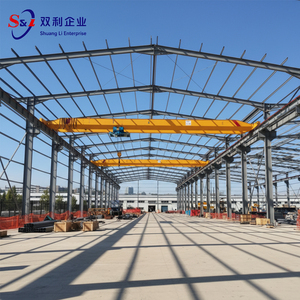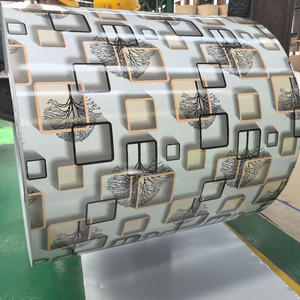
Direct supply line from certified manufacturing facilities with fully traceable mill certs, automated sandwich composite presses, and modular structural steel profiles.
Strategic structural analysis for modern European distribution centers, high-tech agritech campuses, and coastal industrial estates facing strict NTA and EN codes.
The construction landscape within the Netherlands operates under some of the world's most stringent building performance directives. Projects located from the Port of Rotterdam and Moerdijk to Amsterdam Schiphol Logistics Park face multifaceted compliance hurdles: meeting BREEAM-NL Outstanding baselines, adhering to BRL standards, satisfying extreme near-coast corrosive atmospheric requirements (ISO 12944 C4 to C5-M), and fulfilling the strict airtightness criteria dictated by the Dutch Besluit bouwwerken leefomgeving (BBL).
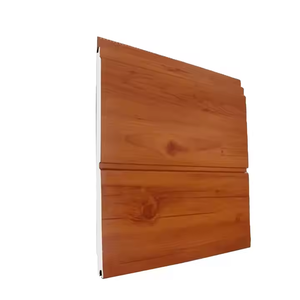
Architectural sandwich panels serve as far more than mere building envelope skins; they act as the principal structural component dictating whole-life energy performance, moisture handling, fire compartmentalization, and thermal bridgeless design. As prime exporters and manufacturers catering to the Western European landscape, Joint Star Steel delivers automated sandwich manufacturing capability integrating high-density polyurethane (PUR), polyisocyanurate (PIR), and stone mineral wool cores bonded under continuous high-pressure laminators with multi-layer organic coated structural steel skins.
Choosing the correct core insulation material requires an empirical trade-off analysis balancing thermal conductivity ($\lambda$-value), reaction to fire under EN 13501-1, structural load-bearing span capability, and acoustic decibel attenuation:
| Performance Criterion | PIR / PUR (Polyisocyanurate) | High-Density Structural Rock Wool | EPS (Expanded Polystyrene) |
|---|---|---|---|
| Thermal Conductivity (λ) | 0.020 - 0.022 W/m·K (Superior efficiency) | 0.038 - 0.044 W/m·K (Moderate efficiency) | 0.035 - 0.038 W/m·K (Economic baseline) |
| Euroclass Reaction to Fire | B-s1, d0 (Flame retardant, zero droplets) | A1 / A2-s1, d0 (Completely non-combustible) | E to B (Vulnerable without direct protection) |
| Target Dutch Applications | Cold storage, fresh agro-distribution, pharmaceuticals | High-fire-risk processing, boundary walls, acoustics | Interior non-load partitions, temporary dry sheds |
| Moisture Absorption (Vol %) | < 1.0% (Closed-cell hydro-repellent) | Hydrophobic treated, capillary active if exposed | 1.5% - 3.0% (Permeable to vapor drives) |
| Average Core Density | 38 - 42 kg/m³ | 100 - 140 kg/m³ | 15 - 20 kg/m³ |
Under the Netherlands' Building Decree standards, building envelope air leakage directly impacts the Energy Label (Energielabel A++++ mandates). Our exported panels feature computer-milled tongue-and-groove side joints with pre-applied butyl seals and integrated EPDM compression gaskets. This eliminates thermal bypass, inhibits inner cavity interstitial condensation, and drastically reduces HVAC operational loads under extreme Dutch weather cycles.
Micro-ribbed and corrugated metal facing options distribute wind suction forces across wider structural purlin spans, reducing deflections under severe North Sea storms.
Exclusively finished with PVDF, HDP (High Durability Polyester), and Plastisol coatings designed to resist sulfurous industrial fallout and marine salt corrosion.
Concealed-fastener architectural wall profiles prevent through-metal thermal transmission, keeping exterior fastening screws protected from weather contact.
How Dutch developers, general contractors, and cold-chain operators deploy insulated sandwich assemblies to navigate structural and decarbonization targets.
The Southeast Netherlands logistics axis (Venlo-Venray) relies extensively on high-efficiency PIR insulated envelopes for high-tech seed preservation, flower export warehouses, and automated agricultural packaging facilities requiring unvarying hygrometric and temperature control.
Industrial warehousing along Maasvlakte and Botlek demands panel assemblies built to survive direct seawater spray and corrosive chemical particulates. Our ZM310 zinc-magnesium substrate panels prevent edge-creep corrosion and deliver long-lasting structural facade life cycles.
Semiconductor manufacturing clusters around Eindhoven require non-outgassing, completely smooth panel wall linings compatible with cleanroom ISO classes, featuring anti-static finishes, flush silicone seals, and chemical-resistant surface coatings.
Combining heavy manufacturing capabilities, integrated supply chain execution, and direct engineering supervision since 2010.
Design, structural steel fabrication, sandwich composite production, and project drawings handled under one unified roof, eliminating interface risks between trade contractors.
Continuous inline quality monitoring testing core density, bond peel strength, fire behavior, and thickness consistency according to ISO 9001 and CE norms.
Specialized export packaging including protective surface PE film, reinforced edge cornering, vapor-sealed stacking, and tailored pallet sizes optimized for 40ft HQ container shipping.
Substantial cost benefits achieved through streamlined raw coil sourcing, high-yield manufacturing economies of scale, and efficient production turnaround times.
Essential technical and logistical answers addressing testing, Dutch certifications, import shipping, and on-site assembly.