Automatic Light Gauge Steel Framing Machine for C75 C89 C140 Steel Frame Production
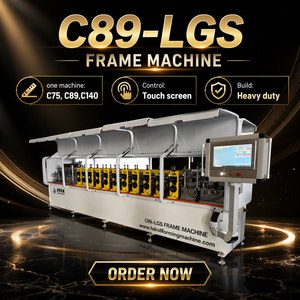
High-precision cold roll-forming station dedicated to auxiliary bridge structures, bridge control towers, toll gate sub-framing, and utility enclosures.
In modern heavy bridge construction and EPC infrastructure projects, structural integrity depends not only on the main truss framework but also on high-performance cold-formed framing, composite deck systems, protective barrier assemblies, and durable field accommodation. Review our core factory-manufactured components below.
High-precision cold roll-forming station dedicated to auxiliary bridge structures, bridge control towers, toll gate sub-framing, and utility enclosures.
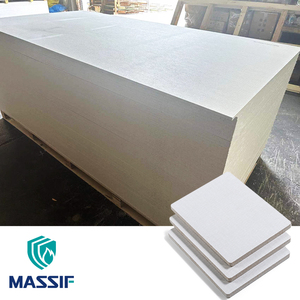
Class A1 non-combustible magnesium oxide panels for infrastructure service corridors, technical monitoring sub-stations, and bridge maintenance buildings.
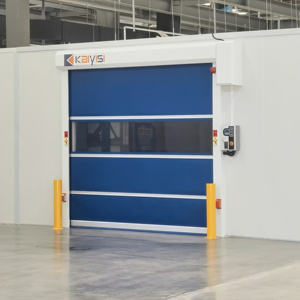
High-frequency industrial rapid roll-up barrier systems optimized for bridge electrical vaults, testing facilities, and clean climate-controlled inspection rooms.
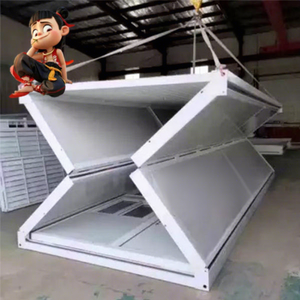
Rapid-deployment, ISO-dimensioned modular living units and on-site engineering headquarters tailored for remote bridge construction job sites.
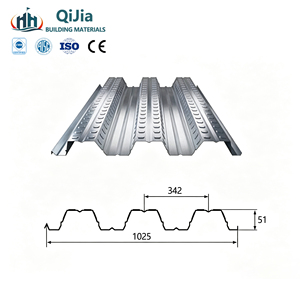
High-yield ASTM-grade corrugated floor deck serving as composite slab reinforcement and permanent formwork for highway bridge approaches and mezzanines.
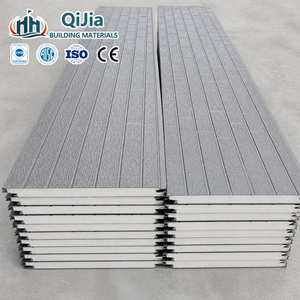
Weather-resistant, polyurethane-insulated metal facade panels engineered for bridge administrative pavilions, toll stations, and auxiliary substations.
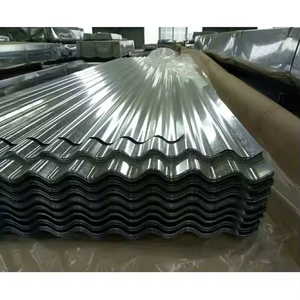
Heavy hot-dip zinc-coated corrugated steel engineered for pedestrian bridge canopy roofing, structural crash barriers, and utility perimeter shielding.
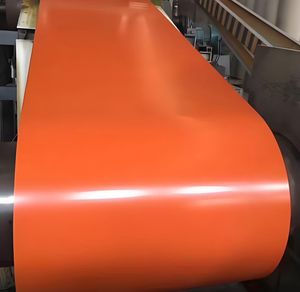
PVDF / HDP fluorocarbon-coated alu-zinc steel coils providing C5-M extreme marine corrosion resistance for bridge auxiliary structures and roofing decks.
As a leading Chinese steel truss bridge manufacturer and international exporter, our structural fabrication yard is engineered to deliver heavy civil connectivity across complex geographical spans. Truss bridges remain the premier engineering typology for medium-to-long span railway networks, arterial highway river crossings, mining haulage lines, and emergency vehicular corridors. By triangulating tensile and compressive load paths through interconnected axial members, steel trusses achieve exceptional stiffness-to-weight ratios unmatched by standard plate girder configurations.
Operating continuously since 2010, our fabrication footprint encompasses multi-axis CNC plasma cutting, automated SAW (Submerged Arc Welding), 3D laser-calibrated end-milling, and expansive heavy trial-assembly yards. Having delivered more than 352+ major structural infrastructure installations across the Asia-Pacific, Africa, the Middle East, and Latin America, our engineering mandate unifies finite element structural modeling, strict metallurgical traceability, and single-source turnkey delivery.
E-E-A-T Quality Guarantee: Every bridge component manufactured in our facility adheres to AWS D1.5 (Bridge Welding Code), EN 1090-2 EXC4 execution class, and AASHTO LRFD Bridge Construction Specifications, backed by mill test certificates (MTC) conforming to EN 10204 Type 3.2.

We design, detail, and pre-assemble all major global truss typologies tailored to site bathymetry, dynamic live loads, wind turbulence regimes, and rapid site erection logistics.
Configured with alternating equilateral or isosceles triangles. Ideal for highway crossings and conveyor gantries spanning 40m to 120m. By eliminating vertical web posts or utilizing verticals only for floor-beam load transfer, Warren trusses streamline secondary framing and lower overall aerodynamic wind drag.
Characterized by vertical members carrying compression while diagonal members accept primary tension. Exceptionally cost-effective for heavy axle-load rail networks and combined road-rail crossings where dynamic fatigue cycling demands clear, inspectable load pathways and simplified bolted node gusseting.
An architectural and structural hybrid combining parabolic curved top chords with high-tensile bottom chord ties. Designed for navigation waterways and urban monumental spans (60m to 160m+) requiring open vertical headroom without intermediate riverbed piers.
International tender requirements and EPC contracting models are rapidly evolving. Strategic procurement officers, bridge authorities, and multilateral development banks now evaluate lifecycle metrics beyond upfront metric-ton steel rates.
Tender mandates increasingly penalize extended river closure and traffic disruption. Procurement is heavily shifting toward pre-engineered, modularized bridge spans assembled using Self-Propelled Modular Transporters (SPMTs) or cantilever incremental launching methods.
To cut 50-year maintenance OpEx, global purchasers are specifying atmospheric corrosion-resistant alloys (such as ASTM A709 Grade 50W / EN 10025-5 S355J2W). These steels form a protective patina, eliminating repeated painting cycles across inaccessible river gorges.
Modern public works contracts demand structural models in IFC format containing complete material genealogy, automated weld inspection records, and integrated piezoelectric sensor nodes for real-time lifecycle Structural Health Monitoring (SHM).
Bidders must furnish Environmental Product Declarations (EPD). Modern factories utilizing Electric Arc Furnace (EAF) metallurgy combined with certified renewable energy credits secure decisive margins in multinational competitive tenders.
A transparent engineering comparison of raw material selection, metallurgical fabrication tolerance, non-destructive testing (NDT), and surface anti-corrosion regimes enforced across our workshop lines.
| Engineering Parameter | AASHTO / ASTM Standard (US/Int'l) | Eurocode EN 1090-2 / ISO (EU) | Our Factory Execution Standard | Verification Protocol |
|---|---|---|---|---|
| Primary Steel Plates | ASTM A709 Gr. 36 / 50 / 50W / HPS 70W | EN 10025-2/3/5 S355J2+N / S460QL | Q355qD / Q420qD / Q690qE | 100% Ultrasonic Lamination Check (ASTM A578 Level B) |
| Welding Execution | AWS D1.5 Bridge Welding Code | EN ISO 3834-2 / EN 1090-2 EXC4 | ASME IX / AWS D1.5 Certified | 100% PAUT (Phased Array) & MT on all tension-groove welds |
| Shop Pre-Assembly | AASHTO / NSBA G12.1 Guidelines | EN 1090-2 Annex B Tolerances | Full Continuous 3-Span Laydown | Total Station 3D Laser Scanning (Accuracy ±1.5mm) |
| Friction Connection | ASTM F3125 Grade A325 / A490 HSFG | EN 14399-4 Class 10.9 HSFG System | Dacromet / Geomet Hot-Dip 10.9 | Bolt Tension Calibrator (Skidmore-Wilhelm batch proofing) |
| Corrosion Protection | SSPC Paint 20 / Zinc-Rich Epoxy | ISO 12944-5 C5-M Extreme Marine | Hot-Dip Galv (ISO 1461) + Fluoropolymer | Dry Film Thickness (DFT) Magnetic Gauge & Cross-Hatch Adhesion |
The primary point of failure in global bridge procurement lies in coordination friction between the foreign design consultant, the overseas fabrication shop, and local civil erection crews. Joint Star eliminates this divide through a unified, single-accountability contract framework.
Before any steel member leaves our factory, every truss chord, diagonal brace, cross-girder, and stringer undergoes complete physical trial assembly in our 20,000 m² open layout yard. Chord continuity, bolt hole reaming alignment, and theoretical parabolic precamber curves are validated using 3D laser coordinate trackers. Every component is marked with distinct alphanumeric stampings linked directly to color-coded erection drawings, drastically shortening site assembly timelines and eliminating costly field modification.
Comprehensive Civil & RCC Packages: In addition to steel superstructure manufacturing, our engineering teams regularly execute pier cap anchoring, bridge abutment engineering, cast-in-place concrete decks, and auxiliary site camp infrastructure.
Direct answers to critical structural engineering, logistics, international quality compliance, and commercial questions raised by EPC contract directors.
Camber is calculated during our TEKLA 3D and MIDAS Civil modeling stages. It accounts for theoretical dead load deflections (including steel self-weight, composite concrete deck, asphalt surfacing, and utilities) plus half of the designated design live load deflection. Individual chord lengths are cut to exact compensated geometry in our workshop so that when the bridge is fully erected and loaded on site, the net profile aligns precisely with the road or railway design grade line.
Fatigue integrity is managed under AWS D1.5 and EN 1993-1-9 guidelines. All welded connections in tension zones or stress-reversal areas are designed as Complete Joint Penetration (CJP) groove welds with backing bars removed and weld toes contoured by tungsten inert gas (TIG) dressing or ultrasonic impact treatment (UIT). Gusset plate corners are radiused to a minimum of 50mm to mitigate notch stress concentration. 100% of cyclic tension welds are examined via Phased Array Ultrasonic Testing (PAUT).
Yes. We manufacture heavy pre-engineered modular truss bridge systems capable of clear spans from 9m up to 60m in single-lane or multi-lane configurations. Our modular systems utilize precision-machined high-strength alloy pins, robotic-welded diamond or square truss panels, and lightweight transoms, allowing complete erection by hydraulic boom cranes or cantilever launching without temporary river falsework.
Long chord members and heavy cross-girders are shipped breakbulk or utilizing dedicated 40ft Flat Rack (FR) container platforms. Contact faces are cushioned with industrial neoprene and timber dunnage. Machined splice surfaces and pin bores are treated with peelable anti-rust compounds. All open member ends feature internal temporary stiffeners to prevent ovalization or racking during rough sea transit.
We routinely host third-party inspection agencies appointed by global clients, including SGS, Bureau Veritas, TÜV Rheinland, and Lloyd's Register. Our dedicated Quality Control (QC) department provides complete access to our in-house chemical spectrometry laboratory, mechanical tensile and Charpy V-notch testing rigs, weld coupon mechanical testing facilities, and all non-destructive testing logbooks.