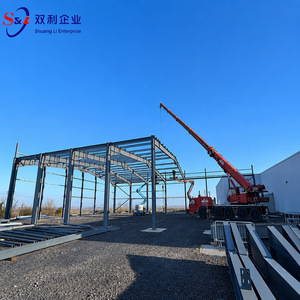

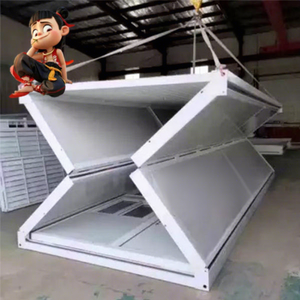
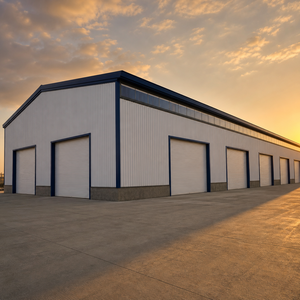
Engineered cold chain envelopes demand structural synergy between high-integrity cold room portals, modular sandwich partitions, and robust pre-engineered frames. Explore our core manufacturing portfolio.
In modern industrial refrigeration, cold room doors represent the most physically stressed component of any thermal envelope. While insulated wall panels remain static, a cold room door operates under intense thermal differentials, cyclic pressure shocks, mechanical forklift impact risks, and thousands of continuous actuations per month. For global cold chain asset owners, logistics engineers, and food processing EPC managers, identifying top China cold room doors manufacturers and factories has evolved beyond simple cost comparison—it is now a complex engineering evaluation of thermodynamic insulation, airtight perimeter geometry, track metallurgy, and long-term operating energy expenditure (OPEX).
A poorly manufactured cold storage door creates severe microclimate infiltration. Even a 2mm gap along the perimeter gasket of a -25°C blast freezer can cause hundreds of kilowatt-hours in parasitic compressor load each month, alongside ice accumulation, motor drive slippage, and irreversible product degradation. Leading Chinese manufacturing clusters across Shandong, Jiangsu, Zhejiang, and Guangdong have redefined cold room doorway technology by integrating high-pressure polyurethane foaming, non-conductive thermal break aluminum profiles, EPDM quad-lip co-extruded gaskets, and intelligent PID-regulated perimeter heating loops.
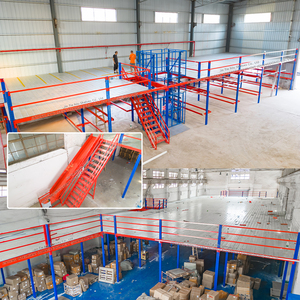
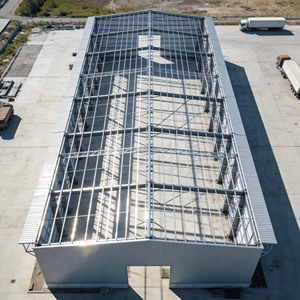
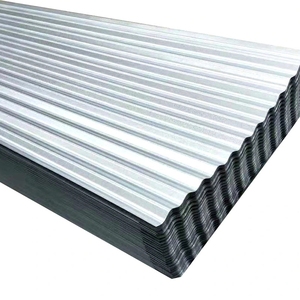
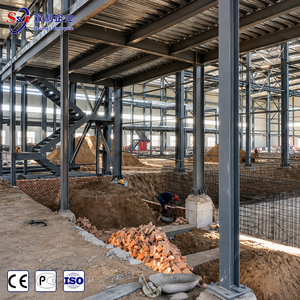
To establish absolute project reliability, forward-looking procurement teams demand integrated manufacturing capabilities where the cold room door and the surrounding structural sandwich panels and PEB steel portal frames are designed, manufactured, and load-tested as a unified thermodynamic system. This eliminates on-site alignment disputes, cold bridge condensation, and sagging hardware failures.
Multi-chamber PA66 polyamide thermal breaks separate the interior stainless steel face from outer framework, preventing condensation and frost weeping entirely.
Injected with cyclopentane blowing agents, our PU/PIR cores achieve a dense 42-45 kg/m³ with thermal conductivity λ ≤ 0.021 W/(m·K) for maximum R-values.
Dual-circuit anti-freeze heating ribbons inside frames and ground thresholds eliminate seal icing in temperatures plunging down to -45°C.
Selecting the ideal cold door variant requires analyzing operational frequency, vehicle passage, chamber temperature differential (ΔT), and hygiene standards.
| Door Typology | Operating Temp Range | Core Thickness & Material | U-Factor (W/m²·K) | Airtight Sealing Mechanism | Optimal Deployment |
|---|---|---|---|---|---|
| Heavy-Duty Electric Sliding Door | 0°C down to -35°C | 100mm - 150mm High-Density PU | 0.18 - 0.22 | Drop-and-slide cam track + EPDM dual-bulb | High-throughput logistics hubs, forklift access bays |
| Single/Double Hinged Chiller Door | +15°C down to -5°C | 75mm - 100mm PU / PIR Core | 0.24 - 0.28 | Continuous compression magnetic frame gasket | Walk-in cold rooms, commercial kitchens, lab storage |
| Blast Freezer Heavy Swing Door | -25°C down to -50°C | 150mm - 200mm Injected PU + VIP | 0.12 - 0.16 | Triple-lip siliconized EPDM + frame heating wire | Deep freeze meat processing, marine tuna freeze tunnels |
| High-Speed Insulated Roll-Up Door | 0°C down to -25°C | 30mm - 50mm Insulated PU Slat / PVC | 0.65 - 0.95 | Self-repairing zipper guides + active air seals | Automated picking corridors, cross-dock cold distribution |
| Controlled Atmosphere (CA) Hermetic Door | -2°C down to +8°C | 80mm - 120mm PU Foam Core | 0.22 - 0.25 | Pneumatic inflatable bladder airtight seal (0.3 bar) | Fruit & agricultural gas-tight storage (O₂ < 1%) |
Global procurement executives are navigating strict carbon disclosure standards, rising grid tariffs, and autonomous warehouse automation. China's top manufacturing factories are innovating across five decisive fronts.
By encasing ultra-porous silica VIPs inside polyurethane cores, Chinese factories are reducing door leaf thickness by 40% while preserving R-values up to R-50. This creates lighter door leaves, reduces motor stress, and expands clear-opening headroom in automated sorting centers.
State-of-the-art cold room doors now embed optical encoders, strain sensors on track hangars, and thermal line-scanners. These modules continuously stream cycle counts, motor torque variance, and perimeter micro-leaks directly to SCADA or building management systems (BMS).
Traditional heavy cold doors that slide at 0.3 m/s are being replaced by high-speed insulated spiral doors actuating at 1.8 to 2.4 m/s. For high-traffic cold rooms, reducing open dwell time by 75% saves up to $18,000 annually per doorway in direct refrigeration compressor power.
In accordance with the Kigali Amendment, leading Chinese factories have transitioned foam formulations from HCFCs to HFO (Hydrofluoroolefin) and ultra-pure cyclopentane systems. This delivers an ozone depletion potential (ODP) of zero and a global warming potential (GWP) of less than 1.
Procuring doors from one supplier, sandwich panels from another, and PEB steel columns from a third creates misaligned tolerances and warranty disputes. The industry trend heavily favors unified manufacturers delivering structural steel, cladding, and cold doors as a single certified envelope package.
In response to stringent food export audits (BRCGS, USDA, HACCP), China's premier plants now fabricate door face skins using nano-coated antibacterial PVDF coatings and marine-grade 316 stainless steel to withstand caustic chemical washdowns and saline environments.
Founded in 2010 under the motto "Your Future in Your Home", our integrated manufacturing facilities bridge structural engineering excellence with certified thermal preservation technology.
Most cold room door failures stem not from the door leaf itself, but from improper doorway framing, deflected structural purlins, or thermal leakage at the junction between the sandwich panel and the sub-frame. Unlike boutique door fabricators who produce hardware in isolation, our manufacturing ecosystem provides an all-in-one execution strategy:
Comprehensive technical answers directly from our senior refrigeration structural engineers to assist your facility specifications.
Thermal bridging occurs when highly conductive metal skins or fasteners span directly from the cold interior to the warm exterior. Top Chinese factories resolve this through two critical design elements: First, our door frames utilize high-density polyamide (PA66 GF25) extrusion isolators that mechanically divide the outer frame from the inner sub-frame. Second, low-wattage, self-regulating constant-wattage heating ribbons (typically 25W to 40W per linear meter) are housed within an internal aluminum raceway directly behind the perimeter gasket. This ensures the frame surface temperature remains consistently above the ambient dew point, completely eliminating condensation and frost weeping without wasting electrical power.
Recommended core thickness depends directly on the chamber operating temperature, humidity levels, and target U-factor. For medium-temperature cold rooms (+2°C to +8°C), a 75mm to 100mm rigid PU/PIR core (density 42 kg/m³) provides optimal thermal preservation. For commercial low-temperature freezers (-18°C to -25°C), we mandate a 120mm to 150mm PU core with heated gaskets and heated thresholds. For industrial blast freezers or deep frozen pharmaceutical chambers (-30°C to -45°C), a 150mm to 200mm high-density core—frequently combined with internal vacuum insulation panels (VIP)—is required to prevent door leaf warping caused by extreme thermal contraction differentials across the inner and outer metal skins.
For small, lightweight manual hinged personnel doors, heavy-duty through-bolt backing plates clamping the sandwich panel skin are often structurally sufficient. However, for industrial electric sliding doors, vertical lift doors, or forklift-trafficked openings, anchoring exclusively into sandwich panels is a primary point of failure. We strongly advocate for an integrated pre-engineered sub-frame (typically galvanized structural steel box sections or heavy aluminum jamb extrusions) tied back directly into the facility's primary PEB columns or slab anchors. As a turnkey manufacturer of both prefabricated steel structures and cold storage panels, our engineering team supplies perfectly dimensioned portal frames that absorb dynamic door track momentum and prevent door sag.
A conventional horizontal track permits friction between the door perimeter rubber and the wall during movement, accelerating seal degradation. Our precision sliding door tracks feature a proprietary curved drop-down-and-inward cam geometry. When opening, the door lifts upward by 10mm and shifts 8mm away from the frame before traveling horizontally, eliminating gasket friction. When closing, the door drops downward and pulls tightly against the heavy stainless jambs, compressing the hollow-core EPDM gasket uniformly against the perimeter and floor. This cam mechanism delivers Class 4 airtight integrity (EN 12426) while dramatically prolonging seal operating life.
Each material serves a distinct engineering purpose. Expanded Polystyrene (EPS) is the most cost-effective and lightweight option, ideal for general warehouse partitions, site offices, and moderate-temperature fruit sheds. Polyurethane (PU/PIR) delivers the world-standard highest thermal efficiency per unit thickness (thermal conductivity λ ≈ 0.020–0.022 W/m·K), making it the compulsory choice for freezer rooms, cold room door leaves, and energy-conscious facilities. Rock Wool (Mineral Wool) provides unmatched non-combustible fire protection (Euroclass A1/A2 ratings) and superior acoustic dampening, making it essential for processing plants with strict municipal fire partition codes, boiler room boundaries, and power station enclosures.
Safety engineering on high-throughput doors incorporates active electronic sensors and mechanical physical protections. Doors are equipped with dual-beam optical through-beam photo-eyes at 300mm and 900mm elevations, wireless safety edge sensors along the leading rubber gasket (which instantly reverse travel on minimal resistance), and emergency pull-cords reachable by forklift operators. On the physical level, heavy tubular stainless steel floor bollards (crash posts) are anchored in front of track supports. Internally, every door features an illuminated luminescent internal emergency release lever with a mechanical push-rod that allows trapped personnel to manually disengage the lock and open the door even if the motor has lost all electrical power.
Exporting oversized cold room doors requires specialized industrial packing to prevent track deformation, corner denting, or moisture ingress. Our factory employs custom fumigated steel-reinforced plywood crates. Door leaves are wrapped in peelable electrostatic protective film, corner-guarded with high-density EPE foam blocks, and sealed in vapor-barrier poly-shrouds with industrial desiccants. Precision aluminum overhead tracks and motor rails are banded into rigid structural U-channel steel cradles to guarantee zero bending or camber distortion across multi-week ocean transit. Clear packing lists and QR codes on each crate correspond directly to structural shop drawings for rapid on-site cross-docking.