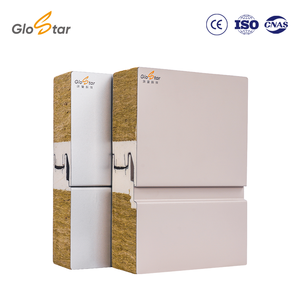
Non-combustible A1 structural rock wool core with polyurethane tongue-and-groove side sealing. Engineered with architectural 3D V-grooves for hospitality, commercial, and high-rise envelope integrity.
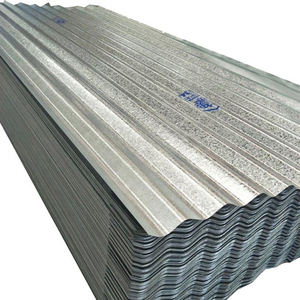
Continuous 55% aluminum-zinc alloy coated sheet metal offering 4x the marine atmospheric life of standard galvanization. Available in 0.12–4.5mm hardness ratings for composite panel outer facings.
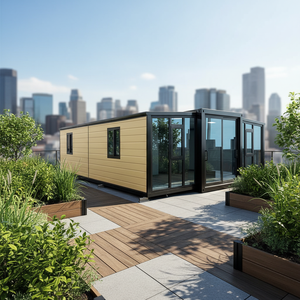
CE-compliant pre-insulated container houses with high thermal boundary R-values. Built with lightweight insulated sandwich facades designed for turnkey residential and commercial European markets.
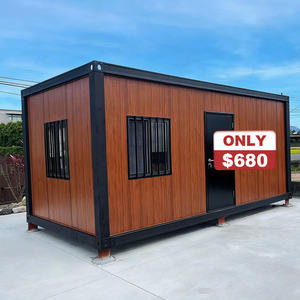
Cost-optimized detachable modular camp units packed flat for intermodal container freight. Features weather-tight PU/EPS wall and roof sandwich composite panels designed for fast, tool-minimal site erection.
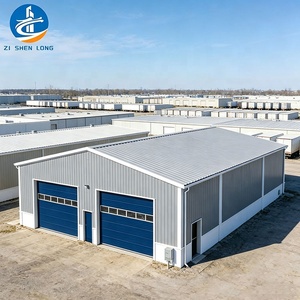
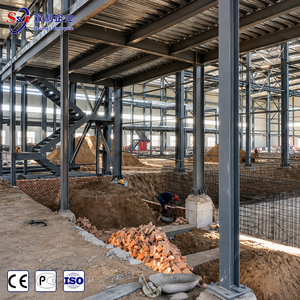
Engineered pre-fabricated structural portals designed for grain storage, livestock facilities, and logistics terminals. Fully optimized for cost efficiency, wind resistance, and anti-condensation envelopes.
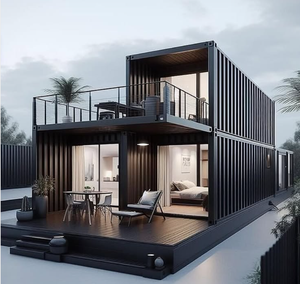
Rapid-response sanitary clinical pods manufactured with antibacterial, easily sterilizable aluminum and steel sandwich panels. Tailored for disaster management, mobile field clinics, and isolated quarantine rooms.
OEM/ODM Aluminum Sandwich Panels: The Definitive Industrial Whitepaper
In contemporary architectural envelope design and modular structural engineering, aluminum sandwich panels (also classified as aluminum composite insulation panels, or insulated metal panels - IMPs) represent the gold standard in balance between structural strength-to-weight ratio, long-term exterior durability, thermal bridging mitigation, and architectural aesthetic plasticity. Sourcing from certified OEM/ODM manufacturers allows EPC contractors, facade engineers, and pre-engineered building (PEB) developers to configure skin alloys, core foam polymer densities, fire-retardant chemistries, and interlocking joint profiles tailored directly to project microclimates.
Structural Skin Metallurgy
Utilizing high-tensile 3003-H14, 5005-H34, or continuous Aluzinc (55% Al-Zn) substrates ranging from 0.40mm to 1.20mm thickness, guaranteeing exceptional flexural yield strength, wind load resistance up to 3.5 kPa, and marine-grade anti-corrosive performance.
Continuous Core Chemistry
Continuous automated high-pressure foaming delivers PIR (Polyisocyanurate), PUR (Polyurethane), high-density structural Rockwool (≥120 kg/m³), or closed-cell aluminum honeycomb cores, providing thermal conductivities down to λ = 0.020 W/(m·K).
Reaction to Fire Ratings
Formulations tested and certified in full compliance with EN 13501-1 (Class A1, A2-s1,d0 and B-s1,d0) alongside ASTM E84 Class A flame spread certifications, preventing flame propagation, toxic gas emission, and thermal collapse during extreme structural fire events.
Technical Performance & Material Selection Matrix
A rigorous empirical comparison of sandwich panel core selections engineered across Joint Star Steel's continuous OEM/ODM lamination infrastructure:
Why Global EPC Contractors & Importers Partner With Joint Star Steel
Established in 2010 in Dhaka, Bangladesh, Joint Star Steel Structure Ltd. has operated for over a decade and a half under the guiding principle of uncompromising structural integrity and complete client accountability. Operating as a single integrated OEM/ODM entity, we eliminate inter-contractor disputes and supply chain variances by housing structural engineering design, automated steel fabrication, continuous sandwich panel lamination, and civil-structural erection under one umbrella.
Complete Integrated Supply Chain: From Coils to Completed Erected Buildings
We do not broker materials. Our continuous lamination lines produce EPS, PU/PIR, and Rockwool sandwich panels with color-coated aluminum, Galvalume (Aluzinc), or heavy cold-rolled steels, integrated seamlessly with our structural fabrication plants.
Multi-Standard Engineering Design & Optimization
Our team of 100+ registered structural designers, CAD modelers, and fabrication experts calculate exact dead, live, wind, and seismic loads in compliance with BNBC, AISC 360, Eurocode 3, and BS 5950 standards to reduce overall steel tonnage without compromising structural safety.
Demonstrated Export Execution Across 352+ Finished Landmarks
With 352+ industrial complexes successfully commissioned for over 120 multinational enterprises, our crating, maritime container consolidation, clear barcoded member tracking, and pre-engineered erection drawings ensure rapid site completion worldwide.
Beyond new building construction, we specialize in high-efficiency thermal insulation retrofits for commercial roofs, cold room enclosures, and modular rooftop expansions that dramatically cut industrial HVAC energy expenditures.
The global building envelope and modular fabrication market is undergoing a seismic shift driven by strict net-zero carbon mandates, escalating fire codes, and the imperative for compressed construction timetables.
1. Decarbonization & Circular Metallurgy
International buyers are increasingly mandating audited Environmental Product Declarations (EPD) and compliance with the EU's Carbon Border Adjustment Mechanism (CBAM). The shift toward low-carbon "green" aluminum (smelted via hydro-power or containing >40% post-consumer recycled billet) is rapidly becoming a standard procurement pre-qualification benchmark.
2. Hybrid PU-Edge Sealed Rockwool Systems
Pure mineral wool panels historically faced vulnerabilities with moisture absorption and edge delamination during transport. Modern procurement prioritizes hybrid continuous lamination: rockwool cores delivering A1 non-combustible ratings combined with high-density polyurethane (PUR/PIR) tongue-and-groove side seals that block vapor ingress and elevate air-tightness.
3. High-Durability Fluoropolymer Surface Finishes
Standard polyester (PE) coatings are being phased out in aggressive atmospheric zones. Modern procurement specifications dictate PVDF (Polyvinylidene Fluoride, Kynar 500) or FEVE resin coatings with film thicknesses exceeding 28μm. These ensure 25+ year color stability (ΔE ≤ 5) and absolute resistance to acid rain, high UV index, and coastal saline erosion.
4. Pre-Engineered BIM-to-CNC Interfacing
Procurement workflows are transitioning away from manual cutting lists toward direct Tekla/Revit BIM-to-manufacturing pipelines. Joint Star Steel integrates factory CNC routing, panel pre-punching, concealed fastening clips, and customized module lengths up to 11.8 meters, minimizing jobsite cutting scrap and slashing erection labor cycles by up to 45%.
5. Strict ASTM E84 & FM Global Certification Compliance
In the wake of heightened global architectural fire regulations, tier-one project insurers actively penalize uncertified composite cores. Sourcing decisions now hinge on demonstrated FM 4880/4881 approval equivalents, self-extinguishing thermoset PIR polymers, and non-dripping cores that safeguard both occupant life safety and corporate assets.
6. Turnkey Supplier Consolidation (EPC Synergies)
Tier-1 contractors are rapidly abandoning fragmented purchasing models that separate primary framing, secondary purlins, facade cladding, and erection teams. The future of lean procurement favors integrated structural partners like Joint Star Steel that guarantee structural envelope fit-up tolerances under a singular, enforceable warranty.
Technical Due Diligence & Inquiry Guidance
Frequently Asked Questions for Global Procurement Officers
What are the key technical distinctions between 3003-H14 aluminum skins and standard Galvalume/Aluzinc steel facings?
Aluminum alloy 3003-H14 (Al-Mn alloy) provides complete immunity to red rust, making it superior for aggressive marine, high-humidity, or coastal industrial atmospheres within 1 to 5 kilometers of coastlines. It delivers a 60% weight reduction compared to steel, substantially decreasing dead loads on foundation structures. Conversely, ASTM A792 Aluzinc (55% Aluminum, 43.4% Zinc, 1.6% Silicon coated steel) offers higher elastic modulus and structural tensile resistance at a more economical price point, making it optimal for long-span roof purlins and industrial warehouses where structural budget optimization is primary.
How does Joint Star Steel prevent galvanic corrosion between aluminum panel skins and structural steel framework?
Direct physical contact between aluminum skins and carbon steel sub-girts creates an active galvanic couple in the presence of an electrolyte. Our engineering design packages enforce complete dielectric isolation. We supply continuous self-adhesive EPDM isolation tape or thermal-break elastomeric barrier strips applied over all steel support surfaces prior to panel placement. Additionally, all mechanical fasteners utilized are grade 304 or 316 austenitic stainless steel fitted with integrated EPDM bonded washers, preventing bimaterial oxidation and securing long-term envelope integrity.
Which insulation core should be specified: PIR, PU, or Rockwool?
Selection depends directly on project building codes and performance goals:
1. Polyisocyanurate (PIR): Best choice when exceptional thermal boundary performance (λ ≈ 0.020 W/m·K) and thin-profile energy compliance are critical, such as cold stores, pharmaceutical cleanrooms, and food logistics centers. PIR achieves self-extinguishing B-s1,d0 fire ratings.
2. Structural Rockwool: Crucial when local fire codes mandate non-combustible Class A1/A2 ratings. Ideal for high-occupancy structures, commercial auditoriums, chemical warehouses, and hazardous process zones. Rockwool also delivers superior sound transmission loss (Rw up to 34 dB).
3. EPS: Best reserved for low-cost temporary housing, remote exploration camps, and non-load-bearing internal partitions where budget minimization outweighs high fire or thermal specifications.
What quality control protocols are implemented during continuous OEM/ODM lamination?
Our automated continuous lamination plants utilize closed-loop digital process control. Incoming metal coils undergo tension leveling and corona surface treatment to ensure flawless polyurethane adhesive wetting. Metering pumps continuously regulate polyurethane precursor mix ratios under high pressure. Curing is completed inside a double-belt caterpillar press with heated temperature zones ensuring uniform density distribution and core-to-skin peel strength (≥0.12 N/mm²). Offline quality checks verify surface flatness, dimensional tolerances (±1.5mm length, ±1.0mm thickness), and water vapor impermeability.
How does Joint Star Steel safeguard panels against damage during long-distance maritime export?
Every panel surface is pre-laminated with a 50-micron UV-resistant self-adhesive PE protective film that remains in place until final jobsite handover. Panels are bundled with interleaving protective foam sheets, reinforced with thick corner protectors, wrapped in heavy-duty moisture-barrier shrink film, and rested on custom wooden or steel runners. Packages are precisely sized for 40ft High Cube (40HQ) maritime containers, utilizing engineered dunnage and ratchet strapping to eliminate any shifting, scratching, or water vapor damage during ocean transit.
Can Joint Star Steel deliver complete structural packages including steel frames, panels, and erection supervision?
Yes. Since 2010, our core market advantage has centered on providing end-to-end turnkey packages. We do not just ship panels; we engineer and fabricate primary structural steel frames (built-up H-beams, box columns, trusses), secondary roll-formed purlins (C/Z sections), flashing, industrial doors, and foundation anchor bolt arrays. For overseas clients, we supply detailed 3D erection sequencing models, piece-marked components matching structural blueprints, and can deploy senior installation supervisors to manage local field labor teams.
What information is required to receive a comprehensive technical proposal and BOM price quotation?
To generate an optimized structural concept and Bill of Materials (BOM), please provide:
1. Building dimensions: Length, Width, Eave Height, and Roof Pitch.
2. Project geographic location (for wind speed, seismic zone, and snow load calculations).
3. Desired panel core: PIR, PUR, Rockwool, or EPS, along with required thickness (e.g., 50mm, 75mm, 100mm, 150mm).
4. Skin specifications: Aluminum (alloy and thickness) or Aluzinc steel, surface finish (PVDF or PE), and preferred color profile (RAL codes).
5. Any auxiliary requirements: Overhead bridge cranes (tonnage capacity), mezzanine floors, or specialized cleanroom requirements.
Accelerate Your Global Procurement Pipeline
Partner Directly With a Proven OEM/ODM Sandwich Panel Manufacturer
Avoid the delays, markups, and coordination challenges of intermediary sourcing. Connect directly with Joint Star Steel's senior engineering department to evaluate structural blueprints, request certified product sample boxes, or obtain precision BOM pricing tailored to your technical project parameters.