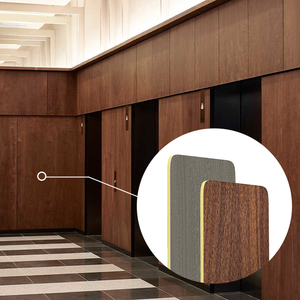
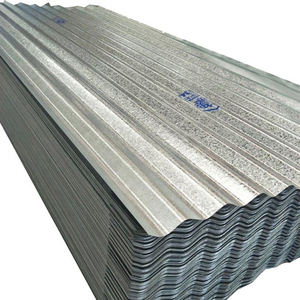
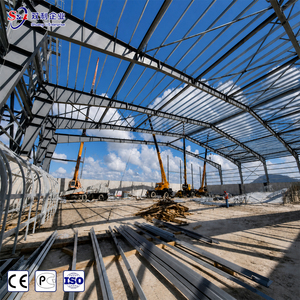
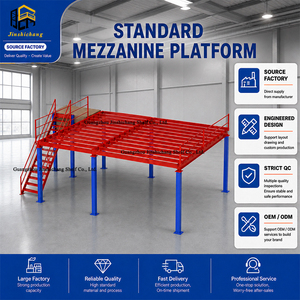
Explore our integrated structural profiles, certified cold-rolled sheets, anti-slip decking, and specialized cleanroom partition panels designed for extreme environmental and thermal endurance.
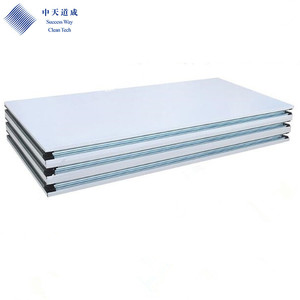
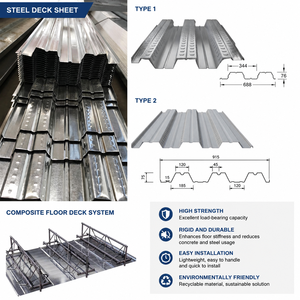
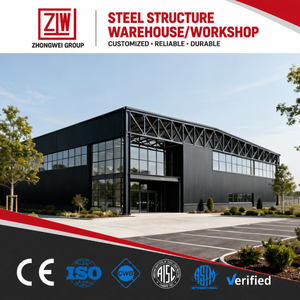
In modern industrial facilities, battery gigafactories, cold storage enclosures, and petrochemical workshops, passive fire containment and acoustic attenuation are mission-critical envelope specifications. Mineral wool sandwich panels (also designated as rock wool panels) represent the gold standard in non-combustible composite construction.
Unlike loose or hand-laid rock wool, our automated continuous production lines slice dense basalt slabs into longitudinal ribbons (lamellas), rotating them 90 degrees so the mineral fibers run strictly perpendicular to the external metal facings. This vertical fiber alignment increases compressive strength beyond 120 kPa and provides exceptional resistance against wind suction shear loads.
Formulated from volcanic basalt rock melted at temperatures exceeding 1,450°C, our OEM mineral wool cores maintain their structural matrix during intense thermal events without melting below 1,000°C. Panels deliver verified fire containment from 60 to 240 minutes (EI60 to EI240) without releasing toxic gases or toxic flaming droplets, complying with ASTM E119 and EN 13501-1 standards.
The open-porous, interconnected micro-filament network of rock wool provides superior broadband acoustic dampening. Industrial installations achieve an airborne acoustic transmission reduction of Rw 31 to 35 dB. When combined with our micro-perforated inner steel skin profiles, NRC (Noise Reduction Coefficient) ratings surpass 0.75, ideal for heavy machining factories and power plant enclosures.
| Insulation Core Type | Density Range (kg/m³) | Thermal Conductivity λ (W/m·K) | Fire Reaction Rating | Acoustic Absorption | Primary Industrial Use Case |
|---|---|---|---|---|---|
| OEM Mineral Wool (Rock Wool) | 80 - 150 kg/m³ | 0.038 - 0.042 | Class A1 / A2-s1, d0 (Non-combustible) | Outstanding (Rw 31-35 dB) | Fire compartments, power plants, gigafactories, cleanrooms |
| Polyurethane Rigid Foam (PU / PUR) | 38 - 42 kg/m³ | 0.022 - 0.024 | Class B2 / B3 (Combustible) | Moderate (Rw 24-26 dB) | Refrigerated cold chains, standard climate warehouses |
| Polyisocyanurate (PIR) | 40 - 45 kg/m³ | 0.020 - 0.023 | Class B-s1, d0 (Fire-retardant) | Moderate (Rw 25-27 dB) | High-thermal efficiency cold storage, agro-processing |
| Expanded Polystyrene (EPS) | 12 - 20 kg/m³ | 0.034 - 0.038 | Class E / F (Highly combustible) | Low (Rw 21-23 dB) | Budget sheds, modular site cabins, rooftop extensions |
To eliminate the historical vulnerability of mineral wool to ambient humidity and capillary water ingress, Joint Star Steel utilizes automated dual-side continuous polyurethane (PU/PIR) injection seals along the longitudinal tongue-and-groove joint. This hybrid design locks out atmospheric vapor, stops thermal bridging, and preserves the hydrophobic core integrity (>98% hydrophobic rating) while retaining A-class fire performance across the panel surface.
Global architectural and engineering procurement is moving rapidly toward lifecycle carbon assessment, digital twin asset tracing, and offsite modular construction. Industrial developers must adapt their purchasing strategies accordingly.
International tenders across Europe, the Americas, and Southeast Asia increasingly require ISO 14025 Environmental Product Declarations (EPDs). Sourcing teams are shifting to blast-furnace optimized or electric arc furnace (EAF) steel facings with recycled scrap inputs, paired with bio-derived basalt binder systems to cut upfront Embodied Carbon (Scope 3 emissions) by up to 28%.
Global property re-insurers (such as FM Global and AXA XL) now enforce strict fire-loss underwriting criteria. Procurement specifications are transitioning away from combustible plastic foams to Class 1 FM-approved continuous mineral wool wall and roof assemblies. Selecting compliant OEM mineral wool panels lowers ongoing corporate facility insurance premiums significantly over a 30-year lifecycle.
Modern fast-track PEB projects no longer permit on-site panel modifications. Procurement schedules demand mill-precision fabricated panels with pre-cut penetrations, factory-routed joint millings, and tagged members directly linked to Tekla Structures and Autodesk Revit models. This ensures rapid crane erection without site waste or joint seal degradation.
Next-generation composite envelope technologies combine aerospace-grade structural adhesives, advanced metallurgy, and digital hygrothermal modeling.
Traditional mineral wool utilizes phenolic urea-formaldehyde resin binders. Advanced continuous lines are transitioning to renewable plant-starch based bio-binders. These eliminate off-gassing, achieve Greenguard Gold indoor air quality compliance, and prevent moisture embrittlement at elevated working temperatures inside pharmaceutical and electronic cleanroom partitions.
State-of-the-art mineral wool manufacturing enables differentiated layer density in a single continuous core. The high-density outer zone (140-160 kg/m³) ensures impact resistance and dynamic screw-holding strength, while the optimized inner zone (80-100 kg/m³) minimizes panel dead-weight and enhances thermal resistance, reducing framing steel consumption in large-span portal frames.
Thermal bridge elimination is paramount in severe climates. Modern OEM mineral wool panels feature double-tongue-and-groove micro-rib joints engineered with internal concealed fixing clips. Self-drilling fasteners are shielded inside the interlocking seam, eliminating through-metal heat paths, stopping wind-driven rain penetration, and providing a clean, screw-free architectural facade.
Direct technical answers addressing international customs, structural validation, maritime transport preservation, and core specifications.
For exterior building envelopes subject to dynamic wind pressures and seismic drift, we recommend a minimum core density of 100 kg/m³ to 120 kg/m³ featuring oriented lamella fibers. For internal fire-rated dividing walls or cleanroom modular partitions where dead weight is minimized and transverse load is low, an 80 kg/m³ to 100 kg/m³ density is optimal and highly cost-effective.
Export packaging is engineered for long-haul ocean transport. Each bundle is shrink-wrapped with waterproof, UV-resistant polyethylene foil and interspaced with high-density EPS blocks to prevent metal-to-metal rubbing. Panel joints are treated with protective edge capping. For 40ft High Cube container stuffing, we apply steel-banding and internal dunnage air bags to ensure zero shifting or corner bending during transit.
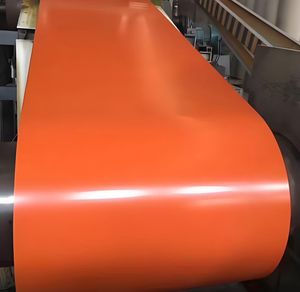
Yes. As an OEM manufacturer, we supply skin thicknesses from 0.40 mm to 0.80 mm in pre-painted galvanized iron (PPGI), pre-painted galvalume (PPGL), and Aluzinc (AZ150). Exterior paint systems include Standard Polyester (PE), Silicon Modified Polyester (SMP), and Polyvinylidene Fluoride (PVDF) for aggressive marine or industrial chemical environments, available across all standard RAL color palettes.
PU and PIR offer superior thermal resistance per millimeter (thermal conductivity λ ≈ 0.022 W/m·K vs 0.038 W/m·K for mineral wool), making them ideal for sub-zero refrigerated facilities. However, mineral wool provides true non-combustibility (Class A1 Euroclass), which cannot be matched by organic plastic foams. Where human safety, strict fire codes, or building insurance requirements dominate, mineral wool is the required specification.
Yes. In addition to delivering numbered, match-marked structural steel and factory-cut panels with detailed 3D installation drawings, we deploy veteran site engineers and project managers to supervise local erection crews, verify torque calibrations, and ensure flashing weathertightness anywhere in the world.
Standard lead times range from 15 to 25 working days depending on coil availability and custom cut specifications. Our baseline MOQ for custom RAL coil production is 500 square meters. For projects requiring immediate dispatch, standard white/grey (RAL 9002/9003) inventories are continuously stocked at our manufacturing center.
Submit your architectural blueprints, structural loading specs, or cleanroom panel schedules. Our senior engineering team will deliver an optimized structural layout, thermal analysis, and competitive FOB/CIF quotation within 24 hours.