China Wholesale Steel Z Purlin Exporter & Exporters
Precision Cold-Formed Continuous Lap Framing, High-Yield Galvanized Z Sections, and Turnkey Pre-Engineered Building Envelopes Engineered to ASTM A653 and EN 10346 Standards.
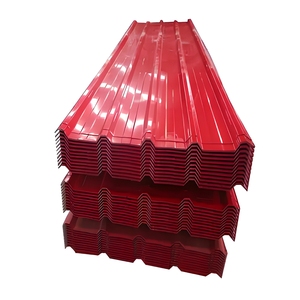
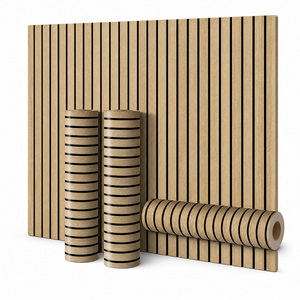
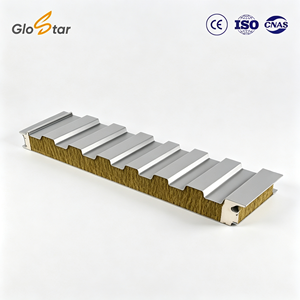
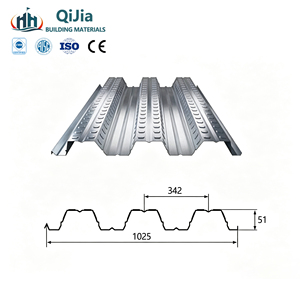
Direct factory supply for major industrial assemblies: precision secondary framing Z purlins, decking profiles, architectural metal roofing, and composite thermal sandwich panels.
Engineered for long-span secondary framing assemblies, providing superior weather-tightness, seismic flexibility, and corrosion resistance under heavy cyclic loads.
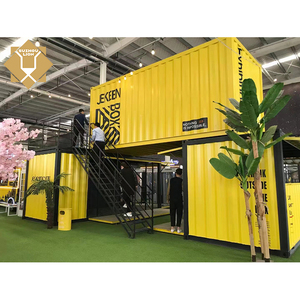
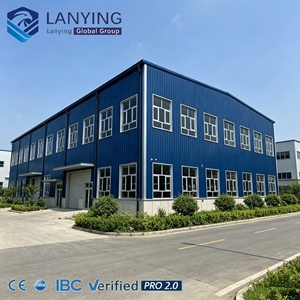
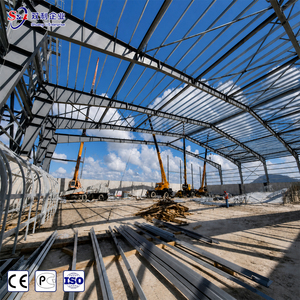
Optimized clear-span logistics hub engineered for extreme snow loads and wind pressures using computerized continuous Z-framing and precision roll-formed trusses.
352+
Turnkey Projects Delivered
120+
Global EPC & Industrial Clients
100+
Structural Engineers & QA Crews
15+
Years Manufacturing Excellence
Secondary Framing Engineering Monograph
Structural Mechanics & Lapping Dynamics of Z Purlins
Why modern pre-engineered steel buildings (PEBs) mandate cold-formed thin-walled Z sections over traditional hot-rolled channels for structural efficiency and global logistics minimization.
Continuous Beam Lap Action
Unlike simple-span C sections, Z purlins feature asymmetric flange dimensions (Flange A > Flange B) enabling identical profiles to nest seamlessly across support rafters. This creates structural continuity, effectively turning discontinuous members into continuous multi-span beams. This continuous beam action redistributes positive mid-span bending moments to negative moments over rafter supports, cutting calculated peak bending moments by up to 35%.
Inertia Optimization & Deflection
Because the principal centroidal axes of a Z-section are tilted relative to the web plane, when mounted on sloping rafters (typical 1:10 or 1:20 roof pitches), the major axis of bending aligns closely with the vertical gravitational load vector. This natural geometric alignment substantially reduces cross-axis biaxial bending and sag, allowing designers to specify lighter gauge steel while remaining strictly within L/180 to L/240 deflection criteria.
Ocean Freight Nesting Efficiency
From an international logistics perspective, structural steel export costs are heavily dictated by cubic measurement. Due to their asymmetrical flange geometry, Z-purlins can be tightly inter-nested into ultra-compact bundles. Compared to bulky hot-rolled structural channels or tubular hollow sections, nested Z-purlins achieve near-maximum allowable weight limits per 40ft high-cube shipping container, slashing ocean freight costs per metric ton by 40-60%.
As a leading Chinese wholesale exporter, our automated continuous cold roll-forming lines process structural coils in compliance with ASTM A653 / A1003, AS/NZS 1397, and EN 10346. Every profile is punched in-line with elongated web slots and flange holes for bolt-up site assembly without cutting, welding, or on-site anti-corrosion painting.
Protective Zinc CoatingsHot-dip galvanized (Z120 to Z600 g/m²), 55% Al-Zn Galvalume (AZ150), and SuperDyma Zinc-Aluminum-Magnesium (ZAM).
In-Line Automated PunchingComputerized hydraulic punching: 14×22mm or 18×26mm slotted holes for rafter laps, round 12mm holes for bridging/anti-sag rods.
Precision Rolling Tolerances
Standard Z Purlin Engineering Properties
Calculated section modulus and inertial values for commonly specified asymmetrical cold-formed Z purlins with stiffened lips.
Profile Designation
Depth (H) mm
Flange A / B (mm)
Lip (C) mm
Thickness (t) mm
Weight (kg/m)
Moment of Inertia Ix (cm⁴)
Section Modulus Wx (cm³)
Z160-15
160
65 / 60
20
1.5
3.58
142.6
17.8
Z180-20
180
68 / 62
20
2.0
5.12
248.5
27.6
Z200-20
200
70 / 64
20
2.0
5.45
328.2
32.8
Z220-25
220
75 / 68
20
2.5
7.48
536.4
48.7
Z250-25
250
75 / 68
22
2.5
8.11
765.8
61.2
Z300-30
300
85 / 78
25
3.0
11.85
1,540.2
102.6
Strategic Market Forecasting
Future Procurement Trends in Cold-Formed Steel Framing
How international EPC contractors, developers, and steel fabricators are navigating technological, metallurgical, and sustainability developments through 2025–2035.
The Shift to Zinc-Aluminum-Magnesium (ZAM)
Global procurement is aggressively transitioning from conventional pure zinc HDG (e.g., Z275) to advanced Zn-Al-Mg metallic alloy coatings. In harsh marine environments, coastal chemical plants, and livestock farming structures, ZAM provides self-healing cut-edge passivation that prevents edge rust where holes are punched. ZAM offers 300% to 500% the corrosion life of traditional galvanizing at reduced coating thicknesses, lowering tonnage weight and carbon tariffs.
Ultra-High-Strength Thin Steels (G550)
Procurement specifications historically leaned on standard Q235 or S280 steel grades. However, raw material price volatility has made high-strength grades (e.g., AS/NZS 1397 G550, EN S450GD) the preferred global choice. By upgrading to 550 MPa yield strength, structural engineers can decrease material thickness from 2.5mm to 1.8mm without sacrificing load-bearing capacity, cutting total steel consumption by 18% to 26% across large warehousing footprints.
Algorithmic BIM & CNC Hole Matching
The days of standard field-drilled purlins have come to an end. Major international engineering buyers now require Tekla Structures and Revit BIM models to export NC/DSTV data directly to manufacturing CNC controllers. Automated cold roll formers dynamically punch variable pitch slotted connection holes, bridging brackets, and fly-brace holes on the fly, eliminating human error on site and accelerating roof framework erection speeds by over 40%.
With industrial decarbonization mandates accelerating worldwide, factories are designing roofs for commercial solar (PV) deployment. Modern Z-purlins are being re-engineered with widened top flanges (up to 85mm) and optimized roll-formed stiffeners to resist concentrated pull-out uplift forces exerted by solar panel racking systems during severe wind shear conditions, removing the need for auxiliary secondary mounting sub-frames.
Embodied Carbon & Green Steel Sourcing
Under Europe's Carbon Border Adjustment Mechanism (CBAM) and North American green procurement mandates, buyers are scrutinizing Scope 1, 2, and 3 emissions. Chinese exporters are investing in low-carbon steelmaking paths—utilizing Electric Arc Furnaces (EAF) with scrap-rich charges and renewably powered cold-rolling lines—supplying verified Type III Environmental Product Declarations (EPD) to qualify for LEED and BREEAM certifications.
Modular Anti-Sag & Fly Bracing Synergy
Next-generation secondary framing designs treat purlins, anti-sag rods, strut pipes, and fly-bracing as a unified structural diaphragm. Instead of bolted angle brackets, new click-lock cold-formed strut purlins and tension rod clevises snap into laser-cut purlin web slots in seconds. This ensures the bottom compression flange is restrained against lateral torsional buckling under severe upward wind suction loads.
Enterprise Manufacturing Authority
Why International Buyers Partner With Us
Joint Star Steel began its operation in 2010 under the philosophy of engineering excellence and uncompromised quality, serving clients across Asia, the Middle East, Africa, and the Americas. Over 15 years, our technical footprint has expanded to deliver complete pre-engineered steel buildings, advanced sandwich panels, and cold-formed structural secondary purlins under one unified quality management standard.
We do not operate merely as a trading house or intermediary broker. Our fabrication workshops encompass high-speed automated roll-forming machines with flying cutoff saws, robotic plasma cutting tables, automatic submerged arc welding lines for built-up H-beams, and in-house tension/coating testing laboratories. When you procure Z purlins from us, you get components engineered to interface directly with primary rafters, floor decks, and insulated cladding panels—backed by 352+ successfully executed industrial projects and a dedicated staff of over 100 engineers and fabrication specialists.
Our complete turnkey packages cover structural engineering consultation, full shop drawings, precision component fabrication, and shipping logistics with labeled identification codes for fast field erection without on-site rework.
Single-Source AccountabilityWe fabricate primary built-up steel framing, cold-formed Z/C purlins, metal roof decking, and insulated sandwich panels simultaneously, ensuring perfect hole and connection alignment.
Rigorous Quality Control (QA/QC)Every production batch undergoes raw material spectroscopic analysis, yield/elongation tensile testing, coating thickness magnetic gauge verification, and 500-hour salt spray audits.
Custom Packaging for Ocean TransitNested bundle stacking strapped with heavy-gauge galvanized bands, edge protectors, heavy-duty sling lifting loops, and desiccated waterproof plastic wrapping for breakbulk or containerized export.
Procurement Knowledge Base
Frequently Asked Questions on Steel Z Purlin Procurement
Technical guidance for structural designers, EPC project managers, and steel procurement heads sourcing cold-formed framing from China.
Why choose continuous-lapped Z purlins instead of simple-span C purlins?
Z purlins have asymmetrical flanges (e.g., 68mm top, 62mm bottom) that allow identical profiles to nest over supports. Lapping over rafters by 10% to 15% of the span creates a continuous beam effect, dramatically reducing maximum mid-span deflection and peak bending moments. This allows engineers to use lighter steel sections (saving 15–25% in steel tonnage) while achieving greater structural stiffness than simple-span C sections.
What is the recommended purlin lap length at the rafter support?
Structural codes (such as AISI S100 and Eurocode 3 Part 1-3) generally specify an optimal lap length between 0.10L and 0.15L (where L is the bay length between rafters) on each side of the support center. For example, over a 6-meter bay, a total lap of 1,200mm to 1,500mm centered over the rafter flange provides full moment continuity and doubles the cross-sectional web area across critical shear zones.
How do we select the right coating: HDG (Z275) vs Zinc-Aluminum-Magnesium?
For standard dry indoor warehouses, standard hot-dip galvanized Z275 (275 g/m² combined both sides) delivers a 25+ year design life. However, for buildings within 5km of the sea, chemical plants, or livestock facilities, Zinc-Aluminum-Magnesium (ZAM / SuperDyma) is recommended. ZAM’s magnesium content triggers a dense zinc hydroxychloride barrier that passivates exposed cut edges and punched bolt holes, providing up to five times greater salt-spray resistance.
How does high yield strength steel (G550) affect web crippling and local buckling?
Cold-formed high-strength steels (G550 / S450GD) offer higher yield stress, but their elastic modulus ($E \approx 205 \text{ GPa}$) remains unchanged. Consequently, design checks are governed by local buckling, distortional buckling, and web crippling at support reactions. We mitigate web crippling by roll-forming reinforced stiffening ribs into the purlin web and utilizing full nested laps over support brackets to double the web thickness at points of concentrated bearing stress.
Can Z purlins support insulated sandwich panels directly?
Yes. When fastening sandwich panels (such as EPS, Polyurethane, or Rock Wool cores) to Z purlins, self-drilling bi-metal screws with EPDM bonded sealing washers must be used. Purlin top flanges must provide a minimum width of 60mm (preferably 65mm–75mm) to provide adequate landing width for panel end joints, ensuring the fastener drills through the center of the purlin flange without edge tearing.
What documentation and mill test reports are supplied with export orders?
Every structural shipment is accompanied by a certified EN 10204 3.1 Mill Test Certificate (MTC) detailing heat numbers, chemical composition (C, Si, Mn, P, S), mechanical yield strength, ultimate tensile strength, elongation percentages, and precise zinc coating weights. For projects adhering to European or Australian standards, CE Declarations of Performance (DoP) and Factory Production Control (FPC) audit documents are provided.
How are nested purlins bundled to prevent handling damage during ocean shipping?
Purlins are inter-nested in pairs and compiled into dense rectangular bundles strapped with heavy-duty tensioned steel strapping every 1.5 meters. Longitudinal wooden skids or polymer spacers are placed between bundles to allow fork pockets and crane sling access without denting profiles. Bundle ends are wrapped in heavy-duty polyfilm to shield punched holes from sea spray and airborne salt during containerized or breakbulk transit.
What are typical manufacturing lead times and Minimum Order Quantities (MOQ)?
Standard profile sizes (Z160 through Z250 in standard zinc coatings) maintain raw coil inventory, enabling production lead times of 10 to 18 days for orders up to 500 metric tons. Custom coil widths, non-standard web depths, or high-coating Z600/ZAM coils typically require 20 to 30 days. Standard container-optimized MOQ is 20 metric tons (one full 40ft container load), but consolidation with other structural items (decking, sandwich panels, structural bolts) is accommodated.
Initiate Your Engineering Quote & Tekla Schedule Review
Send your structural framing drawings, purlin schedules, or architectural layouts. Our engineering desk will deliver an optimized structural calculation report, framing weight bill of quantities, and direct factory pricing within 24 hours.