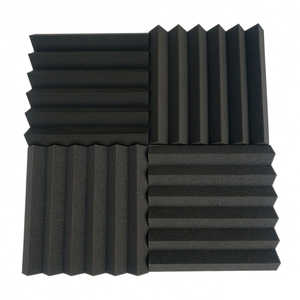
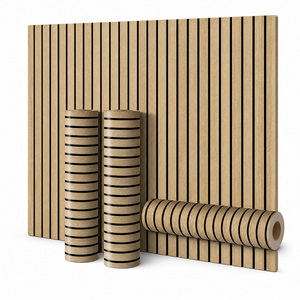
High Density Self-Adhesive Acoustic Foam Panels Durable Soundproof & Fire Retardant Wall Silencers For Studio Office Bedroom
- High-Density Acoustic Attenuation
- Class B1 Flame Retardant Rating
- High Tack Peel-and-Stick Backing
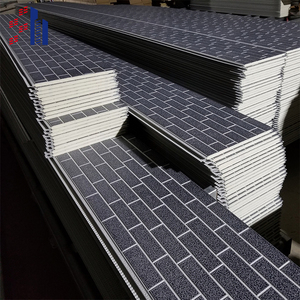
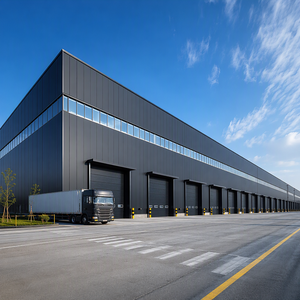
From certified high-cycle industrial rolling doors to insulated fire-retardant wall assemblies and prefabricated structural frames, our unified manufacturing workflow guarantees structural compatibility, airtight thermal performance, and streamlined site assembly.
Operating continuously since 2010 under Joint Star Steel Structure Ltd., our engineering centers deliver integrated industrial building packages. By unifying structural steel frame calculation, sandwich panel cladding fabrication, and heavy-duty industrial roller shutter automation under one ISO-audited management system, we eliminate interface tolerances and cross-supplier finger pointing.
Full conformity with EN 13241-1 (Industrial, commercial, and garage doors), EN 12453 operational safety, EN 12424 wind load classification up to Class 5, and European Machinery Directive 2006/42/EC safety standards.
We design, fabricate, and supply primary structural columns, secondary steel girts, insulated sandwich panels, and precision roller shutters simultaneously, guaranteeing millimeter alignment for tracks, hood assemblies, and seals.
Container nesting optimization, fumigation-free heavy steel bundling, and high-frequency sea cargo staging from Dhaka and port hubs, complete with tagged technical erection mark plans and bilingual QA documentation.
Continuous double-walled interlocking slats injected with ozone-neutral, zero-ODP rigid polyurethane, coupled with cold-formed structural steel guide rails treated with hot-dip galvanization up to Z275 (275 g/m²) for maximum rust resistance.
For procurement officers, structural consultants, and industrial EPC contractors, evaluating industrial roller shutters requires deep insight into dynamic cycle ratings, structural wind load reactions, and thermal decoupling mechanics.
Under the European Union Construction Products Regulation (EU CPR 305/2011) and harmonized standard EN 13241-1, industrial roller shutters are classified as safety-critical structural building components. A shutter is not merely an architectural curtain; it is a motorized structural diaphragm that must withstand massive wind pressure, deliver life-safety entrapment prevention, and prevent hazardous thermal bridging in temperature-sensitive facilities.
Structural integrity centers upon EN 12424 Wind Load Classification. When an industrial opening spans 8 meters to 14 meters in width, standard single-skin slats fail due to plastic deformation and disengagement from guide tracks under moderate gale pressure. Joint Star Steel integrates cold-rolled, high-tensile galvanized wind-lock retaining lugs riveted on every alternate slat. These cast-steel hooks securely anchor inside heavy-gauge, multi-flanged vertical guide rails, achieving certified Class 4 and Class 5 wind resistance (>1,000 Pa to >1,600 Pa), capable of withstanding typhoon gusts exceeding 160 km/h without structural derailment.
Thermal continuity is equally critical. In modern pre-engineered warehouses clad with polyisocyanurate (PIR) or polyurethane (PU) sandwich panels, the loading dock represents up to 45% of total building envelope conductive heat exchange. Our CE-certified insulated roller shutter profiles utilize double-skinned continuous hot-dip galvanized steel or aircraft-grade aluminum alloy sheets, mechanically interlocked with a continuous thermal break and high-density polyol polyurethane core foam ($42\ \text{kg/m}^3$). This delivers a combined overall thermal transmittance U-value as low as $1.2\ \text{W/(m}^2\cdot\text{K)}$, minimizing indoor HVAC losses while eliminating condensation run-off across chilled distribution terminals.

| Engineering Attribute | Standard Single-Skin Galvanized | Insulated Thermal Double-Skin | High-Speed Spiral Aluminum | Heavy Fire-Rated Shutter (EI 120) |
|---|---|---|---|---|
| Primary Standard | EN 13241-1 / EN 12604 | EN 13241-1 / EN 12428 | EN 13241-1 / EN 12453 | EN 1634-1 / EN 13501-2 |
| Wind Resistance (EN 12424) | Class 2 (Up to 450 Pa) | Class 4 & 5 (≥ 1,000–1,600 Pa) | Class 3 & 4 (Up to 1,000 Pa) | Class 3 (Structural Partition) |
| Thermal U-Value | ∼ 5.8 W/(m²·K) | 1.2 to 1.5 W/(m²·K) | 1.8 to 2.2 W/(m²·K) | Insulated Mineral Core Barrier |
| Operating Speed | 0.12 – 0.18 m/s | 0.15 – 0.25 m/s | 0.8 – 2.0 m/s (Inverter VFD) | 0.10 – 0.15 m/s (Controlled Drop) |
| Lifecycle Cycle MTBF | 30,000 – 50,000 Cycles | 100,000 – 150,000 Cycles | 500,000 – 1,000,000 Cycles | Emergency & Daily Hybrid |
| Acoustic Attenuation | 16 dB (EN ISO 10140) | 24 – 28 dB (Sound Dampened) | 22 dB (Composite Profile) | 32 – 38 dB (Intumescent Pack) |
| Safety Fall Arrest | Mechanical Anti-Drop Brake | Integrated Inertia Parachute | Dynamic Centrifugal Brake | Gravity-Fail-Safe Fusible Link |
Industrial shutter engineering is undergoing a technological transformation driven by industrial automation, rigorous sustainability mandates, and intelligent facility networking.
Replacing legacy oil-bath worm gears, Permanent Magnet Synchronous Motors (PMSM) paired with frequency inverters provide soft-start, soft-stop dynamics, decreasing mechanical shock on barrel springs and reducing drive energy consumption by up to 35% across high-traffic logistics centers.
Advanced rolling slats are shifting from polyurethane-infilled cavities toward extruded aluminum or dual-steel composite slats incorporating structural polyamide isolating clips. This eliminates outer-to-inner skin conductive transmission, essential for pharmaceutical and sub-zero cold room docks.
Microprocessor smart control boards equipped with Modbus, BACnet, and industrial IoT transceivers continuously log run times, motor winding temperature, braking wear coefficients, and curtain resistance anomalies, transmitting predictive maintenance alerts directly to central BMS consoles.
Finite Element Analysis (FEA) is revolutionizing slat profile design. Micro-curved geometries distribute high lateral wind shear across the entire curtain perimeter into heavy steel jamb tracks, preventing slat buckling and allowing clear spans exceeding 12 meters without intermediate mullions.
Procurement directors and commercial EPC developers are recalibrating supplier evaluations toward life-cycle reliability, sustainability metrics, and integrated structural envelope compatibility.
Modern procurement models balance upfront hardware expenditures against 10-year facility operational expenses. Energy loss through substandard loading bays and production downtime resulting from gearmotor failure frequently outweigh initial door costs within 36 months. Selecting Class 4 wind-rated, 100,000-cycle certified systems guarantees long-term return on capital investment.
Procuring structural pre-engineered buildings and motorized industrial shutter portals from disparate vendors frequently introduces on-site dimensional misalignments, deflection conflicts, and flashing leaks. Leading EPC developers prioritize single-source manufacturers like Joint Star Steel to ensure pre-punched structural jambs, pre-engineered lintel deflectors, and factory-matched trim details.
Cross-border freight costs necessitate advanced containerization engineering. Smart rolling shutter sourcing prioritizes modular barrels with internal motor drives, pre-assembled guide tracks with factory-fitted rubber and brush seals, and nested slat bundles that maximize 40-foot HQ maritime container volume utilization while preventing transit abrasion.
Rigorous engineering answers addressing European standard conformity, wind calculation methodology, and export logistics.
Under standard EN 13241-1, manufacturers must furnish an authentic Declaration of Performance (DoP), initial type-test certification issued by an accredited European Notified Body, structural wind resistance test reports (EN 12424), and mechanical safety documentation proving anti-drop brake arrest compliance (EN 12604).
Wind load calculation relies on site geographic parameters (Eurocode 1 EN 1991-1-4 or ASCE 7-16), building eave height, topography, and opening dimensions. For coastal and cyclone-prone zones, we specify our heavy-gauge double-skin wind-lock slats tested to Class 4 (1,000 Pa) or Class 5 (>1,600 Pa), ensuring zero permanent curtain displacement.
Yes. We engineer dedicated heavy-duty structural steel sub-frames (hot-rolled tubes or cold-formed heavy C/Z channels) that bolt directly to the PEB portal frame columns and headers. This absorbs rotational dynamic torsion from the rolling barrel without causing deflection on sandwich wall panels.
All our motorized overhead systems incorporate an autonomous mechanical safety brake (parachute mechanism) mounted to the non-drive shaft end. If motor gearbox failure or chain fracture causes the descent speed to exceed 22 RPM, an internal centrifugal wedge locks into the outer housing within 30 degrees of rotation, completely halting the curtain.
We supply high-density CFC-free and HCFC-free Polyurethane (PU/PUR) foam ($40\text{--}42\ \text{kg/m}^3$) for standard thermal insulation, Polyisocyanurate (PIR) for superior fire-resistant self-extinguishing applications, and specialized mineral wool cores for industrial facilities requiring EN 1634-1 fire compartmentalization ratings up to EI 120.
Curtains are interlined with protective PE foam wrapping, strapped in heavy-duty welded structural steel cradles, and enveloped in moisture-barrier vapor films. Precision motor drives, IP65 digital control boxes, and hardware are housed in seaworthy fumigated plywood or steel crates with humidity desiccant packs.
Standard configurations include optoelectronic bottom-rail safety edge loops, dual wireless infrared photocells, and emergency manual chain hoists. Optional industrial upgrades feature microwave radar motion detectors, magnetic ground induction loops for AGV/forklift traffic, and integrated PLC cards for automated interlock with dock levelers.
Every export package includes comprehensive CAD general arrangement drawings, point-to-point electrical schematics, member mark tags, and step-by-step video installation guides. For large-scale industrial projects, we deploy certified site supervisors to oversee erection, mechanical alignment, and final commissioning.
Whether you are engineering a multi-span logistics distribution terminal, cold-storage warehouse, or heavy industrial assembly plant, our structural and automation engineering teams are available to prepare detailed shop drawings, wind load calculations, and comprehensive commercial proposals.