EN 1090-2 (EXC2 / EXC3 / EXC4) & ISO 3834-2 Certified
CE Certified Heavy Steel Structure Factories & Global Supplier
Comprehensive Technical White Paper & Structural Engineering Dossier: Integrated Design, Automated Fabrication, Turnkey Civil-RCC Execution, and High-Performance Cladding Systems Since 2010.
Direct Factory Sourcing
Featured Industrial Steel Building Systems & Fabrication Components
Engineered in compliance with European Standard EN 1090-1/2, AISC 360, and ASTM quality regimes. From multi-span industrial warehouses to precision-profiled building envelopes, inspect our flagship structural systems designed for tier-1 industrial applications.
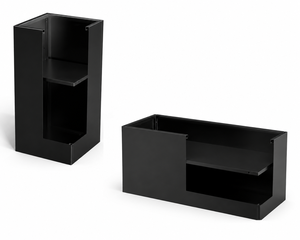
Precision multi-axis CNC bending, robotic laser cutting, and MIG/TIG welding of stainless, carbon, and galvanized alloy sheets. Certified under IATF 16949 / ISO 3834.
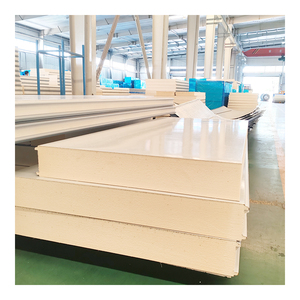
Structural architectural insulated wall & roof panels offering Class A non-combustible fire protection, high sound dampening, and advanced thermal U-values down to 0.16 W/m²K.
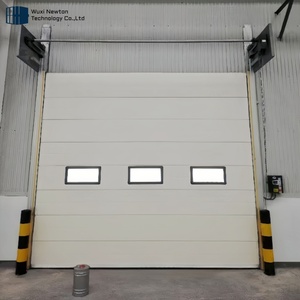
Heavy-duty motorized overhead sectional doors for logistics depots and heavy equipment hangars. Wind resistance up to Class 4 with infrared perimeter anti-fall safety sensors.
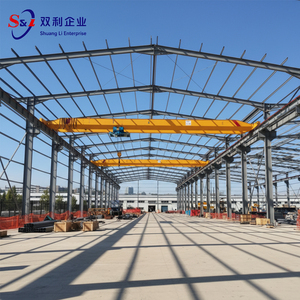
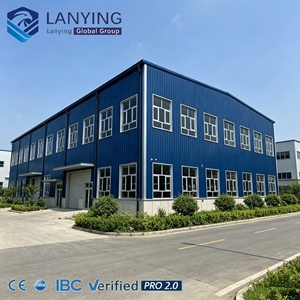
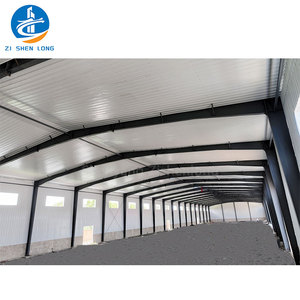
Integrated multi-story and single-span manufacturing plants engineered with low-carbon structural steel and high-efficiency composite roof/wall thermal assemblies for fast erection.
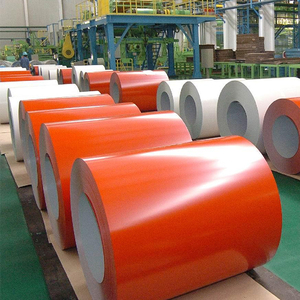
Continuous hot-dip Aluzinc (AZ150) and zinc-coated (Z275) steel coils with PVDF, HDP, and SMP fluorocarbon exterior paint systems resisting harsh UV and marine coastal environments.
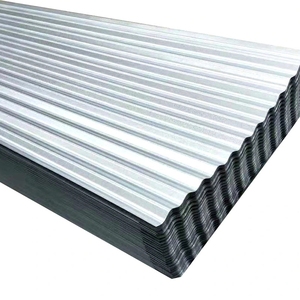
Heavy 30-gauge and 26-gauge high-yield trapezoidal and corrugated steel profiles. Engineered with anti-capillary side grooves and concealed standing seam fasteners for leak-proof durability.
Why Global Procurement Teams Choose Our Heavy Steel Facilities
Operating since 2010 under the engineering philosophy of "Total Accountability," Joint Star Steel has delivered 352+ structural installations across heavy industry, petrochemical, logistics, and power generation sectors. We mitigate cross-contractor friction by executing design, fabrication, civil foundation integration, and erection under a unified QA/QC protocol.
Full CE (EN 1090-2) Factory Production Control
Our manufacturing facilities operate strict Factory Production Control (FPC) audit procedures conforming to EN 1090-1 and EN 1090-2 Execution Classes EXC2, EXC3, and EXC4. Complete material traceability back to mill origin with EN 10204 3.1 & 3.2 inspection certificates guarantees metallurgical fidelity for dynamic structural loadings.
Single-Contract Turnkey EPC Execution
Unlike conventional component fabricators, we bundle architectural PEB structural design, shop fabrication, reinforced cement concrete (RCC) foundation engineering, floor slab pouring, and on-site crane erection under one unified contract. This turnkey methodology removes cross-vendor interface errors and compresses site handover schedules by up to 35%.
Pioneer Sandwich Panel & Cladding Manufacturing
Equipped with automated continuous roll-forming lines, we manufacture high-density EPS, PIR, PUR, and Rock Wool core sandwich panels in-house. Our insulated cladding systems achieve Euroclass A1 non-combustibility and deliver tailor-made acoustic dampening and R-values exceeding modern international building energy conservation codes.
Finite Element Analysis & BIM Structural Modeling
Our 100+ structural engineers utilize Tekla Structures, SAP2000, and ETABS for 3D/4D Building Information Modeling (BIM). Every flange, web stiffener, purlin clip, and high-strength anchor bolt assembly is modeled to millimetric tolerances, preventing clashes with HVAC, MEP, and industrial crane runway systems before steel enters production.
Advanced Non-Destructive Testing (NDT) Protocol
Welding integrity is non-negotiable for heavy industrial frameworks. Our in-house Level II/III certified NDT inspectors conduct 100% Visual Testing (VT), Magnetic Particle Testing (MT), and Ultrasonic Testing (UT) along with X-ray Radiographic Testing (RT) on primary tension butt welds, verifying zero internal porosity, inclusions, or lack of fusion.
Standardized Export Logistics & Member Coding
Serving export accounts across Europe, the Middle East, Southeast Asia, and Africa, each steel member is blast-cleaned to ISO 8501-1 Sa 2.5, coated with corrosion-inhibiting epoxies, and hard-stamped with unique piece-mark IDs. Components are packed in containerized steel cradles alongside color-matched 3D erection sequencing manuals.
Selecting the proper European structural steel designation and composite cladding core directly impacts structural deadload, foundation size, seismic resilience, fire insurance underwriting, and building lifecycle energy expenditure.
Steel Grade / Standard
Min. Yield Strength (t ≤ 16mm)
Tensile Strength (Rm)
Charpy V-Notch Impact Test
CE EN 1090-2 Suitability
Recommended Industrial Application
S235JR (EN 10025-2)
235 MPa
360 - 510 MPa
27 J at +20°C
EXC1, EXC2
Secondary purlins, sag rods, light canopy frames, simple eaves
S275JR / J0 (EN 10025-2)
275 MPa
410 - 560 MPa
27 J at 0°C (J0)
EXC2, EXC3
Standard warehouse portal frames, mezzanine framing, crane brackets
S355JR / J2+N (EN 10025-2)
355 MPa
470 - 630 MPa
27 J at -20°C (J2)
EXC2, EXC3, EXC4
Heavy industrial factories, 50T+ crane runways, multi-tier process towers
S460QL / QL1 (EN 10025-6)
460 MPa
550 - 720 MPa
30 J at -40°C (QL)
EXC3, EXC4
Extra long-span aircraft hangars, seismic dampening trusses, super-heavy columns
Panel Core Chemistry
Density Range
Thermal Conductivity (λ)
EN 13501-1 Fire Reaction
Acoustic Rating (Rw)
Optimal Building Use Case
EPS (Expanded Polystyrene)
15 - 20 kg/m³
0.038 W/m·K
Class E / B2
~ 24 dB
Budget-sensitive general storage, temporary worker dorms, dry sheds
High-fire-risk chemical factories, power facilities, noise-dampened workshops
Strategic Sourcing Insights
Future Procurement Trends in Heavy Steel Structures (2025–2035)
The international procurement landscape for heavy structural steel is undergoing an epochal transformation driven by European decarbonization directives, algorithmic supply chains, and automated off-site construction standards.
Green Steel & Scope 3 Carbon Mandates
Global EPC contractors must comply with strict embodied carbon caps and Environmental Product Declarations (EPD). Sourcing is shifting rapidly toward Electric Arc Furnace (EAF) steel fed by recycled scrap and hydrogen-reduced direct reduced iron (DRI), cutting embedded CO₂ emissions per ton of fabricated steel from 2.1t down to under 0.6t.
Design for Manufacture & Assembly (DfMA)
On-site welding is being actively engineered out of global projects due to rising site labor costs and weather disruptions. Modern procurement contracts stipulate 100% pre-welded shop subassemblies featuring CNC-machined bolted moment connections (Grade 8.8 and 10.9 HV bolts), drastically accelerating on-site erection velocity.
Supply Chain Nearshoring & Tier-1 Resilience
Geopolitical trade frictions and maritime logistics volatilities have driven enterprise clients to diversify away from single-country dependency. Procuring steel frames from established hubs such as South Asia (Bangladesh) provides superior tariff hedging, favorable shipping lanes, and highly competitive tonnage pricing without sacrificing CE/ISO quality compliance.
Predictive Lifecycle Durability Warranties
Modern RFQs are demanding 25 to 50-year structural design lifespans with 15+ year maintenance-free paint guarantees. This has made multi-coat C4 and C5-M marine epoxy duplex systems, thermally sprayed aluminum (TSA), and minimum 275 g/m² continuous hot-dip galvanization non-negotiable procurement baseline criteria.
Smart Industrial Fabrication
Technological Innovations in Heavy Steel Production
How state-of-the-art robotic workcells, automated submerged arc welding (SAW), and cloud-synchronized digital twin environments are rewriting heavy fabrication accuracy, structural throughput, and defect prevention.
Tekla-to-CNC Automated Direct Link
Eliminating human detailing translation error, structural designs export direct DSTV/NC files from Tekla Structures to heavy multi-axis CNC drilling, coping, and beveling machines. Bolt hole positioning tolerances are held strictly under ±0.5mm across 24-meter member spans.
Tandem Submerged Arc Welding (SAW)
Heavy built-up H-beams, box columns, and crane girders are welded using multi-wire tandem submerged arc welding gantries. This provides deep weld penetration, homogeneous metallurgical bead geometry, and eliminates hydrogen cracking risk under EN ISO 5817 Level B standards.
Automatic Centrifugal Shot Blasting
Surface preparation dictates paint adhesion longevity. Integrated 8-wheel centrifugal pass-through blasting lines cleanse structural shapes to ISO 8501-1 Sa 2.5 cleanliness with an anchor profile of 40-75µm, establishing the ideal mechanical tooth for zinc-rich silicate primers.
Digital Twin & Barcode Project Tracking
Each fabricated column, rafter, and truss assembly receives an individual weather-resistant QR code linked to our cloud MES platform. Clients and site managers can scan any member on arrival to inspect 3.1 Mill Certificates, NDT reports, paint dry-film thickness (DFT) logs, and exact 3D site placement.
Procurement Due Diligence
Frequently Asked Questions for EPC Structural Buyers
Detailed technical answers to the most critical regulatory, metallurgical, testing, and logistical inquiries submitted by structural consultants and international procurement officers.
What execution classes (EXC) under EN 1090-2 can your fabrication facilities deliver?
Our facilities are independently certified to fabricate structural steel components across Execution Classes EXC1, EXC2, EXC3, and EXC4 pursuant to European Standard EN 1090-2. For standard commercial distribution centers, EXC2 is typically mandated. For complex chemical factories, high-tonnage overhead crane runways, rail bridges, and structures situated in high-consequence failure zones (Consequence Class CC3), we execute under EXC3 and EXC4. This entails full WPQR/WPS qualification under ISO 15614-1, qualified Responsible Welding Coordinators (RWC) per ISO 14731, and stringent 100% NDT inspection regimens.
How do you verify structural steel chemical composition and mechanical properties?
Every incoming heat of structural plate and coil is accompanied by an authentic EN 10204 Type 3.1 inspection certificate directly from accredited primary steel mills. Upon arrival at our stockyard, our quality assurance team conducts random third-party chemical spectrometry (verifying Carbon Equivalent Value - CEV ≤ 0.43% for optimal weldability) alongside destructive tensile and Charpy V-notch impact testing at temperature gradients ranging from +20°C down to -40°C depending on project design requirements.
What are your standard Non-Destructive Testing (NDT) percentages for welded joints?
For EN 1090-2 EXC2 fabrication, we perform 100% Visual Testing (VT), minimum 10% Magnetic Particle Testing (MT) or Dye Penetrant Testing (PT) on fillet welds, and 10% to 20% Ultrasonic Testing (UT) on full-penetration butt welds. Under EXC3 specifications, UT and MT inspection percentages on primary moment connections, crane girder splices, and high-stress tension flanges are elevated to 100% full-length examination. All defect evaluations strictly comply with EN ISO 5817 acceptance Level B (or Level C for non-critical secondary attachments).
Can Joint Star Steel deliver an integrated civil foundation and RCC construction package?
Yes. Joint Star Steel operates dedicated civil engineering and RCC (Reinforced Cement Concrete) construction divisions. We undertake turnkey scope extending from geotechnical soil testing, piling, anchor bolt cage pre-setting, pile caps, and heavy equipment foundations to industrial laser-screed floor slabs. Executing civil and superstructure under one single-point engineering contract eliminates common anchor bolt misalignment disputes and guarantees seamless erection on site.
Which sandwich panel core should be selected for high-temperature and cold-chain facilities?
For low-temperature cold rooms, cold storage logistics, and food processing plants, Polyisocyanurate (PIR) or Polyurethane (PUR) is strongly recommended due to its exceptional low thermal conductivity (λ ≈ 0.022 W/m·K) and closed-cell moisture resistance. For high-occupancy industrial factories, power plant boiler buildings, or applications with strict local fire marshal codes, Structural Rock Wool is the mandatory choice, offering non-combustible Class A1 performance with up to 4 hours of structural fire integrity and superior sound attenuation.
How do you guarantee anti-corrosion performance in maritime or corrosive industrial zones?
We engineer coating systems tailored to ISO 12944 atmospheric corrosivity categories from C1 up to C5-M (Marine/Offshore). For C5-M high-salinity zones, our steel undergoes automated centrifugal blast cleaning to Sa 2.5 cleanliness, followed by a three-coat duplex paint schedule: 75µm zinc-rich epoxy primer, 150µm polyamide epoxy intermediate barrier coat, and 75µm aliphatic polyurethane topcoat (total dry film thickness ≥ 300µm). Alternatively, structural assemblies can be hot-dip galvanized in molten zinc (ASTM A123 / ISO 1461) achieving coating weights exceeding 610 g/m² (85µm thickness).
What technical information is required to initiate an engineering concept and quote?
To provide an optimized structural steel design concept and bill of quantities (BOQ), please provide: (1) Building geometry: length, clear span width, and eave height; (2) Operational usage and crane specifications (crane rail height, lifting capacity, bridge span); (3) Geographic site conditions: basic wind speed (m/s or km/h), ground snow load, and seismic spectral acceleration; (4) Cladding preference (sandwich panel core, thickness, steel skin gauge); and (5) Applicable national design codes (Eurocode 3, AISC 360, BS 5950, or BNBC).
Initiate Your Heavy Industrial Steel Structure Project Today
Whether you are engineering a 48-meter clear-span production plant, a high-bay logistics terminal, or sourcing certified fabricated steel members for export delivery, our licensed structural engineers provide full preliminary sizing, connection design, and detailed cost modeling within 48 hours.