
Engineered for immediate procurement across Vallejo, Naucalpan, Cuautitlán Izcalli, and the greater Metropolitan Zone of the Valley of Mexico (ZMVM). Fully compatible with Mexican NOM thermal and seismic standards.
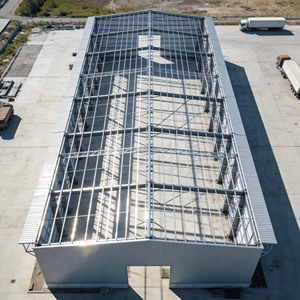
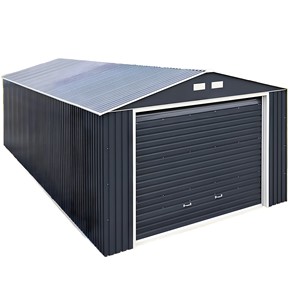
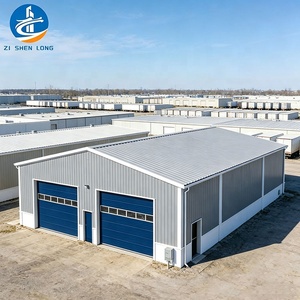
An authoritative technical analysis for procurement directors, EPC contractors, and structural engineers specifying industrial building envelopes in CDMX and the State of Mexico.
Industrial infrastructure across the Valley of Mexico (Valle de México) operates under an unusual combination of geographical, atmospheric, and microclimatic stresses. Situated at an altitude exceeding 2,240 meters (7,350 feet) above sea level, the Metropolitan Area of Mexico City (ZMVM) experiences severe ambient solar radiation. With atmospheric thinning of approximately 22% compared to sea-level environments, UV-A and UV-B solar radiation penetrate with exceptional intensity, yielding UV Index values routinely peaking between 11 and 12 during the spring and summer dry months.
In conventional single-skin steel buildings, warehouses, and logistic sheds across historic industrial hubs such as Azcapotzalco (Vallejo), Naucalpan, and Tlalnepantla, solar heat gain coefficient (SHGC) through uninsulated metal vertical envelopes leads to extreme thermal bridging. Exterior wall sheet skin temperatures frequently exceed 65°C to 72°C under peak afternoon solar radiation. This thermal load conducts directly into the internal building volume, driving interior dry-bulb temperatures above 38°C. This creates uncomfortable conditions for manufacturing personnel, destabilizes temperature-sensitive warehousing, and drives massive HVAC cooling power demands under the Comisión Federal de Electricidad (CFE) Gran Demanda Media Tensión Horaria (GDMTH) peak electricity tariff schedules.
"Optimizing building envelopes under the high-altitude conditions of Mexico City requires solving two conflicting engineering demands: maximizing thermal mass resistance ($R$-value) while strictly limiting dead-load mass ($W$) to prevent devastating seismic base shear ($V$) across the soft lacustrine clay soils of Seismic Zone III."
The Valley of Mexico experiences daily temperature swings (“oscilación térmica diaria”) reaching 18°C to 22°C between pre-dawn lows and afternoon peaks. This dynamic cycling imposes relentless expansion-contraction stress on perimeter wall fasteners, sealants, and exterior joint profiles. Uninsulated or poorly detailed cladding systems quickly develop micro-fissures, leading to thermal leakage, interstitial condensation, and moisture intrusion during the torrential summer rainy season.
Simultaneously, the geotechnical profile of the Valley of Mexico presents profound structural constraints. The central and eastern industrial districts sit upon the clay lakebed strata of Zone III (Zona de Lago), characterized by soft, high-water-content soils subject to seismic wave amplification during Pacific subduction zone events. Heavy conventional insulation envelopes, such as precast concrete tilt-up slabs or masonry cinder blocks, introduce massive dead weight into the superstructure. According to the Normas Técnicas Complementarias para Diseño por Sismo del RCDF, horizontal seismic base shear is directly proportional to reactive structural weight. Therefore, our modern pre-engineered sandwich panels and high-strength structural wall cores offer the ideal solution: minimal structural weight combined with superior thermal resistance.
| Thermal Core Material | Thermal Conductivity (λ) | Volumetric Density (ρ) | Fire Reaction Class | CDMX Seismic Weight Impact | Target Local Application |
|---|---|---|---|---|---|
| PIR / Polyisocyanurate | 0.020 – 0.023 W/m·K | 40 – 45 kg/m³ | B-s1, d0 / Class 1 | Negligible (Ultra-lightweight) | Cold Storage, CTT Logistics Corridors |
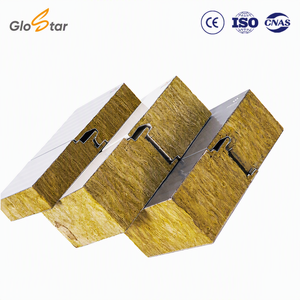
| Structural Rock Wool | 0.034 – 0.038 W/m·K | 100 – 140 kg/m³ | Class A1 Non-combustible | Low-to-Medium | Automotive, Hazardous Chemical, Vallejo Rejuvenation |
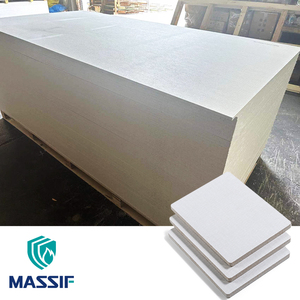
| Pure Eco-MgO Board | 0.140 – 0.170 W/m·K | 950 – 1100 kg/m³ | Class A1 Flameproof (4hr) | Medium (High rigidity) | Interior Partitions, Pharmaceutical Cleanrooms |
| EPS Composite (FR Grade) | 0.036 – 0.040 W/m·K | 16 – 20 kg/m³ | B2 / Self-extinguishing | Minimal (Extremely light) | Modular Offices, Fast-Assembly Workshops |
Strategic deployment of wall heat-proof cladding tailored to the microclimates, urban regulations, and operational profiles of key industrial submarkets in the ZMVM.
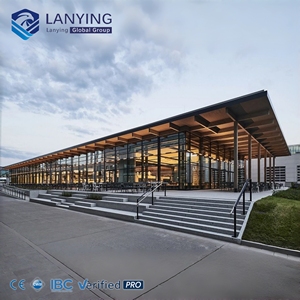
Urban industrial redevelopment zone characterized by high property density and brownfield upgrades. Our thin, high-efficiency PIR and Rock Wool wall panels maximize internal usable floor area while lowering exterior thermal transmittance to meet strict Mexico City energy efficiency mandates.
The Cuautitlán, Tultitlán, and Tepotzotlán logistics backbone handles massive FMCG, food distribution, and cold-chain traffic. Factory-engineered continuous polyurethane tongue-and-groove joint systems eliminate thermal bridges, preventing condensation and reducing industrial chiller load.
Precision automotive, electronics, and precision metalworking facilities require steady internal thermal conditions. Combining Rock Wool sandwich wall assemblies with structural PEB portal frames stabilizes ambient indoor temperatures within +/-2°C of design thresholds throughout high diurnal swings.
Located at an extreme altitude of 2,600m with sub-zero winter overnight conditions and intense daytime radiation. Heavy-duty PVDF steel facings paired with non-combustible mineral wool insulation cores prevent freeze-thaw degradation while delivering superior plant fire ratings.
How evolving regulatory frameworks and industrial reshoring under the USMCA / T-MEC agreement are transforming thermal envelope specifications.
Multinational manufacturing transfers from Asia and Europe into Central Mexico demand industrial facilities matching North American ASHRAE 90.1 energy performance standards. Specifying pre-engineered, factory-certified wall heat-proof panels reduces construction timelines by over 40% compared to traditional on-site masonry construction.
Mexican Official Standards (Normas Oficiales Mexicanas) strictly regulate the heat gain envelope ($Q_t$) across commercial and industrial facilities. Our precision composite panels deliver certified overall heat transfer coefficients ($U$-values) below 0.35 W/m²·K, ensuring smooth municipal building permit approvals across Mexico City municipalities.
Industrial developers such as FIBRA Uno, Prologis, and Vesta increasingly mandate LEED Gold and Platinum certifications for tier-1 tenants. Our zero-ODP, low-GWP blowing agent formulations, halogen-free fireproof boards, and highly recyclable alloy skins deliver critical credits in Energy & Atmosphere and Materials & Resources categories.
Direct technical answers addressing engineering metrics, international freight logistics to Manzanillo/Veracruz, and turnkey erection details.
Our sandwich panels are tested and certified to verify both Thermal Transmittance ($U$-value) and Thermal Resistance ($R$-value) according to ASTM C518 and ISO 8301 standards, which form the technical calculation base accepted by Mexico's CONUEE (Comisión Nacional para el Uso Eficiente de la Energía). When our panels are integrated into pre-engineered steel buildings, total building heat gain ($Q_t$) consistently tests well below the maximum allowable heat flux ceiling under NOM-008-ENER-2001 (non-residential envelopes). Our engineering team supplies complete thermal envelope calculation dossiers alongside shop drawings for direct submission to municipal building review boards across Mexico City, Estado de México, and Querétaro.
The subsoil of Mexico City's Zone III (lacustrine soft clay strata of the former Lake Texcoco bed) experiences long-period seismic wave resonance, drastically magnifying horizontal ground acceleration. Under the Reglamento de Construcciones para el Distrito Federal (RCDF), the base shear coefficient ($C$) multiplies total structural reactive weight ($W$). Conventional concrete cladding creates massive inertial loads that require over-dimensioned structural steel columns, deeper foundations, and expensive friction piling. In contrast, our PIR and EPS insulated composite wall panels weigh between 10 kg/m² and 18 kg/m², compared to over 220 kg/m² for precast concrete. This provides a dramatic reduction in seismic base shear while delivering superior insulation performance.
At 2,240m elevation, UV radiation rapidly degrades lower-grade standard polyester (PE) coil coatings, causing surface chalking, micro-cracking, and pigment fading within 3 to 5 years. For Mexico City projects, Joint Star Steel specifies external metal facings treated with advanced Polyvinylidene Fluoride (PVDF / Kynar 500) or High-Durability Polyester (HDP) coatings with a nominal paint thickness of 25μm on the weather side. These coatings feature concentrated ceramic pigments that reflect infrared radiation (Cool Roof / Cool Wall technology with Solar Reflectance Index SRI ≥ 78) and provide guaranteed UV durability (tested up to 2,000 hours QUV accelerated weathering resistance) against premature degradation.
Ocean shipments depart from deep-water ports directly to Mexico's primary maritime gates: Puerto de Manzanillo (Colima) on the Pacific corridor or Puerto de Veracruz (Veracruz) on the Atlantic coast. Ocean transit typically averages 24 to 32 days depending on the shipping line. From Manzanillo or Veracruz, intermodal bonded rail (Ferromex or CPKC) or bonded flatbed trucks transport containerized crates directly to customs bonded terminals within the Vallejo Intermodal Terminal or Pantaco customs dry port in Mexico City. Our export documentation includes full commercial invoices with certified HS Code classifications (Capítulo 7308 / 9406), clean packing lists with piece-mark numbering, and mill test certificates (MTC) ensuring seamless clearance with your appointed Mexican Customs Broker (Agente Aduanal).
Yes. We frequently supply over-cladding retrofit systems engineered specifically for operating manufacturing plants and logistics sheds throughout Vallejo and industrial Tlalnepantla. Our engineering department designs lightweight sub-framing spacers and cold-formed Z/C purlins that attach directly over existing corrugations without halting interior factory operations. The new insulated sandwich envelope creates a continuous external thermal blanket, eliminating thermal bridging and sealing leaks across the building perimeter.
The ideal material depends strictly on your building classification and fire code requirements. For cold-chain operations, pharmaceuticals, and temperature-controlled logistics in the CTT corridor, Polyisocyanurate (PIR) offers the highest thermal efficiency per millimeter of thickness ($\lambda \approx 0.022\text{ W/m}\cdot\text{K}$), minimizing wall thickness while optimizing warehouse volume. For facilities with strict fire mitigation mandates — such as chemical processing, heavy manufacturing, or facilities adjacent to urban boundaries in Azcapotzalco — Rock Wool provides non-combustible A1 fire resistance (withstanding temperatures exceeding 1,000°C for up to 120-240 minutes) alongside superior acoustic damping. Magnesium Oxide (MgO) structural boards are favored for interior cleanroom partitions, server rooms, and modular structures where zero-halogen flame protection and mechanical impact resistance are mandatory.
Joint Star Steel Structure Ltd. combines in-house design, automated fabrication lines, and end-to-end quality assurance to de-risk overseas procurement for EPC contractors and building developers.
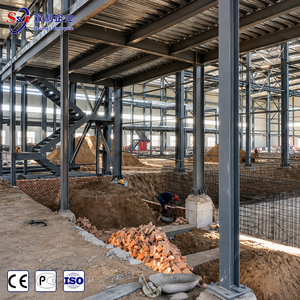
We manage the full technical scope: structural analysis, primary/secondary member fabrication, panel production, and installation guidance. By eliminating third-party intermediaries, we ensure seamless compatibility between structural steel portal frames and exterior insulated envelopes.
Our continuous polyurethane foaming and double-belt lamination lines guarantee uniform core density, void-free foam distribution, and robust metal-to-core bonding strength exceeding 0.12 MPa, preventing panel delamination under extreme thermal cycling.
Every production run undergoes comprehensive mechanical and material testing: ultrasonic weld inspections, paint thickness and cross-hatch adhesion verification, fire reaction testing, and laboratory thermal conductivity assessments according to international standards.
To simplify field assembly in Mexico, all panel bundles and structural framing components are packaged in moisture-resistant marine-grade wrapping, complete with piece-mark numbering matching installation drawings for efficient erection.
Whether you are designing a nearshoring manufacturing plant in Naucalpan, a temperature-controlled distribution center in Tepotzotlán, or retrofitting a factory in Vallejo, our structural engineering team will prepare a preliminary design package and thermal compliance estimate within 48 hours.
Get Catalog