Precision-manufactured insulated panels, primary structural steel profiles, and rapid-assembly cold-chain building envelope systems certified for robust North Sea and Arctic load conditions.
A rigorous structural, thermal, and regulatory assessment for general contractors, structural engineers, and facility developers navigating Norwegian building directives.
Procuring exterior wall and roof envelope components for construction within the Kingdom of Norway demands a level of material science far surpassing ordinary industrial benchmarks. Governed by the stringent parameters of the Norwegian Regulations on Technical Requirements for Building Works (Byggteknisk Forskrift - TEK17), civil contractors cannot compromise on thermal dissipation, acoustic dampening, or non-combustible fire resistance. As the leading Chinese manufacturing partner specializing in high-density structural rock wool sandwich panels and turnkey pre-engineered building systems, our factory delivers direct factory-to-quay solutions engineered explicitly to withstand Northern Europe’s polar fronts, high-salinity oceanic atmospheres, and punishing snow drift dynamics.
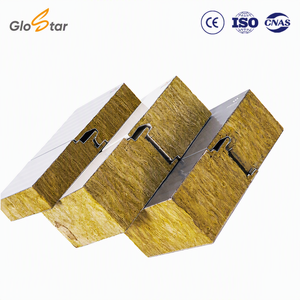
The core structural advantage of our rock wool panels originates from premium basaltic volcanic rock, melted at temperatures exceeding 1,450°C and spun into non-directional microscopic fibers bonded with thermosetting resin. Unlike synthetic hydrocarbon-based insulating cores such as expanded polystyrene (EPS) or standard polyurethane (PU), mineral rock wool guarantees an Euroclass A1 and A2-s1, d0 fire reaction rating under EN 13501-1. When integrated between heavy-duty hot-dipped galvanized or zinc-aluminum-magnesium alloy steel skins, our panels provide an impenetrable barrier against flames, containing structural integrity for upwards of 120 to 240 minutes (EI120 to EI240 fire resistance classes).
From maritime aquaculture processing plants along Vestland to interior logistics hubs in Viken, discover how our rock wool panel assemblies overcome specific environmental rigors.
Situated along coastal fjords in regions like Troms, Finnmark, and Møre og Romsdal, salmon processing and packaging facilities experience perpetual exposure to marine salt fog, internal washdown moisture, and harsh cleansers. Our rock wool panels equipped with C4/C5-M atmospheric corrosive protection (utilizing 55% Al-Zn and high-build polyvinylidene fluoride (PVDF) or food-safe plastisol coatings) eliminate delamination and red rust while maintaining strict hygienic internal environments.
Meeting the strict U-value thresholds mandated by TEK17 (often requiring wall values ≤ 0.18 W/m²K and roof values ≤ 0.13 W/m²K) requires optimized core density and thermal bridge neutralization. Our interlocking tongue-and-groove joints, combined with hydrophobic rock wool cores (density ranging 100 kg/m³ to 140 kg/m³), preserve interior climate stability, dramatically cutting electrical refrigeration costs in central logistics corridors surrounding Oslo and Trondheim.
Mountainous inland terrains face snow load pressures exceeding 4.5 kN/m² under NS-EN 1991-1-3. When paired with our hot-rolled structural H-beams and secondary purlin systems, our continuous-line manufactured rock wool panels demonstrate extreme flexural shear capability, resisting catastrophic deflection, heavy snow loading, and high cyclical wind buffeting along coastal inlets.
The green transition, heightened fire mitigation demands, and stringent life-cycle certifications shape how developers in Scandinavia procure building envelopes.
Green building sustainability metrics are mandatory for institutional real estate investments in Norway. Rock wool, composed of natural mineral stone, is intrinsically recyclable, emits zero ozone-depleting volatile organic compounds (VOCs), and provides favorable Life Cycle Assessments (LCAs) crucial for securing maximum BREEAM-NOR environmental credits.
Norway is a global pioneer in mass timber construction (CLT). However, municipal fire marshals enforce rigorous compartmentalization laws. Our Class A1 non-combustible rock wool insulated sandwich panels act as passive perimeter firewall barriers, preventing structural propagation across multi-story modular zones.
With high on-site hourly artisan labor rates in Norway, general contractors are aggressively shifting toward precision pre-cut, CNC-machined cladding panels. Our panels arrive precision-milled with pre-punched fastener points, side-lap seal tapes, and numbered architectural placement schematics, reducing on-site erection durations by up to 55%.
Empirical evaluation of core insulation matrices calibrated against thermal efficiency, structural integrity, acoustic transmission, and European fire resistance standards.
| Performance Metric | High-Density Basalt Rock Wool | Polyisocyanurate (PIR / PU) | Expanded Polystyrene (EPS) |
|---|---|---|---|
| Combustibility (EN 13501-1) | Class A1 / A2-s1, d0 (Non-combustible) | Class B-s1, d0 / B-s2, d0 (Fire retardant) | Class E / F (Combustible) |
| Fire Endurance Threshold | Resists up to 1,000°C (>120 mins) | Chars at 200°C–350°C (30-60 mins) | Melts at 80°C–100°C (Rapid failure) |
| Thermal Conductivity (λ) | 0.038 – 0.044 W/m·K | 0.022 – 0.026 W/m·K | 0.033 – 0.038 W/m·K |
| Acoustic Isolation (Rw) | 30 – 35 dB (Superior noise attenuation) | 23 – 26 dB (Reflective transmission) | 20 – 24 dB (Low dampening) |
| Water Absorption (EN 1609) | < 1.0 kg/m² (Hydrophobic silicone treated) | < 1.5% (Closed-cell structure) | 2.0% – 4.0% (Capillary retention) |
| Recommended Norwegian Application | Firewalls, processing halls, public hubs | Deep-freeze sub-zero cold rooms | Temporary offices, mild interior sheds |
Combining heavy structural steel engineering with continuous high-capacity panel fabrication under unified contract accountability.
Established in 2010, our engineering operation has delivered over 352 structural projects spanning four continents. We maintain our own fabrication workshops, guaranteeing end-to-end metallurgical quality control without subcontracting risks.
Our plant operates advanced double-belt continuous lamination technology. Mineral rock wool slabs are automatically cut into staggered perpendicular lamellas, increasing compressive load strength to >100 kPa for heavy exterior wind loads.
Direct supply line integration enables shipping through major maritime channels directly into Norwegian distribution ports, including Oslo Havn, Bergen Havn, and Stavanger, packaged in ocean-worthy waterproof crates with VCI desiccant protection.
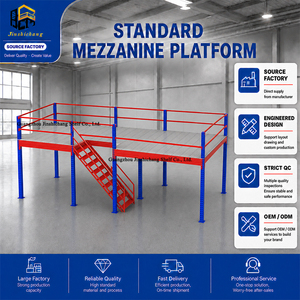
Unlike simple panel processors, we fabricate primary columns, crane girders, portal frames, and floor mezzanines. Structural components and cladding fit seamlessly on site according to pre-coordinated 3D BIM models.
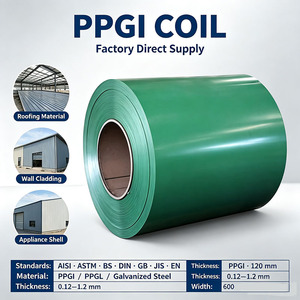
All sheet coils conform to ASTM A792, JIS G3321, and EN 10346 standards. We enforce precise dry film thickness (DFT) checks, cross-hatch adhesion testing, and saline fog spray audits to ensure C4/C5-M atmospheric longevity.
Our in-house design office provides comprehensive calculation sheets, static wind/snow load deflection simulations, joint thermal bridge reduction profiles, and technical substantiations for Norwegian municipal approval submissions.
Detailed technical, customs, and logistical clarifications addressing the specific compliance realities of the Scandinavian market.