
Manufactured under strict ISO 9001 and CE compliance protocols. Designed for swift ocean freight containerization, rapid on-site bolt assembly, and extreme climatic endurance across mining, energy, and urban megaprojects.
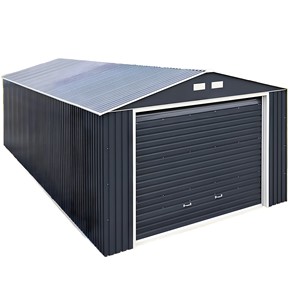
Clear-span industrial portals engineered with heavy Q355B H-section framing, optimized for rapid site deployment and mezzanine integration.
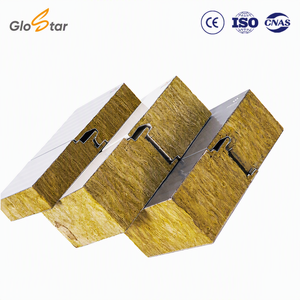
Continuous polyurethane and high-density rock wool thermal cores providing Class-A fire ratings and exceptional thermal barrier performance.
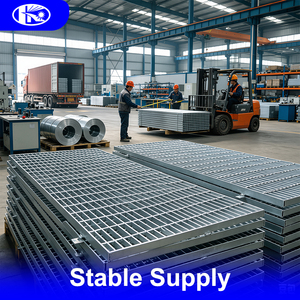
Heavy-duty serrated and plain electro-forged steel grating with >85μm hot-dip galvanization for offshore platforms and mining plant access.
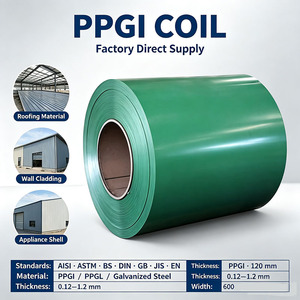
High-durability polyester topcoats baked over a galvanized core, specifically engineered to resist UV degradation and tropical rainfall.
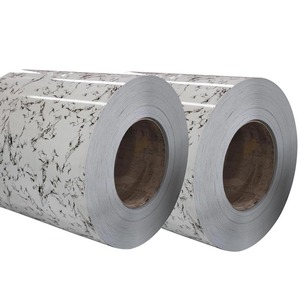
Heavy 275 g/m² zinc barrier coating providing superior salt-spray corrosion resistance for coastal logistics hubs and maritime ports.
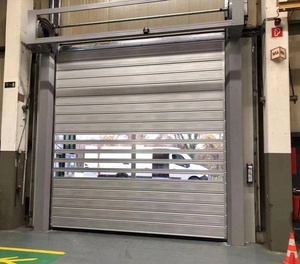
Engineered for cleanroom logistics, container inspection hubs, and automated warehousing with wind resistance up to Class 11.
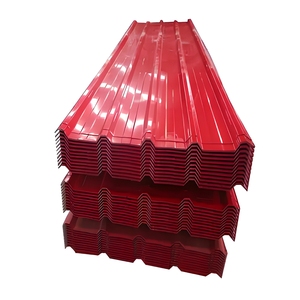
Continuous long-span ribbed sheeting eliminating transverse joints, drastically lowering water ingress risks during monsoon downpours.
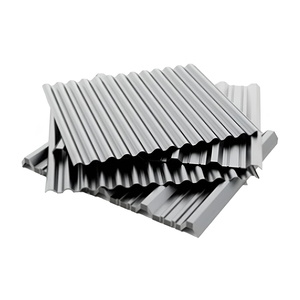
Zero-spangle cold-rolled profiled sheets certified to international standards for commercial building facades and modular cabin cladding.
A strategic overview of industrial manufacturing synergies between China's raw material supremacy and Indonesia's regional assembly capabilities for resource and infrastructure projects.
The global construction industry has fundamentally pivoted from traditional site-intensive masonry toward industrial prefabrication. In the Asia-Pacific region, this transition is anchored by the complementary strengths of China’s advanced prefabricated modular factories and Indonesia’s accelerating domestic infrastructure demands. China represents the epicenter of structural cold-formed steel manufacturing, automated robotic welding lines, and automated continuous polyurethane (PU) and rock wool sandwich panel production. Chinese manufacturing clusters provide unprecedented economies of scale, micro-millimeter dimensional tolerances, and high-tensile metallurgical sourcing.
Concurrently, the Republic of Indonesia represents Southeast Asia’s most dynamic market for modular structures. Spurred by national priority programs such as the construction of the new green capital city IKN Nusantara (Ibu Kota Nusantara) in East Kalimantan, widespread nickel refining smelters across Morowali (Central Sulawesi) and Weda Bay (North Maluku), and expansive industrial parks across West Java (Cikarang, Karawang, Subang), the demand for rapidly deployable, high-integrity office cabins has never been higher.
Strategic Procurement Reality: While direct sourcing from China factories maximizes component yield and structural steel grade choices (e.g., Q355B vs. domestic standard Q235B), establishing an integrated supply line with Indonesian fabrication partners mitigates port demurrage, addresses Tingkat Komponen Dalam Negeri (TKDN) local content compliance, and guarantees immediate on-site erection supervision.
Modern prefabricated office cabins are no longer basic repurposed ISO shipping boxes. Contemporary systems are designed as completely knockdown (CKD) or flat-pack architectural modules featuring cold-formed galvanized steel portal chassis, integrated hidden roof drainage channels, interlocking sandwich panel envelopes, and factory-prewired electrical systems conforming to both IEC standards and Indonesian SNI regulations.
Deploying prefabricated buildings in equatorial zones demands a specialized engineering paradigm. Indonesia presents an aggressive combination of high relative humidity (consistently 75%–95%), high UV radiation, heavy tropical precipitation, and heightened seismic activity across the Pacific Ring of Fire. Specifying off-the-shelf cabins without geographic engineering adaptations frequently leads to premature envelope degradation, corrosion, acoustic failure during torrential rainfall, and excessive HVAC operating costs.
Top-tier Chinese factories partnering with Indonesian procurement teams implement rigorous engineering adaptations across three core domains:
| Evaluation Parameter | China Direct Factory Supply | Local Indonesian Fabricator | Integrated Hybrid Partnership |
|---|---|---|---|
| Structural Core Fabrication | High-speed automated CNC roll-forming & laser profiling | Semi-automated or manual shop welding & assembly | China-manufactured frames assembled locally |
| Sandwich Panel Integrity | Automated double-belt continuous lamination line | Discontinuous vacuum press (often manual glue injection) | Certified automated continuous-line panels imported |
| Production Capacity & Scalability | 500+ modular units per month capacity | 30–80 units per month per workshop | Scalable batch imports with local inventory buffer |
| Cost per m² (Landed / Built) | Highly competitive baseline cost; ocean freight variable | Higher material overhead; minimal sea freight | Optimized landed cost + minimal demurrage overhead |
| TKDN (Local Content) Compliance | 0% direct TKDN score; full customs clearance required | 30%–60%+ TKDN score achievable for tenders | Structured BOM: local civil + imported precision frame |
| Turnkey Site Erection & Civil | Remote engineering drawings; client executes assembly | Direct local civil, MEP, and on-site labor | Factory supervisory engineer + experienced local crews |
From deep-jungle nickel concessions to mega industrial corridors, discover how engineered modular cabins serve demanding operating environments.
Locations: Morowali, Pomalaa, Halmahera, Sorowako.
Operating environments in Indonesian mineral corridors are isolated and characterized by heavy red laterite clay mud, high rainfall, and corrosive atmospheres containing sulfur and dust. Modular office cabins serve as multi-level executive staff quarters, geology labs, safety induction rooms, and plant command centers. Fast-pack rock wool insulated cabins offer essential fire resistance and sound suppression from heavy ball mills and excavators.
Locations: Sepaku, Penajam Paser Utara, East Kalimantan.
Building the new green capital demands rapid deployment of thousands of administrative cabins, engineering consultant site complexes, and worker living units. With stringent green building standards mandated by the Indonesian government, prefabricated flat-pack cabins generate zero wet-construction debris, minimize site impact, and can be disassembled and re-erected when permanent ministries are completed.
Locations: Cikarang, Karawang (KIIC), Kendal (KIK), Batam FTZ.
Modern manufacturing operations require clean, rapid indoor modular construction. Prefabricated office cabins are frequently erected inside high-bay warehouses as two-story supervisor observation suites, QA/QC testing cleanrooms, and factory dispatch offices. Modular cabins eliminate the dust, moisture, and month-long downtime associated with traditional drywall and masonry partitions inside active facilities.
How cutting-edge prefabrication engineering is adapting to regulatory evolution and sustainable construction practices.
Engineering cabin connection nodes to absorb lateral shear stress via ductile cold-formed structural steel profiles, preventing deformation during tectonic shifts.
Phasing out standard flammable EPS in favor of PIR and rock wool, meeting international underwriter requirements (FM Global) and strict corporate HSE guidelines.
Mounting lightweight thin-film or monocrystalline solar modules onto reinforced cabin roof purlins, creating self-powered field offices for remote exploration teams.
Every modular bay, column splice, and pre-cut conduit is simulated in Tekla Structures, delivering full digital twin verification prior to container loading.
Backed by more than a decade of steel structure fabrication, automated sandwich panel manufacturing, and end-to-end EPC execution.
From pre-engineered and prefabricated industrial steel buildings to color-coated sheets, built-up columns, high-speed doors, and custom-formed structural purlins, we cover both domestic installations and high-volume export packaging under single-source accountability.
Prefabricated modular building solutions combined with civil engineering, anchor bolt layout design, reinforced concrete (RCC) floor foundations, and dedicated MEP integration under one consolidated contract, eliminating subcontractor coordination friction.
Every modular project is engineered around your functional process layout, local wind velocities, soil bearing capacity, and planned vertical expansion. Our engineering department verifies structural integrity via finite element modeling before raw steel cutting begins.
Essential guidance on import logistics, custom tariffs (Form E), structural compliance, and site erection across Indonesia.