Technical Engineering Dossier
Eurocode 3 & Romanian Seismic Code P100-1/2013 Compliance
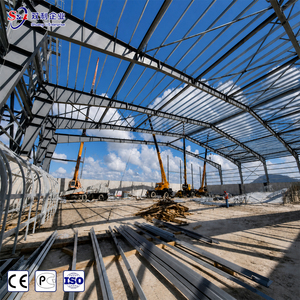
Exporting structural steel buildings into the Romanian market requires far more than basic fabrication capacity; it demands high-tier structural engineering consultancy capable of harmonizing international fabrication tolerances with strictly mandated Romanian National Annexes and State Construction Inspectorate (ISC) safety laws.
Romania represents one of Europe's most seismically challenging structural jurisdictions due to the intermediate-depth earthquakes originating in the Vrancea tectonic zone. Buildings erected in southern and eastern Romania, including Bucharest, Ploiești, and the Dobrogea plain, must be calculated with peak ground acceleration coefficients ($a_g$) ranging from 0.20g up to 0.40g and control periods ($T_c$) extending to 1.6 seconds.
Consultancy Optimization Principle: We employ multi-modal response spectrum analysis in Tekla Structures and SAP2000, designing moment-resisting portal frames (DCH - High Ductility Class) equipped with dog-bone reduced beam sections (RBS) and energy-dissipating bolted connections to suppress structural drift without adding excessive dead weight.
Our engineering export dossier provides verified static calculation reports (Breviar de Calcul) signed by accredited professional engineers, full 3D BIM coordination (LOD 400), and erection-ready part-numbering drawings that simplify local site authorization overseen by licensed Project Verifiers (Verificatori de Proiecte Atestați MDLPA).
SR EN 1990: Basis of Structural Design
SR EN 1991-1-3: Snow Loads (CR 1-1-3)
SR EN 1991-1-4: Wind Pressures (NP 082)
SR EN 1993-1-1: Design of Steel Structures
P100-1/2013: Romanian Seismic Design Norm