Fabricated under strict ISO 9001 and AWS D1.1 welding standards. Our heavy-duty structural members, modular mezzanine solutions, and high R-value composite envelopes are fully configured for prompt deployment across industrial ports, logistics parks, and energy concessions throughout Oman.
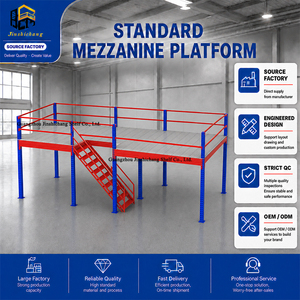
Multi-tier high-capacity mezzanine racking systems engineered for distribution warehouses. Bolted moment connections with industrial grating or chequered floor plates designed to handle live loads up to 1,200 kg/m².
View Structural Details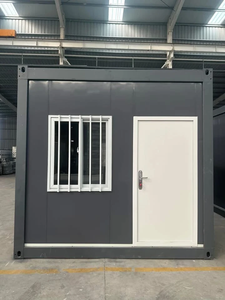
Galvanized light-gauge structural framework with integrated PU/Rockwool insulation. Modular plug-and-play assembly ideal for rapid-deployment field offices, engineering control units, and temporary site infrastructure.
View Structural Details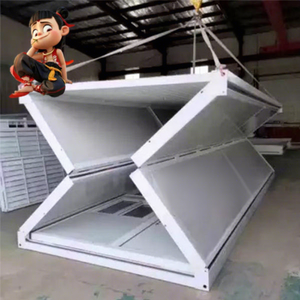
Heavy-duty foldable steel shelter solutions erected in under 15 minutes per module. Fire-rated mineral wool panels ensure safe, climate-regulated living conditions in remote desert oil concessions and mining zones.
View Structural Details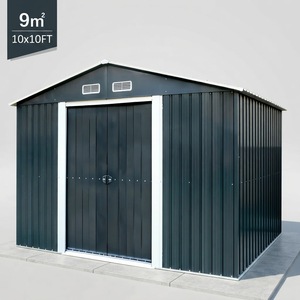
Corrosion-resistant hot-dipped zinc-galvanized exterior storage unit equipped with cross-flow ventilation louvers and UV-resistant baked polyester coil coatings to resist harsh UV chalking and sand scouring.
View Structural Details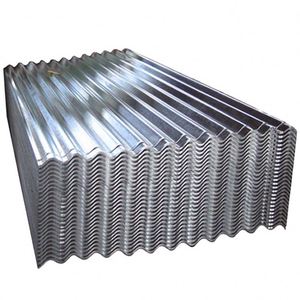
High-tensile DX51D/SGCC cold-rolled steel profiling sheets with G90 (275 g/m²) zinc coating and 25-micron fluorocarbon PVDF coating, offering elite C5 marine atmospheric corrosion resilience.
View Structural Details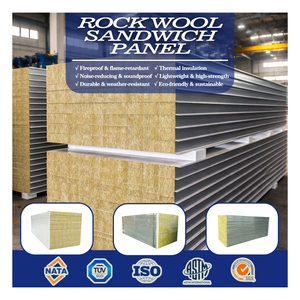
Engineered composite building panels combining zero-formaldehyde structural oriented strand board with non-combustible high-density mineral rock wool cores for high fire compartmentalization.
View Structural Details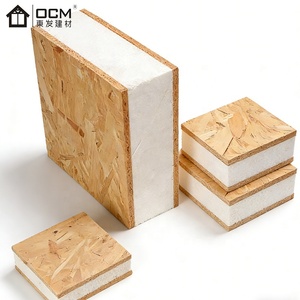
Next-generation envelope panels providing superior thermal breaks. Thermal conductivity values as low as 0.022 W/m·K reduce HVAC electrical loading by up to 42% across extreme Middle Eastern summers.
View Structural Details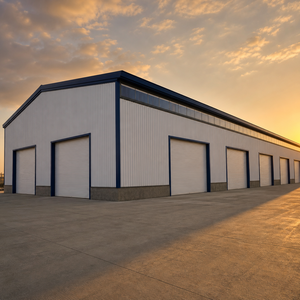
Tapered H-beam portal frames engineered with clear spans over 60 meters without central columns. Fully integrated runway girders designed to support 5-ton to 50-ton overhead electric overhead traveling (EOT) cranes.
View Structural DetailsDeploying permanent prefabricated steel infrastructure across the Sultanate of Oman requires structural design protocols far beyond standard temperate assumptions. Oman’s geographic profile exhibits some of the world's most aggressive atmospheric deterioration indices. Industrial installations situated in the Port of Duqm Special Economic Zone (SEZAD), Sohar Port and Freezone, and Salalah Free Zone operate under ISO 12944 C5-M (Very High Marine) corrosivity classifications. These zones combine high relative humidity (frequently exceeding 85%), airborne sea salt chlorides, and prolonged cyclic thermal loads.
Conversely, central and interior concessions such as Fahud, Nimr, and the Marmul oil fields encounter hyper-arid desert weathering: daytime metal skin temperatures climbing to +80°C under intense solar radiation, followed by rapid nocturnal thermal contraction. Without precise elastic calculation for thermal expansion joints and slotted purlin connections, structural frames face localized buckling, bolt shear, and catastrophic weather-seal rupture.
Engineering Standard Adherence: Every steel frame supplied by Joint Star Steel Structure Ltd. serving Omani clients conforms strictly to AISC 360-16 (Specification for Structural Steel Buildings), MBMA (Metal Building Manufacturers Association) standards, and ASCE 7-10 wind load criteria, withstanding 3-second gust velocities up to 160 km/h (45 m/s) common during coastal Arabian Sea cyclonic events.
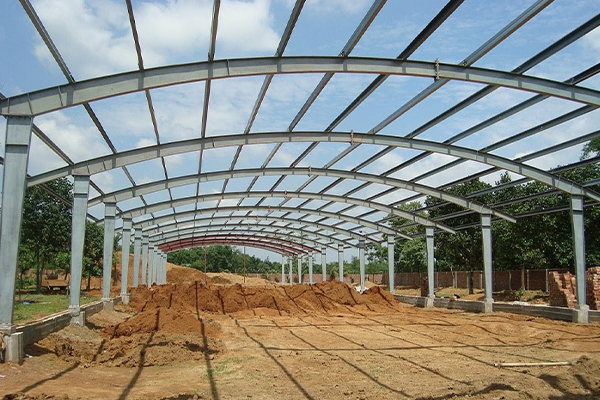
Primary structural tapered frames undergo automated centrifugal blast cleaning to SSPC-SP 10 / ISO 8501-1 Sa 2.5 near-white metal cleanliness. Coatings utilize high-build zinc-rich epoxy primers (minimum 80% metallic zinc in dry film) followed by an intermediate micaceous iron oxide (MIO) epoxy barrier, capped with aliphatic polyurethane finish coats totaling a minimum dry film thickness (DFT) of 240 to 320 microns.
Northern Oman, including the Al Hajar Mountain periphery, Muscat Governorate, and Musandam Peninsula, sits within moderate seismic active zones (UBC Zone 2A/2B). Primary frames are calculated using rigid moment-resisting portal frames or braced frames with seismic response modification factors ($R = 3.5$ to $4.5$), guaranteeing dynamic energy dissipation during seismic excitation without brittle failure.
Mitigating interior condensation and eliminating massive HVAC cooling loads in Oman demands composite thermal insulation envelopes. Our concealed-fastener sandwich wall and standing-seam roof panels integrate high-density polyurethane (PU/PIR) and basalt rock wool cores, featuring tongue-and-groove labyrinth joints that eliminate thermal bridging and deliver U-values as low as 0.21 W/m²·K.
| Insulation Core / System | Thermal Conductivity (λ) | Fire Behaviour Rating | Compressive Strength | Ideal Application in Oman |
|---|---|---|---|---|
| PIR / PU Polyurethane Panel | 0.020 - 0.023 W/m·K | Class B1 / EN 13501 B-s1, d0 | 140 - 180 kPa | Pharmaceutical facilities, food logistics, cold stores in Sohar & Barka |
| Basalt Mineral Rock Wool | 0.038 - 0.044 W/m·K | Class A1 / Non-combustible (up to 1,000°C) | 100 - 150 kPa | Oil & Gas refineries, chemical plants, Oman Civil Defence high-risk zones |
| Expanded Polystyrene (EPS) | 0.033 - 0.037 W/m·K | Self-extinguishing (B2) | 80 - 120 kPa | Economical logistics sheds, temporary worker camps, rooftop extensions |
| Engineered OSB SIP System | 0.026 - 0.032 W/m·K | Custom Class B / Heavy timber equivalent | > 220 kPa (Structural load-bearing) | Fast-track administration complexes, commercial villas, eco-tourism resorts |
Tailored structural steel design methodologies aligned with Oman’s national economic geography, logistics corridors, and localized infrastructure programs.
Heavy clear-span portal frames exceeding 50m without internal supports. Integrated with 40-ton crane runways, marine-grade zinc-rich epoxy paint systems, and ASTM A653 G90 corrugated roof skins engineered to withstand severe coastal humidity and salt-fog aerosol deposition along the Arabian Sea.
High-cube distribution centers optimized for multi-tier industrial mezzanine platforms and narrow-aisle automated racking. Features continuous PIR insulated roof and wall panels to ensure zero thermal bridging, cutting HVAC electrical pull by over 35% in Barka and Sohar.
Rapid-erection flat-pack containerized office blocks, explosion-venting maintenance workshops, and modular staff quarters for PDO, OQ, and BP concession sites. Fire-resistant rock wool insulation ensures thermal stabilization and total workforce acoustic comfort during desert operations.
Hybrid architectural steel frames combined with RCC foundations and decorative insulated sandwich facades. Engineered for dynamic vibration damping to accommodate precision CNC machinery, plastic extruders, and consumer goods packaging lines in Rusayl Industrial City.
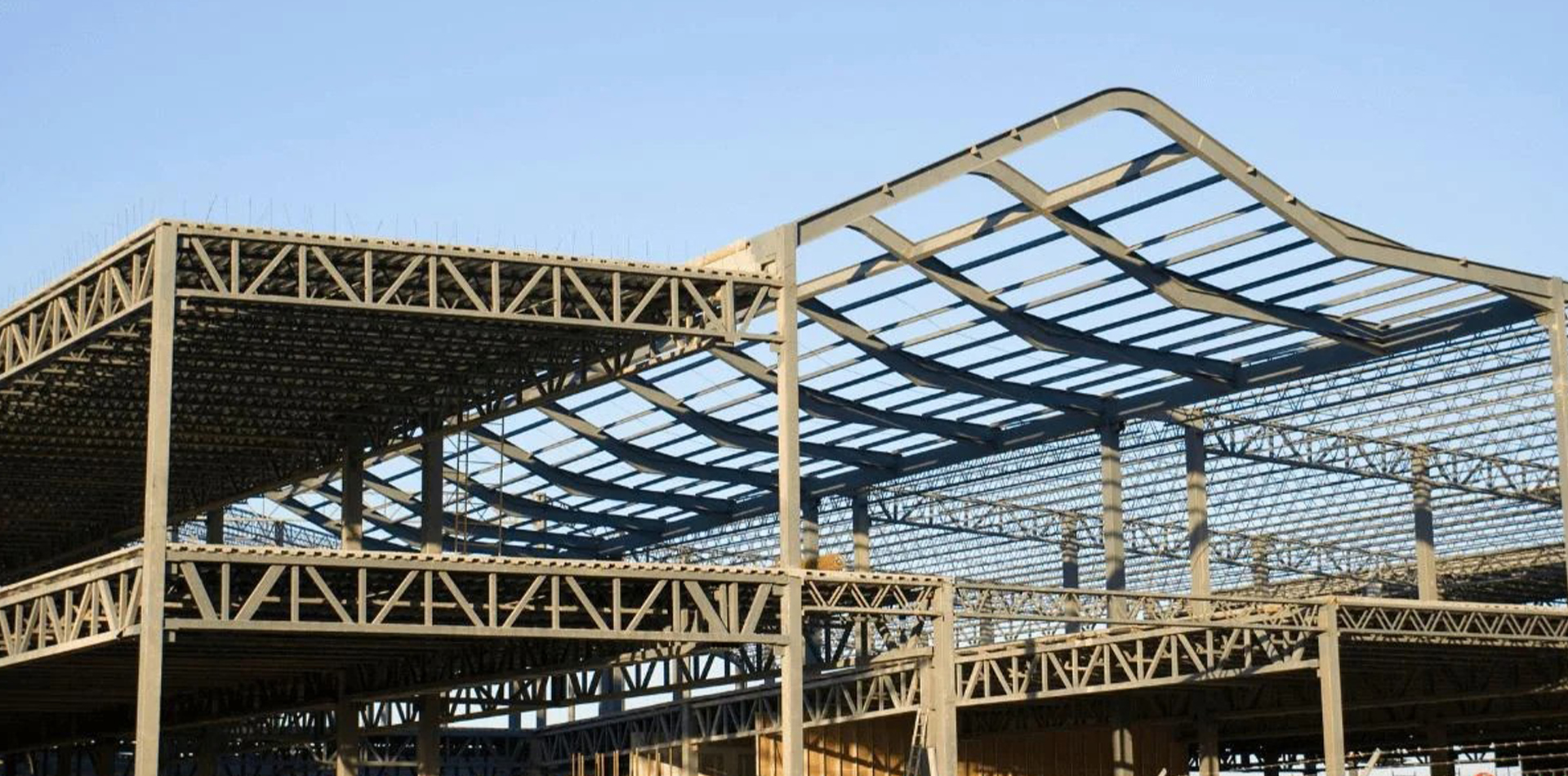
Under the national framework of Oman Vision 2040, the Sultanate is rapidly accelerating its economic diversification agenda away from hydrocarbon dependence. Key target sectors—including transport, logistics, manufacturing, mining, and food security—demand immediate, scalable, and environmentally sustainable industrial construction solutions.
Traditional cast-in-place concrete structures face mounting constraints across the GCC: protracted construction timelines (12 to 18 months), excessive on-site water consumption in hyper-arid zones, high embodied carbon footprints, and severe labor bottlenecks. Pre-engineered structural steel manufacturing provides the essential solution:
Operating since 2010 with more than 352 delivered industrial installations, Joint Star Steel Structure Ltd. combines in-house design engineering, automated CNC structural fabrication, and dedicated sandwich panel lines to deliver single-source accountability.
Complete 3D structural modeling via Tekla Structures and structural analysis in STAAD.Pro and SAP2000. Comprehensive calculation packages and connection engineering ready for swift Omani Municipal (Baladiya) approvals.
Heavy submerged arc welding (SAW), high-precision CNC multi-torch flame cutting, hydraulic flange straighteners, and automated shot-blasting guarantee millimeter-level dimensional accuracy across all primary members.
Continuous automated production lines producing EPS, high-density PU/PIR, and non-combustible rock wool core panels, ensuring tight quality control on skin bond adhesion, core density, and interlocking air-seals.
We eliminate contractor finger-pointing by integrating structural steel manufacturing with coordinated foundation anchor bolt layouts, civil coordination drawings, and reinforced concrete (RCC) engineering specs under one contract.
Full factory traceability with mill test certificates (MTC) for all steel coils and plate stock. Standard NDT protocols include 100% visual inspection, ultrasonic testing (UT) on butt welds, and dry film thickness verification.
Every piece is color-coded, labeled, bundled, and container-stowed with precision packing lists. Detailed 3D erection shop drawings and anchor bolt templates ensure safe, straightforward assembly by local Omani contractors.
Direct technical answers addressing structural codes, local authority permits, fire ratings, and logistics across Muscat, Sohar, Duqm, and Salalah.
For coastal zones across the Batinah coast, Duqm port area, and Dhofar, we implement strict ISO 12944 C5-M marine paint specifications. Steel sections undergo automated centrifugal shot-blasting to Sa 2.5 cleanliness to remove all mill scale and surface oxides.
We then apply a 3-coat heavy-duty protective system: an 80-micron zinc-rich epoxy primer, a 120-micron micaceous iron oxide (MIO) epoxy barrier coat, and an 80-micron aliphatic polyurethane topcoat (total dry film thickness ≥ 280 μm). For secondary cold-formed purlins (C and Z sections), we supply continuous hot-dip galvanized steel with zinc coatings of Z275 (275 g/m²) or Galvalume (AZ150) to completely arrest atmospheric chloride pitting and edge rust.
Oman’s Civil Defence authorities require strict fire performance ratings based on building occupancy, square footage, and proximity to property lines. For high-occupancy industrial facilities, chemical production plants, and fire-compartment barrier walls, we supply Class A1 non-combustible Rockwool sandwich panels. Rockwool withstands temperatures exceeding 1,000°C without generating toxic fumes or flaming droplets, offering 1 to 3 hours of certified fire resistance (EN 13501-1 / ASTM E119).
For temperature-controlled cold logistics warehouses where thermal insulation efficiency is paramount, we fabricate fire-retardant polyisocyanurate (PIR) panels achieving a B-s1, d0 reaction-to-fire classification that self-extinguishes upon flame removal.
To ensure rapid permit issuance through the Muscat Municipality, Sohar Freezone Authority, or SEZAD building approval departments, Joint Star Steel Structure Ltd. delivers complete calculation documentation. This includes:
1. Comprehensive structural engineering design calculations modeled in STAAD.Pro or SAP2000 detailing dead, live, wind, and seismic load combinations under ASCE 7-10 and AISC 360-16.
2. Reaction force schedules at baseplates (axial, shear, and overturning moments) to allow your local geotechnical and civil consultant to quickly design concrete isolated footings, grade beams, or pile caps.
3. Full General Arrangement (GA) drawings, anchor bolt setting plans, and architectural cladding details ready for submission by your local Grade-A supervising engineering consultant.
For industrial clear spans over 20 meters, pre-engineered steel structures offer clear economic and operational superiority. Structural steel delivers overall project timeline reductions of 40% to 60% because all primary members and secondary purlins are prefabricated off-site while site grading and civil foundation work proceed in parallel.
Because steel frames weigh roughly 50% less than equivalent reinforced concrete structures, foundation concrete volumes and sub-base soil remediation costs are reduced substantially—especially critical in low-bearing coastal soils. Overall capital expenditure (CAPEX) savings typically range between 20% and 30%, allowing tenants and industrial operators to begin production and generate revenue months ahead of conventional timelines.
We maintain established export logistics workflows directly servicing Sohar Port, Port Sultan Qaboos (Muscat), Port of Salalah, and Duqm Port. All structural members are marked with permanent metal tags matching the erection drawings, then bundled and lashed in open-top or standard 40ft high-cube sea containers.
We supply complete documentation for Omani Customs' Bayan clearance system, including attested Commercial Invoices, Packing Lists with precise weight schedules, Bills of Lading, and Certificates of Origin. For on-site assembly, we provide detailed 3D step-by-step assembly drawings, bolt-tightening torque specifications, and can deploy technical field advisors to supervise local erection crews.
Yes. Our structural engineering department regularly incorporates heavy crane runways and multi-level mezzanine systems. We design built-up stepped columns or reinforced column haunches with bolted crane brackets, runway girders, surge trusses, and continuous crane rails rated for crane capacities from 5 tons up to 50 tons.
Dynamic wheel impact factors, lateral crane surge loads, and longitudinal traction forces are fully checked under AISC and CMAA (Crane Manufacturers Association of America) standards to prevent fatigue cracking or excessive structural sidesway during heavy industrial operations.
Planning a high-bay logistics warehouse, manufacturing plant, industrial mezzanine floor, or fast-track accommodation complex in Muscat, Sohar, Duqm, or Salalah? Submit your preliminary plot dimensions, crane load parameters, or architectural sketches. Our structural engineering specialists will provide a value-engineered structural concept proposal, material bill of quantities, and competitive quotation within 24 to 48 hours.