
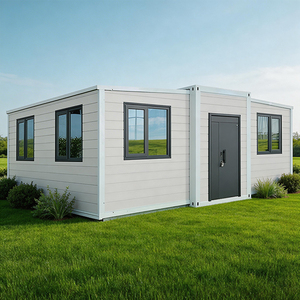
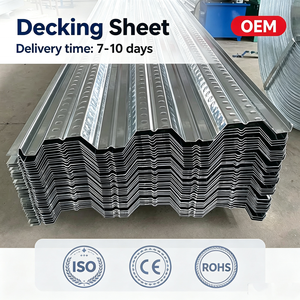
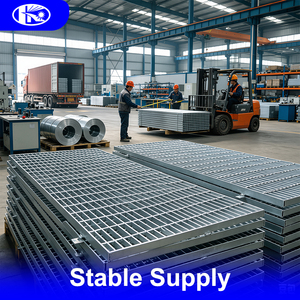
Direct export supply of pre-engineered framing members, cold-rolled anti-corrosion profiles, insulated modular units, and industrial accessibility components tested to international ASTM and local ABNT regulatory criteria.
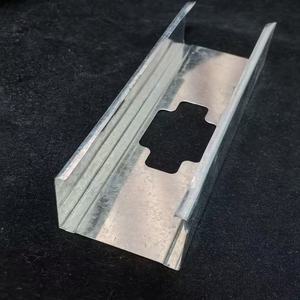
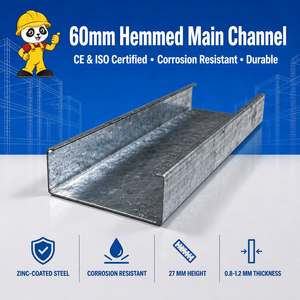
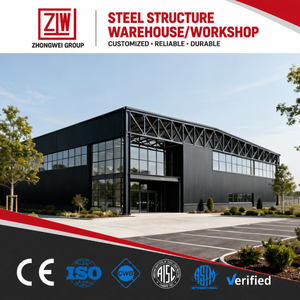
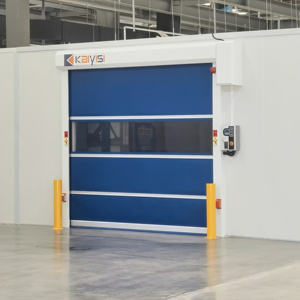
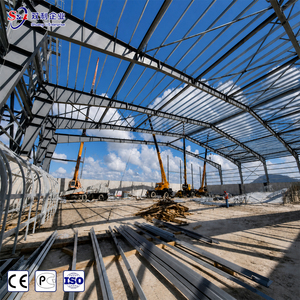
Exporting structural steel framing to Brazil requires strict calibration to the national building codes enforced by CREA (Conselho Regional de Engenharia e Agronomia) and local municipal secretariats of urban development.
Our structural engineering department performs full load-combination analysis using finite element analysis (FEA) compliant with ABNT NBR 8800 (Design of Steel and Composite Structures for Buildings) and NBR 14762 for cold-formed steel sections. Primary columns and rafters utilize continuous automatic submerged arc welded (SAW) built-up I-sections fabricated from high-tensile ASTM A572 Grade 50 (or domestic equivalent USI-SAC 350 / NBR 7007 AR 350), securing yield strengths of $f_y = 345 \text{ MPa}$ to optimize tonnage while eliminating deflection.
Brazil experiences distinct regional microclimates ranging from convective squalls in the Central-West savannah to intense cyclonic extratropical wind fronts in Santa Catarina and Rio Grande do Sul. We apply the basic wind velocities ($V_0$) dictated by ABNT NBR 6123, ranging from 30 m/s up to 48 m/s. Topographical factor ($S_1$), terrain roughness rating ($S_2$), and statistical probability factor ($S_3 = 1.0$ for industrial facilities) are factored into flange bracing spacings and purlin anti-uplift anchoring.
Industrial corridors near Brazilian coastal ports (Santos, Paranaguá, Suape) present aggressive atmospheric marine classifications (C4 to C5-M). To prevent premature pitting and structural oxidation, our structural elements receive hot-dip galvanization with minimum zinc mass of 600 g/m² (ABNT NBR 6323) or multi-tier epoxy barrier coatings consisting of zinc-rich ethyl silicate primer, high-build epoxy intermediate, and aliphatic polyurethane topcoats exceeding 240 μm nominal dry film thickness (DFT).
Custom-engineered structural steel structures tailored to Brazil's core macroeconomic drivers: Agribusiness, Heavy Mining, Coastal Intermodal Logistics, and Cold-Chain Food Processing.
In key agricultural territories such as Mato Grosso (Sorriso, Rondonópolis), Goiás, and western Bahia (MATOPIBA), large-span, clear-span storage warehouses (30m to 80m unobstructed clearance) are required to shelter harvest yields, soybean processing plants, and bulk chemical fertilizers. Bulk fertilizers produce severe atmospheric corrosive emissions (urea, ammonium nitrate, potash); our structures incorporate polyaspartic coatings or heavy-gauge hot-dipped galvanized portal frames to ensure lifetime durability.
In the mineral-rich territories of Minas Gerais (Quadrilátero Ferrífero) and Pará (Carajás), pre-engineered buildings house high-tonnage off-highway haul trucks and heavy ball mills. These structures feature reinforced runway beams engineered for heavy overhead travelling cranes (pontes rolantes) ranging from 20 to 80 tonnes. High fatigue-resistant bolt assemblies (ASTM A325 / A490) maintain connection integrity under cyclical vibration.
Surrounding the Port of Santos, Port of Paranaguá, and the Campinas/Viracopos logistics belt, multi-door cross-docking distribution centers require extensive column-free interior handling bays. We engineer modular PEB layouts incorporating high-speed industrial cleanroom fabric doors, continuous perimeter dock leveler canopies, and insulated PU sandwich panels that minimize indoor air leakage, reducing air-conditioning loads by up to 35%.
For meatpackers and poultry exporters operating in Paraná, Santa Catarina, and São Paulo compliant with SIF (Serviço de Inspeção Federal) and international HACCP standards, hygiene and continuous vapor seals are vital. We supply complete prefabricated portal frames combined with food-grade antimicrobial prepainted PIR insulated wall and ceiling panels, eliminating condensation risk and cold-bridge losses.
The Brazilian structural building industry is undergoing a structural paradigm shift from conventional site-cast concrete towards pre-engineered off-site steel fabrication.
High local labor liabilities, extended site installation schedules, and inflation in cast-in-place concrete make conventional construction a major financial risk in Brazil. Prefabricated steel components fabricated in off-site automated workshops reduce project delivery timelines by 40% to 50%. Factory bolt-together assemblies drastically compress on-site labor requirements and site overhead costs.
With corporate ESG priorities rising in São Paulo and Rio de Janeiro, logistics parks are seeking LEED or AQUA-HQE green building ratings. Replacing single-skin corrugated metal sheets with high-reflectivity thermal sandwich panels (PU/PIR or high-density Rock Wool) significantly lowers operational cooling energy while improving Solar Reflectance Index (SRI > 78) across roofing surfaces.
Brazil's domestic distribution networks are aggressively decentralizing beyond the traditional Rio-São Paulo axis toward Midwest and Northeast consumption centers (Goiânia, Cuiabá, Recife, Salvador). Pre-engineered steel buildings offer ideal structural modularity: light containerized transport weights, rapid assembly on light foundations, and simple disassembly or bay expansion as throughput climbs.
Evaluating the optimal insulating core based on thermal efficiency, fire rating certifications (Corpo de Bombeiros / IT-10), and targeted industrial use-cases across Brazil.
| Insulation Core Type | Thermal Conductivity ($\lambda$) | Fire Reaction Rating | Water Absorption & Humidity Resistance | Ideal Application in Brazil |
|---|---|---|---|---|
| PIR / Polyisocyanurate | 0.020 - 0.023 W/m·K (Best Performance) | Class B-s1, d0 (Self-extinguishing, low smoke) | < 1.0% volume (Impermeable to tropical humidity) | Cold rooms, pharmaceutical distribution hubs, temperature-controlled seed storage in Mato Grosso. |
| PU / Polyurethane (PUR) | 0.022 - 0.026 W/m·K (High Performance) | Class B2 / Class R1 (Flame retardant) | < 1.5% volume (High moisture barrier) | Agro-processing warehouses, fruit processing plants in the São Francisco Valley, industrial sheds. |
| Rock Wool (Lã de Rocha) | 0.038 - 0.044 W/m·K (Moderate Performance) | Class A1 / Non-combustible (Up to 120 min fire stop) | Hygroscopic; requires vapor-tight edge sealing | Chemical manufacturing facilities, power generation plants, strict insurance-rated fire compartment walls. |
| EPS (Poliestireno Expandido) | 0.035 - 0.040 W/m·K (Cost-Effective) | Class F / Class P (Standard flame retardant additive) | 2.0 - 4.0% volume (Susceptible to saturated moisture) | Temporary field offices, modular container clinics, low-cost general dry cargo warehouses. |
Detailed regulatory, logistic, and structural guidance for corporate buyers navigating steel structure importations through Brazilian customs authorities.
When exporting pre-engineered steel structures to Brazil, we deliver comprehensive structural calculation books (memorial de cálculo) signed by registered professional engineers, complete with load-combination matrices complying with ABNT NBR 8800:2008 and NBR 6123. These documents include full 3D Tekla structural models, foundation load reaction plans (forces $F_x$, $F_y$, $F_z$ and bending moments $M_x$, $M_y$), and detailed erection mark drawings. Your local civil engineer or technical contractor can smoothly endorse the technical responsibility annotation (ART - Anotação de Responsabilidade Técnica) before the regional CREA council.
Fabricated steel structures and prefabricated buildings are classified under Mercosur Common Nomenclature NCM 7308.90.10 (Structures and parts of structures: plates, rods, angles, shapes, sections, tubes) or NCM 9406.90.20 (Prefabricated buildings of iron or steel). Taxes payable during clearance via the Brazilian foreign trade portal (Siscomex) include the Import Duty (II), Industrialized Products Tax (IPI), PIS/COFINS-Importação, and state-level value-added tax (ICMS). We support Brazilian trade brokers with compliant Commercial Invoices, Packing Lists grouped by piece-mark, and Certificates of Origin to expedite customs dispatch.
We routinely arrange ocean freight on FOB, CFR, or CIF terms serving Brazil's primary container and breakbulk sea terminals:
• Port of Santos (SP): The ideal gateway for logistics parks in Greater São Paulo, Campinas, and the interior.
• Port of Paranaguá (PR) & Port of Itajaí / Navegantes (SC): Cost-effective entry points for the Southern agricultural and cold-chain industrial belt.
• Port of Suape (PE) & Port of Pecém (CE): Strategic deep-water hubs for projects located across the Brazilian Northeast.
All structural members are bundled with heavy-duty steel strapping and labeled with weatherproof tags for seamless cross-modal transfer onto Brazilian flatbed trucks.
Yes. Our engineering division designs heavy industrial portal frames incorporating crane brackets (consolos) and crane runway beams (vigas de rolamento). We account for standard Brazilian crane operational loads (ranging from 5t to 100t capacity), dynamic impact coefficients ($25\%$ vertical impact factor, $20\%$ lateral surge, and $10\%$ longitudinal braking thrust according to AISE Technical Report No. 13 and ABNT NBR 8800). Our supply scope includes rail clamps, forged stops, and high-tensile connection hardware.
Under Brazilian solar radiation, single-skin metal roofs can reach surface temperatures over $70^\circ\text{C}$, radiating severe radiant heat down into the workspace. We mitigate this through continuous high-density Polyurethane (PU/PIR) insulated sandwich roof and wall systems (50mm to 100mm thickness), providing a thermal transmittance ($U$-value) below $0.28 \text{ W/m}^2\text{K}$. Coupled with high-albedo prepainted coils (silicone-modified polyester or PVDF) in white shades, indoor ambient temperatures are reduced by $8^\circ\text{C}$ to $12^\circ\text{C}$ without active refrigeration.
Standard fabrication for a 5,000 to 15,000 square meter pre-engineered building takes approximately 25 to 35 days from approved shop drawings. Ocean transit to Brazilian ports averages 30 to 40 days. Each structural member is tagged with high-contrast piece marks corresponding directly to our 3D erection sequencing manuals. Local Brazilian assembly teams utilize standard mobile cranes without requiring field cutting or welding, enabling assembly speeds up to 1,500 square meters per week.
Combining state-of-the-art heavy fabrication facilities, continuous automated roll-forming lines, and strict international inspection certifications.
Unlike simple trading brokers, we provide integrated engineering from concept drawings to final handover. Our engineering package includes foundation bolt layouts (chumbadores), embedded plate details, and civil-structural interface coordination, eliminating alignment errors when installing steel columns onto in-situ reinforced concrete footings.
Our production facilities utilize CNC high-definition plasma cutting tables, automated variable-depth H-beam assembly machines, twin-wire submerged arc welding systems, and fully continuous sandwich panel laminating lines. Every weld seam undergoes non-destructive testing (NDT), including ultrasonic (UT) and magnetic particle testing (MT) to AWS D1.1 structural welding standards.
Since 2010, our engineering teams have delivered over 352 steel structures worldwide. We prepare heavy sea-worthy export packaging, marked bundles, color-coded installation packages, and container loading plans that protect steel members from salt mist corrosion during long ocean transit to South American seaports.
Whether you require an 80-meter clear-span agricultural distribution warehouse in Mato Grosso, a heavy industrial manufacturing facility in São Paulo, or a cold-chain meat processing facility in Paraná, our engineering team will provide preliminary structural sizing and quotation within 24 hours.
Send an Inquiry