
Continuous-line fabricated color-coated roof plates, high-tensile floor deck profiles, rigid structural frames, and multi-core thermal sandwich panels specifically configured for logistics parks, agro-warehouses, and heavy industrial facilities.
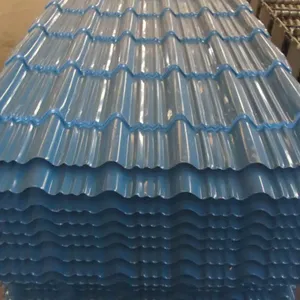
High solar reflectance index (SRI) coating with anti-corrosion zinc protection engineered to bounce solar heat radiation and resist corrosive freeze-thaw cycles.
Technical Specs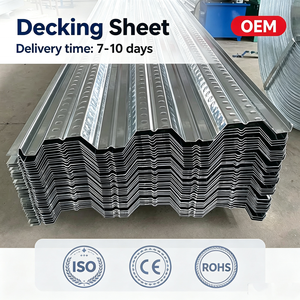
Structural corrugated profiles designed to withstand severe Moscow Region Snow Load Zone III and IV requirements when integrated into composite slabs and warm roofs.
Technical Specs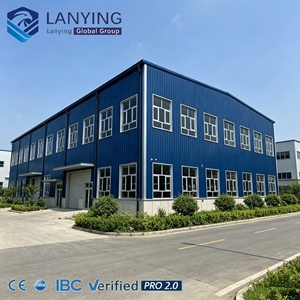
Complete pre-engineered clear-span industrial complexes with thermal break joints and mineral wool or PIR insulation envelopes for turnkey energy savings.
Technical Specs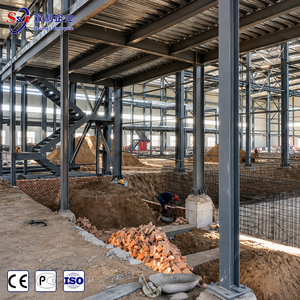
Optimized portal frame logistics sheds equipped with heat-proof roof decking, engineered for minimum thermal transmission loss and rapid low-temperature erection.
Technical Specs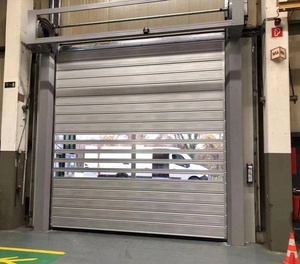
Double-skinned insulated aluminum spiral doors designed to prevent heat leakage at loading docks and maintain internal warehouse microclimates down to -30°C.
Technical Specs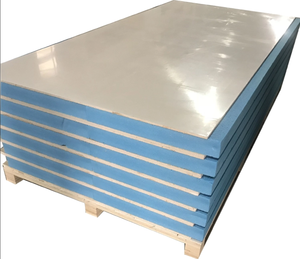
Class A non-combustible magnesium oxide composite panels engineered for high-risk industrial facilities requiring extreme fire resistance and zero smoke toxicity.
Technical Specs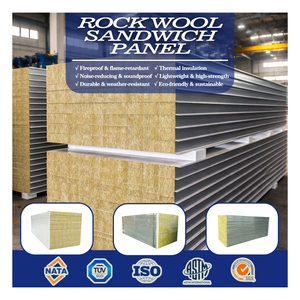
High-density structural mineral wool panels offering dual thermal insulation and acoustic dampening, preventing heat dissipation in cold weather and solar heat gain.
Technical Specs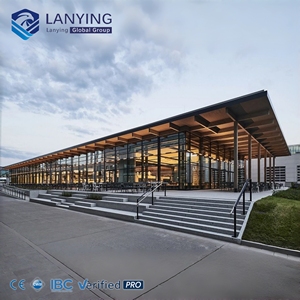
Architectural pre-engineered steel frames with high-performance heat-proof standing seam roofing systems, delivering uncompromised aesthetic and thermal control.
Technical SpecsSpecifying pre-engineered building (PEB) roofing for the Greater Moscow Region presents a unique climatic challenge. Moscow experiences extreme continental weather swings: winter temperatures plunge as low as -30°C, while summer solar radiation can elevate bare metal roof temperatures up to +70°C. In logistics hubs and manufacturing halls, this intense summer heat drives interior ambient temperatures far above acceptable workplace and storage thresholds, overburdening HVAC systems and spiking power consumption.
Conversely, during the prolonged six-month heating season, substandard metal roofs suffer catastrophic thermal bridging, internal condensation drip, and progressive moisture accumulation inside the insulation blanket. Our PEB Roof Heat Proof Solutions integrate high-reflectance exterior metal cladding with continuous high-density PIR (Polyisocyanurate) or basalt rock wool cores. This configuration neutralizes radiant summer solar gain (Solar Reflectance Index SRI ≥ 78) while maintaining compliance with Russian Building Code SP 50.13330.2012 (Thermal Performance of Buildings), delivering thermal resistance ratings ($R_0$) reaching up to 4.5–5.0 $(m^2\cdot K)/W$.
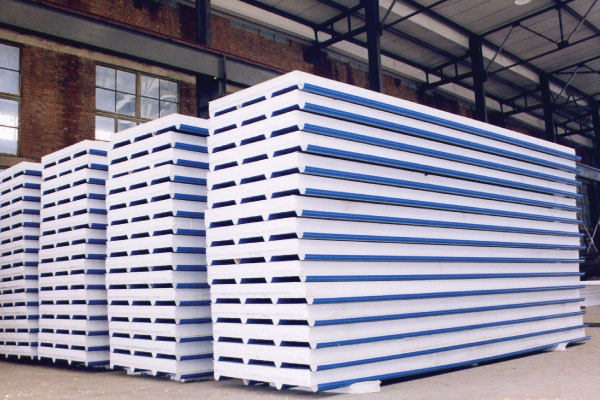
Choosing the correct insulation core is critical to balancing fire safety regulations (Federal Law No. 123-FZ), load-bearing capacity under heavy snow, and life-cycle heating and cooling costs.
Closed-cell polyisocyanurate provides the absolute highest thermal resistance per millimeter of thickness. Ideal for high-efficiency logistics parks, temperature-regulated pharmaceutical hubs, and cold storage warehouses across Moscow.
Manufactured from pure volcanic rock fibers, basalt mineral wool is completely non-combustible (Class KM0 / NG). It is mandatory for industrial complexes with strict Russian fire protection regulations (SP 2.13130).
Expanded Polystyrene provides a cost-effective, ultra-lightweight solution for secondary agricultural sheds, non-hazardous assembly workshops, and economical roof retrofit overlays over existing cold single-skin metal cladding.
Comprehensive comparative performance metrics calculated in accordance with SP 20.13330 (Loads and Actions for Snow Region III/IV) and SP 50.13330 (Thermal Protection).
| Insulation System | Core Thickness | Thermal Resistance ($R_0$) | Solar Reflectance (SRI) | Fire Safety (123-FZ) | Snow Load Rating | Moscow Compliance |
|---|---|---|---|---|---|---|
| PIR Continuous Sandwich | 120 mm | 5.45 $(m^2\cdot K)/W$ | 82 (PVDF / Cool Roof) | G1 / Flame-retardant | Up to 3.2 kPa (320 kg/m²) | Exceeds SP 50.13330 |
| Basalt Mineral Wool | 150 mm | 3.75 $(m^2\cdot K)/W$ | 78 (High-grade PE) | KM0 / Non-combustible | Up to 2.8 kPa (280 kg/m²) | Mandatory for Fire Category A/B |
| Double-Skin Built-up System | 160 mm (Glass/Rockwool) | 3.90 $(m^2\cdot K)/W$ | 75 (Standard PPGI) | KM1 Composite | Determined by Z-Purlin pitch | Standard Factory Specification |
| EPS Roof Panel | 100 mm | 2.70 $(m^2\cdot K)/W$ | 72 (Polyester) | G3 / G4 Combustible | Up to 2.0 kPa (200 kg/m²) | Permitted for Class V Structures |
From the Central Ring Road (TsKAD) logistics nodes to heavy engineering districts in New Moscow, our heat-proof PEB roofing systems resolve critical local operating demands.
Large-format fulfillment hubs in Domodedovo, Podolsk, and Noginsk requiring vast clear-span portal roofs. Our PIR continuous joint panels suppress the heavy summer solar load across 50,000+ m² surfaces, reducing chiller operating budgets by up to 34%.
Vegetable storehouses and dairy cold hubs in Stupino and Dmitrov. The high thermal resistance of our PIR roof-to-wall interlocking connections eliminates interstitial condensation and thermal bridges during harsh winter freezes.
Precision cleanrooms and microelectronics fabrication plants in Technopolis Moscow (Alabushevo & Rudnevo). Utilizing non-combustible basalt rock wool panels to satisfy stringent Russian fire regulations (KM0) while maintaining rigorous interior climate stability.
Over-roofing retrofits across Soviet-era industrial zones in Lyubertsy and Khimki. Converting old, leaky, single-skin corrugated zinc roofs into modern, well-insulated, energy-conserving thermal envelopes without halting ongoing production machinery inside.

Supplying structural steel and thermal building envelopes to the Moscow market requires unwavering adherence to Russian federal building standards. Structural designs must account for Snow Load Region III and IV under SP 20.13330.2016, where standard roof snow loads reach 1.8 to 2.4 kPa (180 to 240 kg/m²), compounded by aerodynamic drifting in multi-span configurations.
Our engineering department verifies all structural dimensions, purlin spans, and panel deflection limits according to Russian limit states (First and Second Limit States - PGU/SGU):
From initial structural calculation to component packaging and on-site technical erection guidance, Joint Star Steel Structure Ltd. eliminates intermediary contractor margins and delivers proven pre-engineered building reliability.
Comprehensive pre-engineered and structural steel frameworks, continuous color-coating lines, cold-formed floor decking profiles, and automated EPS/PU/Rockwool sandwich panel production.
We eliminate structural misalignment by delivering coordinated structural concepts, anchor bolt plans, foundation design consultancy, and reinforced concrete (RCC) coordination under a single contract.
Our structural team utilizes Tekla, SAP2000, and PKPM to optimize steel consumption without compromising safety, saving our international clients 12% to 18% in total steel tonnage.
Over 100 dedicated structural engineers, certified high-penetration welders, and erection site supervisors with verified project deliveries across 352+ worldwide industrial developments.
High-capacity automated rolling mills and panel corrugators deliver short production turnarounds, enabling rapid containerized shipping and seamless rail transit to Greater Moscow hubs.
Every beam, truss, purlin, and roof panel is individually stamped with matching fabrication drawings (KMD/KM equivalent), ensuring rapid error-free erection even in sub-zero winter temperatures.
Clear, technical, and regulatory answers addressing common procurement inquiries from Chief Project Engineers (GIP), general contractors, and facility asset managers.
Moscow experiences significant seasonal temperature swings. During June and July, solar radiation can elevate the surface temperature of standard dark metal roofs to over +65°C to +70°C. In expansive modern logistics warehouses (20,000–80,000 m²), this intense radiant energy turns uninsulated or poorly insulated interiors into heat traps, compromising food, pharmaceutical, and consumer goods storage while overloading chillers.
Furthermore, during the freezing winter (-25°C to -30°C), an engineered heat-proof roof works in reverse as an essential thermal envelope. Without continuous high-performance PIR or rock wool cores, warm interior humid air condenses against cold purlins, creating internal moisture drip, rotting insulation bats, and accelerating frame corrosion. A heat-proof roof provides essential year-round microclimate equilibrium.
The choice between PIR and Rock Wool depends strictly on your building’s fire hazard classification (Category A, B, V, G, or D) and required fire resistance rating (REI) under Russian Federal Law No. 123-FZ and SP 2.13130:
Specify Basalt Rock Wool (KM0 / Non-combustible): Mandatory for fire separation walls, multi-tenant industrial parks, public display buildings, power sub-stations, and high-hazard petrochemical or metalworking production plants requiring up to REI 120 fire endurance.
Specify PIR (Polyisocyanurate - G1 / G2): Highly recommended for logistics distribution centers, food processing plants, pharmaceutical warehouses, and cold storage facilities where thermal efficiency is paramount ($\lambda \approx 0.020$ W/m·K) and lower dead weight is desired. Modern flame-retardant PIR forms a carbonized protective crust when exposed to flame, preventing continuous combustion.
The Moscow Oblast falls into Russian Snow Load Region III with edge pockets in Region IV. The standard design snow load ($S_g$) ranges from 1.8 kPa to 2.4 kPa (180 to 240 kg/m²), which can double in roof valleys, parapet junctions, and canopy intersections due to wind-driven snow drifting ($\mu$ coefficient).
We engineer our roof panels and sub-purlin systems using deep-rib trapezoidal corrugated profiles (such as 750-type deck or 4-rib sandwich profiles) with high-tensile steel skins (up to 0.6–0.7 mm thickness) and high-density foam/rockwool cores. Purlin spacing is adjusted to 1.2 m–1.5 m rather than the tropical standard of 2.0 m, preventing panel deflection under heavy snow accumulation.
Freeze-thaw cycles subject painted steel surfaces to intense mechanical micro-stresses. Our exterior sheets use hot-dip galvanized substrates carrying a minimum of 180 to 275 g/m² zinc mass or Galvalume (AZ150). The exterior face is coated with a 5-micron corrosion-resistant primer followed by a 20–25 micron topcoat of High-Durability Polyester (HDP), Polyurethane (PUR/Pural), or Polyvinylidene Fluoride (PVDF).
This coating package provides exceptional resistance to UV chalking, acid rain, and freezing moisture penetration, achieving corrosion protection ratings compliant with GOST 34180 and ISO 12944 (C3/C4 industrial atmospheres).
Yes. For international and cross-border deliveries to Russian and Eurasian clients, our technical department generates complete structural calculation models (3D Tekla Structures & Staad Pro), member loading tables, foundation reaction data (for local Russian GIP/civil engineers to verify footing designs), and detailed assembly drawings (KM/KMD equivalent).
Packing lists, shipping documents, assembly markings, and installation manuals are provided with full English technical specifications and clear metric dimensioning for straightforward Russian technical review and site assembly.
International freight demands robust, ocean- and rail-grade protective packaging. All sandwich panels are covered with a protective UV-resistant PE film to guard against scratches during handling. Panels are stacked on custom-made EPS foam shock-absorbing blocks and shrink-wrapped with waterproof multi-layer polyethylene stretch film.
Primary steel columns and welded built-up girders are bundled with corner protectors, heavy-duty steel strapping, and designated slinging points. Containers are loaded with desiccants to prevent sea-sweat and condensation oxidation during long-haul transit to Moscow customs terminals.
Whether you are designing a 40,000 m² Class-A distribution warehouse in Greater Moscow or retrofitting an operational production plant, our engineering team will calculate your heat-transfer coefficients, snow-load requirements, and deliver a comprehensive factory-direct proposal.