ISO 9001 / CE Certified Structural Engineering

OEM/ODM RCC Building Construction Factory & Supplier in Osaka

Engineered Precast Concrete & Hybrid Pre-Engineered Steel Systems Built for Kansai Seismic Durability, Typhoon Resistance, and Rapid Industrial Commissioning.

Industrial Building Systems & Engineered Structural Modules

Accelerate your capital projects across the Osaka-Kobe industrial basin with our factory-controlled building envelope systems, structural framing, and high-performance partition boards engineered to international and JIS-comparable mechanical thresholds.

Bridging RCC Foundations & Pre-Engineered Superstructures in Osaka

Industrial civil construction across Greater Osaka faces a unique trifecta of geotechnical and structural hurdles: coastal marine alluvial soil mechanics, strict compliance with the Japanese Building Standards Act (Kenchiku Kijun-hō), and unprecedented timeline compression driven by the economic influx around Osaka Bay and Yumeshima. While conventional cast-in-situ Reinforced Cement Concrete (RCC) provides unmatched compressive stiffness and foundation stability, its prolonged curing schedules and high labor-dependence present prohibitive cost liabilities in Kansai's competitive subcontractor market.

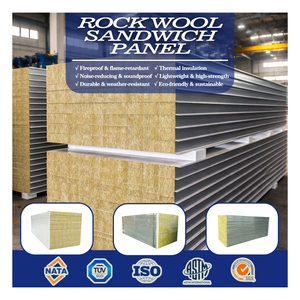
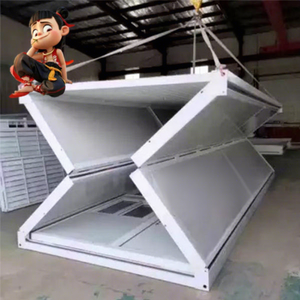
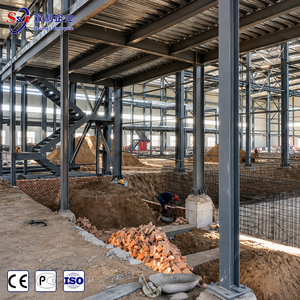
As a premier OEM/ODM manufacturer with 15+ years of structural fabrication heritage and over 352 completed industrial installations, our engineering group bridges this bottleneck. We deliver hybrid SRC (Steel-Reinforced Concrete) and Pre-Engineered Building (PEB) frameworks where precast RCC substructures, massive bored pile foundations, and anchor-embedded ground slabs merge seamlessly with computer-modeled structural steel superstructures, insulated thermal sandwich panels, and non-combustible MGO/Rock Wool partition envelopes.

Through off-site CNC robotic plasma cutting, submerged arc welding, and factory-certified rebar tie cages, we reduce on-site construction schedules by up to 45% while adhering strictly to high ductility ratios and seismic moment-frame performance.

352+ Global Projects Handed Over
45% Faster Erection Cycle
100+ Dedicated Structural Engineers
JIS/CE Certified Grade Steels
Engineered for Osaka's Key Industrial & Logistics Corridors

Customized engineering envelopes specifically tuned to the environmental load specifications, seismic zoning, and zoning restrictions across Kansai municipalities.

Osaka Bay & Nanko Port Logistics Terminals

Facilities situated across reclaimed coastal land (such as Sakishima and Yumeshima) require deep RCC bored pile caps combined with C35/C45 marine-grade sulfate-resistant concrete. Our factory fabricates corrosion-resistant hot-dip galvanized structural steel (exceeding 600g/m² zinc mass) paired with Polyurethane (PU) and Rock Wool sandwich roof systems that withstand saline sea breezes and aggressive typhoon wind-uplift pressures up to 2.4 kPa.

Higashiosaka Advanced Manufacturing Clusters

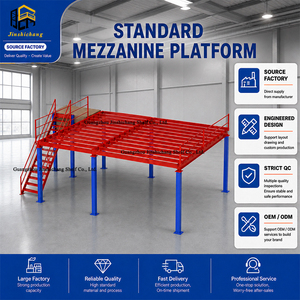
In dense manufacturing districts characterized by strict property boundary setbacks and vibration tolerances, our OEM mezzanine floors and portal frame workshop kits maximize indoor production volume. Heavy multi-floor steel platform lofts link with reinforced concrete column collars, absorbing repetitive dynamic vibration from 20-ton stamping presses and precision CNC production lines.

Kita-Settsu & Ibaraki Multimodal Distribution Hubs

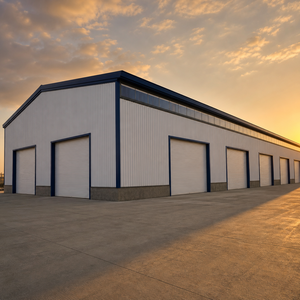
Positioned as the northern distribution gate linking the Meishin and Shin-Meishin Expressways, fast-turnaround cold-chain warehouses demand zero thermal leakage. We supply specialized EPS and PU cam-lock sandwich panel walling, heavy RCC sub-base insulation slabs, and fireproof MGO thermal breaks designed to uphold strict refrigerated storage standards while operating at continuous -25°C interiors.

Sakai-Senboku Petrochemical & Heavy Industry Belt

Heavy industrial refineries require uncompromised fire isolation and seismic blast mitigation. Our Class-A non-combustible MGO board interior partitions, rock wool sandwich panels with 2-hour MLIT equivalent fire endurance, and integrated RCC containment trenches deliver total compartmental safety under volatile thermal exposure environments.

Technical Specifications: Core Panel & Structural Systems

Compare performance attributes to align your Osaka project specifications with structural safety, energy codes, and Japanese Building Standards Act requirements.

Structural / Core System Primary Material Grade Thermal Conductivity (λ) Fire Classification Seismic / Load Resistance Regional Code Status
Rock Wool Sandwich Panel Basalt Wool / Galvalume 0.5-0.8mm 0.038 - 0.044 W/m·K Class A1 Non-Combustible Wind uplift up to 2.8 kPa MLIT Code Compliant
PU (Polyurethane) Panel Rigid PIR / PUR Cyclopentane 0.020 - 0.024 W/m·K B1 / Flame Retardant High shear & skin-delamination bond Cold Storage Standard
EPS Sandwich Panel Expandable Polystyrene 18-24 kg/m³ 0.033 - 0.038 W/m·K B2 Self-Extinguishing Lightweight dead-load reducer General Commercial
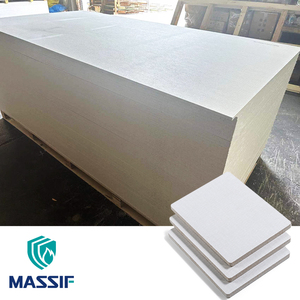
MGO Fireproof Board High-Purity MgO / Sulfate Matrix 0.14 - 0.18 W/m·K Class A1 Incombustible Zero halogen chloride cracking Cleanroom / Fire Wall
Hybrid RCC Substructure + PEB JIS G3101 SS400 / SM490 + C35 RCC Composite Insulation 2-Hour Fire Protection Shell Seismic Grade 3 (1.5x Code Standard) BSL Verified Equivalent

Proven Manufacturing Depth & Turnkey Engineering Control

Eliminate coordination gaps between offshore component manufacturing and domestic site handover. We manage the entire structural pipeline under unified engineering accountability.

End-to-End Design & Turnkey EPC Package

From geotechnical soil analysis and foundation structural calculations to high-precision shop drawings (Shop Drawings & Erection Marks), we combine civil RCC design, steel structure fabrication, insulated cladding production, and site advisory under a single contract.

Rigorous JIS / CE / ISO Compliance

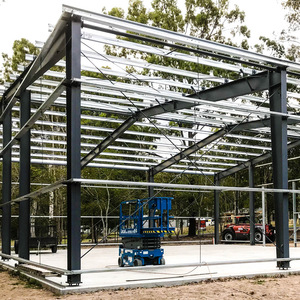
All built-up primary columns, rafters, and secondary cold-formed Z/C purlins are fabricated from certified structural mill steel comparable to JIS G3101 (SS400, SM490). Complete Non-Destructive Testing (NDT), ultrasonic flaw detection on full-penetration butt welds, and mill test certificates are provided with every shipping lot.

15+ Years Track Record with 352+ Projects

Founded in 2010, our engineering organization has completed over 352 turnkey steel structure facilities and precast building projects globally for 120+ demanding industrial accounts. Our 100+ structural engineers, fabrication specialists, and certified quality managers ensure uncompromised dimensional fidelity.

Optimized Sea Freight Logistics to Osaka Port

All modular structural beams, pre-engineered purlins, and sandwich panels are marked with CNC coding, packed into heavy-duty sea transport bundling frames, and containerized for direct multimodal delivery through the Port of Osaka or Kobe Port, slashing field transit damage and sorting labor.

Frequently Asked Questions for Kansai Building Procurement

Detailed technical insights for project directors, general contractors, and corporate facility procurement teams sourcing OEM/ODM structural systems for Osaka developments.

How do your OEM/ODM steel and RCC systems conform to the Japanese Building Standards Act (Kenchiku Kijun-hō)?
Our structural designs are engineered in accordance with international ultimate limit state (ULS) and serviceability limit state (SLS) calculations, easily verified against Japanese Kenchiku Kijun-hō requirements. We provide complete 3D structural analysis models (via Tekla / SAP2000), material test certificates matching JIS G3101 (SS400/SM490) and JIS G3112 (SD295/SD345 rebar equivalents), and WPS/PQR welding procedure certifications. Japanese first-class registered architects (Kenchi-kushi) can readily cross-verify our engineering documentation for local municipal building confirmation applications (Kenchiku Kakunin Shinsei).
Can your factory accommodate seismic damping connections suitable for the Nankai Trough seismic zone?
Yes. Osaka requires high lateral force resistance factors (Co coefficient values adjusted up to 0.3 or higher depending on geotechnical soil category). Our detailing team designs heavy moment-resisting connections, slotted damper bolt configurations, buckling-restrained braced frames (BRBF), and anchor bolt groupings embedded into high-strength RCC pile caps. This absorbs energy effectively during extreme cyclical seismic displacement without inducing catastrophic brittle weld failures.
How do you safeguard building envelopes from maritime chloride attack along Osaka Bay?
For coastal facilities in Yumeshima, Nanko, or Sakai-Senboku, we utilize structural steel coated with epoxy zinc-rich primers followed by high-build micaceous iron oxide (MIO) intermediate coats and polyurethane/fluorocarbon topcoats exceeding 250 microns total dry film thickness (DFT). Alternatively, hot-dip galvanizing to ISO 1461 / JIS H8641 standards is applied. For envelope cladding, our sandwich panels employ PVDF (polyvinylidene fluoride) or HDP (high-durability polyester) coated 55% Al-Zn Galvalume steel skins with superior 1,000-hour neutral salt spray test ratings.
What is the typical lead time from design approval to container arrival at Osaka or Kobe Port?
A standard 5,000 m² to 15,000 m² pre-engineered building package requires 3 to 4 weeks for comprehensive LOD 400 fabrication drawings and shop approvals. Factory fabrication, CNC cutting, automated welding, trial assembly, blasting, and painting require approximately 4 to 6 weeks. Direct container shipping to Osaka Port or Kobe Port typically takes 12 to 18 transit days, allowing contractors to complete primary structural handovers well within a 12-to-16-week window.
Which core material should we specify: Rock Wool, PU, or Fireproof MGO Boards?
Selection depends on municipal fire zoning and operational usage: Rock Wool is recommended for boundary walls, fire separation corridors, and factories requiring Class A1 zero-smoke non-combustible compliance. PU / PIR delivers the highest R-value per thickness (λ = 0.020-0.024 W/m·K) making it mandatory for cold chain distribution facilities, frozen food storage, and precision temperature-controlled cleanrooms. MGO Boards are ideal for moisture-heavy interior partitions, chemical storage, and areas needing non-toxic, non-halogen fire separation with superior surface impact resistance.
Do you provide on-site technical supervision or erection advisory in Japan?
Yes. In addition to delivering clear, 3D assembly-coded drawings and pre-punched erection kits, we provide bilingual engineering technical advisors (English/Japanese coordination support) for on-site quality oversight, anchor bolt position auditing, torque verification on high-strength bolts, and composite sandwich panel weather-seal inspections throughout Osaka and the wider Kansai prefecture.

Accelerate Your Next Osaka Industrial Construction Project

Partner with an established OEM/ODM factory holding 15+ years of verified international execution experience. Send us your architectural schematics, floor loads, or site layout for a comprehensive structural proposal, seismic calculation review, and itemized bill of quantities.

Contact Us