Engineered to interface seamlessly with glass wool sandwich assemblies for industrial, agricultural, and commercial developments across Metro Manila, Calabarzon, Central Luzon, Visayas, and Mindanao.
Established track record delivering steel structures & composite panels since 2010.
Full-scale industrial warehouses, logistics depots, and multi-span processing facilities.
Trusted across PEZA ecozones, Southeast Asian logistics hubs, and export corridors.
Specialized structural calculation, BIM detailing, automated laminating & field erection.
The Philippine building sector faces an uncompromising convergence of environmental stresses: sustained relative humidity ranging between 75% and 90%, frequent super-typhoons generating sustained wind gusts upwards of 260 km/h (PAGASA Category 5), intense solar radiation that drives roof surface temperatures beyond 68°C, and stringent regulatory oversight enforced under the Revised Fire Code of the Philippines (RA 9514). In this rigorous geographic matrix, traditional uninsulated corrugated GI sheets and basic EPS (expanded polystyrene) panels increasingly fail modern procurement standards. Glass wool core sandwich panels have emerged as the premier structural building envelope solution for industrial developers, logistics operators, and PEZA-registered global manufacturers requiring Class A non-combustibility, superior sound insulation against torrential tropical rainfall, and long-term thermal conductance stability.
Critical Architectural Insight: Under Section 10.2.6.5 of the Philippine Fire Code (RA 9514), industrial manufacturing plants, hazardous material storage, and commercial facilities must utilize interior and exterior cladding systems with verified flame-spread and smoke-development classifications meeting ASTM E84 / UL 723 Class A. Glass wool panels inherently fulfill this standard, boasting a flame spread index ≤ 25 and smoke-developed index ≤ 50, unlike combustible foam plastics.
Rainfall noise mitigation represents a critical yet frequently overlooked operational requirement across Philippine factories and business process outsourcing (BPO) campuses. Monsoon downpours commonly generate ambient noise levels inside single-skin metal sheds exceeding 78 to 84 dBA, degrading employee productivity and severely violating occupational health parameters. Glass wool cores feature an intricate three-dimensional matrix of spun biosoluble borosilicate glass microfibers (mean fiber diameter 4.0 to 6.5 μm) bonded with thermosetting resin. This tortuous porous labyrinth traps acoustic energy through frictional dissipation, delivering a Sound Transmission Class (STC) rating of 32 to 38 dB and a Noise Reduction Coefficient (NRC) between 0.85 and 0.95. Simultaneously, with thermal conductivity (λ) measured between 0.031 and 0.036 W/m·K, a 100mm glass wool panel provides an effective thermal resistance value of R-3.125 m²·K/W (R-17.7 h·ft²·°F/Btu), lowering internal warehouse temperatures by 8°C to 14°C without continuous HVAC over-utilization.
A critical engineering failure mode observed in poorly manufactured mineral fiber panels across coastal Philippine installations is core saturation and adhesive delamination driven by capillary vapor drives. Our continuous automated lamination lines resolve this environmental vulnerability through two synchronized mechanisms: first, using water-repellent silane-treated glass wool with a hydrophobic rating exceeding 98.5% (tested under ASTM C1104 / JIS A9504); second, utilizing high-performance polyether polyol dual-component polyurethane (PUR) edge seals and automated polyurethane reactive hot-melt adhesive spreading. The PUR edge barrier stops driving rain infiltration at the tongue-and-groove joint profile, while continuous surface lamination under calibrated heated presses guarantees tensile bond strength exceeding 0.12 MPa, preventing skin delamination even under repetitive typhoon wind pressure reversals.
Cross-referencing critical thermal, acoustic, fire, and durability benchmarks to guide procurement decisions for structural engineers, project management teams, and MEP consultants.
| Performance Parameter | Continuous Glass Wool (Our Spec) | Standard Rock Wool | EPS Core Panel | PIR (Polyisocyanurate) |
|---|---|---|---|---|
| Thermal Conductivity (λ) | 0.031 – 0.036 W/m·K | 0.038 – 0.044 W/m·K | 0.039 – 0.042 W/m·K | 0.020 – 0.024 W/m·K |
| Fire Classification (ASTM E84 / EN 13501) | Class A / A2-s1,d0 (Non-Combustible) | Class A / A1 (Non-Combustible) | Class B1/B2 (Combustible Core) | Class B1 / B-s1,d0 (Fire-Retardant) |
| Acoustic Performance (NRC / Rain Noise) | NRC 0.85 – 0.95 (Exceptional Dampening) | NRC 0.80 – 0.90 (Very Good) | NRC 0.20 – 0.30 (Poor / Echoing) | NRC 0.15 – 0.25 (Reflective) |
| Nominal Density | 48 – 64 kg/m³ (Lightweight, High Resilience) | 80 – 140 kg/m³ (Heavy Dead-Load) | 12 – 20 kg/m³ (Ultra-lightweight) | 40 – 45 kg/m³ (Moderate) |
| Moisture Absorption (Hydrophobic Rate) | > 98.5% Hydrophobic (Silane Treated) | > 98.0% Hydrophobic | Low absorption, but mold-vulnerable | Closed-cell (< 2.0% volume) |
| Dead-Load Impact on Steel Frame | Low (Reduces Primary Steel Weight) | High (Requires Heavier Purlins/Trusses) | Very Low | Low to Moderate |
| Suitability: Philippine Typhoon Purlin Spacing | High Structural Span (up to 2.4m purlins) | High Structural Span | Moderate (Prone to mid-span flex) | High Structural Span |
Proven operational configurations engineered to answer specific sectoral and environmental challenges throughout Luzon, Visayas, and Mindanao.
Designed for semiconductor and precision engineering facilities in Cavite Economic Zone (CEZ), Laguna Technopark, Clark Freeport, and First Philippine Industrial Park (FPIP). The dust-free borosilicate fibers and airtight interlocking tongue-and-groove joint eliminate particle shedding, upholding ISO 14644 cleanroom integrity while lowering facility cooling loads by over 28%.
Applied as interior dividing acoustic partitions and rooftop mechanical screening enclosures across Metro Manila (BGC, Ortigas, Eastwood) and Cebu IT Park. These panels attenuate loud generator humming, external traffic clamor, and torrential rain acoustic transference, preserving speech intelligibility and complying with DOLE-OSHC acoustic comfort regulations.
Engineered for high-throughput distribution complexes in Batangas, Pampanga, and Bulacan subjected to Category 4 and 5 typhoons under the National Structural Code of the Philippines (NSCP 2015). Panels feature deep trapezoidal exterior profiles and high-gauge Aluzinc skins designed to resist negative uplift pressures exceeding ±3.8 kPa without fastener tear-out.
Tailored for high-density agricultural facilities in Tarlac, Bukidnon, and General Santos. Equipped with anti-microbial factory-applied PVDF coatings and hydrophobic core treatments that resist corrosive ammonia fumes, periodic high-pressure chemical washdowns, and condensation pooling, maintaining thermal homeostasis to minimize livestock mortality rates.
Deployed as boundary envelopes in multi-temperature food hubs and marine logistics terminals across Davao, Cagayan de Oro, and Cebu South Harbor. When paired with high-performance vapour-seal mastics, the dimensional stability of glass wool eliminates cold bridges and thermal expansion buckling across internal-to-external temperature deltas exceeding 35°C.
Constructed in close proximity to saline marine spray at Subic Bay Freeport, Batangas Container Terminal, and PHIVIDEC Industrial Estate. Featuring AZ150 Aluzinc substrates (55% Aluminum, 43.4% Zinc, 1.6% Silicon), these panels resist salt-spray blister corrosion up to 1,500 hours (ASTM B117), exceeding standard galvanized steel durability by four times.
Strategic regulatory shifts transforming procurement frameworks from traditional metal roofing to advanced factory-bonded composite systems.
Mandatory energy efficiency compliance enacted by DPWH now requires strict Solar Heat Gain Coefficients (SHGC) and Overall Thermal Transfer Values (OTTV) for industrial spaces over 10,000 m². Glass wool panels provide the quantifiable R-values required to secure operational occupancy permits.
Institutional property developers (e.g., Ayala Land, SM Prime, Megaworld) and global tech occupiers demand LEED Gold or EDGE Advanced certification. Our glass wool features up to 65% post-consumer recycled cullet glass, reducing embodied carbon and qualifying for Materials & Resources credits.
Traditional field installation of loose fiberglass blankets below metal decks frequently suffers from sagging, vapour barrier punctures, and moisture traps in Philippine humidity. The market has decisively pivoted toward continuous factory-laminated sandwich panels that guarantee uniform density.
Under the national “Build Better More” initiative, expressways (CLLEx, SLEX TR4) and port expansions are decentralizing logistics away from Port of Manila toward Batangas and Subic, fueling massive demand for modern cold-chain and dry-goods distribution centers requiring high fire safety envelopes.
Combining 15+ years of heavy structural manufacturing experience with advanced sandwich panel lamination lines, delivering seamless EPC project execution under one accountable contract.
Rooted in heavy pre-engineered steel building (PEB) design, fabrication, and continuous sandwich panel lamination, we have successfully completed 352+ capital industrial projects across international markets, eliminating contractor interface risk.
From conceptual structural calculations and shop drawings to automated fabrication of built-up columns, rafters, purlins, and matching glass wool sandwich panels, we supply the complete building envelope with marked piece identifiers and bolt lists.
Our plants operate high-speed automated continuous sandwich panel laminating lines with integrated PUR side-sealing injection, computerized transverse sawing, and double-belt continuous pressing for optimal flatness and bond strength.
Every shipment is accompanied by complete Mill Test Certificates (MTCs), ASTM E84 Class A fire certification, tensile bond test verification, and coating thickness reports (Aluzinc AZ150 / Galvalume), ensuring zero friction during local building inspections.
Panels are packaged with automated PE protective film, foam edge guards, moisture-barrier shrink wrapping, and heavy-duty timber dunnage engineered for containerized maritime shipment directly to Manila (MICP), Batangas, Subic, Cebu, or CDO ports.
Our team of 100+ engineers provides structural concept modeling, purlin deflection analysis (L/200 & L/240), fastener engineering, and flashings/trim detailing tailored precisely to your project's local wind zone under NSCP 2015.
Actionable answers addressing import documentation, fire compliance, wind calculations, installation protocols, and lifecycle durability across local job sites.
Under the Revised Fire Code of the Philippines (RA 9514), industrial manufacturing plants, hazardous material storage warehouses, institutional buildings, and assembly spaces require building envelope materials to achieve verified non-combustible ratings under ASTM E84 / UL 723 or equivalent PNS (Philippine National Standards). Glass wool panels are intrinsically inorganic, manufactured from spun silica fibers with thermosetting binders. They achieve a Flame Spread Index (FSI) ≤ 25 and Smoke Developed Index (SDI) ≤ 50, conferring an official Class A fire rating.
Unlike standard EPS or non-fire-retardant polyurethane cores that soften, melt, and fuel flashover fires at 250°C, glass wool fibers maintain structural matrix cohesion up to 650°C without generating toxic hydrogen cyanide gas, enabling rapid sign-off by BFP fire safety inspectors during Building Occupancy Inspections.
The National Structural Code of the Philippines (NSCP 2015, 7th Edition) classifies the country into three distinct wind zones: Zone 1 (Basic Wind Speed V = 300 – 320 km/h, covering Eastern Luzon, Samar, Leyte, and Bicol), Zone 2 (V = 260 km/h, covering Western Luzon, Metro Manila, and Western Visayas), and Zone 3 (V = 200 km/h, covering Central and Southern Mindanao).
For roof and wall panels, velocity pressure $q_z$ is calculated using the formula $q_z = 0.613 K_z K_{zt} K_d V^2$, incorporating topographic factors ($K_{zt}$) and wind directionality ($K_d$). In coastal Zone 1 installations, negative corner and eave suction pressures can exceed ±3.6 kPa. Our technical engineering division prepares structural panel deflection and fastener pull-out calculations, specifying appropriate steel skin gauges (0.5mm / 0.6mm exterior) and recommended purlin spacings (typically 1.2m to 1.8m) to ensure total resistance against skin peeling or fastener blow-off during super-typhoon events.
To eliminate moisture absorption in humid Philippine coastal environments, our glass wool fibers are chemically treated during production with a silane-based water-repellent emulsion, achieving a hydrophobic water-repellency rate exceeding 98.5% in accordance with ASTM C1104. The fibers cannot absorb ambient moisture vapour through capillary action.
Furthermore, our advanced panels feature high-density polyurethane (PUR) or PIR side seals integrated along the longitudinal tongue-and-groove joint. This seals the fibrous core off from external moisture and water vapor ingress. Even under relentless tropical monsoons, the continuous polyurethane-reactive (PUR) adhesive bond preserves a tensile strength > 0.12 MPa, preventing internal fiber compaction, sagging, or skin delamination across decades of field service.
While both glass wool and rock wool (mineral stone wool) are Class A non-combustible materials, their physical and structural attributes serve distinct building criteria:
1. Weight & Dead Load: Glass wool panels feature a nominal core density of 48 to 64 kg/m³, making them approximately 40% to 55% lighter than rock wool panels (typically 100 to 120 kg/m³). This significantly reduces the structural dead load on primary steel frames and secondary purlins, enabling structural engineers to optimize overall steel tonnage and foundation costs under Philippine seismic zone 4 conditions.
2. Acoustic Attenuation: Glass wool offers slightly superior sound absorption across middle-to-high frequencies, ideal for damping rainfall drumming noise on large-span warehouse roofs.
3. Fire Resistance: Rock wool withstands temperatures above 1,000°C (recommended for 2 to 4-hour certified firewalls and boiler rooms), whereas glass wool withstands up to 650°C, which is ideal for broad industrial roofing, exterior wall cladding, and internal partitions.
We supply complete international trade documentation required by the Philippine Bureau of Customs (BOC) and authorized brokerages, including:
• Commercial Invoice & Detailed Packing Lists (itemizing panel piece marks, lengths, colors, and bundle volumes).
• Clean on Board Ocean Bills of Lading (B/L) consigned to Manila (MICP / South Harbor), Subic, Batangas, Cebu, or Cagayan de Oro.
• Mill Test Certificates (MTCs) to EN 10204 3.1 certifying steel mechanical properties, yield strength, and AZ150 coating thickness.
• Certificate of Origin (COO) enabling preferential import tariff duty treatment under regional economic trade agreements.
• Quality & Fire Test Reports (ASTM E84 Class A). If your facility is located within a Philippine Economic Zone Authority (PEZA) zone, we assist your registered broker in applying the required VAT-zero rated and duty-exempt importation procedures.
For installations situated within 10 km of Philippine coastlines (such as facilities in Cavite, Batangas, Subic, Cebu, or Davao), standard commercial galvanized steel (Z120 or Z180) is prone to premature white rust and pitting corrosion. We specify continuous hot-dip 55% Aluminum-Zinc alloy coated steel (Galvalume / Aluzinc conforming to ASTM A792 / JIS G3321) with a minimum coating mass of AZ150 (150 g/m² total both sides).
For high-solar or chemical exposure, we apply a high-durability Super Polyester (HDP) or Polyvinylidene Fluoride (PVDF) topcoat (minimum 20 μm topcoat over a 5 μm corrosion-inhibiting primer), ensuring chalking resistance, color retention, and salt spray endurance exceeding 1,500 hours under ASTM B117 testing.
The joint selection depends entirely on your architectural application:
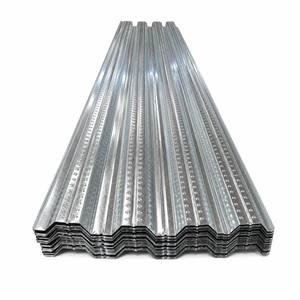
• For Roofing: We recommend our 3-rib or 4-rib deep corrugated trapezoidal profile with anti-capillary drainage grooves. The panel overlap joint is secured with self-drilling screws equipped with heavy-duty EPDM sealing washers. We also provide saddle washers (storm washers) to distribute wind uplift loads during typhoons and prevent water pooling.
• For Exterior Walls: Our concealed-fastener (hidden screw) tongue-and-groove joint provides an uninterrupted, sleek modern facade that shelters fastener heads from direct rainfall and ultraviolet degrade.
• For Interior Partitions & Cleanrooms: A double-groove flat tongue-and-groove joint profile creates smooth wall planes that are easy to sanitize and seal with anti-fungal silicones.
Typical factory production for an average 5,000 to 15,000 square meter industrial order is 15 to 20 working days following final shop drawing and color sample approvals. Ocean freight transit times from major manufacturing export ports to Port of Manila (MICP) or Subic Bay typically range from 7 to 12 days; transit to Cebu or Batangas ranges from 9 to 14 days.
We pack panels in optimized bundle lengths designed for standard 40ft High Cube (40'HQ) shipping containers (maximum panel length approximately 11.85 meters) or arrange flat-rack / break-bulk charter vessels for oversized panels up to 15+ meters, accompanied by detailed lifting and site offloading diagrams.
Whether you require full pre-engineered structural building packages, detailed wind load calculations under NSCP 2015, or certified Class A glass wool composite wall and roof panels, our senior engineering team is ready to analyze your drawings.