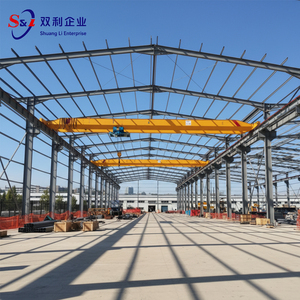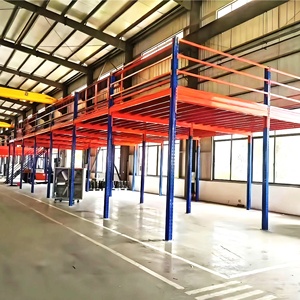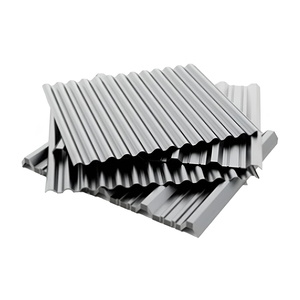
Direct factory supply of heavy-duty pre-engineered building frameworks, multi-tier platforms, access envelope components, and certified roofing elements manufactured for industrial deployment.
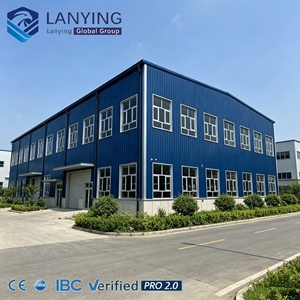
A technical treatise on structural mechanics, microclimate aerodynamic load mitigation, and metallurgy standards for industrial exterior canopies across Central and Eastern Europe.
In accordance with MSZ EN 1991-1-3 (Eurocode 1), industrial structures deployed within Hungary's Great Plain (Alföld) and Transdanubian regions must withstand characteristic ground snow loads ($s_k$) ranging from 1.25 to 1.60 kN/m². Our OEM cantilever canopies integrate specialized aerodynamic roof slopes and tapered moment frames engineered to eradicate snow drifting accumulations at the junction between primary warehouse walls and extended canopy eaves, eliminating structural deflection risks.
Hungary's flat topography creates substantial wind vortex patterns around large logistics complexes. Calculated via MSZ EN 1991-1-4 under Terrain Category II, our steel canopy structures withstand fundamental basic wind velocities ($v_{b,0}$) up to 24 m/s. We employ high-tensile hot-dip galvanized bracing systems, gusset plate stiffeners, and torsion-resistant box girders that mitigate uplift and localized flutter stresses across large-span loading bay canopies.
Surface treatment selection determines canopy longevity in Hungary's industrial zones. Our steel canopies are treated in conformity with EN ISO 12944 and hot-dip galvanized per EN ISO 1461, achieving zinc coating thicknesses between 85 µm and 140 µm. For high-humidity chemical clusters or salt-treated logistics staging aprons, duplex coating systems (epoxy barrier combined with aliphatic polyurethane topcoats) guarantee a service lifespan exceeding 30 years without structural maintenance.
Addressing distinct operational frameworks across Central Hungary, Western Transdanubia, and the Eastern manufacturing corridors through customized structural fabrication.
In high-capacity automotive production corridors like Debrecen and Győr, our OEM cantilever dock canopies provide uninterrupted, weather-protected staging lanes. Engineered with column-free projections up to 12 meters, these canopies accommodate multi-bay mega-trailers delivering lithium battery cells and powertrain assemblies without the risk of forklift-column collisions.
Along the M0 motorway ring and hubs like Biatorbágy and Dunaharaszti, high-throughput transshipment requires continuous exterior cross-dock canopies. Fabricated with integrated stormwater siphon drainage channels and heavy-gauge PU sandwich panel decking, our systems prevent rain backsplashes and frozen dock aprons during rapid winter freight turnarounds.
Across the Great Hungarian Plain, agricultural machinery and grain transfer stations demand wide clear-span steel canopies resistant to airborne soil abrasion and fertilizers. Utilizing high-yield S355JR structural steel and thick zinc coatings, our agricultural canopies shield multi-row combine harvesters and grain hoppers from severe hail and UV degradation.
Hungarian municipal green energy directives and corporate ESG mandates are accelerating solar carport installations across Budapest, Szeged, and Miskolc. We design dual-pitch and cantilever steel parking canopies optimized for bi-facial solar panel clamping, including embedded cable management conduit cavities and EV charging transformer housings.
Key technological, regulatory, and environmental shifts driving structural steel procurement decisions among Hungarian project developers and general contractors.
Escalating on-site labor costs in Hungary have propelled the market away from traditional rolled I-beams toward custom pre-engineered tapered steel sections (PEB). Built up via automated submerged arc welding (SAW) from high-grade flat plates, tapered cantilever rafters maximize section modulus exactly at critical bending moments while cutting structural deadweight by up to 28% compared to conventional British or European profiles.
Hungarian municipal building authorities (Építésügyi Hatóság) strictly enforce CPR 305/2011/EU regulations. Canopies installed above dynamic loading dock areas or public commercial zones are classified under Execution Class EXC2 or EXC3. Procurement managers must demand certified Factory Production Control (FPC), WPS/PQR welding documentation, and full mill test traceability (EN 10204 3.1) from foreign OEM exporters.
Standard single-skin metal roofing sheets frequently suffer from severe underside condensation (drip phenomena) during Hungarian winter cold-front inversions. The contemporary trend incorporates PIR/PUR or stone wool composite sandwich panel roof decking or pre-applied anti-condensation fleece liners, protecting transit pallet cargo and high-value vehicle inventory from moisture stains.
Standardized structural engineering guidelines customized for European import and Hungarian installation conditions.
| Structural Parameter | Standard Configuration | Heavy-Duty Logistics Tier | Applicable European Code |
|---|---|---|---|
| Primary Steel Grade | S275JR / S355JR Plate | S355J2+N / High-Tensile Q355B | EN 10025-2 |
| Cantilever Projection Span | 3,000 mm – 6,000 mm | 6,000 mm – 15,000 mm (Clear-Span) | EN 1993-1-1 |
| Corrosion Protection | Hot-Dip Galvanized ≥85 µm | Duplex: HDG 100 µm + 120 µm Epoxy-Polyurethane | EN ISO 1461 / 12944 |
| Characteristic Snow Load ($s_k$) | 1.25 kN/m² (Hungarian Lowlands) | Up to 2.00 kN/m² (Transdanubian Hills) | MSZ EN 1991-1-3 |
| Basic Wind Velocity ($v_{b,0}$) | 21.0 m/s (Standard Exposure) | 24.0 m/s – 27.5 m/s (Open Puszta Plain) | MSZ EN 1991-1-4 |
| Secondary Steel Framework | Galvanized C/Z Purlins (Z275) | Continuous High-Tensile Z-Purlins (Z350) | EN 10346 |
| Roof Cladding Integration | 0.5mm Corrugated Steel Sheet | 40mm - 100mm PU / Rock Wool Sandwich Panels | EN 14509 |
| Weld Verification & FPC | 100% Visual + 10% Ultrasonic | 100% Ultrasonic / Magnetic Particle (EXC3) | EN ISO 17640 / EN 1090-2 |
Combining proprietary high-volume manufacturing facilities, certified European welding standards, and complete structural integration under a unified quality management system.
Operating since 2010 under the motto “Your Future in Your Home”, Joint Star Steel Structure Ltd. delivers end-to-end structural steel engineering, precision factory fabrication, export containerization, and erection supervision. We eliminate interface risks between steel frame manufacturers and sandwich panel cladders by producing both building systems within our self-owned heavy fabrication plants.
Beyond primary structural portal frames, Joint Star Steel is a pioneer manufacturer of expanded polystyrene (EPS), polyurethane (PU/PIR), and mineral rock wool sandwich panels. This composite capability ensures that Hungarian clients receive roof canopies with tailor-engineered thermal resistance, acoustic buffering, and class A1/A2 non-combustible fire ratings tested under strict laboratory conditions.
Every structural column, cantilever rafter, and sag rod fabricated in our facilities undergoes strict CNC pre-punching, automated edge beveling, and weld inspection. Members are sandblasted to Sa 2.5 cleanliness, coated, individually marked with stainless identification tags matching 3D Tekla erection models, and bundled into custom maritime container racks for damage-free transit to Hungary.
Detailed answers addressing statutory European compliance, logistics corridors, connection mechanics, and local installation requirements for OEM steel canopies.
Hungarian national building legislation (253/1997. Korm. rendelet - OTÉK) mandates that all external structures, including cantilever canopies and logistics shelters, adhere strictly to European structural standards. Joint Star Steel designs its primary and secondary frames in direct compliance with Eurocode 0 (Basis of Design), Eurocode 1 (Actions on Structures), and Eurocode 3 (Design of Steel Structures). Structural calculation packages, finite element analysis (FEA) reports, and connection nodal models are furnished in English alongside full material test certificates (MTC per EN 10204 3.1) so that local Hungarian chartered engineers (Kamarai tag statikus mérnök) can seamlessly submit technical dossiers for planning and building permits.
Fabricated steel members are carefully nested, crated, and containerized into 40ft High Cube (HC) or 40ft Open Top (OT) sea containers. Shipments transit from major deep-water seaports directly to primary European entry gateways such as the Port of Koper (Slovenia) or Port of Hamburg/Rotterdam. From Koper, regular rail and highway container corridors deliver shipments directly to Budapest terminals (e.g., BILK Logistics Center) or project job sites across Győr, Debrecen, and Kecskemét within 4 to 6 days from port discharge. The overall manufacturing lead time typically spans 4 to 6 weeks, with sea transit averaging 28 to 35 days.
Cantilever canopies generate substantial overturning moment forces at the base connection. For retrofitting against existing reinforced concrete warehouse frames, we engineer post-installed chemical anchor bolt groups using high-performance vinyl ester resins certified under ETA (European Technical Assessment) Option 1 for cracked concrete. For new installations, we supply custom pre-fabricated anchor bolt cages (Grade 8.8 or 10.9 high-strength threaded studs) complete with precision steel positioning templates, leveling nuts, and non-shrink cementitious grout specifications ensuring total moment transfer into pile-cap or strip foundations.
Yes. Our engineering department regularly integrates polycarbonate FRP daylighting strips engineered to match corrugated metal sheet profiles, featuring co-extruded UV-blocking layers that prevent yellowing under intense summer exposure. Furthermore, we pre-calculate dead loads for rooftop solar PV installations. Canopy rafters and cold-formed Z-purlins can be factory-pre-drilled with mounting rail fixtures, allowing Hungarian EPC contractors to directly affix bifacial solar arrays without on-site field welding or compromising the galvanizing coating.
We execute 100% Visual Inspection (VT) on all continuous fillet and groove welds according to EN ISO 17637. Crucial moment-resisting splice connections, full-penetration butt welds on column bases, and cantilever rafter haunches undergo Non-Destructive Testing (NDT), including Ultrasonic Testing (UT) per EN ISO 17640 and Magnetic Particle Inspection (MPI) per EN ISO 17638. All testing is carried out by certified Level II NDT inspectors, and inspection reports are supplied in the comprehensive project quality documentation binder.
Connect directly with our senior structural design team. Submit your architectural layouts, span requirements, or site specifications for a comprehensive Eurocode-compliant proposal and competitive OEM fabrication quotation.